The first strange thing was not that Noah Donohoe vanished. It was that, for a while, he seemed impossible to lose.
On a bright June evening in Belfast, the 14-year-old left home on his bike to meet friends. He was seen again and again after that: moving through the city, passing cameras, crossing roads, following a route that should have made the story easier to understand. Instead, every sighting made the next gap feel worse. By the time the trail reached north Belfast, the picture was no longer clean. It was fractured. One visible movement after another had somehow failed to produce a visible explanation.
Days later, Noah was found dead in a storm drain tunnel. And ever since, the case has carried a specific kind of weight—not just because a schoolboy died, but because the evidence feels so close to an answer while never quite becoming one.
Noah Donohoe is at the center of an unsolved disappearance and death that still draws public attention because the case appears, at first glance, to be unusually well documented. It matters because the Belfast teenager’s final movements were partly captured through CCTV, witness sightings, and a known route—yet the overall sequence still feels unstable, incomplete, and fiercely contested.
That tension is why the case fits so naturally beside other disappearances caught on surveillance footage, where being seen did not make the truth easier to reach.
The Ride That Should Have Been Ordinary
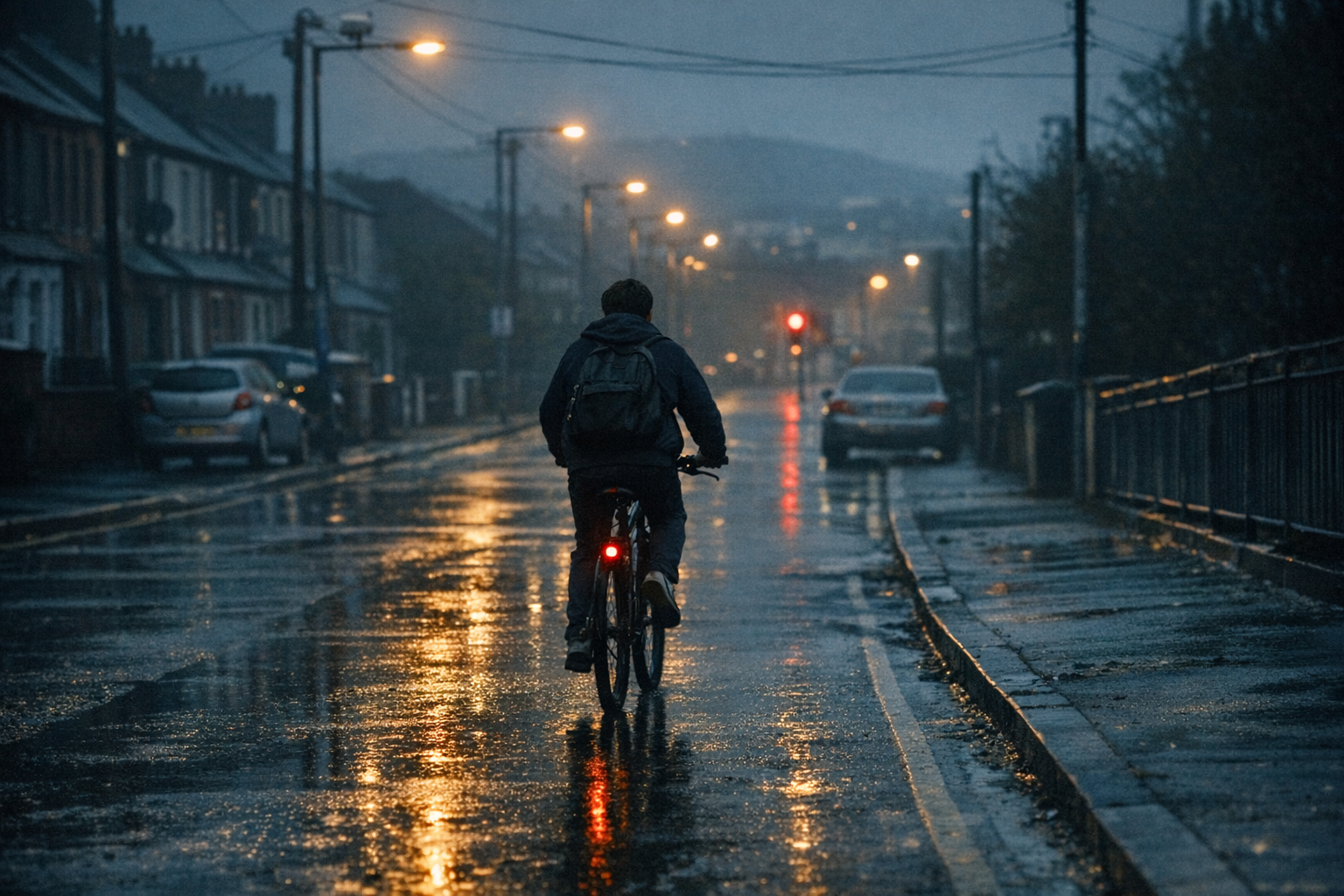
On 21 June 2020, Noah Donohoe left his home in south Belfast planning to meet friends in the Cave Hill area. It should have been the kind of trip that barely registers in family memory: a teenager on a bike, summer light still hanging in the sky, a city that was quiet enough for individual movements to stand out.
He was a pupil at St Malachy’s College. He was 14 years old. By every account, he was heading into a normal evening. But almost from the start, the route began to bend away from expectation.
CCTV later placed Noah cycling through parts of Belfast that confirmed he had made it out of the south of the city and into the north. Footage showed him on the Lower Ormeau Road. Later, cameras caught him along York Road. Eventually, the last known sighting placed him in the Northwood area.
That sequence should have created confidence. It should have allowed investigators to say: here is where he went, here is where he turned, here is the moment the story changed. Instead, Noah’s trail became the opposite of reassuring. The closer people looked, the more the route seemed to break apart.
Some of the most haunting details in the case come from that contradiction. Belfast did not swallow him all at once. The city seemed to hand over pieces of him—his movement, fragments of his route, separate clues—while withholding the one thing everyone needed most: a clean explanation for why the journey became so chaotic.
Timeline of Events
- Early hours before the disappearance: later-released CCTV showed Noah leaving his home around 3:34am and returning about 35 minutes later, a detail that added a new layer of uncertainty years after the original search.
- Evening of 21 June 2020: Noah left home on his bicycle at about 5:40pm to meet friends in the Cave Hill area of Belfast.
- South Belfast sightings: CCTV captured him cycling along the Lower Ormeau Road shortly after he left home.
- North Belfast route: further footage placed him along York Road, showing that he had crossed into the part of the city where the case would later narrow.
- Final known movement: Noah was later seen in the Northwood area, near the point where the visible route begins to fail.
- Search and discovery: after days of public concern and searching, Noah’s body was found on 27 June 2020 in a storm drain tunnel near a railway depot in north Belfast.
- Post-mortem finding: the cause of death was reported as likely drowning.
- Ongoing inquest era: inquest hearings and later evidence discussions kept the case in the public eye, especially as questions about CCTV, timing, and missed opportunities resurfaced.
When the Route Starts to Fracture
The most unsettling part of this case is not simple absence. It is route fracture. The evidence does not vanish with him. It keeps appearing in pieces.
There is the boy leaving home. There is the bike journey through Belfast. There are the cameras that catch him on roads that can still be named. There is the final sighting in the Northwood area. There is the storm drain where he was eventually found. The bones of a timeline are there. But the bones do not lock together.
That matters, because in many disappearance cases the public pain comes from a total void. With Noah, the pain comes from nearness. It feels like the truth ought to be just one working camera, one clear minute, one missing explanation away. Every piece of evidence makes the overall absence harder to accept.
Over time, the CCTV dimension only deepened that feeling. Inquest coverage in 2026 highlighted evidence that some footage may have been missed or not understood properly during the original effort to track Noah’s movements. One police witness acknowledged that Noah had not been identified on certain footage viewed the day after he disappeared. Another witness described how difficult it could be to track one person through multiple city cameras, especially when time offsets, camera direction, and assumptions about route all get involved.
Those details matter because they reinforce the case’s central tension. Noah was not invisible. But visibility did not become certainty.
What Doesn’t Add Up
- A route with too many known points and too little confidence: multiple sightings exist, yet the overall picture still refuses to settle into a single convincing narrative.
- CCTV did not create clarity: later inquest evidence suggested some relevant footage may have been overlooked or complicated by timing issues, which damaged confidence in the early reconstruction.
- The Northwood transition remains deeply unsettling: the final visible stretch of Noah’s movement leads into the exact zone where the case becomes most difficult to explain.
- The early-hours footage raised fresh questions years later: video showing Noah leaving home and returning during the night before his disappearance widened the mystery instead of narrowing it.
- Public trust was shaped by delay: when important details appear late, the case begins to feel less like a solved sequence and more like a file that keeps changing shape.
That last point is one reason this story has never settled into the background. People do not just debate what happened to Noah Donohoe. They debate whether the path to understanding him was compromised almost from the beginning.
And that is a powerful engine for public attention. Not sensationalism—frustration. The kind that grows when a case seems full of evidence but starved of confidence.
The City, the Cameras, and the Missing Stability
One of the reasons the Noah Donohoe case remains so emotionally gripping is that it feels modern in the most unsettling way. Older disappearances can be explained, at least partly, by a lack of witnesses, poor records, or simple isolation. Noah vanished in a world of cameras, mapped streets, digital timestamps, and a public that expects movements to be traceable.
But modern evidence does not always produce modern certainty. Sometimes it produces a more painful version of doubt.
The CCTV trail in this case has always created a strange illusion of control. It lets you believe, for a moment, that the route can be rebuilt cleanly. He was here. Then here. Then here. Yet each confirmed movement seems to increase the pressure on the unexplained space around it. Why this direction? Why that turn? Why did a visible route still end in such a catastrophic blank?
That is also why this case connects so well to pages like What Happened After the Last Sighting? The haunting part is not just the last time someone was seen. It is the fact that being seen can still fail to save the truth.
In Noah’s case, that failure feels especially sharp because he was so young. A 14-year-old cycling across Belfast should not become an evidence maze. And yet the case still feels defined by unstable sequencing: one clue found here, another movement fixed there, an official account challenged, a later hearing reopening confidence in what was supposedly already known.
🔎 Related Investigation:
If this case pulled you deeper into the mystery, continue into:
🔎 Related Investigation:
If this case pulled you deeper into the mystery, continue into:
Why This Case Still Gets Attention
There are several reasons the story of Noah Donohoe continues to hold the public.
- It involves a child. Cases involving teenagers always carry a deeper emotional charge, especially when the day began so ordinarily.
- The evidence seems tantalizingly close. This is not a case with no trail at all. It is a case with a partial trail that never becomes solid enough.
- Inquest-era developments keep reopening the file in public memory. Every new detail about CCTV, timing, or missed footage revives the sense that the route still has not been fully understood.
- The case sits inside a strong search pattern. People look for the Noah Donohoe timeline, CCTV footage, Belfast route, and inquest updates because those are the exact points where certainty appears to almost exist.
People do not come to this case only to ask what happened. They come because they want the movements arranged into something that feels coherent. They want the route to stop shifting under their feet.
Where the Story Becomes Hard to Leave
There are cases that remain famous because the theory is bigger than the evidence. Noah Donohoe is not one of them. This case stays with people because the evidence is real, the route is partly visible, and the unanswered space sits in plain view.
A teenager leaves home to meet friends. He rides through Belfast. Cameras pick him up. Searchers, police, journalists, lawyers, and the public all try to reconstruct what happened next. But the farther the reconstruction goes, the more the route seems to resist becoming one stable story.
That is what makes this case so painful. It is not just that Noah disappeared. It is that the city seemed to watch parts of it happen and still could not explain the whole thing.
Years later, the inquest process and renewed evidence discussion have only sharpened that feeling. Each new fragment has lessened the silence in one sense, while deepening it in another. There is more to look at now than there was before. More footage. More scrutiny. More testimony about what was missed, what was difficult, and what may have gone wrong in the effort to track him.
And still the core problem remains. The route is visible enough to haunt people, but unstable enough to keep them searching.
That may be the truest way to understand the Noah Donohoe case. Not as a simple unanswered question, and not as a neat timeline waiting to be solved, but as a path that keeps breaking under the weight of its own evidence. A Belfast cycling journey that should have been ordinary. A CCTV trail that should have helped more than it did. And a 14-year-old boy whose final known movements still feel far too close to clarity to remain this unresolved.
🔎 Related Investigation:
🔎 If this story stayed with you, the author suggests these real cases next:
- The child disappearance that turned one rainy night into a permanent question
- Missing children and teen cases where the last routine moment became the whole mystery
- Disappearances where the final route, camera, or witness sighting only made the case harder to explain
Explore more Disappearances stories here: