Michel Gauvreau was checking a warehouse full of maple syrup when one of the barrels moved beneath him. It should have been too heavy for that.
On July 30, 2012, the accountant was taking inventory in Saint-Louis-de-Blandford, Quebec. According to Brendan Borrell’s reporting for Bloomberg Businessweek, Gauvreau had climbed onto stacked barrels to count them. One shifted under his weight. When he examined it, he found it empty. Other barrels were empty too.
That was only the first discovery. When officials returned and opened a barrel that appeared to contain something, they found water.
The containers were still there. Millions of dollars’ worth of the product they were supposed to hold was gone.
Why anyone would steal a warehouse of syrup
The target belonged to Quebec’s maple syrup producers, whose federation held supplies in reserve. This was a valuable agricultural inventory with an ordinary commercial purpose: making sure buyers could obtain syrup even when the harvest disappointed.
Maple production depends on a short, weather-sensitive season. A strong crop can leave producers with more syrup than the market immediately needs; a weak one can leave buyers short. The reserve stores surplus production and releases it when demand exceeds the current supply. Quebec Maple Syrup Producers explained that function again in 2021, when an unusually warm April shortened the season and the industry drew on stored syrup.
For the people producing it, that buffer connects an unpredictable spring to a continuing business. The product can wait in storage while its usefulness to buyers remains.
The Saint-Louis-de-Blandford warehouse was a temporary storage site. Borrell reported that the missing syrup amounted to roughly 60 percent of its inventory. That figure sometimes makes the crime sound like the disappearance of most of Quebec’s entire reserve. It was not: the warehouse was only one part of a larger system.
The syrup moved; the barrels concealed the loss
The Supreme Court’s later account describes a scheme developed by Richard Vallières and Avik Caron in June 2011. Caron directed theft operations at the warehouse. Syrup was removed from barrels and transferred into other containers; barrels were refilled with water. Vallières bought syrup from Caron and sold it outside Quebec, including in New Brunswick.
That distinction matters. This was not simply someone taking a few containers and leaving an obvious gap. The operation separated the commodity from its packaging. A row of barrels could remain a row of barrels while the contents had changed.
The court described the syrup being transferred into other barrels or plastic containers and transported in 53-foot trailers. The operation had a distribution route as well as access to stored goods. From the Quebec warehouse, the syrup traveled through intermediaries and into sales outside the province.
The investigation ultimately identified 9,571 stolen barrels. That scale helps explain why the trail extended beyond the warehouse: the missing inventory had become loads to transport, product to sell and money to collect.
Following the load, not just the empty container
By December 18, 2012, police were announcing arrests. Contemporary reporting by The Canadian Press described an investigation reaching across Quebec, Ontario, New Brunswick and the northern United States. Investigators had interviewed about 300 people working in the industry.
The Sûreté du Québec was not working alone. The RCMP, Canada Border Services Agency and U.S. Immigration and Customs Enforcement assisted. Police seized vehicles, scales and lifting equipment. Those were the practical tools of moving a bulk commodity, and the investigation had become a search through the infrastructure that could carry it.
At that December announcement, police said they had recovered about two-thirds of the stolen syrup. The statement was a dated recovery estimate, not a declaration that every missing barrel had been accounted for. The federation also said the loss had not disrupted market supply.
The trial ended. The argument over the money did not.
A jury convicted Vallières in 2016 of theft, fraud and trafficking in property obtained by crime. He received an eight-year prison sentence and a multimillion-dollar fine in lieu of forfeiture: a financial order standing in for criminal proceeds that could not be forfeited directly.
The numbers describe different things. The stolen inventory was worth more than C$18 million. Vallières acknowledged C$10 million in resale income from syrup obtained by theft or fraud. His personal profit was approximately C$1 million. Those figures cannot be substituted for one another.
The dispute that reached Canada’s highest court concerned the fine, not whether the jury had found him guilty. Could the amount be reduced to reflect only the profit he kept, after paying others? Or did it have to reflect the value of the proceeds that had passed through his hands?
The lower appeal court had used his personal profit as the starting point. On March 31, 2022, the Supreme Court unanimously rejected that approach. Paying accomplices did not turn the remaining profit into the only proceeds that counted.
After allowing for a separate restitution order, the court set the fine at C$9,171,397.57. Vallières was given ten years to pay, with six additional years of imprisonment in default. That was the order made in 2022; it does not establish his present custody status or how much has since been paid.
The case began with an accountant discovering that a container could still be present while its value had disappeared. It ended with a court rejecting a different kind of subtraction: the money paid onward could not simply vanish from the calculation of the proceeds.
Timeline of Events
- June 2011: According to the Supreme Court’s account, Vallières and Caron planned the theft and resale operation.
- July 30, 2012: Gauvreau’s inventory inspection exposed empty barrels; further checks revealed water in others.
- December 18, 2012: Police announced arrests and reported recovering approximately two-thirds of the stolen syrup.
- 2016: A jury convicted Vallières of theft, fraud and trafficking.
- 2017: Sentencing proceedings imposed an eight-year prison term and a fine in lieu of forfeiture.
- March 31, 2022: The Supreme Court set the fine at approximately C$9.17 million, rejecting a calculation limited to personal profit.
Frequently Asked Questions
Was Canada’s entire maple syrup reserve stolen?
No. The theft affected a warehouse in Saint-Louis-de-Blandford. The federation told The Canadian Press in December 2012 that the missing syrup represented about one-tenth of its provincial reserve.
Was all the syrup recovered?
Police reported recovering roughly two-thirds by December 18, 2012. That contemporary report does not establish complete recovery afterward.
Why was the fine larger than Vallières’ personal profit?
The Supreme Court ruled that the relevant proceeds were not limited to the amount he retained after paying others. The final fine used C$10 million, less C$828,602.43 covered by a restitution order.
Related Stories
For another theft discovered at a commercial storage site, read the Sylmar cash heist and the missing millions at a Los Angeles warehouse. For a case in which the stolen objects remain central to the search, explore the Gardner Museum heist.
Sources & References
- Brendan Borrell, “The Great Canadian Maple Syrup Heist” — original Bloomberg Businessweek reporting, January 9, 2013; discovery and warehouse context, reproduced on the reporter’s website.
- Quebec Maple Syrup Producers, “The Maple Syrup Reserve: Serving Its Purpose in a Time of High Demand” — December 1, 2021; industry explanation of the reserve’s function.
- The Canadian Press, “The great maple syrup swindle of 2012 solved: cops make arrests in maple heist” — December 18, 2012; contemporary police and federation statements.
- Supreme Court of Canada, R. v. Vallières, 2022 SCC 10 — official Supreme Court Reports, [2022] 1 S.C.R. 144; factual account and final order.
- Supreme Court of Canada, Case in Brief: R. v. Vallières — March 31, 2022; accessible explanation of the proceeds-of-crime ruling.
- The Canadian Press, “Supreme Court restores multimillion-dollar fine for Quebec maple syrup thief” — March 31, 2022; conviction and final fine reporting.
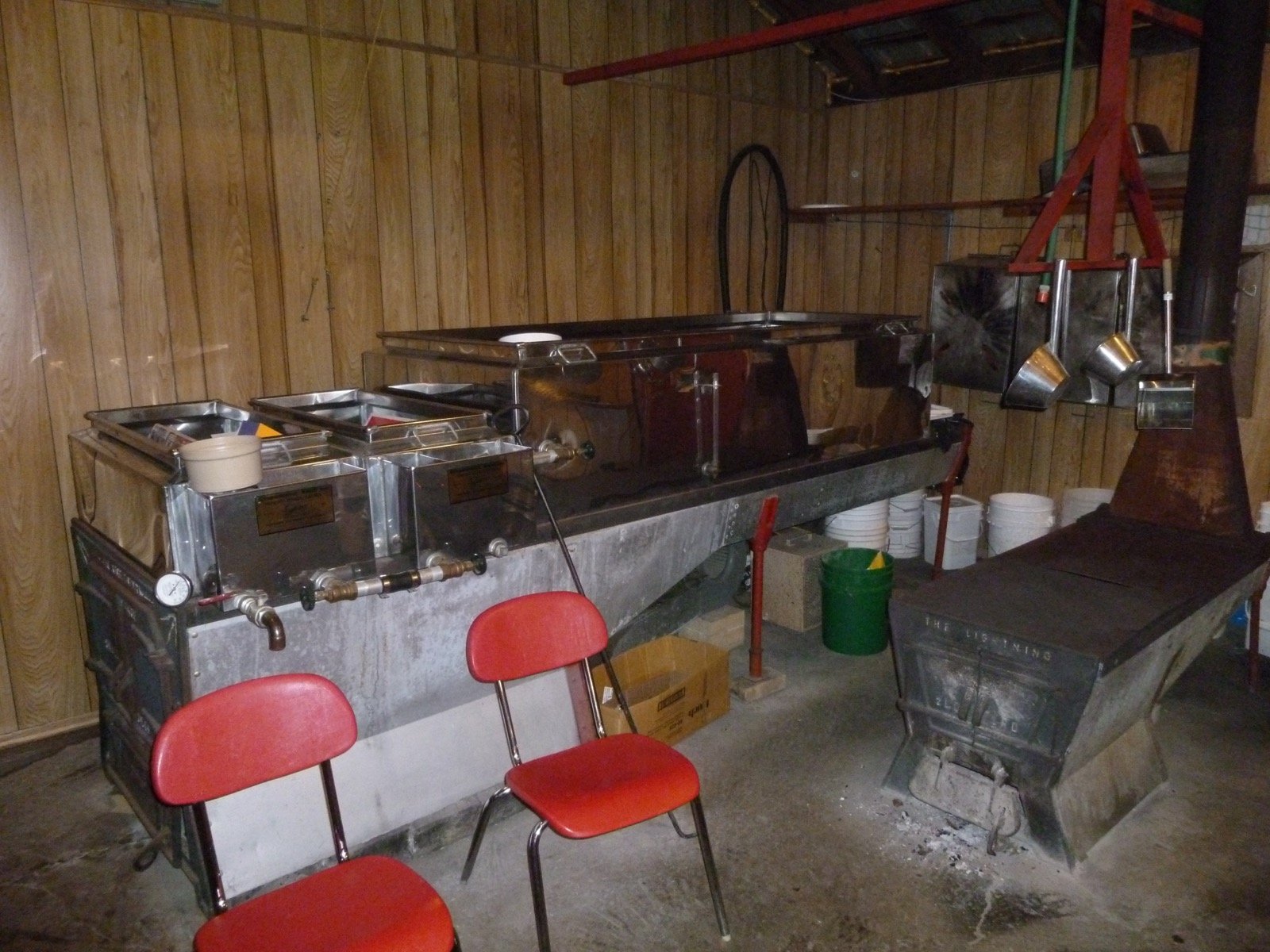
Featured image: Quebec maple-syrup boiling equipment, photographed by Justin Quintal in 2011, via Wikimedia Commons, CC BY 3.0. Resized and cropped for display. The photograph illustrates syrup production; it does not show the theft warehouse or equipment used in the crime.