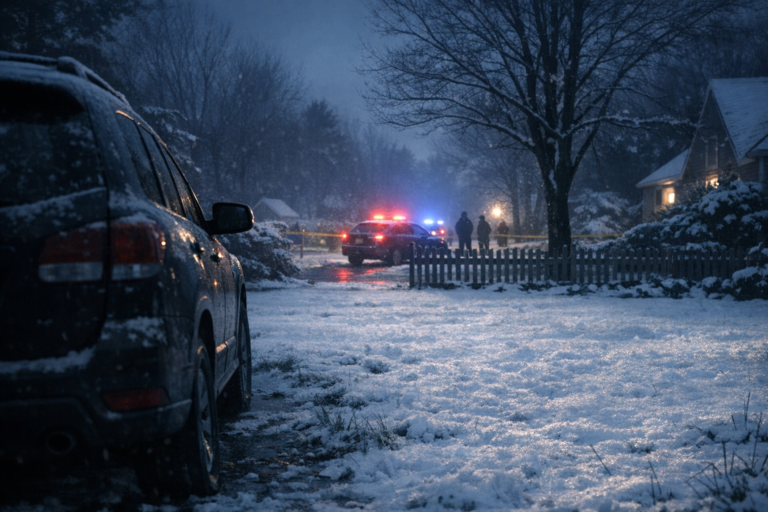
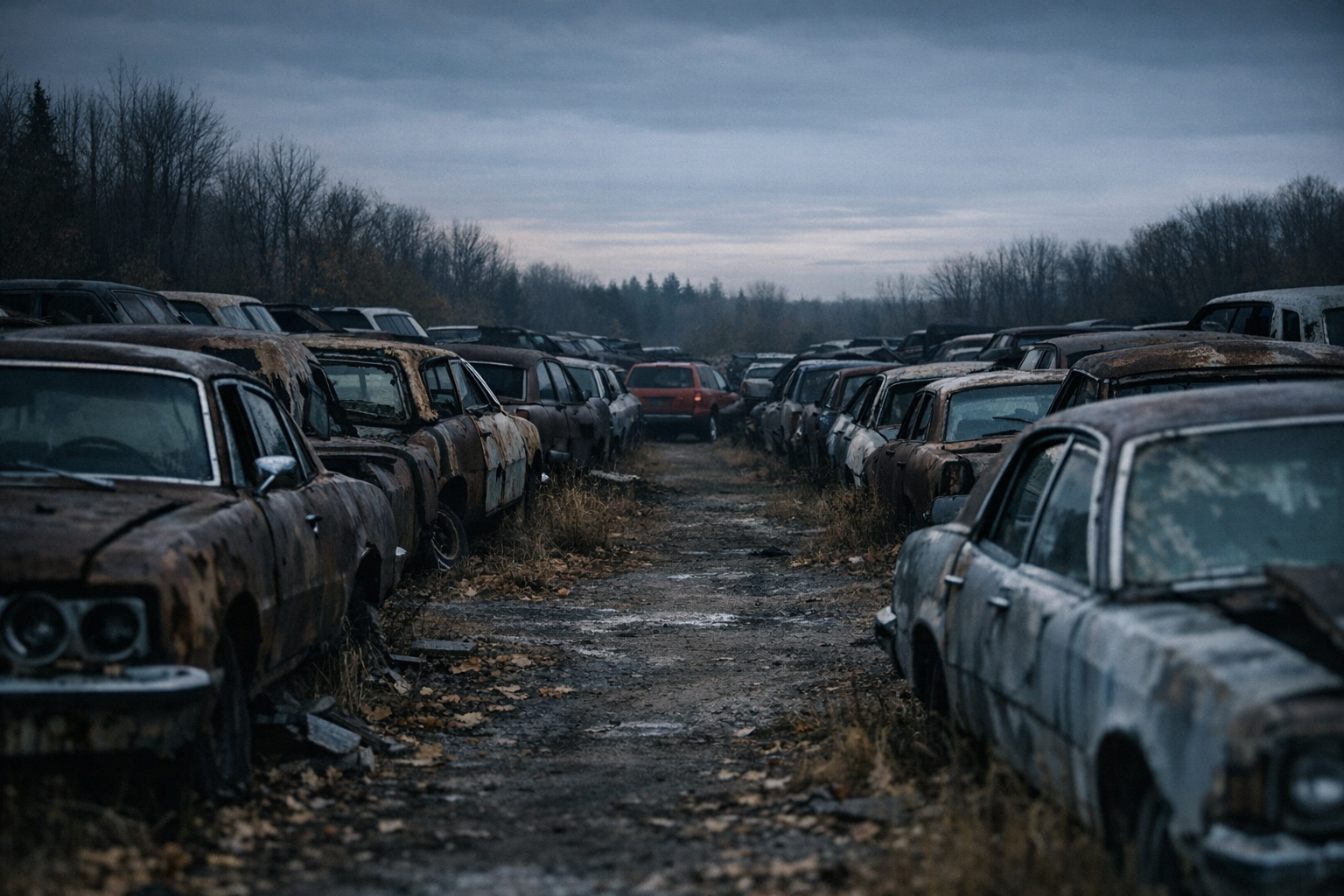
On Halloween afternoon in rural Wisconsin, the salvage yard looked like the kind of place where things disappeared every day. Rusted fenders leaned into weeds. Doors hung open on dead cars. Wind moved across acres of metal with a dry, scraping sound. Somewhere in that maze, Teresa Halbach arrived to do a routine photography job she had probably done a hundred times before. Then she was gone.
Teresa Halbach’s murder case remains one of America’s most debated true crime stories
Teresa Halbach was a 25-year-old photographer whose disappearance and killing became one of the most argued-over murder cases in modern true crime. What began as a missing person case in Wisconsin turned into a conviction, a national obsession, and years of public argument over evidence, procedure, and whether the full truth was ever cleanly settled.
That tension is part of why this case still refuses to fade. Like the courtroom storm surrounding the Casey Anthony case, the Teresa Halbach story never stayed inside one neat version of events for very long.
Halbach was a freelance photographer who often worked for Auto Trader, driving to homes and dealerships to photograph vehicles for sale. On October 31, 2005, one of those appointments brought her to Avery Salvage Yard in Manitowoc County. It should have been quick. Photograph the van. Leave. Move on to the next stop. Instead, that afternoon became the last confirmed stretch of her normal life.
The salvage yard matters because it shaped the whole feeling of the case. This was not a city sidewalk, a crowded store, or a suburban driveway with half a dozen clean sightlines. It was a sprawling property cluttered with thousands of vehicles, stacked parts, dirt lanes, and family buildings. A place where distance could swallow noise. A place where a person could vanish behind rows of metal in seconds. From the beginning, the setting made everything feel sealed in.
When investigators pieced together Halbach’s schedule, the Avery appointment quickly became the center of attention. She had spoken with people about the job. Her phone activity helped narrow the timeline. Witness accounts and records placed her at the salvage yard that afternoon. After that, the trail began to harden in one direction and blur in another. Her vehicle was later found on the property. So were other key pieces of evidence that prosecutors said pointed directly to Steven Avery, with Brendan Dassey later drawn into the case as well.
But this is where the Teresa Halbach case stopped behaving like an ordinary solved murder story. The more evidence surfaced, the less unified the public response became. For some people, the case looked overwhelming. For others, it looked troublingly unstable. The documentary era only made that divide worse, because millions of viewers encountered not just the facts of the case, but the feeling of the case: the unsettling sense that every apparent answer generated another argument.
The salvage yard atmosphere feeds that uncertainty. It is easy to imagine how the prosecution’s story took hold. Halbach enters a huge isolated property. She is never reliably seen leaving. Her SUV turns up hidden there. Human remains are later discovered. Her key is recovered in Avery’s bedroom. A bullet tied by the state to Halbach becomes another part of the official theory. Put together, those elements sound like the spine of a closed case.
And yet the case never felt fully closed in the public imagination because almost every major item came with an aftershock. Critics questioned the handling of evidence. They questioned whether searches were conducted cleanly. They questioned why certain discoveries appeared when they did. They questioned whether the broader context around Avery’s earlier wrongful conviction and civil lawsuit made the investigation impossible to view as emotionally neutral. That doesn’t erase the evidence. But it does explain why the case kept dividing people long after the verdicts were delivered.
Timeline of Events
- October 31, 2005: Teresa Halbach goes to Avery Salvage Yard for a vehicle photography appointment and is later reported missing.
- Early November 2005: Search efforts intensify as Halbach’s family and investigators try to reconstruct her final known movements.
- November 5, 2005: Halbach’s Toyota RAV4 is found on Avery Salvage Yard, sharply changing the direction of the investigation.
- Following searches: Investigators recover additional evidence on the property, including remains and items the prosecution says connect the case to Steven Avery.
- 2007: Steven Avery is convicted of Halbach’s murder. Brendan Dassey is also convicted in a related case.
- Years later: Appeals, documentaries, and renewed public scrutiny keep the Teresa Halbach case alive in true crime culture.
If you look only at the sequence, the official narrative feels straightforward: Teresa Halbach arrived, something violent happened on the property, and the evidence stayed behind in pieces. But the reason people still debate the case is that the timeline never produced emotional certainty. Instead, it created a cold sequence of events surrounded by nagging procedural doubts.
That is the unique tension at the center of this story. Teresa Halbach herself can get lost in the shadow of the larger argument, but she should not. She was the person who stepped into that property on a workday and never came home. Everything that followed grew around that fact.
In the years since, public discussion has often moved between two extremes. One side sees the case as an example of people talking themselves out of obvious evidence because a documentary changed the emotional framing. The other sees it as a case where the evidence trail is real but the confidence attached to it has always been shakier than authorities wanted to admit. That split is why the case keeps resurfacing whenever appeals, forensic arguments, or documentary conversations return to public view.
What Doesn’t Add Up for Many People
- The discovery pattern: Some critics argue key evidence seemed to appear in ways that made the search process feel messy or suspicious rather than airtight.
- The key in Avery’s room: One of the most argued-over details is why Halbach’s vehicle key was found where it was, and only after repeated searches.
- The wider context: Avery’s prior wrongful conviction and active lawsuit against Manitowoc County made many observers immediately suspicious of investigative motives.
- Brendan Dassey’s role: Debate over Dassey’s confession and the reliability of his statements added another layer of instability to the public story.
- The gap between proof and certainty: Even people who think Avery is guilty sometimes argue the case was presented in a way that left too much room for doubt.
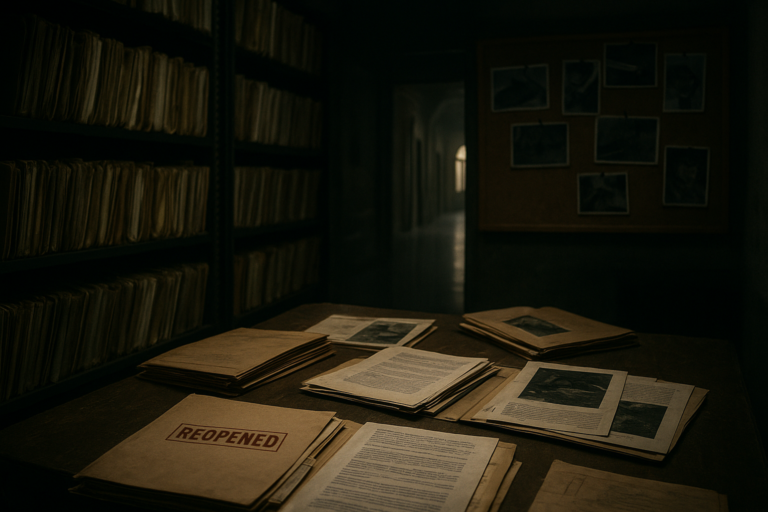
Those questions are the reason this story became bigger than a local homicide. The Teresa Halbach case evolved into a referendum on how much confidence people should place in official narratives when a case arrives already carrying institutional baggage. And unlike simpler mystery stories, this one never offered the comfort of distance. There is no old mansion here. No folklore haze. Just a modern murder case with documents, recordings, trial arguments, and competing interpretations spread across the internet for years.
That is also why the salvage yard remains such a powerful image. It feels like the perfect setting for a story where certainty keeps slipping. On one level, it is a physical place full of evidence questions. On another, it has become a symbol of the case itself: a landscape cluttered with fragments, each one capable of pointing somewhere, none of them able to end the argument for everyone.
For readers who follow retrials, contested convictions, and cases that keep reopening in the public mind, Teresa Halbach’s story sits in the same uneasy lane as the debates surrounding the Karen Read retrial. Not because the facts are the same, but because both cases force people into an uncomfortable place between evidence and confidence.
And that may be the real reason the case never stopped dividing people. It is not just the murder itself. It is the feeling that the story asks a harder question than “Who did it?” It asks how people decide they are sure. Is certainty built from the total weight of the evidence? From trust in the institutions presenting it? From the emotional power of a narrative that feels complete? Or from the absence of unanswered questions?
In Teresa Halbach’s case, those things never lined up cleanly. The prosecution had a story. The defense had a challenge. The public had years of arguments, edited footage, legal filings, and its own growing distrust of systems that are supposed to feel solid. So the case lived on in that unstable space where true crime stops being only about a victim and becomes, for better or worse, about the machinery surrounding her death.
Still, the simplest and saddest part remains unchanged. A young photographer went to a salvage yard for work on an ordinary afternoon. She disappeared into a setting that already looked like a graveyard for broken things. The case that followed produced convictions, headlines, documentaries, and endless debate. But it never produced peace. Not for everyone watching, and certainly not for the family at the center of it all.
That is why Teresa Halbach’s case still matters. It is a murder case, a missing person story, a courtroom battle, and a public trust test all at once. And even now, years later, people still return to it for the same reason they always have: because the evidence seems forceful, the arguments seem stubborn, and the feeling of final certainty still stays just out of reach.