The Menendez brothers case is back in the headlines because April 2026 resentencing coverage has reopened one of the most infamous murder stories in American history. It began with the shotgun killings of Jose and Kitty Menendez in Beverly Hills in 1989 and grew into a bitter national argument about greed, trauma, violence, and whether justice ever fully settled what happened inside that house.
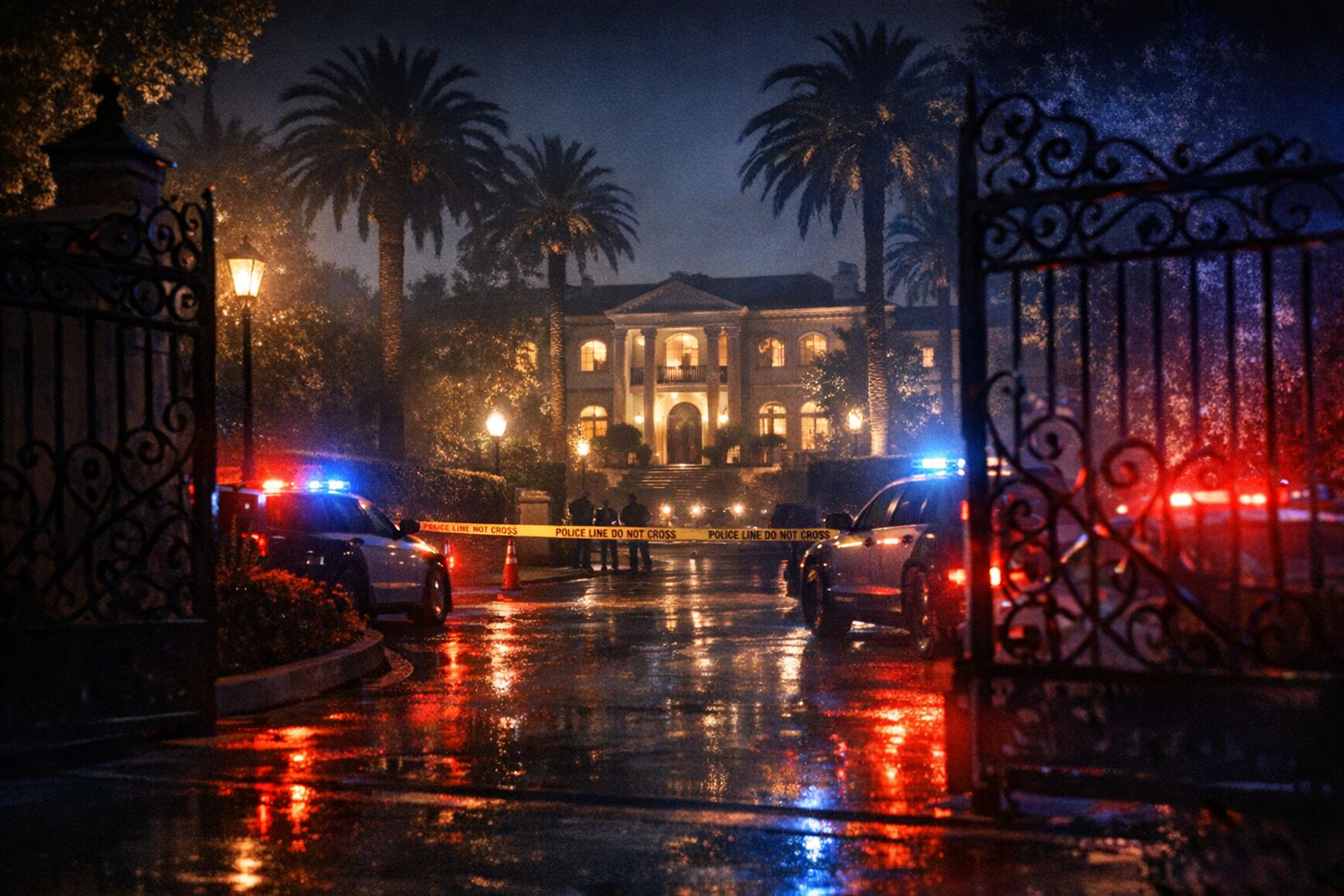
On the night of August 20, 1989, one of the richest zip codes in America was suddenly wrapped in the kind of horror people like to believe only happens somewhere else.
The address was 722 North Elm Drive in Beverly Hills. From the outside, it looked like success had reached its final form. Jose Menendez was a powerful entertainment executive. Kitty Menendez had the image of a glamorous wife and mother. Their sons, Lyle and Erik, had grown up surrounded by privilege, ambition, and the pressure that often comes with both. The family lived in a world of tennis lessons, expensive schools, luxury cars, and the unspoken rule that appearances mattered.
Then, in a matter of seconds, that polished image was blown apart.
Jose and Kitty were in the den watching television when shotgun blasts ripped through the room. Jose was hit with overwhelming force. Kitty, badly wounded, tried to crawl away and was shot again. It was savage, close, and impossible to mistake for an accident. The crime scene looked less like a domestic tragedy and more like an execution carried out with pure panic and rage.
When Lyle called 911, his voice sounded frantic. He said someone had killed his parents. For a while, police treated the case like an outside attack. Beverly Hills was full of wealth, status, grudges, and people who knew how to hide ugly truths behind locked gates. Investigators looked at business rivals. They looked at mob rumors. They looked at the possibility that Jose, who had risen high in the entertainment world, had made enemies dangerous enough to send a message through blood.
Meanwhile, the two surviving sons behaved in ways that would later become impossible to ignore.
In the months after the killings, Lyle and Erik spent heavily. Cars, watches, clothes, restaurants, tennis coaches, travel, luxury. The spending spree became one of the first details that burned itself into the public imagination. To many people, it looked simple. Two rich sons murdered their parents for money and then celebrated the freedom. That theory had the kind of brutal logic TV producers love. It was easy to understand and easy to repeat.
But the Menendez case would never stay simple.
What broke it open was not a fingerprint, a hidden camera, or some dramatic last-minute witness. It was a confession that slowly worked its way out through the strange weak points in human secrecy. Erik admitted the killings to his psychologist, Dr. Jerome Oziel. Oziel later told authorities, and the information led investigators toward the brothers. By 1990, Lyle and Erik Menendez were arrested and charged with murdering their parents.
Once the case moved into court, it stopped being just a murder case and turned into something much larger and more explosive. The brothers did not deny the killings. Their defense was that the murders happened after years of sexual, physical, and emotional abuse by their father, with their mother accused of failing to protect them. The defense argued that the brothers feared their parents were going to kill them after years of control, threats, and escalating terror. Prosecutors answered with a very different story. In their view, this was not fear. It was greed. It was two sons who wanted the family fortune and chose shotguns as the fastest path to it.
That clash is why the Menendez case has never faded. It asked the public to sit with two possibilities people hate having to hold at the same time. Could someone be both a victim and a killer? Could years of abuse help explain a crime without excusing it? Could a person tell the truth about terrible things and still be guilty of a terrible act? The case did not offer clean moral lines. It forced people to look at violence inside a wealthy home and admit that expensive houses can hide the same darkness as any other place.
The first trials in the early 1990s became a media storm. Cameras turned the courtroom into national theater. People watched the brothers cry on the stand and describe what they said had happened behind closed doors. They watched prosecutors attack those claims as manipulation. They watched a country split into camps. Some believed the brothers were spoiled liars performing for sympathy. Others believed the testimony revealed abuse that had been ignored because the family was rich, polished, and powerful.
The first round of trials ended in deadlocked juries. That alone was a sign of how divided the case had become. The same evidence produced two opposite readings. In one version, the brothers were cold, calculating killers. In the other, they were damaged young men who exploded after years of fear and humiliation. America could not agree.
Then came the retrial, and the atmosphere changed.
The second trial limited some of the abuse-related evidence that had given the first proceedings their emotional force. This time, the prosecution narrative landed harder. In 1996, both brothers were convicted of first-degree murder and conspiracy to commit murder. They were sentenced to life in prison without the possibility of parole.
For many cases, that would have been the end. The public moves on. The names fade. The crime becomes a documentary every few years, then a footnote.
That did not happen here.
The Menendez brothers stayed alive in the culture because the case kept touching a nerve that never fully healed. Every few years, some new wave of attention brought it back. Sometimes it was a documentary. Sometimes it was a TV drama. Sometimes it was a new generation, far removed from the original trial, looking at the evidence with different instincts than the people who first watched it. Over time, views about trauma, sexual abuse, family violence, and how victims behave changed. Things many people dismissed in the early 1990s were taken more seriously decades later. That did not prove the brothers should go free. But it did change the frame.
Instead of asking only, Did they do it, people increasingly asked a harder question: what kind of sentence fits a crime like this if the abuse claims are true, or even partly true?
That question became even louder as defense teams and supporters pushed for new reviews, citing evolving standards, additional evidence, and a broader public willingness to hear allegations of abuse that had once been mocked or minimized. Critics pushed back just as fiercely. Jose and Kitty Menendez were dead. Nothing could change that. No new sympathy for the brothers, critics argued, could erase the fact that they entered that room with shotguns and killed both parents in a barrage of violence.
And that is where the story sits again in April 2026, which is exactly why it is surging back into the spotlight.
Resentencing coverage has reopened every wound in the case. Timeline explainers are everywhere. News reports are revisiting the murders, the spending after the killings, the courtroom testimony, the abuse allegations, and the long path through prison and appeals. For younger audiences, it feels like discovering the case for the first time. For older audiences, it feels like reopening an argument they never finished.
The reason resentencing matters so much is that it changes the public question. A conviction asks whether someone is guilty. A resentencing asks what should happen now, after decades have passed, after attitudes have changed, after the original horror has cooled but not disappeared. That is a much stranger question, because it does not let anybody stay comfortably in the past.
If the brothers remain exactly what the prosecution said they were, then the answer seems obvious to many people. They murdered their parents for money. End of story.
But if the full picture includes years of abuse, fear, manipulation, and psychological damage, then the case becomes harder. Not cleaner. Harder. The brothers were not children when they pulled the triggers. They were also not strangers breaking into a house. They were sons shaped inside that house. That does not erase responsibility. It does, however, complicate the human meaning of the crime. And complicated cases are the ones that refuse to die.
There is another reason this case still grips people: it shattered a fantasy about wealth. The Menendez home represented achievement, order, and control. Yet behind those walls, according to the defense, was terror. Even people who reject the brothers’ story remain drawn to the possibility that one of America’s most famous mansion murders may also have been a story about things the outside world refused to see. It is unsettling because it suggests that money can hide suffering just as easily as it hides sin.
The case also survives because it sits at the intersection of true crime and family nightmare. Strangers killing strangers are terrifying, but familiar. Children killing parents in a mansion while arguing they were also victims of that home is something darker. It feels unstable. It leaves behind no easy role for anybody. Victims, offenders, abusers, survivors, liars, truth-tellers, manipulators, traumatized children, calculating adults: the labels keep shifting depending on which piece of the story a person believes most.
That is why one resentencing hearing can send the entire story roaring back into public view. The Menendez brothers case was never just about what happened in 1989. It was about what people think violence means when it grows inside a family. It was about whether the justice system knows what to do with trauma once trauma becomes bloodshed. It was about how television can freeze a case in one era while later generations return and see something different.
The Beverly Hills murders are still gripping the world because they remain unfinished in the public mind. Jose and Kitty are still dead. Lyle and Erik are still the men who killed them. But the moral argument around the case never stayed locked in 1996. Every fresh review, every new hearing, every resentencing headline asks the same chilling question in a new way: was this simply a greedy double murder, or was it a family tragedy so warped by secrecy and abuse that people still cannot agree on what justice should look like?
That is the trap at the center of the Menendez story. The facts are old, but the meaning keeps shifting. And as long as that keeps happening, the case will never feel buried. It will keep returning, decade after decade, like a door in a mansion that looks closed until someone touches it and realizes it never fully latched.
🔎 Related Investigation:
🔎 Related Investigation:
🔎 Related Investigation:
If this case pulled you deeper into the mystery, continue into:
🔎 If this story stayed with you, the author suggests these real cases next:
- The father who erased his family and vanished into another identity
- Hollywoods most famous murder mystery and the case that never stopped haunting investigators
- The night an entire house was left in silence after a brutal family massacre
Explore more True Crime stories here: