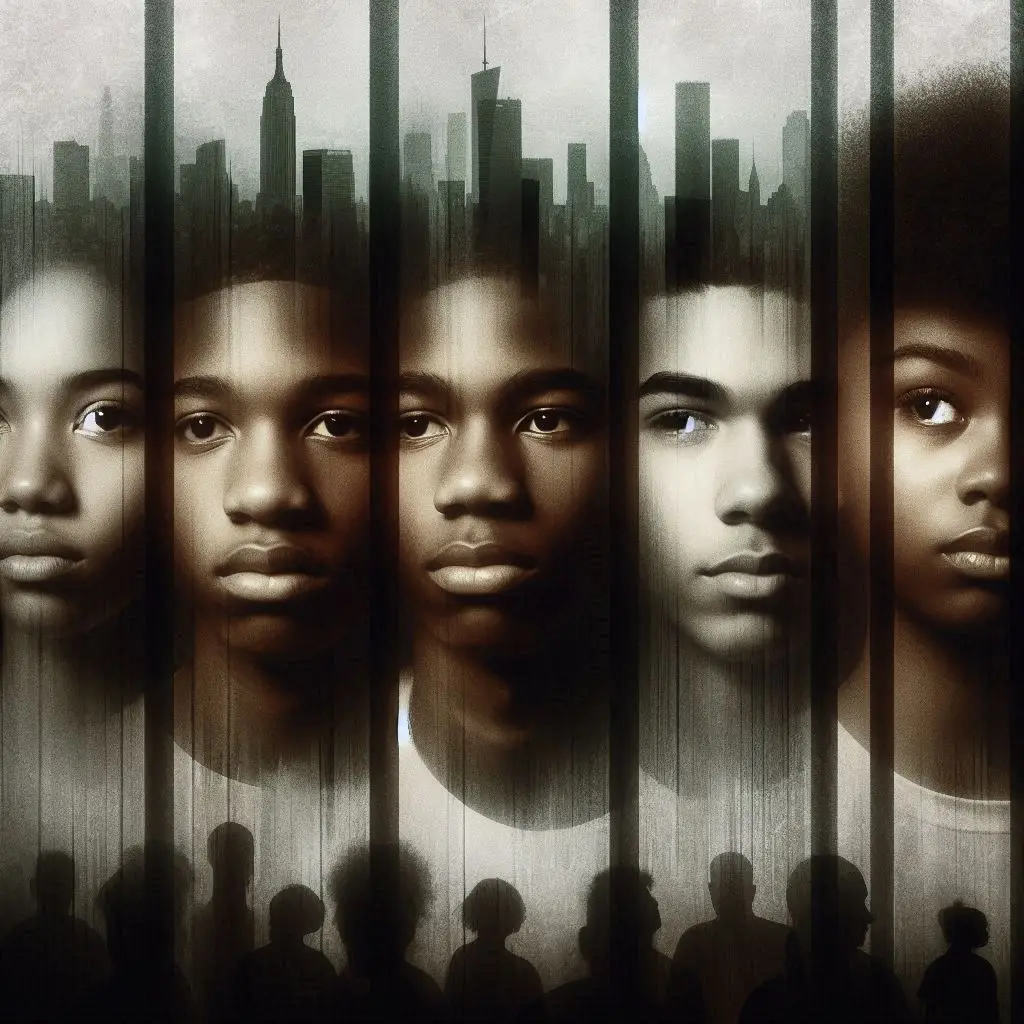
In April 1989 investigators had a severely injured runner, reports of other assaults in Central Park and several teenagers in custody. What they did not have was an identification from the runner. Trisha Meili survived the attack but could not remember it. Her inability to name her assailant made the reliability of the accounts gathered that night especially important.
Listen to “Central Park Five” on Spreaker.The Night Everything Changed
Meili was beaten and raped in Central Park on April 19. Reports of other attacks that evening led police to detain several young people. Kevin Richardson and Raymond Santana were apprehended that night. Antron McCray, Yusef Salaam and Korey Wise were brought in for questioning the next day. All five were Black or Latino teenagers between fourteen and sixteen.
The investigation soon treated their accounts as evidence of a group assault. Taken together, those accounts sounded like corroboration. Set beside one another, they disagreed about where and how the attack occurred and who had done what. The young men would live with the consequences of those discrepancies long after the interviews ended.
Timeline of Events
- April 19–20, 1989 — Meili is attacked. Police question teenagers in connection with violent incidents in the park.
- 1990 — Two juries return convictions against the five teenagers.
- 2002 — Matias Reyes admits attacking the runner alone. Investigators test his account against the case evidence.
- December 19, 2002 — A New York court vacates the convictions after prosecutors support the defendants’ motions.
- September 2014 — A federal judge approves a $41 million settlement of the five men’s civil case against New York City.
How the Case Was Built
After prolonged police questioning, four teenagers gave videotaped statements: McCray, Richardson, Santana and Wise. Salaam did not give a videotaped confession. The distinction matters because a viewer seeing an individual statement could not thereby see the circumstances of all five interrogations.
The prosecution relied heavily on the statements, along with forensic testimony offered at trial. No semen evidence identified any of the five as its source. The absence of a match did not prevent the state from advancing a group-assault theory. In 1990 juries in two trials convicted the defendants of offenses arising from the night in the park. The counts varied among them.
What Doesn’t Add Up
- The accounts conflicted on significant features of the attack, including participants and location.
- The jogger could not remember the assault or identify an attacker.
- The prosecution had to account for biological material that did not come from any of the five.
- A recording of a final statement did not document everything said or done during the questioning that preceded it.
The Years That Were Taken
Wise was sixteen and was prosecuted as an adult. His convictions included assault and sexual abuse. He received a sentence of five to fifteen years. The other four, younger at the time of the investigation, also spent years in custody.
These distinctions can disappear beneath a collective name. Each teenager faced his own jury record, sentence and passage into adulthood. The court could eventually vacate those judgments. By then, the intervening years had already been spent.
The Break That Changed Everything
In 2002 Reyes, already imprisoned for other violent crimes, said he alone had raped and beaten the jogger. Prosecutors reopened the case. He provided details consistent with the assault, and DNA from the rape evidence matched him. The investigation now had both a confession to evaluate and a direct physical means of testing it.
The district attorney supported vacating the convictions. On December 19, 2002, the court granted the motions. Its decision examined both the new evidence and what the juries had originally heard. The match to Reyes’s DNA profile and the conflicts among the teenagers’ statements could now be understood together.
New York City later agreed to a $41 million civil settlement. A federal judge approved it in 2014. That closed the civil claims addressed in the agreement, twelve years after the criminal judgments had been overturned.
Why This Case Still Gets Attention
This case asks what an investigator should do when an interview and a physical fact point in different directions. A statement implicating someone else may sound independent. It carries less weight if the accounts disagree on details or if the circumstances that produced them remain unclear. The DNA match gave prosecutors a way back into a case that two juries had already decided.
The five men are also known as the Exonerated Five. Their names belong in the story for the same reason Meili’s does. A woman survived an assault she could not remember, and five teenagers bore convictions for an attack they had not committed.
FAQ
Who were the Central Park Five?
Kevin Richardson, Raymond Santana, Antron McCray, Yusef Salaam and Korey Wise were teenagers wrongfully convicted in connection with the 1989 attack on Trisha Meili.
What evidence was used against the Central Park Five?
Prosecutors relied on statements taken after prolonged questioning and on forensic testimony. Four of the five gave videotaped statements.
When were the Central Park Five exonerated?
The convictions were vacated on December 19, 2002.
Was the Central Park Five case solved?
Reyes admitted attacking Meili alone, and DNA from the rape evidence matched him. That evidence led to a reinvestigation of the original prosecution.
Why is the Central Park Five case still so important?
It shows the consequences of treating conflicting statements as mutual corroboration and the importance of testing those statements against independent physical evidence.
Research Sources
The following resources were consulted to verify and update this article.
- New York Supreme Court, People v. Wise (2002) — Vacatur decision, sequences of apprehension, trial evidence and the reinvestigation of Reyes’s account.
- Innocence Project, the fifth anniversary of exoneration — Ages, two trials, identities of the four who gave videotaped statements, DNA findings and date of exoneration.
- University of Colorado, Korey Wise’s story — Wise’s age, prosecution as an adult, offenses and sentence, and the encounter with Reyes.
- New York City Law Department, federal approval of settlement — Official announcement of the $41 million civil settlement in September 2014.
Watch on YouTube
Watch This Story on YouTube
Prefer to watch? See the full story on our YouTube channel.