A skiing accident sent Anna Bågenholm into a stream beneath the ice. One moment Anna Bågenholm was skiing with coworkers above Narvik on a cold May afternoon. The next, she slid headfirst beneath ice covering a mountain stream.
What followed became one of the most astonishing hypothermia survival cases ever recorded. Anna Bågenholm, a Swedish doctor working in Norway, was trapped beneath the ice for roughly 80 minutes after a skiing accident near Narvik in 1999. At the hospital, her core temperature was measured at 13.7°C, and by every ordinary measure, the story should have ended there.
Cases like Juliane Koepcke’s survival story stay with people because they begin in one normal moment and then drop without mercy into a fight that feels impossible to survive. Anna’s ordeal belongs in that same category, but hers unfolded in a place even more claustrophobic: upside down, underwater, pinned beneath ice while time kept moving above her.
The Slope Opened and the Water Took Her
On May 20, 1999, Anna was out ski-touring in the mountains outside Narvik with two colleagues. She was athletic, comfortable in the cold, and used to mountain conditions. That detail matters, because it strips away the fantasy that only careless people end up in stories like this. Sometimes the setting is familiar. Sometimes the danger is hidden just under the surface.
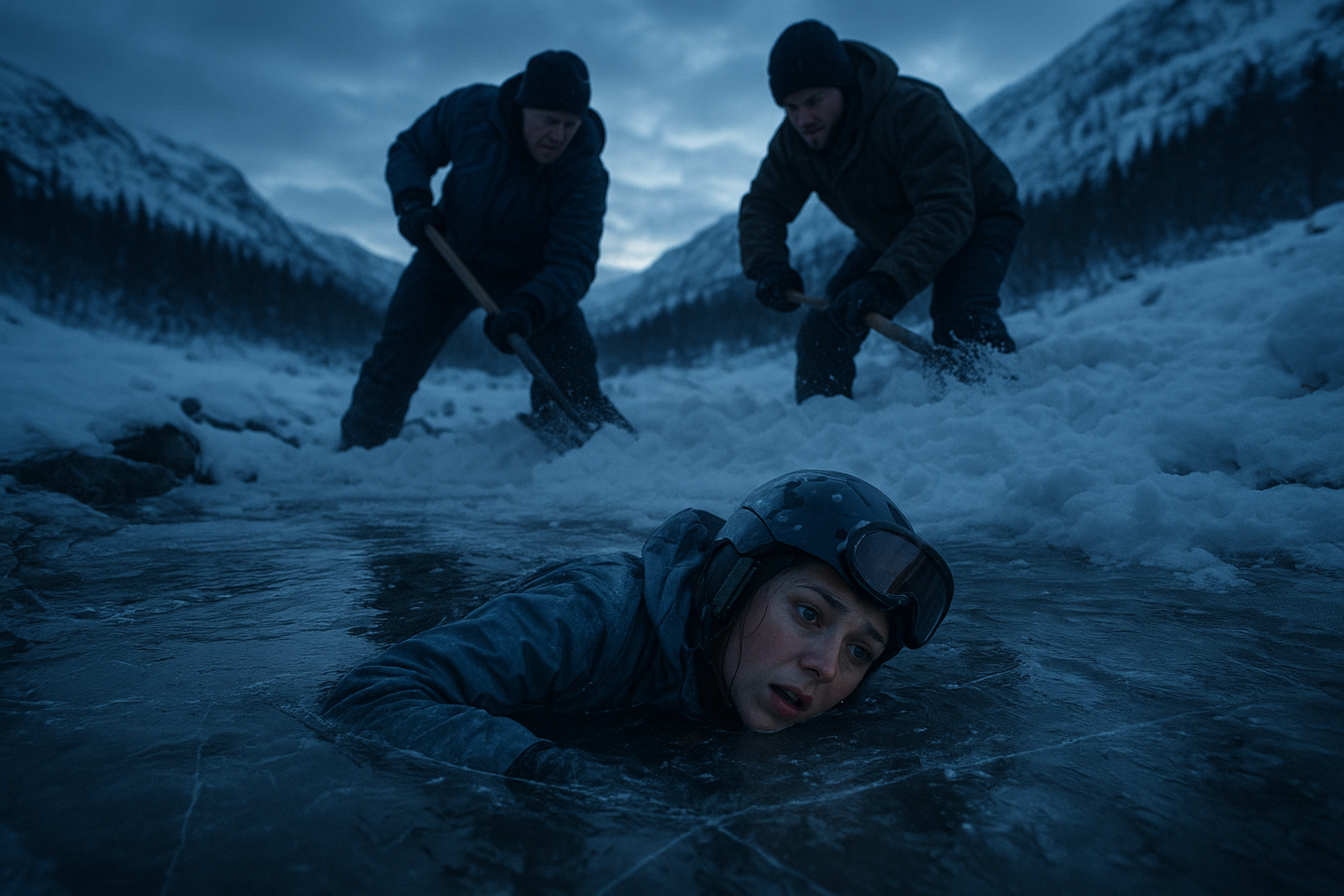
Anna lost control during the descent and slid headfirst into a stream, landing on her back beneath the ice. When her coworkers reached the opening, Anna was wedged under the ice, upside down, with only her skis and lower legs still visible above the surface.
Her coworkers dropped to the snow and tried to free her with bare hands and whatever tools they had. They pulled at her skis. They dug at the ice. They shouted to her. In the first minutes, Anna was still alive and struggling. And then the worst part settled in: even with two people right there, they could not get her out.
The Rescue Clock Kept Running
Help was called quickly, but mountain rescues do not happen at the speed panic wants. Distance, tools, and terrain all matter when the victim is trapped under solid ice in a steep, frozen landscape.
While rescue teams were being assembled, Anna’s coworkers kept holding onto her skis so she would not disappear farther under the ice. She found an air pocket and initially remained conscious. Her movements stopped after about 40 minutes; cardiac arrest was apparent when she was extracted. That detail makes the case even stranger. It means this was not a simple drowning timeline. It was a prolonged fight between suffocation, freezing, and total physical shutdown.
Rescuers arrived and still faced a nightmare extraction. The ice had to be broken open in the right place. The current was still moving beneath her. The space was tight and dangerous for everyone leaning over it. By the time Anna was finally pulled out, about 80 minutes had passed.
Eighty minutes under ice is the kind of number that sounds wrong even when it is true. It pushes far beyond what most people think of as survivable water exposure.
When They Pulled Her Out, She Looked Gone
There was no cinematic gasp when Anna came free. No immediate sign that the rescue had worked. When rescuers got her onto the surface, she was not breathing. Her circulation had stopped. Her pupils were dilated and her body was pale and ice-cold. To the eye, it looked like the mountain had already taken her.
But this is where the story shifts from physical survival to medical stubbornness. The people around her did not stop because the scene looked hopeless. CPR began immediately and continued during the helicopter transfer to Tromsø University Hospital. That decision mattered. So did the fact that the cold had changed the biology of the emergency in a way that warmer water drowning cases usually do not.
There is a phrase often repeated in extreme hypothermia cases: a patient is not dead until they are warm and dead. It captures the strange medical reality that severe cold can sometimes slow the body enough to preserve a tiny chance of recovery.
Anna reached Tromsø with a core temperature of 13.7°C, one of the lowest survived body temperatures ever documented in an adult with accidental hypothermia. Doctors connected her to a heart-lung machine, using cardiopulmonary bypass to circulate and oxygenate her blood while slowly warming her body.
The Medical Impossibility That Somehow Worked
Even then, nothing was guaranteed. Drowning, cardiac arrest, and extreme hypothermia together should have stacked the odds beyond reason. Instead, the cold that had nearly killed her may also have bought the tiny margin that saved her.
Eventually, after hours of work, her heart began beating again.
That was not the end of the fight. Anna remained critically ill, spent a long period in intensive care and rehabilitation, and suffered nerve damage, especially in her hands and feet. But the case kept refusing the ending most people expected. She improved, regained function, and eventually returned to work as a doctor.
Timeline of Events
- Afternoon, May 20, 1999: Anna Bågenholm goes skiing near Narvik, Norway, with two coworkers.
- The fall: She loses control and slides into a stream beneath the ice.
- Entrapment: Her body becomes pinned beneath the ice, upside down in near-freezing meltwater, with only part of her lower body visible.
- First rescue attempts: Her coworkers try to pull her free and call for help.
- Roughly 40 minutes in: Her movements cease after she has found an air pocket. When she is extracted later, she has no detectable circulation.
- About 80 minutes after the fall: Rescuers finally cut through the ice and extract her.
- Transport to Tromsø: CPR continues during helicopter evacuation.
- Hospital treatment: She is rewarmed using a heart-lung machine after arriving with a core temperature of 13.7°C.
- After rewarming: Her heartbeat returns, beginning a long and uncertain recovery.
Why This Case Still Feels So Impossible
What makes Anna Bågenholm’s survival story so unnerving is not only that she lived. It is how many points along the way the story appears to close, only to reopen again.
- The setting was ordinary for her. This was familiar terrain, not a reckless stunt.
- The trap was nearly perfect. Under-ice entrapment removes movement, light, air, and easy access all at once.
- The rescue window should have slammed shut. Eighty minutes underwater sounds far beyond recovery.
- The medical outcome was extraordinary. Returning to a demanding professional life is what makes the case almost surreal.
That combination is why the story still gets cited decades later. It sits beside other rescue-clock ordeals, from the buried-voice endurance of Reshma Begum’s survival under Rana Plaza to ocean survival stories like the USS Indianapolis survival story, where time itself became the enemy.
The Part People Remember Long After the Medical Facts
Medical journals can explain the physiology. Rescue reports can map the timeline. But that is not the part most people carry away.
What stays with readers is the scene on the mountain: the white silence, the black opening in the snow, the skis sticking out, and two coworkers trying to keep hold of a friend who was slipping into a place no one could safely follow.
That is why the story keeps pulling people back. It is not just a cold-water miracle. It is a reminder that the line between ordinary life and catastrophic crisis can be absurdly thin. A hidden stream. A split second of lost control. A body under the ice. Then a chain of decisions by coworkers, rescuers, and hospital staff who refused to let the obvious ending stand.
For Anna Bågenholm, survival came as layers of refusal: refusing to stop digging, refusing to stop CPR, refusing to call the case over while cold still held the body in suspension. Long after the numbers are forgotten, that is what remains.
FAQ
What happened to Anna Bågenholm?
Anna Bågenholm was skiing near Narvik, Norway, in 1999 when she slid into a stream and became trapped beneath the ice. She remained under the ice for about 80 minutes before rescuers pulled her out and doctors later rewarmed her at Tromsø University Hospital.
How long was Anna Bågenholm trapped under the ice?
She was trapped for roughly 80 minutes. That number is what makes the case so extraordinary, because it far exceeds what most people think a person could survive in freezing water.
Why did Anna Bågenholm survive?
The leading explanation is that the extreme cold slowed her body’s metabolism so dramatically that it reduced oxygen demand enough to preserve her brain during the rescue and rewarming effort. Her coworkers’ quick response, prolonged CPR, and hospital treatment with a heart-lung machine were also crucial.
What was Anna Bågenholm’s body temperature?
When she arrived at the hospital, her core body temperature was measured at 13.7°C, or 56.7°F, one of the lowest survived body temperatures ever recorded in an adult with accidental hypothermia.
Did Anna Bågenholm fully recover?
She made a remarkable recovery, though not without a long rehabilitation process and nerve damage, especially in her hands and feet. The most astonishing part is that she was eventually able to return to work as a doctor.
Research Sources
The following resources were consulted to verify and update this article.
- The Lancet / PubMed — Resuscitation from accidental hypothermia of 13.7 degrees C with circulatory arrest
The treating team’s 2000 case report records extreme hypothermia, prolonged resuscitation and recovery. - University Hospital of North Norway — Iskald banebrytende verdensrekord
The hospital’s retrospective describes the accident, intensive care, rehabilitation and her return as a senior doctor. - UiT The Arctic University of Norway — Surviving hypothermia — Labyrint, 2014 English edition
Pages 27–28 discuss the under-ice rescue, air pocket and physiological effects of cooling.
Continue exploring:
- The Andes crash that turned a frozen mountain into a 72-day fight to stay alive
- The fisherman who drifted across the Pacific for 438 days and somehow kept living
- The teenage survivor who fell from the sky into the Amazon and walked out alone
- Disaster survival stories where ordinary days became rescue clocks
More Survival Stories stories:
Watch This Story on YouTube
Prefer to watch? See the full story on our YouTube channel.