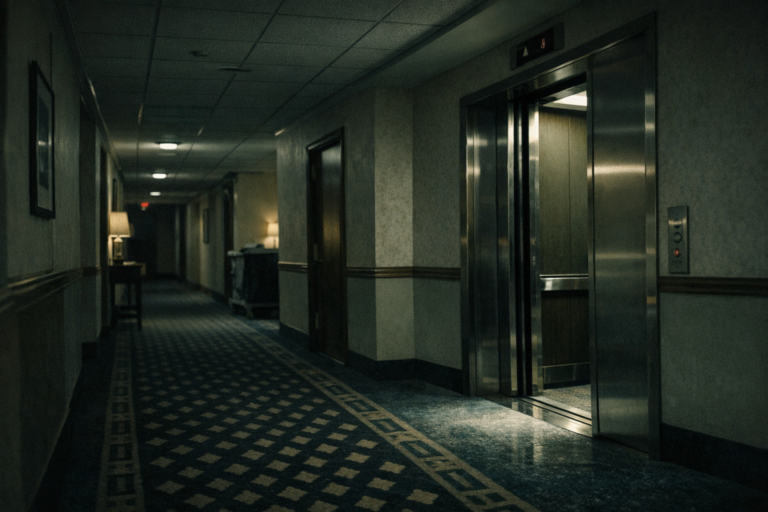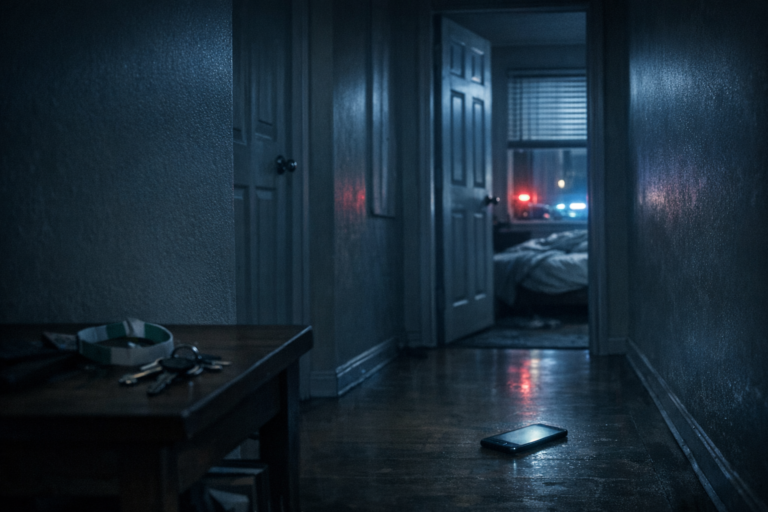

The last night of the trip was supposed to feel weightless. Aruba was warm, the bars were loud, and the students from Alabama were standing at that strange edge between childhood and whatever came next. By sunrise, some of them would be packing for the airport. Parents back home were expecting tired voices, souvenir stories, maybe sunburns. Instead, when the room checks started and departure time got closer, one bed had not been slept in and one suitcase was still waiting for the girl who never came back.
Natalee Holloway was 18 years old when she disappeared in Aruba during a 2005 graduation trip, and her case became one of the most searched unsolved disappearance stories of the modern era. What keeps the case alive is not only that she vanished after a final night out, but that the timeline, the last sightings, and the shifting stories around those hours never stopped feeling unfinished.
Natalee’s case belongs beside other disappearance timelines that refuse to close, because it asks the same unbearable question: how can somebody be seen in a crowded place, leave with known people, and still disappear so completely?
The Night Everything Broke Apart
Natalee Ann Holloway had come to Aruba with classmates from Mountain Brook High School in Alabama. She had just graduated, college was ahead, and the trip was supposed to be the bright final chapter before life opened into something new. That is part of what still makes the case sting. Nothing about the setup feels ominous at first. It feels ordinary in the way real danger often does.
On the night of May 29 into the early hours of May 30, 2005, Natalee and others from the trip went out to Carlos’n Charlie’s in Oranjestad. It was loud, busy, and exactly the kind of place where a final vacation night can stretch later than anyone planned. Witnesses placed Natalee there enjoying the night like everyone else. For hours, the story still looked normal.
Then it narrowed. By the end of the night, Natalee was reportedly seen leaving with Joran van der Sloot and brothers Deepak and Satish Kalpoe. That moment became the fracture line in the whole case. Everything before it felt crowded and visible. Everything after it dissolved into contradictory stories, vague claims, and a timeline that never fully sealed shut.
The Last Known Movement
One reason the Natalee Holloway disappearance still lingers is that the final accepted movements are both simple and maddening. Investigators were not dealing with someone who vanished on an empty road or deep in the wilderness. They were dealing with a teenager last seen in a tourist zone after a night out, in the company of people who could be identified almost immediately.
Early versions of the story suggested Natalee had been dropped off safely near her hotel. That would have been the cleanest answer. But the problem with that version was obvious: she never simply reappeared inside the Holiday Inn and resumed normal life. Her belongings were still waiting in her room. She missed the flight home. The easiest explanation collapsed almost as soon as it was offered.
Other versions drifted toward the beach. Later still, van der Sloot gave an account tied to a violent encounter near the water. Over the years the details shifted, but the pattern underneath them stayed the same. The last stretch of Natalee’s life remained wrapped around the gap between leaving the nightlife district and never making it back to the safety everyone assumed was only minutes away.
That is why this case belongs alongside Disappearances at the Water’s Edge. Once a timeline turns toward a shoreline, uncertainty multiplies. Water erases, darkness hides, and if the people around the victim are lying, the setting itself begins swallowing the truth.
Morning at the Hotel
The emotional center of many disappearance cases is not the moment the person vanishes. It is the moment normal life tries to resume and fails. In Natalee’s case, that moment came the next morning when the students were getting ready to leave for the airport.
Her passport and personal belongings were still in her room. She had not checked out. She had not come back. Those details matter because they strip away the fantasy that she chose to disappear. This did not look like escape. It looked like interruption.
You can almost feel the panic arrive in stages. First annoyance. Then confusion. Then the tightening realization that the bus time was getting closer and one person was still missing. In travel disappearance cases, that shift from inconvenience to dread can happen in minutes.
For Beth Holloway, Natalee’s mother, the nightmare started almost immediately after that realization spread. She flew to Aruba and entered the kind of world families in these cases know too well: interviews, tips, rumors, dead ends, and the exhausting work of keeping one missing person from being reduced to a headline.
Why the Timeline Never Felt Clean
Some disappearances haunt people because there are too few clues. Natalee Holloway’s case haunts people because there were too many claims and too little certainty. The names were known. The final setting was known. The last group around her was known. And still the truth stayed just out of reach.
Timeline of Events
- May 29 to early May 30, 2005: Natalee spends her final night in Aruba with classmates and is seen at Carlos’n Charlie’s.
- Early May 30: She is reportedly last seen leaving in a car with Joran van der Sloot and brothers Deepak and Satish Kalpoe.
- Later that morning: Natalee fails to appear for her flight home. Her passport and belongings remain in her hotel room.
- June 2005: Van der Sloot and the Kalpoe brothers are arrested, then later released without charges.
- 2007 to 2008: The case is revisited amid renewed arrests and a hidden-camera recording in which van der Sloot discusses Natalee’s death, though officials could not fully corroborate the account.
- 2010: Van der Sloot is accused of trying to extort money from Beth Holloway in exchange for information about Natalee’s remains, offering yet another disputed version.
- 2023: As part of a U.S. plea agreement in the extortion case, van der Sloot provides a statement claiming he killed Natalee after she rejected his advances on a beach in Aruba.
What Doesn’t Add Up
- The safe-return story never fit. Saying Natalee was dropped off near the hotel did not explain why there was no solid evidence of her getting back inside.
- The beach versions emerged late and changed often. Every major shift in the story made the earlier one look less credible.
- Multiple narratives pointed to concealment. Investigators were not only searching for Natalee. They were also trying to peel away layers of distortion.
- No physical recovery gave the case certainty. The lack of recovered remains left a permanent opening for doubt, even as suspicion hardened around the final known circle.
This is also why Natalee’s story fits naturally beside Rebecca Coriam’s disappearance. Both cases begin in places that should have felt safe enough to resist mystery. Both instead became examples of how travel can turn familiar routines into unusable maps.
The Weight of the Changing Story
It is impossible to tell this case without confronting the role of Joran van der Sloot. He was linked to Natalee’s last known hours from the start, and his account changed again and again. That matters because shifting statements do not feel like small memory errors when they surround the final hours of a missing person. Each change alters the emotional gravity of the case.
One version suggested a routine drop-off. Another drifted toward the beach. Later statements pushed toward violence. By the time van der Sloot gave his 2023 statement as part of the U.S. extortion case, the story had moved from confusion into something much darker. In that account, he claimed he killed Natalee on a beach after she rejected his sexual advances and disposed of her body in the ocean.
For Beth Holloway, that statement represented the answer she had searched for over 18 years. But it did not erase the cruelty of the years before it. A late confession cannot give a family back the time consumed by false leads, shifting lies, and the mental torture of never knowing where to place grief.
The Most Likely Explanation
Based on the known timeline, the repeated contradictions, and the later statement from van der Sloot, the most likely explanation is that Natalee Holloway met with violence after leaving Carlos’n Charlie’s and never returned to her hotel. The broad direction of the case has long pointed that way. The danger was not waiting somewhere later. It was already inside the final movement of the night.
That conclusion also explains why the case still feels emotionally unresolved. The timeline can be rebuilt in broad strokes, but too much of the truth arrived late, and too much certainty was lost in the years when lies were allowed to stand in place of fact.
Why This Case Still Gets Attention
Natalee Holloway’s disappearance never faded because it touched several fears at once. It was a youth-travel case, a last-seen case, and a story built around known people rather than faceless unknowns. It also unfolded in a place that looked, from the outside, like paradise. That contrast made the horror sharper.
Readers still return because the setup is so painfully understandable. You send your child on a celebratory trip. They are surrounded by friends. They are in a bright public place. Then one decision at the edge of the night changes everything. That same uneasy pull is why stories like Amy Bradley’s disappearance and the Madeleine McCann case remain so magnetic. Travel is supposed to widen life. In these stories, it becomes the frame around a permanent absence.
FAQ
What happened to Natalee Holloway?
Natalee Holloway disappeared in Aruba in May 2005 after a night out at Carlos’n Charlie’s. She was last widely reported leaving with Joran van der Sloot and the Kalpoe brothers, and years later van der Sloot gave a statement claiming he killed her on a beach after she rejected his advances.
Is the Natalee Holloway case still unsolved?
For many readers, yes in an emotional sense. Her body was never recovered, and the case was shaped by years of changing stories. Even with van der Sloot’s later statement, it still feels like one of the most unresolved disappearances of its era.
Why does this case still get so much attention?
It combines youth, travel, a known last-seen circle, conflicting accounts, and a family that never stopped pushing for answers. The night began so normally that the outcome still feels impossible to accept.
Why was Joran van der Sloot always central to the case?
Because he was tied to Natalee’s final known hours and repeatedly changed his account of what happened. Those shifting stories kept him at the center of every serious reconstruction of the timeline.
Continue exploring:
- The cruise ship disappearance where the last ordinary night never stopped haunting the case
- The crew-footage mystery that turned one morning aboard ship into a permanent question
- The family holiday disappearance that still feels impossible to accept
- Cases where the camera caught the final moment but never solved the mystery
- A deeper archive of cases where the final timeline still was not enough
More Disappearances stories: