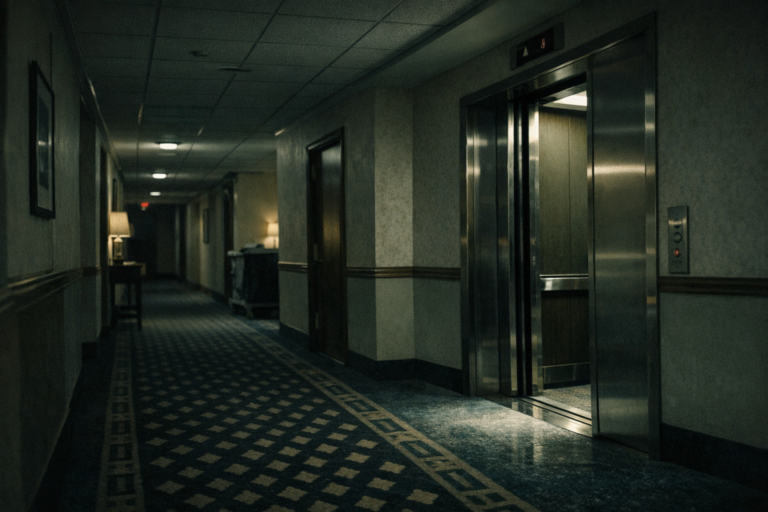
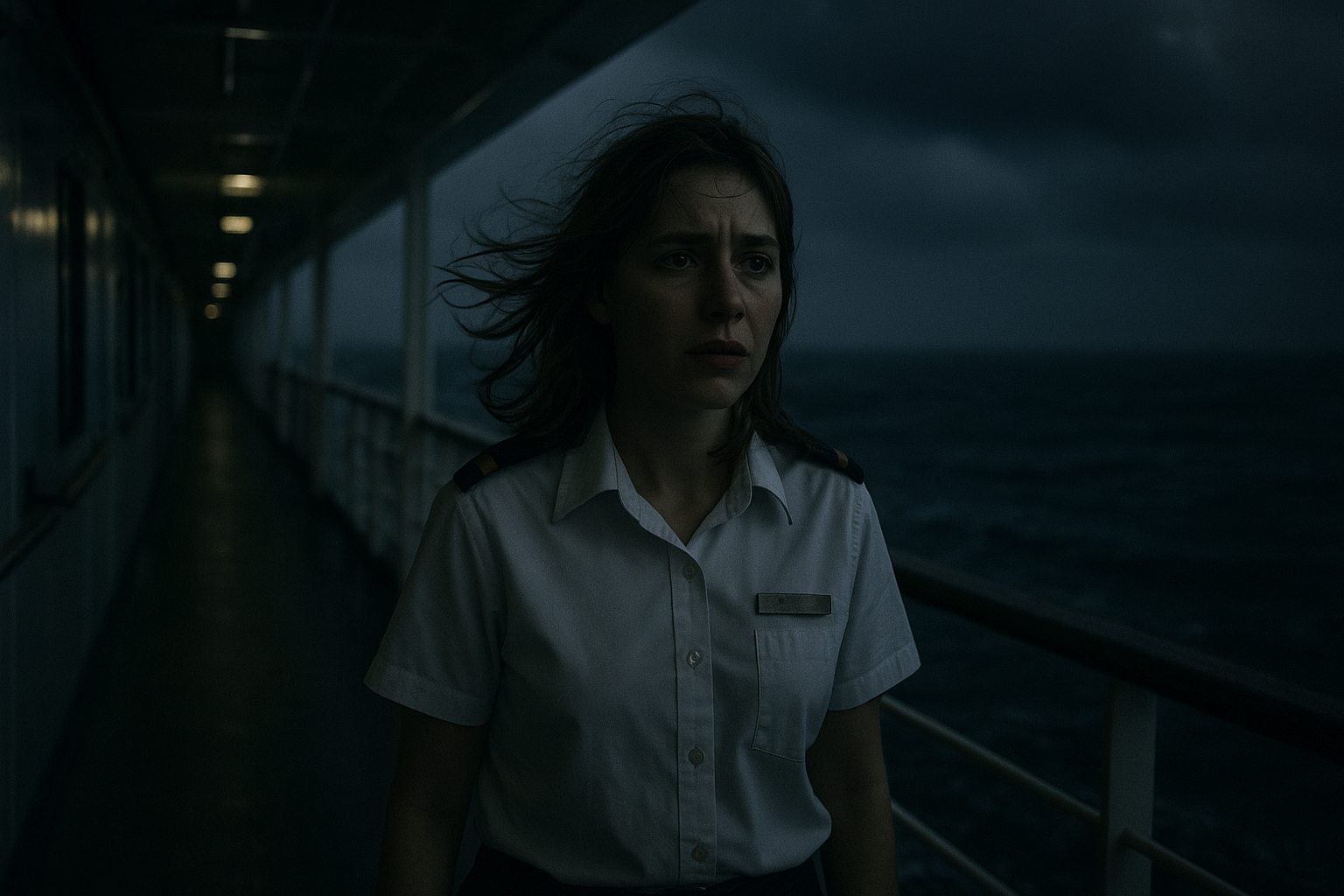
Just before dawn, while most passengers on the Disney Wonder were asleep behind closed cabin doors, Rebecca Coriam was still awake somewhere inside the ship’s hidden crew world. The hallways back there were narrow, fluorescent, and humming with machinery. Outside, beyond the steel walls, the sea was black and moving. Inside, a 24-year-old crew member from Chester, England, stood near a crew phone looking upset enough that someone noticed. A little later, she was gone.
The Rebecca Coriam disappearance remains one of the most haunting cruise ship mysteries in recent memory because it happened in a place that should have been easier to contain than almost anywhere on land. The ship had schedules, cameras, restricted crew areas, radios, logs, and a fixed population of passengers and staff. And still, Rebecca vanished without a clear answer.
Cases like this stay with readers because they sit in that same uneasy space as other disappearances caught on surveillance footage where the last recorded moment only makes the mystery feel worse. In Rebecca’s case, the final visible clue was not a dramatic struggle or a clean timeline. It was a fragment: a distressed-looking crew member, a phone, and then silence.
The morning the ordinary routine broke apart
Rebecca Coriam had built the kind of life many young people imagine when they picture working at sea. She loved sports, had an outgoing personality, and took a job with Disney Cruise Line that let her travel while working with children in the youth activities program. From the outside, it sounded bright, social, and full of movement. But crew life on a major ship is not the same thing as being a guest on one. It is structured, exhausting, and strangely enclosed. Long shifts blur together. Privacy gets thin. Even when the ocean outside looks endless, the daily life inside can feel tightly sealed.
In the early hours of March 22, 2011, while the ship was sailing off the coast of Mexico during a Disney cruise, Rebecca was seen in a crew area using an internal phone. Reports about the moment vary in detail, but the core facts have remained consistent for years: she appeared visibly upset, and a crew member later recalled hearing her say something like “Yeah, fine,” in a tone that sounded anything but fine. It was the kind of exchange that becomes unbearable in hindsight because it might have meant everything or almost nothing at all.
Not long after that, Rebecca failed to report for work. That was the first real rupture in the routine. On a ship, when someone misses a required duty, concern builds quickly. Crew members checked the places that made sense first: her cabin, work areas, common staff spaces, the ordinary corners where a tired or distracted employee might have drifted for a few minutes alone. But Rebecca was not in any of them.
The CCTV moment everyone keeps returning to
One reason this case has never loosened its grip is that there is a visual anchor to it, even if that anchor explains almost nothing. People know Rebecca was seen on CCTV in that crew corridor. They know she seemed emotional. They know the image exists. In a mystery, that kind of evidence feels like it should narrow the world. It should freeze the truth long enough for investigators to get hold of it.
Instead, the opposite happened.
The footage gave the case one more detail to obsess over but not enough to solve it. Who was she speaking to? Was the conversation personal, professional, romantic, or tied to some pressure no one else understood? Did whatever upset her that morning have anything to do with her disappearance, or has that phone call grown larger simply because it was one of the last known moments before she vanished?
That is the cruelty of incomplete evidence. It does not just leave questions behind. It puts unbearable pressure on ordinary details. A hand across the face. A flat phrase. A short pause in a corridor. Years later, people are still trying to pull a full explanation out of a few seconds that refuse to expand.
Rebecca’s case also belongs naturally beside other travel and water-edge disappearances, including Amy Bradley’s disappearance from a cruise ship and cases gathered in the archive of disappearances at the water’s edge. Those stories disturb people for the same reason Rebecca’s does: once the environment turns into open water, uncertainty expands fast and evidence starts slipping away.
When the ship becomes the mystery
On land, a disappearance can spread in every direction. On a ship, the possibilities feel narrower. That should make a case easier. But it also makes failure feel more disturbing.
If Rebecca went overboard accidentally, people want to know how that happened without a clear witness or a definitive public account of the exact moment. If she intentionally entered the water, people want to know what drove her there and why the warning signs did not lead to intervention in time. And if someone else knows more than they ever said, then the silence around the ship becomes even harder to live with.
Over the years, reports have circulated about possible signs on an outside deck area, including mention of water and a flip-flop. Those details have never settled the case because they exist in the frustrating half-light that often surrounds older disappearances: repeated, discussed, partly sourced, but never enough on their own to lock the narrative in place. They hint at a physical event without fully proving its shape.
That left Rebecca’s family with the worst possible version of uncertainty. They were not dealing with total absence of clues. They were dealing with fragments that seemed important but never formed a complete picture. Her parents pushed publicly for answers and criticized how the disappearance was handled, especially the sense that time may have been lost. At sea, delay matters in a brutal way. Minutes stretch into miles, and the ocean does not preserve a scene. It erases it.
Timeline of events
- Before dawn on March 22, 2011: Rebecca Coriam is aboard the Disney Wonder while it is sailing off the coast of Mexico.
- Early morning: She is seen on CCTV in a crew corridor using an internal phone and appears upset.
- Shortly afterward: She is expected to report for work with the youth activities team but does not appear.
- Concern escalates: Crew members begin looking for her in the places where she should have been or reasonably might have gone.
- No confirmed recovery: Rebecca is not found aboard the ship, and the possibility that she went overboard becomes central to the case.
- Afterward: The investigation and the ship’s handling of events come under lasting scrutiny from her family and from readers who never felt the available explanation was complete.
What doesn’t add up
- A ship is a controlled environment. Rebecca disappeared from a setting built around surveillance, staffing, and structure, which makes the lack of a definitive explanation especially hard to accept.
- The CCTV clue is emotionally powerful but incomplete. The footage confirms distress, not its cause.
- The timeline never feels fully closed. There is no publicly satisfying sequence that takes Rebecca from the phone call to a clear ending.
- The sea complicates everything. Once open water is involved, even a short delay can destroy the chance to recover evidence or reconstruct events cleanly.
- Competing explanations all leave gaps. Accident, suicide, and foul play have all been discussed over the years, but none resolves every loose edge of the story.
Why the case still feels wrong
Some disappearances haunt people because they are vast. Others haunt people because they are small. Rebecca’s case feels small in the most frightening way: a corridor, a phone, a shift change, a missing person on a vessel that should have narrowed the answer instead of swallowing it.
That is why readers keep returning to it. The modern world teaches people to trust systems. Cameras are supposed to preserve truth. Logs are supposed to preserve sequence. Restricted access is supposed to reduce uncertainty. Rebecca Coriam’s disappearance breaks that confidence. It reminds people that a monitored environment is not the same thing as a transparent one.
It also sits inside a larger fear tied specifically to cruise ships. These vessels are sold as bright, self-contained worlds: organized, secure, almost frictionless. But behind the public-facing music and polished decks is a more complicated reality of crew-only spaces, layered authority, fatigue, jurisdictional complexity, and the simple fact that the ocean is the largest evidence-destroying backdrop imaginable. Once a story crosses that boundary, the difference between what happened and what can be proved may never close.
Rebecca’s family never accepted the idea that the case should simply fade into the category of tragic maritime mystery and stay there. They kept asking the question that has always made this disappearance so difficult to ignore: how does a young woman vanish from a ship full of people and leave behind so little that can be said with confidence?
That question lands harder now because the case feels like an argument with modern certainty itself. If this can happen on a major cruise ship, in the age of cameras and records, then what exactly do those systems protect us from? Sometimes they document the edge of a mystery. They do not solve it.
And in Rebecca Coriam’s story, that is exactly what happened. The image exists. The phone call exists. The missed shift exists. The worry exists. The sea exists. Everything after that remains suspended between theories, pain, and the awful possibility that the truth passed through a small hidden corridor on a moving ship and was never fully caught.
Why this disappearance still gets attention
Rebecca’s story still pulls people in because it combines several of the strongest forces in modern unsolved cases: surveillance footage, an enclosed environment, a travel setting that should have produced witnesses, and a final sequence that appears close enough to reconstruct but never quite becomes clear. It also leads naturally into other cases where final images and last-known routines became the whole burden of the mystery, including Jennifer Kesse’s disappearance and broader archive pages like The Unsolved Disappearances Archive.
In the end, the reason the case lingers is not just that Rebecca disappeared. It is that she disappeared from a place that should have forced a cleaner answer into the open. Instead, the setting became part of the mystery itself.
FAQ
What happened to Rebecca Coriam?
Rebecca Coriam, a 24-year-old Disney cruise crew member from England, disappeared from the Disney Wonder in March 2011 while the ship was sailing off the coast of Mexico. She was last known to have been seen on CCTV in a crew corridor appearing distressed, but no final explanation has ever settled the case.
Was Rebecca Coriam caught on camera?
Yes. One of the most discussed details in the case is CCTV footage showing Rebecca in a crew area using an internal phone shortly before she was reported missing. The footage is important because it confirms one of her final known moments, but it does not explain what happened next.
Did Rebecca Coriam fall overboard?
That has long been one of the central possibilities discussed in the case, but the public record has never produced a definitive explanation that closes every question. Accident, suicide, and foul play have all been debated, which is exactly why the disappearance still feels unresolved.
Why does the Rebecca Coriam case still get attention?
Because she vanished from a highly controlled setting that should have produced clearer answers. A cruise ship has cameras, schedules, and a fixed environment, so the lack of a fully satisfying timeline makes the case feel unusually disturbing.
Continue exploring:
- The cruise ship disappearance that left a family chasing sightings for years
- The water-edge cases where the sea became part of the silence
- The final footage cases where being seen changed nothing
- The disappearance archive built around last-seen timelines and missing answers
More Disappearances stories: