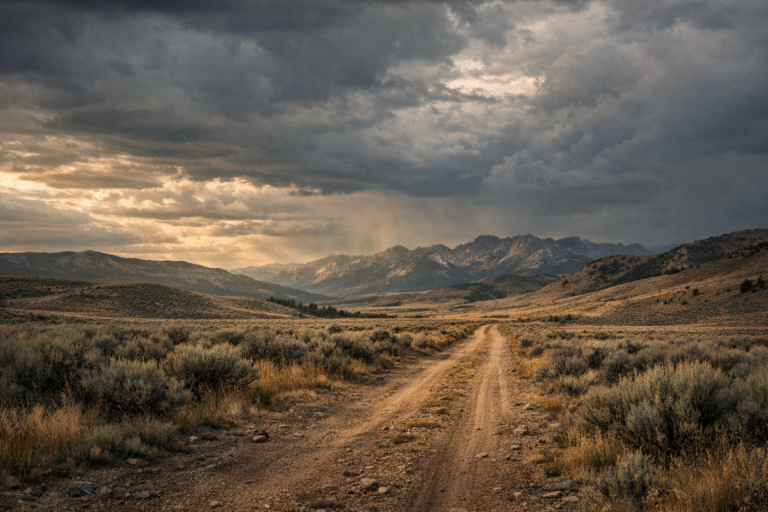
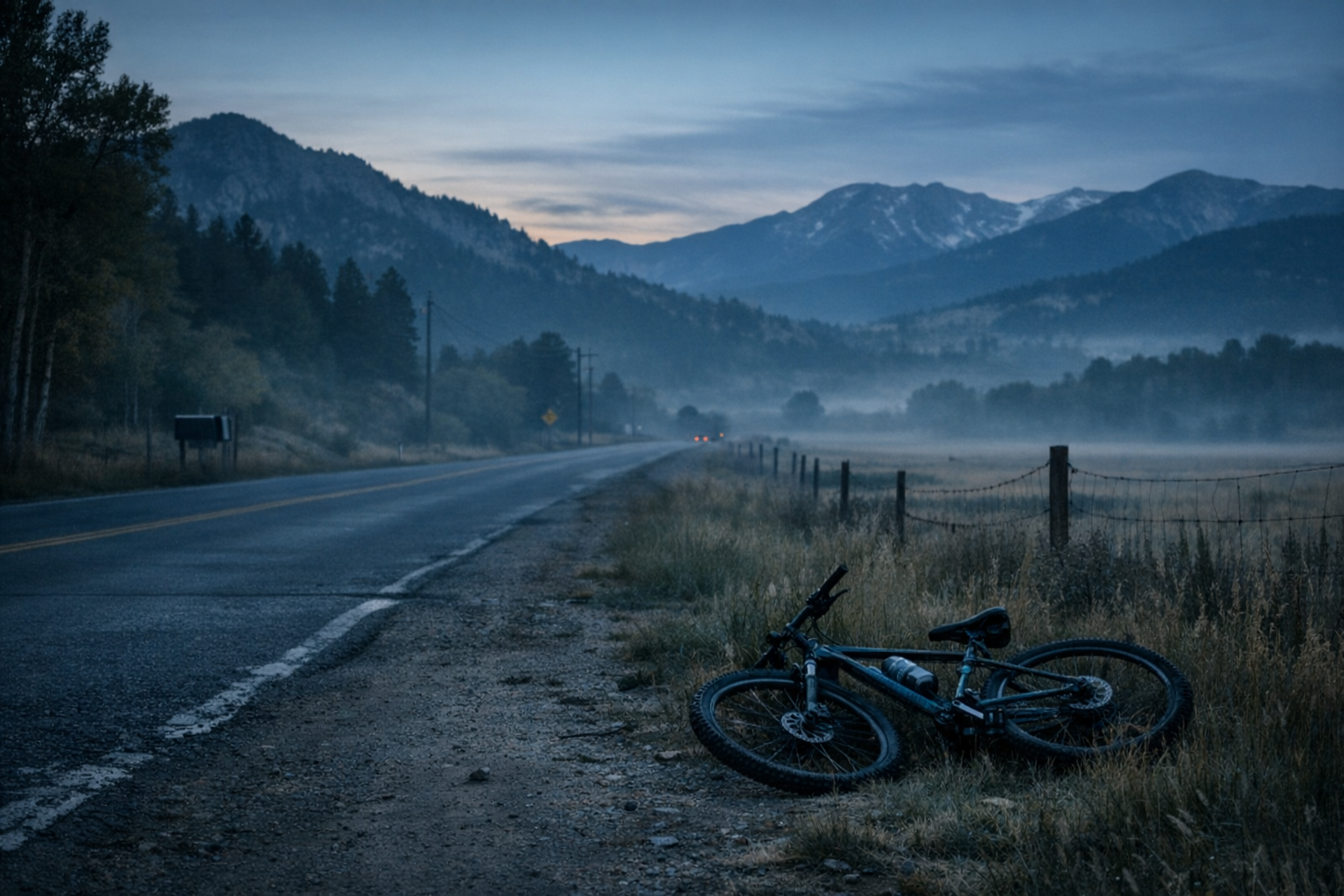
On Mother’s Day morning in 2020, the road outside Suzanne Morphew’s Colorado home looked almost too calm to matter. The sky was bright. The hills were still. And somewhere in that quiet stretch of time, a 49-year-old mother of two seemed to slip out of her own life so completely that what followed did not feel like a simple missing-person report. It felt like a scene with the middle torn out.
By the time deputies began searching, there was already a story forming around her: a bike ride, a wife gone missing, a husband out of town, a rural landscape big enough to hide anything. But the longer people looked at the Suzanne Morphew disappearance, the less it behaved like a clean outdoor mystery. The trail kept circling back to something stranger and more disturbing — the missing hours between what was said, what was seen, and what the evidence seemed to suggest.
What happened to Suzanne Morphew? The unsolved disappearance and why the case still matters
The Suzanne Morphew unsolved disappearance became one of the most talked-about missing person cases in America because it combined a vanishing, a fractured marriage, disputed evidence, and years of public argument over what likely happened. Even now, the case matters because it sits in that uncomfortable place where the official story kept changing, the theories kept multiplying, and the missing hours never stopped pulling the whole case apart.
That is part of why stories like these unresolved disappearances where the evidence points in different directions keep drawing readers back. Suzanne Morphew’s case does the same thing: it looks simple from a distance, then gets more unsettling the closer you stand to it.
Suzanne lived near Salida, Colorado, with her husband, Barry Morphew. To people on the outside, the family looked settled. There was the house, the mountain setting, the life that seemed built far enough away from noise to feel safe. But behind that image, investigators would later focus on a marriage that appeared to be under serious strain. That mattered because once Suzanne vanished, every minute before and after that disappearance began to feel less like background and more like motive, opportunity, and pressure compressed into a single weekend.
The public first heard the case through the bike-ride version of events. Suzanne, people were told, had gone out on her bicycle on Mother’s Day and never returned. Search crews looked through rough country. Flyers went up. Volunteers came in. At first, it sounded like one of those cases where a person disappears into terrain so wide and unforgiving that the landscape itself becomes the main suspect.
But almost immediately, there were cracks in that picture.
Her bicycle was found. Later, her helmet was found too. Neither discovery closed the story. If anything, both made it worse. In many disappearance cases, the key question is where the missing person went. Here, another question pressed just as hard: was the bike scene really the beginning of the mystery, or was it something left behind to make the mystery look different than it was?
That is where the Suzanne Morphew case took on the shape that still defines it. Not a clean wilderness disappearance. Not even a single obvious crime scene. Instead, it became a fight over sequence — who was where, when they were there, what digital records showed, what physical evidence suggested, and why the timeline seemed to widen into fog exactly where it should have sharpened.
Timeline of Events
- Saturday, May 9, 2020: Suzanne spent part of the day at home in Chaffee County, Colorado. Investigators later focused heavily on the final known communications and movements inside the home and around the property.
- Mother’s Day weekend: Barry Morphew said he left for a work trip in Broomfield. That trip became a major point of scrutiny because of the timing and the gap between his account and the questions investigators later raised.
- Sunday, May 10, 2020: Suzanne was reported missing after concern grew that she had gone out on a bike ride and not come back.
- Shortly after: Her bicycle was found in the area. Her helmet was discovered separately later on.
- Following months: Search efforts continued while attention shifted from a possible accident or stranger encounter to Suzanne’s home life, marriage, digital records, and unexplained windows of time.
- Years after the disappearance: The case stayed in court, in headlines, and in public argument, with each development pushing the same basic question back into view: what happened during the hours Suzanne could no longer speak for herself?
That last question is the reason this case never settled into one neat category. The image that remained in the public mind was the bike. But the emotional center of the case was really absence inside a marriage already under pressure. The more that came out, the more the disappearance seemed to revolve around contrast: the calm look of the home versus the private damage beneath it, the outdoor search versus the inward pull of suspicion, the simple explanation first offered versus the layers that followed.
And that is why the “missing hours” matter so much. In some cases, an empty stretch of time is frustrating. In Suzanne Morphew’s, it became the whole battlefield.
If Suzanne did go for a ride, what exactly happened next? If she did not, why did the case begin that way? If someone staged part of the scene, when was that done, and how much of the original timeline had already been bent before searchers even knew what they were looking at?
Those questions kept colliding with the picture of Suzanne herself. She was not described as someone drifting casually out of her life. She was a mother with close family ties and ongoing plans. That does not rule anything out by itself, but in a disappearance case it matters. Investigators often ask whether a person vanished from life or was cut out of it. Suzanne’s story kept sounding more and more like the second possibility.
Public attention only intensified when the marriage came under brighter light. Reports and court filings over time pointed to deep problems in the relationship. That did not just add drama. It changed the logic of the case. A mysterious outdoor disappearance can leave investigators searching a map. A strained marriage turns the search inward, toward phones, messages, movement records, deleted gaps, contradictory explanations, and behavior after the fact.
What Doesn’t Add Up
- The bike ride as the defining story: It gave the case a clean public frame early on, but many observers felt the evidence around it never settled naturally into a straightforward accident or abduction scenario.
- The separate discoveries of the bicycle and helmet: Instead of clarifying the route of events, they raised the possibility that the scene had been arranged or at least did not reflect the full truth of what happened.
- The pressure inside the marriage: Once that became more visible, the disappearance stopped looking like a random vanishing and started looking more like a case shaped by hidden conflict.
- Digital and movement questions: The case kept returning to timing, records, and unexplained windows — the exact kind of details that become crucial when a story depends on where someone was and what they were doing minute by minute.
- The divide between proof and persuasion: This is one reason the case became a theory war. Many people felt they knew what happened long before the legal process could close the distance between suspicion and proof.
That divide is a big reason the Suzanne Morphew disappearance stayed so emotionally charged. Some true crime cases are driven by mystery. Others are driven by outrage. This one was driven by both. People looked at the same set of broad facts and landed in very different places. Some saw an obvious domestic crime hidden behind a bike story. Others focused on legal weaknesses, contested evidence, and the danger of assuming certainty too early.
But even that argument says something important. It says the center of this case is not just whether Suzanne disappeared. It is whether the truth about her final hours was buried beneath a story that sounded plausible enough to buy time.
That idea explains why the case keeps resurfacing. Each court development, each renewed headline, each documentary retelling pulls readers back to the same hard point: Suzanne is still the missing person at the center of all of it. The legal fights matter. The public theories matter. But they all exist because a woman vanished and the explanation has never fully held still.
Cases like this often create a strange distortion over time. The person who disappeared can slowly be replaced in public memory by the suspect, the trial, the evidence chart, the argument online. Suzanne Morphew’s story resists that a little. Her absence is still the most unsettling part. The case is loud, but at its core is a silence that never got answered.
And that silence became even heavier because of what the case seemed to reveal about appearances. From the outside, the Morphews looked like a family in a beautiful place. The landscape almost worked like camouflage. Mountains, roads, and open country can make people think danger must come from outside. The the widening distance between appearance, evidence, and explanation. The more carefully the story was examined, the less those three things lined up.
Why This Case Still Gets Attention
Suzanne Morphew’s case still draws attention for a few very specific reasons:
- It began with a vivid image: a Mother’s Day bike ride in rural Colorado.
- It shifted into a suspect-centered disappearance: readers are pulled toward cases where the inner circle keeps coming back into focus.
- It became a timeline case: the missing hours feel like the place where the real story lives.
- It never stopped evolving publicly: legal action, media coverage, and arguments over evidence kept the case active rather than frozen.
- It feels unresolved in more than one way: not only because Suzanne vanished, but because the public has never felt the full sequence lock into place with clean finality.
In other words, this is not just a case people remember. It is a case people keep trying to reconstruct.
That reconstruction is where the article really lands. A lot of disappearance stories ask readers to choose between mystery and explanation. Suzanne Morphew’s story does not let you do that. The mystery is the explanation problem. Every route through the case leads back to a gap: a period of time that should be clear but is not, a domestic story that should look one way but seems to look another, a public narrative that should have settled but keeps reopening.
There is also something uniquely haunting about the Mother’s Day frame. It gives the case an ordinary, almost gentle beginning. A spring morning. A family weekend. A ride outside. That is exactly why the story lingers. It begins in a place that feels familiar enough to trust. Then, little by little, that trust collapses.
And once it collapses, everything around it changes. The bicycle is no longer just a bicycle. The trip is no longer just a trip. The house is no longer just a house in the mountains. Every object becomes part of a question. Every hour becomes something people try to reopen.
What happened to Suzanne Morphew? That is still the question. But the reason the case holds on so tightly is that it also asks a second one: at what point did the story people were first given stop matching the reality underneath it?
Until that second question is answered in a way that feels complete, the first one will keep echoing.