By the time people started saying the disappearances felt connected, years had already passed.
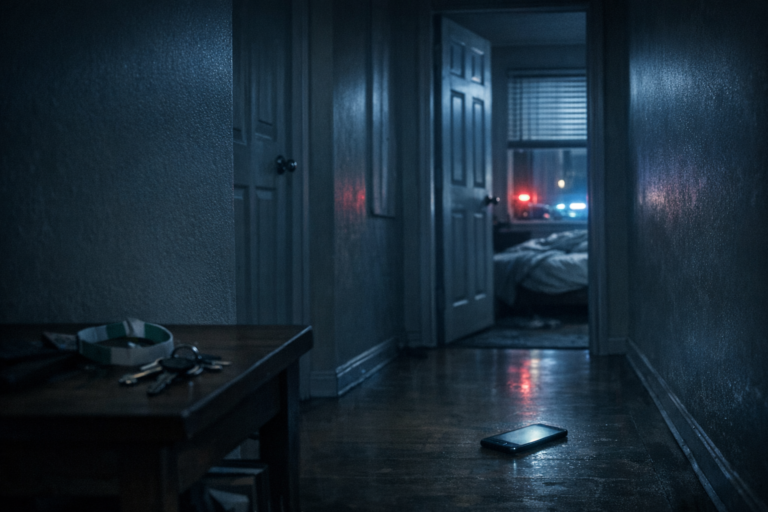
Men were vanishing from Toronto’s Gay Village and nearby neighborhoods, and each case seemed to slide into the same terrible silence. A friend would notice somebody had stopped answering calls. A family member would wait for a return home that never came. A car might turn up. A room might stay exactly as it had been left. But the men themselves were simply gone, as if the city had opened for a second and closed again.
And somewhere inside that gap, a pattern was forming. The most chilling part was not just that Bruce McArthur would later be identified as the killer. It was that the pattern had been close enough to touch. Names overlapped. Places overlapped. Warnings flickered. Yet the story of the missing men kept breaking into separate pieces, and those broken pieces bought the killer time.
Who was Bruce McArthur, and why does this missing person case still matter?
The Bruce McArthur case is one of Canada’s most disturbing missing person case stories because it began with a series of disappearances that many people feared were connected long before the full truth was uncovered. Although McArthur was ultimately convicted of murder, the case still matters because the years of missed connections, ignored patterns, and delayed recognition left Toronto asking how so many men could vanish before the danger was fully understood.
That is one reason the case is still discussed alongside other sprawling investigations like the Long Island Serial Killer at Gilgo Beach, where the central horror is not only the killer, but how long the pattern stayed alive before institutions caught up.
Bruce McArthur did not look like the kind of man a city imagines at the center of a serial murder investigation. He was an older landscaper. He worked for wealthy clients. He moved through Toronto with the ordinary invisibility of somebody who seemed to belong exactly where he was. That surface mattered. It let him exist inside other people’s blind spots.
And blind spots are really the heart of this story.
This is not just the story of a killer. It is the story of a city where men kept disappearing, where communities feared the worst, and where the pattern should have rung louder, sooner.
The disappearances that should have sounded the alarm
In 2010, Skandaraj Navaratnam disappeared after being seen in Toronto’s Gay Village. Later that same year, Abdulbasir Faizi vanished. In 2012, Majeed Kayhan disappeared too. On paper, the men had different lives, different routines, and different circles. But to the people paying attention, the shape of the fear was becoming familiar: a man connected to the Village was there one moment and gone the next, with no satisfying explanation for the break in the timeline.
Police launched Project Houston in 2012 to investigate the disappearances of Navaratnam, Faizi, and Kayhan. Investigators did find overlap. They learned Bruce McArthur was known to all three men in some way. That should have felt significant, because in missing person cases, the same name appearing around multiple vanished people is the kind of detail that can turn background noise into signal.
But the signal did not become a conclusion. Project Houston eventually closed in 2014 without criminal charges. Officially, there was not enough evidence to say a serial killer was stalking the community. Unofficially, fear did not disappear just because the task force did.
The years that followed are what make this story so hard to shake. The danger was not over. It was still moving.
How missed connections kept the pattern from closing
If you step back from the case and look at it the way intended—as a chain of missed connections—the whole story becomes even more unsettling.
Bruce McArthur had already shown violence years earlier, when he assaulted a man in 2001 with a metal pipe. He later received a conditional sentence and, after a record suspension, that history became far less visible than it should have been. On its own, that earlier case did not predict everything to come. But in hindsight it sits like a warning sign standing just behind a row of trees.
Then came 2013, when investigators interviewed McArthur during Project Houston because he was connected to multiple missing men. He was not treated as a suspect at that point. He was treated as a witness, a person on the edge of the story rather than at its center. That distinction matters, because once someone is mentally filed under background figure, institutions can start seeing them through that frame even when new facts should force a rethink.
Another chance may have come in 2016. A man reported that McArthur had tried to strangle him during a sexual encounter in a van. It was the kind of allegation that, when placed beside the disappearances and old violence, seems impossible to read lightly now. But no charges followed.
That is the recurring chill of the Bruce McArthur story: not one giant missed clue, but a series of smaller moments that might have mattered more if they had been laid next to each other at the right time.
One name linked to several missing men. An earlier violent assault. A later choking allegation. Community fear that something was wrong. A city hearing pieces of the same warning, but never loudly enough all at once.
Timeline of Events
- September 2010: Skandaraj Navaratnam disappears after being seen in Toronto’s Gay Village.
- December 2010: Abdulbasir Faizi vanishes; his car is later found abandoned.
- October 2012: Majeed Kayhan disappears.
- November 2012: Toronto police create Project Houston to examine the disappearances.
- November 2013: Bruce McArthur is interviewed by police because he is connected to multiple missing men.
- April 2014: Project Houston is shut down without charges.
- 2015–2016: Soroush Mahmudi, Dean Lisowick, and Kirushna Kumar Kanagaratnam disappear during the gap between task forces.
- June 2016: A man reports that McArthur tried to strangle him in a van; no charge results.
- April 2017: Selim Esen disappears.
- June 2017: Andrew Kinsman disappears after getting into McArthur’s van on surveillance video.
- August 2017: Police launch Project Prism.
- January 18, 2018: McArthur is arrested and initially charged in the deaths of Esen and Kinsman.
- 2018: Additional charges follow as investigators identify more victims.
- January 2019: McArthur pleads guilty to eight counts of first-degree murder.
- February 2019: He is sentenced to life in prison with no chance of parole for 25 years.
The city kept getting the same warning in different forms
By 2017, the unease around Toronto’s Gay Village had become impossible to dismiss as paranoia. When Selim Esen disappeared in April and Andrew Kinsman disappeared in June, the old fear came roaring back. Kinsman, in particular, was well known in the LGBTQ community, and his disappearance was harder to fold into silence. It drew fresh urgency, fresh organizing, and fresh scrutiny.
That was when the story finally began to close around McArthur.
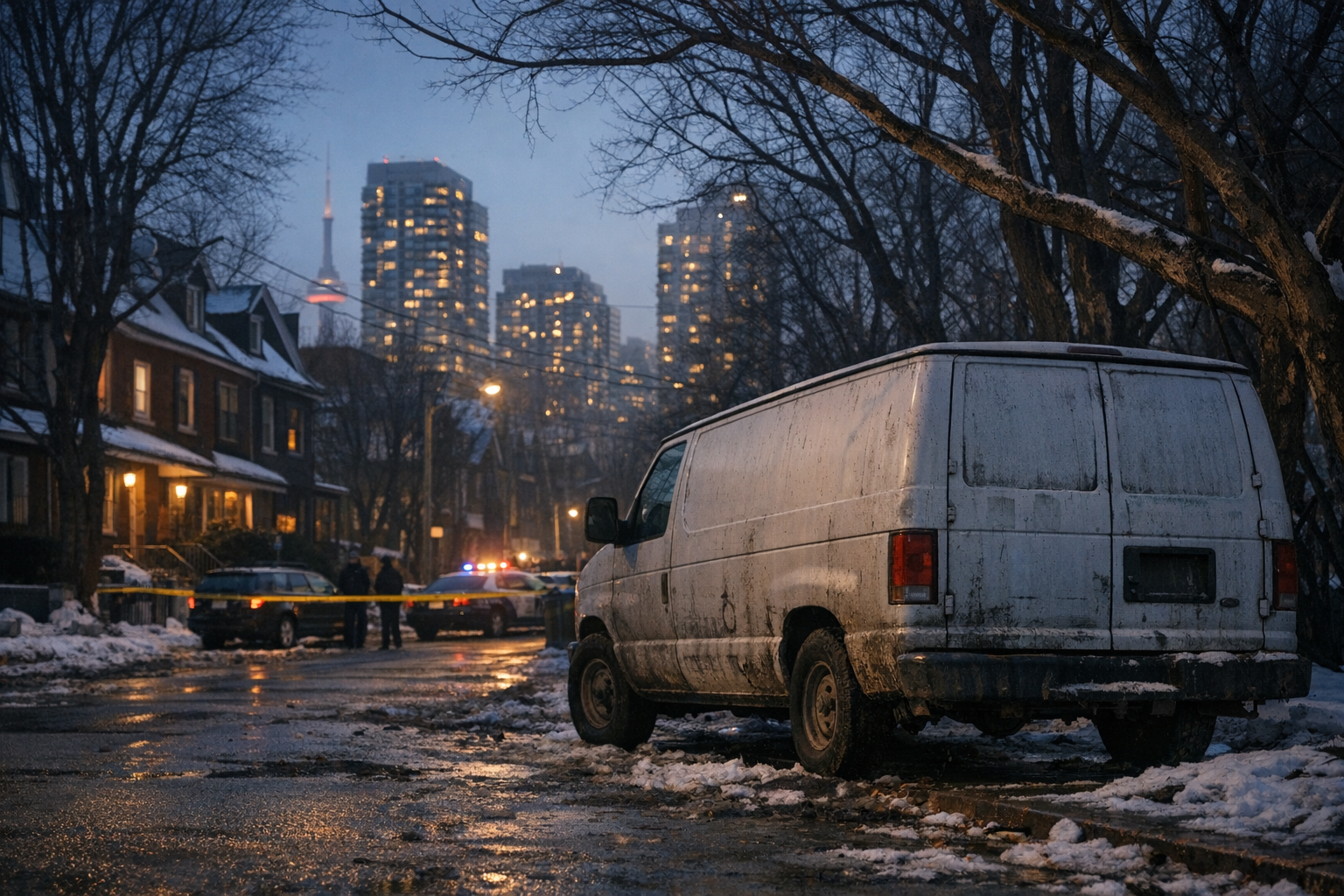
Detectives searching for Kinsman found the name “Bruce” on a calendar. Surveillance evidence later showed Kinsman getting into McArthur’s van. Forensic work on that vehicle found Kinsman’s blood. Investigators searching McArthur’s digital devices uncovered photographs, including images connected to victims after death. The man who had spent years sitting near the edge of earlier investigations moved, at last, into the center of the frame.
When police arrested McArthur on January 18, 2018, the case changed from fear to confirmation. But even that moment came with its own terrible aftershock. Investigators began searching properties linked to his landscaping business and discovered remains concealed in planters and other locations. It was one of those revelations that does more than confirm guilt. It changes the emotional temperature of everything that came before it. Every earlier disappearance starts to feel heavier. Every delayed decision starts to feel more expensive.
What Doesn’t Add Up About the Investigation?
- Multiple links, delayed escalation: McArthur was connected to several missing men during Project Houston, yet the investigation did not progress to charges or sustained focus at that stage.
- Prior violence in the background: His 2001 assault case and later record suspension meant an important warning sign was easier to miss.
- A 2016 strangulation allegation: In hindsight, the reported van attack reads like a flashing red alarm that did not trigger enough institutional response.
- Community fear outpaced official certainty: Many people in Toronto’s LGBTQ community believed a serial predator might be active before police said publicly that such a conclusion was supported.
- Victims outside neat categories: Not every victim was reported missing in the same way, and not every victim fit a single public narrative, which made the pattern easier to fragment.
That fragmentation is what makes this case so important beyond the name Bruce McArthur. Patterns do not always arrive in a clean line. Sometimes they arrive scattered across neighborhoods, agencies, years, and assumptions. If investigators wait for a perfect shape, the pattern can keep breathing while everyone argues over whether it is real.
The missing men became the center of the story
In the end, Bruce McArthur pleaded guilty to murdering eight men: Skandaraj Navaratnam, Abdulbasir Faizi, Majeed Kayhan, Soroush Mahmudi, Dean Lisowick, Selim Esen, Andrew Kinsman, and Kirushna Kumar Kanagaratnam. The names matter. They matter because serial killer coverage has a bad habit of letting the killer swallow the story. But the real scale of this case is measured in the lives that were interrupted, the families that waited, and the communities that kept insisting something was wrong.
Andrew Kinsman’s disappearance especially became a turning point not just because of the evidence trail, but because it was harder for the city to absorb him into silence. He was known. He had roots. People noticed the rupture quickly. That does not make the earlier victims less visible. It makes the contrast more painful. Cases often move faster when the missing person has stronger institutional visibility, more social reach, or a circle that can generate sustained public pressure.
That reality is uncomfortable, but it belongs inside the story. So does the fact that some victims were immigrants, some were vulnerable, some moved through margins that can make official attention slower and public empathy less immediate. Those conditions did not create the crimes. But they may have helped the pattern stay hidden longer than it should have.
Why This Case Still Gets Attention
The Bruce McArthur case still draws readers, investigators, and true-crime audiences back for a few reasons:
- It is a serial killer case built around disappearance first. For years, the public story was not bodies or charges. It was men who were simply gone.
- The investigative delay is part of the mystery. People are still trying to understand how the warning signs failed to line up sooner.
- It exposed larger systemic questions. The case raised sharp criticism about how missing persons reports were handled and how marginalized communities were heard.
- The setting made it intimate. This was not one isolated highway or one abandoned property. It unfolded across ordinary Toronto spaces—streets, bars, homes, vehicles, work sites.
- The pattern feels preventable in hindsight. That is often what keeps a case alive in public memory: not just what happened, but the fear that some of it might have been interrupted earlier.
That last point is the one that lingers longest. Some crimes haunt people because they are monstrous. Others haunt people because the monster moved through windows when the blinds were already half open.
Bruce McArthur’s victims did not disappear into a vacuum. They disappeared into a city that had fragments of the same warning for years. Project Houston. The names. The interviews. The van incident. Community fear. Each piece alone could be explained away. Together, they now read like a long emergency that nobody fully declared until far too late.
And maybe that is the truest reason this case still grips people. It is not only a story about a serial killer in Toronto. It is a story about what happens when a pattern keeps knocking and the system keeps answering with, not yet.