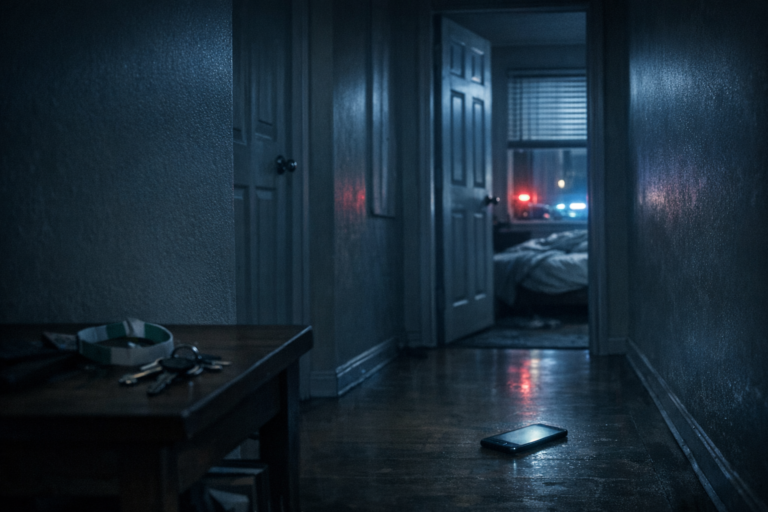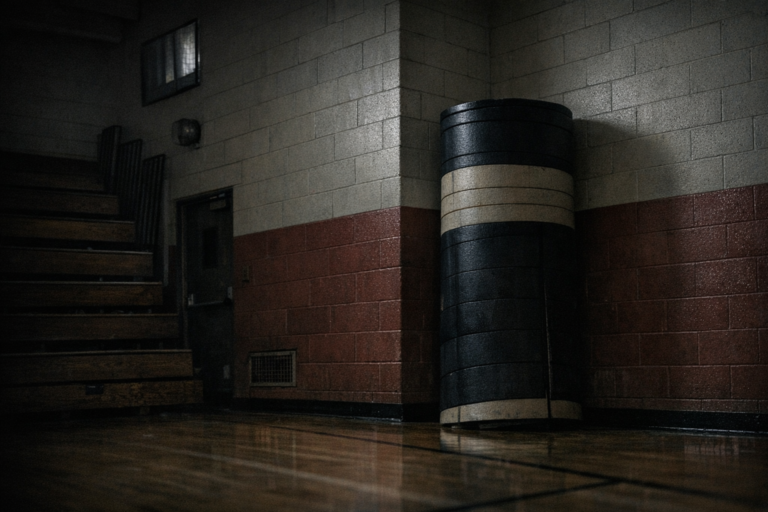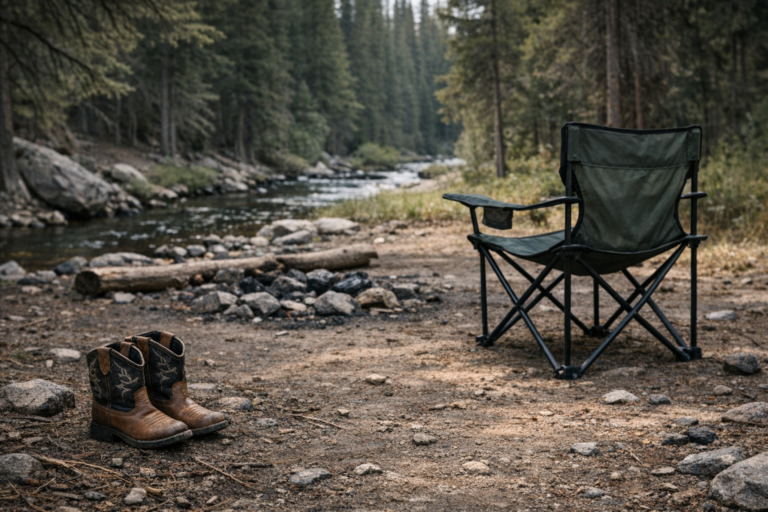
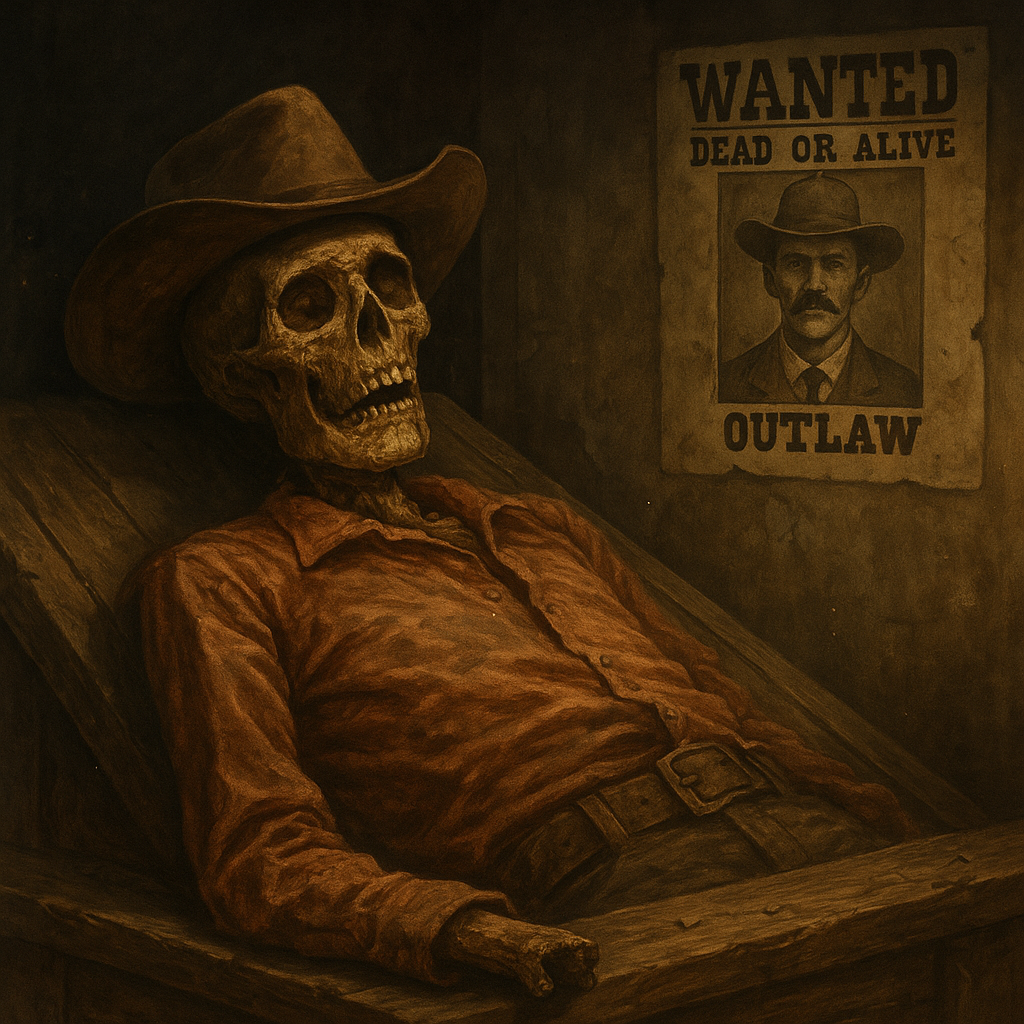
They thought they were dressing a set.
It was 1976 at The Pike in Long Beach, California, the kind of place built for noise and nerves. Music leaked from rides. Neon bounced off metal railings. Visitors moved past cheap thrills and painted horrors without expecting anything in the dark to be real. Inside a funhouse called Laff in the Dark, a dusty hanging figure had become part of the scenery: orange paint, stiff limbs, cracked skin, a face so warped by time it no longer looked fully human.
Then someone grabbed the arm to move it for a television shoot, and the arm broke off.
Inside was bone.
In one instant, a carnival prop became a corpse again, and one of the strangest stories in American history came back to life.
Elmer McCurdy is at the center of one of the most bizarre true stories in American folklore: a failed outlaw shot dead in 1911 whose embalmed body spent decades drifting through funeral parlors, traveling carnivals, crime museums, and amusement parks. The Elmer McCurdy corpse story still gets attention because it feels impossible even when every major turn in it is real.
If this kind of real-history nightmare stays with you, it belongs in the same strange corner of the archive as Strange True Events Nobody Would Believe, where the facts sound made up right until you realize they are not.
The Man Before the Exhibit
That is the first thing worth remembering. Before Elmer McCurdy became a legend, he was just a man making a mess of his own life.
Born in 1880 in Maine, McCurdy grew up under family circumstances that left damage early. He believed for years that his mother was his sister, and when the truth finally came out, it hit hard. The rest of his life never found much balance after that. He drifted. He worked odd jobs. He served in the Army. He drank heavily. He learned enough about explosives to become dangerous, but not enough to become competent.
By the early 1900s, the real Wild West was already dying, but McCurdy still seemed drawn to a version of it that only really worked in stories. He wanted quick money, outlaw status, and a reputation bigger than his life. What he mostly produced instead were failures.
One robbery attempt went wrong because he used too much nitroglycerin to open a safe, ruining much of what he was trying to steal. Another turned infamous for a different reason: he and his associates targeted the wrong train and came away with almost nothing worth bragging about. The version most often repeated is almost humiliating in its smallness — around $46, two jugs of whiskey, and a revolver.
That detail matters because it sets the emotional tone of the whole story. McCurdy was never a legendary bandit in life. He was a minor criminal with bad instincts and worse luck. And yet history was somehow not finished with him.
The Gunfight That Should Have Ended Everything
After the failed robbery, McCurdy went into hiding in Oklahoma, near the Osage Hills. He had no great escape plan. No long game. No rising criminal empire. Just a temporary hiding place, a bottle, and the false confidence of a man who had already misread his own story.
On October 7, 1911, lawmen surrounded the barn where he was staying. A shootout followed. When it was over, Elmer McCurdy was dead.
That should have closed the file on him. Men like McCurdy were not supposed to become immortal. They were supposed to become a brief newspaper item, a local cautionary tale, then nothing.
Instead, the strange part began after his breathing stopped.
Timeline of the Elmer McCurdy Corpse Story
- 1880: Elmer McCurdy is born in Maine.
- Early 1900s: He drifts through jobs, military service, heavy drinking, and increasingly reckless crime.
- 1911: After failed robbery attempts, he is killed in a shootout with law enforcement in Oklahoma.
- 1911–1916: His unclaimed body is embalmed by undertaker Joseph Johnson and displayed to paying visitors.
- 1916: Men claiming to be relatives take the body — reportedly carnival men, not family.
- Following decades: McCurdy’s corpse is exhibited under different names in carnivals, sideshows, museums, and amusement attractions.
- By the 1960s–1970s: His identity has effectively been lost, and he is treated as a prop.
- 1976: At The Pike in Long Beach, a production crew discovers bone inside the hanging figure.
- 1977: Elmer McCurdy is finally buried in Guthrie, Oklahoma, under concrete to prevent another theft.
When an Unclaimed Body Became an Attraction
After the shootout, McCurdy’s body was taken to undertaker Joseph Johnson in Pawhuska, Oklahoma. No family came for him. No one stepped forward to arrange a burial. Days passed, then longer. And somewhere in that stillness, Johnson realized he had something the public might pay to see.
He embalmed the body with an arsenic-based fluid that preserved it unusually well. Then he dressed McCurdy, posed him upright, and put him on display. Visitors reportedly paid a nickel to see the dead outlaw. Some accounts say they dropped coins directly into his mouth.
That is where the story stops feeling merely sad and becomes something colder. McCurdy was no longer being remembered. He was being used.
But even that stage might have remained a local oddity if the body had stayed in one place. It did not. In 1916, two men arrived claiming to be McCurdy’s brothers and said they wanted to take him home for a proper burial. Johnson let them take the corpse.
They were not brothers.
They were, by the story most often told, carnival men. And with that, Elmer McCurdy began the second half of his life — the part no one could have imagined.
What Doesn’t Add Up — and Why the Story Lasted So Long
- He was preserved too well to vanish quickly. The embalming mattered. Without it, there is no decades-long afterlife as an exhibit.
- People kept changing the story around him. He was repeatedly renamed, repackaged, and advertised as whatever the next attraction needed.
- A real body slowly became easier to mistake for a fake one. As the remains hardened, cracked, and were painted over, the truth became less obvious to casual observers.
- Ownership kept shifting. Once the body left the undertaker’s custody, it passed through too many hands for a clean history to survive on its own.
- The public wanted the spectacle more than the explanation. That may be the bleakest detail of all. People were more interested in the show than in asking who, exactly, they were looking at.
Over the years, McCurdy was displayed under names like “The Embalmed Bandit,” “The Outlaw Who Wouldn’t Die,” and “The Thousand-Year-Old Man.” He moved through carnivals, traveling shows, and crime displays. Somewhere along the way, his humanity was stripped down into branding. His skin hardened. Paint was added. Features broke down. He became less like a dead man and more like a bad special effect.
That is how a corpse can disappear without ever being hidden. It stays visible, but the truth about it gets replaced a little at a time.
From Sideshow Relic to Funhouse Prop
By the time McCurdy reached The Pike, the transformation was nearly complete. The outlaw whose body had once drawn paying curiosity in an Oklahoma funeral home was now hanging in a California funhouse as little more than set dressing. Visitors screamed, laughed, pointed, and moved on. Nobody expected authenticity in a place designed around fake fear.
And maybe that is the most unsettling part of the entire story. He was not hidden in some locked crate or buried under paperwork. He was in public. Openly. For years.
The world had simply stopped recognizing him.
Then came the television crew in 1976. During production work connected to The Six Million Dollar Man, someone moved the hanging figure. The arm snapped. Human bone showed through. Suddenly investigators had a body, but not a name.
From there, they had to work backward through layers of false labels, carnival history, rumor, and neglect. The remains contained small clues, including old materials tied to earlier exhibition history. Piece by piece, the trail led back across decades until it reached the beginning: Elmer McCurdy, dead since 1911 and somehow still traveling.
How Elmer McCurdy Was Finally Identified
The confirmation did not come from one dramatic reveal so much as stubborn reconstruction.
- Investigators recognized the remains as genuinely human once the broken arm exposed bone.
- The body’s condition matched long-term embalming, which fit the old undertaker-display history.
- Artifacts associated with the corpse helped trace its exhibition path through earlier sideshow and amusement ownership.
- Historical records connected the chain backward to the unclaimed outlaw displayed in Oklahoma after the 1911 shootout.
That evidence-analysis angle is what makes the story more than a grotesque curiosity. For decades, McCurdy’s identity had been buried under performance, commerce, and decay. Reconstructing it meant restoring the one thing the spectacle had erased: that this was not a Halloween invention or a carnival myth. It was a real man, with a real name, whose body had been repurposed until even that name almost disappeared.
In a strange way, the identification was the first mercy the story had offered him in years.
The Burial He Never Got the First Time
In 1977, Elmer McCurdy was finally buried in Guthrie, Oklahoma, in the Boot Hill section of Summit View Cemetery. Officials reportedly poured concrete over the coffin so no one could steal the body again.
That detail sounds almost darkly funny until you sit with it for a second. Concrete was necessary because history had already proved that even death had not been enough to protect him.
And that is why the story lingers. Not just because it is weird, though it absolutely is. Not just because the image of a corpse mistaken for a prop is unforgettable, though it is. The story lasts because it turns into something broader and more uncomfortable the longer you think about it.
It asks what happens when spectacle outlives dignity. It asks how easily a person can become an object once nobody is left to speak for them. And it reminds you that some of the most disturbing real stories do not happen in one violent instant. They happen slowly, through neglect, indifference, and the human habit of treating the unbelievable as entertainment.
FAQ
Who was Elmer McCurdy?
Elmer McCurdy was a minor American outlaw born in 1880 who became infamous not for his crimes, but for what happened after he died in a 1911 shootout in Oklahoma.
How was Elmer McCurdy’s body discovered?
In 1976, workers moving what they thought was a funhouse prop at The Pike in Long Beach broke off an arm and found real human bone inside, revealing that the figure was an actual embalmed corpse.
Why did Elmer McCurdy’s corpse travel for so long?
Because his unclaimed body was embalmed, displayed for profit, then taken by carnival operators and repeatedly repackaged as a sideshow attraction. Over time, the corpse passed through enough owners that its real identity was largely forgotten.
How was Elmer McCurdy finally identified?
Investigators traced the body backward through amusement-park and carnival history, matched the preservation and exhibition trail to historical records, and linked the remains to the unclaimed outlaw killed in Oklahoma in 1911.
Where is Elmer McCurdy buried now?
He was buried in 1977 at Summit View Cemetery in Guthrie, Oklahoma, and concrete was reportedly placed over the grave to ensure his body could never be stolen again.
🔎 If this story stayed with you, the author suggests these real cases next:
- The man whose hunger turned into one of history’s most impossible medical stories
- The prisoner whose hidden face kept history arguing for centuries
- The ancient artifact that still looks like a message nobody was meant to read
- The medieval blades that seemed to appear centuries too early
Explore more Bizarre & Unbelievable stories here: