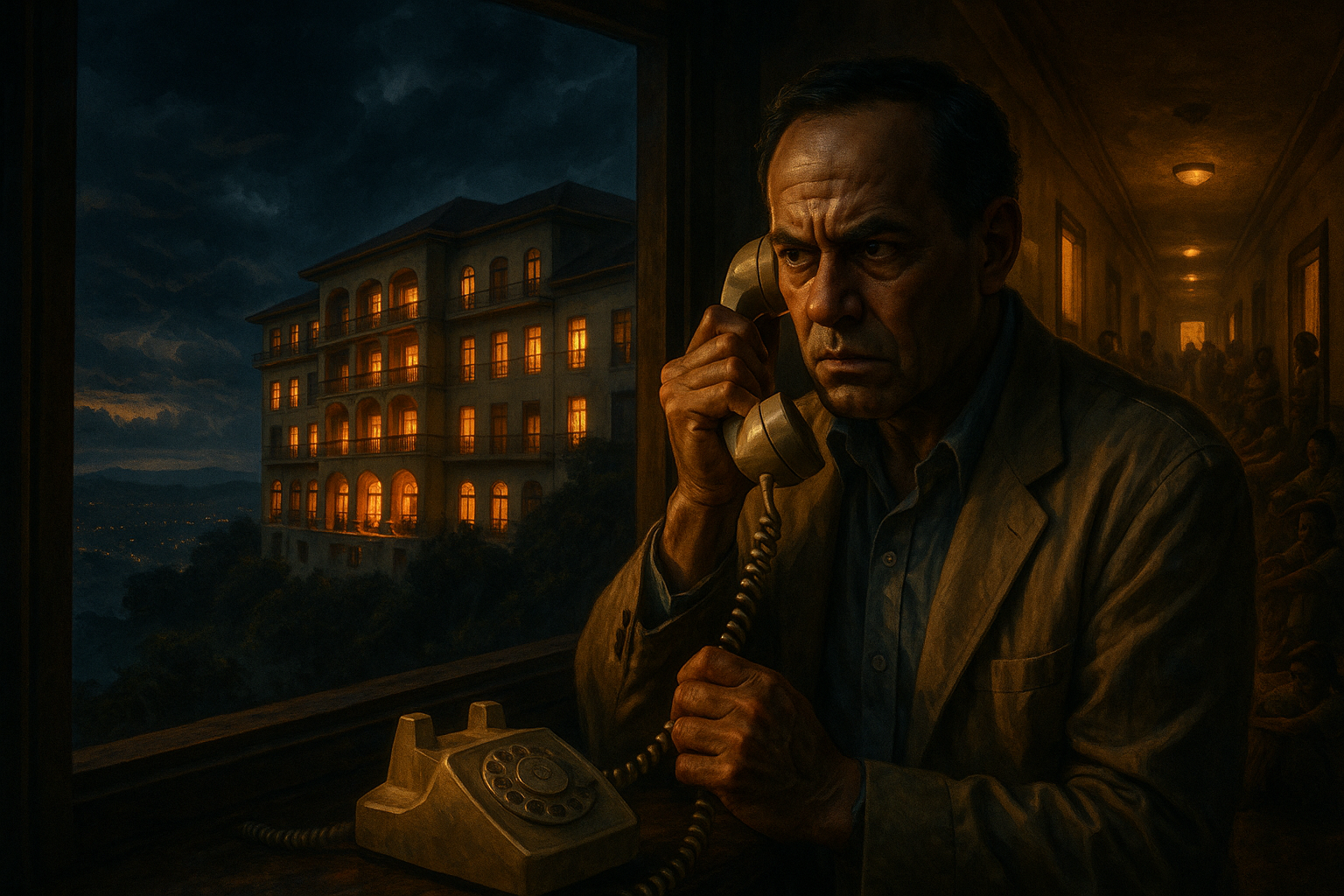
On April 23, 1994, an army lieutenant came to Kigali’s Hotel des Mille Collines and ordered everyone sheltering there to be turned out. According to the account recorded by Human Rights Watch, temporary manager Paul Rusesabagina had half an hour to comply. He and several refugees began calling people abroad. Before the deadline expired, a police colonel arrived and made the lieutenant leave.
That reprieve captures the hotel’s predicament. Getting through its doors did not end the danger. More than a thousand civilians would shelter there during the genocide against the Tutsi, depending on protection that had to hold while organized killing continued outside.
Rusesabagina became internationally famous through Hotel Rwanda, but his account of negotiation is only one part of this history. Refugees, UN peacekeepers and people exerting pressure from abroad also shaped the outcome. The story is strongest when those people remain visible alongside the man portrayed on screen.
The Night Kigali Changed
On April 6, 1994, the plane carrying Rwandan president Juvénal Habyarimana and Burundian president Cyprien Ntaryamira was shot down over Kigali. During the following hundred days, extremist forces carried out genocide against the Tutsi and killed Hutu opponents. The International Criminal Tribunal for Rwanda’s historical account puts the toll at between 800,000 and one million people.
Streets used for errands and work became places where being recognized could get you killed. Roadblocks and organized searches turned movement through the city into a danger of its own. Reaching shelter was urgent; staying there was another problem.
People began taking refuge at the Mille Collines on April 7. The hotel belonged to the Belgian airline Sabena and had connections beyond Rwanda. It offered something a private home could not easily offer: international visibility. Visibility is not the same thing as safety, but in Kigali that spring, visibility could buy time.
How the Siege Took Shape
Rusesabagina’s experience was in hospitality, not military command. In his memoir and interviews, he described using contacts and negotiation to protect people inside. An April 15 public appeal for protection is documented in the Human Rights Watch history. The refugees also made calls and sent messages; the building’s prominence was not the work of one voice alone.
The pressure never stayed gone. A second threat documented by Human Rights Watch came on May 13: an officer warned of an attack that afternoon. A fax reached the French Foreign Ministry. It alerted its UN representative, and the threatened attack did not take place.
That is what gives the story its shape. It was not one dramatic rescue scene. A confrontation postponed could keep people alive without telling them whether the next threat would be stopped. Each reprieve left the central problem unresolved: how to get the refugees out.
Timeline of Events
- April 6, 1994: The presidential plane is shot down over Kigali; systematic massacres follow.
- April 7 onward: People seek shelter at the Mille Collines.
- April 23 and May 13: The investigative record describes threats against the hotel and urgent appeals abroad.
- Late May and June: Survivor accounts record UN-organized evacuations and transfers to RPF-controlled territory.
- July 1994: The Rwandan Patriotic Front’s victory brings the genocide to an end.
- 2004–2006: Hotel Rwanda and Rusesabagina’s memoir bring his account to a much wider audience; survivors dispute aspects of that portrayal.
- 2021–2023: A separate terrorism prosecution leads to imprisonment, fair-trial criticism and eventual sentence commutation. It is not a trial of the hotel’s 1994 history.
Inside the Hotel, Survival Became a Routine
The hotel was a refuge under threat, rather than the tidy heroic setting a film can create. Protection depended partly on people stationed there. Canada’s official UNAMIR history credits Tunisian peacekeepers and military observers led by Major Victor Moigny with resisting attacks and enduring bombardments at the hotel.
That matters because the UN’s wider failure to stop the genocide can obscure the work of individuals on the ground. A severely reduced mission could protect some locations without making the city safe. The people sheltering at the Mille Collines needed that protection while waiting for a route away from the fighting.
The refugees were not simply a crowd waiting for orders. In testimony published by Rwanda’s National Commission for the Fight against Genocide, Tatien Ndolimana Miheto described a refugee crisis committee, messages sent abroad and arrangements to exchange civilians between the opposing sides’ zones. His account emphasizes efforts made by people inside the hotel and by its owners in Brussels.
These arrangements offered a way out, but not an immediate one. The same testimony records departures on May 27, 29 and 31 and during June. Evacuation involved crossing from one side’s territory to the other, rather than stepping out of the hotel into a city where danger had ended.
What Doesn’t Leave You
The physical survival of the people inside the hotel is only one layer of the story. In the CNLG collection, receptionist Wellars Bizumuremyi recalled remaining at work after the killing began. He survived; his wife and children were killed. Shelter could save a person without saving their family.
The hotel did not defeat the genocide. It did not undo what happened across Rwanda. Its history turns on the narrower, essential achievement of keeping a threatened group alive long enough to leave. Remembering that outcome should not erase the refugees’ own accounts of what they endured.
Key Questions That Still Surround the Story
Why is Rusesabagina’s role disputed? Scholar Nicki Hitchcott compares the film and memoir with survivor testimony, including accounts by Edouard Kayihura and Ancilla Mukangira. Some survivors described demands for payment and difficulties obtaining help inside the hotel. Hitchcott also records Rusesabagina’s denial in his autobiography that he charged refugees for rooms. These competing accounts should be attributed rather than collapsed into a verdict on every disputed incident.
Does the dispute mean nobody helped the refugees? No. UN protection and outside intervention are documented. The disagreement concerns credit, conduct and how the experience was represented. It does not make the danger faced by the people inside fictional.
Why distinguish the film from the historical record? A film can follow one central character while compressing the work of many others. Refugees who challenged its portrayal were disputing the representation of an experience they had lived through. Their testimony belongs in this story, even when it complicates its most familiar version.
Evacuation and the End of the Genocide
Refugees left the hotel in late May and June, before the RPF’s victory in July. Leaving did not mean that survivors could return to ordinary life. Nor was there a single decision that can safely be presented as the explanation for everyone’s survival.
The later public life of Rusesabagina added another controversy. Amnesty International records that his 2021 prosecution concerned armed attacks attributed to the FLN in 2018 and 2019, not events at the hotel. On September 20, 2021, a Rwandan court convicted him on terrorism charges and sentenced him to twenty-five years. Amnesty, which monitored the trial, identified serious fair-trial violations.
The American Bar Association’s trial-monitoring program also reported violations affecting defense preparation and the presumption of innocence. Rusesabagina was released on March 24, 2023, and returned to the United States four days later. Rwanda’s Justice Ministry stated that his sentence had been commuted following a clemency request and that the conviction remained in place. Release was not an acquittal; criticism of the trial is also a material part of the record.
Those later proceedings do not settle who did what inside the Mille Collines. At the heart of the hotel’s history remain the refugees, the people who sought help for them, and those who held off threats long enough for evacuation to become possible. A fuller account leaves room for all of them. The doors mattered because of the lives on the other side.
FAQ
What happened to Paul Rusesabagina during the Rwanda genocide?
He became temporary manager of the Mille Collines and later described protecting refugees through negotiation. Some survivors dispute his portrayal. UNAMIR and outside actors also contributed to the hotel’s protection.
How many people were sheltered at the Hotel des Mille Collines?
More than a thousand civilians took refuge there. In his 2006 NPR interview, Rusesabagina gave the precise figure of 1,268. That is his account, rather than an independently reconciled list presented here.
Why is the Hotel Rwanda story still discussed today?
It combines a documented refuge during genocide with contested recollections about responsibility and treatment inside. Rusesabagina’s later prosecution and release are a separate chapter, not a resolution of those historical disputes.
Was the Hotel des Mille Collines actually safe?
It offered protection under repeated threat. Appeals abroad, peacekeepers and eventual evacuations mattered; reaching the hotel did not guarantee that the danger was over.
Sources & References
The following resources were consulted to verify and update this article.
- Human Rights Watch / FIDH — Leave None to Tell the Story: Genocide in Rwanda — An Exceptional Case: The Hotel Mille Collines
Investigative history documents refugees arriving from April 7, Sabena’s international connections, Rusesabagina’s protection appeal and outside intervention (hotel section, printed pp. 960–961). - Canadian Department of National Defence — LANCE (UNAMIR)
Official mission history records UNAMIR protection of civilians at the hotel and other Kigali sites, and efforts to arrange civilian movements. - NPR / WWNO — ‘An Ordinary Man’ Navigates Rwanda’s Genocide
A 2006 interview records Rusesabagina’s own account and his figure of 1,268 survivors; it is testimony, not an independent resolution of disputed credit. - Nicki Hitchcott / Memory Studies — Seeing the Genocide against the Tutsi through someone else’s eyes: Prosthetic memory and Hotel Rwanda
Academic analysis compares the film and memoir with critical survivor testimony, showing why the heroic account is contested. - Rwanda National Commission for the Fight against Genocide (CNLG), archived by MINUBUMWE — What really took place at the Hotel des Mille Collines during the Genocide against the Tutsi in 1994
Government-published survivor testimony; evacuation dates and personal experiences are attributed to the witnesses. - International Criminal Tribunal for Rwanda — The Genocide
Historical overview of the 1994 genocide and its victims. - Amnesty International — September 20, 2021 trial statement
Explains the later charges and records the organization’s fair-trial concerns. - American Bar Association — March 31, 2023 update
Trial-monitoring findings, release and return to the United States. - Rwanda Ministry of Justice — Sentence commutation
Official explanation of the March 2023 clemency decision and its limits.
Related stories
- Reshma Begum: surviving beneath the rubble
- Anna Bågenholm: rescue from beneath the ice
- Survival inside a sunken ship
- Mauro Prosperi’s Sahara ordeal