A six-year-old boy left his home in lower Manhattan for a school bus stop nearby. It was the first time Etan Patz had been allowed to make that short journey alone. He never arrived at school. The distance was small; the search for an answer would stretch across decades.
The Etan Patz disappearance began on May 25, 1979, when the six-year-old vanished on his first solo walk to a Manhattan school bus stop. The case became one of the most famous missing child investigations in American history because it changed how parents thought about safety, how police handled missing children, and how the country responded to a child who never came home.
Even now, the story sits in the same uneasy space as The Springfield Three disappearance: a short window, an ordinary routine, and a mystery that feels impossible because the person should have been seen.
Etan lived in SoHo with his parents, Stan and Julie Patz. On May 25, 1979, the family allowed him a new measure of independence: walking to the bus stop by himself. That ordinary decision became inseparable from the years of searching that followed.
Julie watched him leave that morning. The route ran through the neighborhood around Prince Street. Its familiarity did not give investigators a complete account of what happened between home and school.
It was the beginning of a mystery built out of missing minutes. Etan had left home, but he had not arrived at school. Later statements and recollections did not produce a recovered child or an immediate criminal case.
When Etan did not return home that afternoon, his mother learned that he had not been at school. The search expanded through the neighborhood, and his disappearance became a national story.
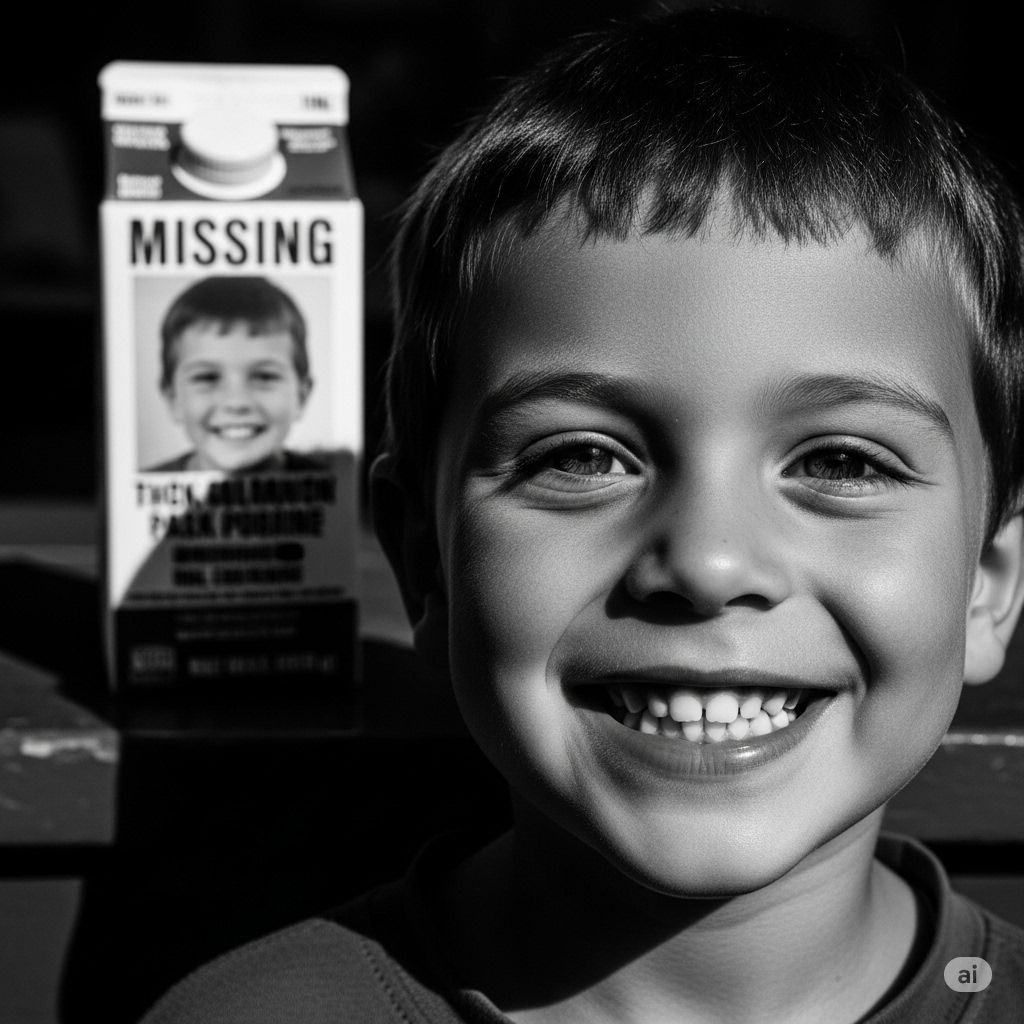
Stan Patz, a photographer, distributed pictures of his son. Etan became one of the children associated with the milk-carton campaigns and the growing public movement around missing children. In 1983, President Ronald Reagan designated May 25 as National Missing Children’s Day.
But cultural impact and investigative clarity are not the same thing. The case generated a huge emotional response long before it generated reliable answers.
Timeline of Events
- May 25, 1979, around 8:00 a.m.: Etan Patz leaves home in SoHo to walk alone to his school bus stop for the first time.
- Later that day: His family learns he never arrived at school, and the missing child search begins.
- 1980s: The investigation focuses heavily on José Ramos, a convicted child molester linked indirectly to the family through a babysitter.
- 2000s: The case remains one of the country’s best-known child disappearances, but no body and no physical evidence bring certainty.
- 2012: Pedro Hernandez confesses to killing Etan after luring him into a basement near the bus stop.
- 2015: Hernandez’s first trial ends with a deadlocked jury.
- 2017: A second jury convicts Hernandez of kidnapping and murder.
- July 21, 2025: A federal appeals court grants relief over the trial judge’s response to a jury question.
- June 22, 2026: The U.S. Supreme Court reverses that ruling and reinstates the conviction.
For years, investigators examined José Antonio Ramos, who had a connection to a woman who cared for Etan. He denied abducting the boy and was never criminally charged in the disappearance. Ramos died on March 7, 2026. His history remains part of the investigation’s record, but it is not a second conviction in Etan’s case.
The investigation had pursued a suspect without resolving the disappearance. That distinction matters when looking back: suspicion did not establish who had taken Etan.
The investigation shifted in 2012 after a tip about statements Pedro Hernandez had made concerning a child’s death in New York. Hernandez had worked at a nearby store in 1979. During questioning, he confessed to luring Etan into the basement with a soda, choking him and disposing of his body. His defense has maintained that those admissions were false.
On paper, that sounds like the ending a cold case waits for. In reality, it opened new problems.
What Doesn’t Add Up
- No body was ever found. That absence has haunted the case from the first day and still shapes how people see the conviction.
- There was no physical evidence tying Hernandez to the crime. The prosecution relied heavily on the confession and surrounding context.
- Hernandez had a history of mental illness. That gave the defense room to argue he was vulnerable to suggestion and could confess falsely.
- Ramos remained a powerful alternate suspect in many people’s minds. The case never erased the shadow he cast over the investigation.
- The timeline is still incomplete. The most important stretch of the case remains those short missing minutes between home and the bus stop.
That is what made the trials so emotionally brutal. By the time Pedro Hernandez was in court, Stan and Julie Patz had lived with the case for more than three decades. The first trial ended in a mistrial. The second ended in a conviction in 2017. Hernandez was sentenced to 25 years to life.
The legal proceedings continued. In July 2025, the Second Circuit granted Hernandez relief because of the judge’s answer to a jury question about his confessions. On June 22, 2026, the Supreme Court reversed that decision. It held that the federal court had exceeded the limits on habeas review: no clearly established federal law required the particular jury instruction at issue. The conviction was reinstated. That ruling resolved the federal legal question; it did not announce the discovery of new physical evidence.
That sequence is essential to any current account of the case. Hernandez’s conviction stands after the Supreme Court decision. His lawyers continue to dispute the reliability of the confessions. The distinction between the verdict and the defense’s position should remain clear in discussions of disappearances solved years later.
Key Evidence and Clues
- The route itself: a tiny walk that somehow produced no definitive witness account.
- The neighborhood grocery store connection: Hernandez’s location mattered because it placed him close to Etan’s final known path.
- The confession: the most important late-stage evidence, and also the most disputed.
- Ramos’s history and statements: never enough for conviction, but impossible to ignore when reconstructing the investigation.
- The absence of physical proof: not a clue in the usual sense, but the central hole every theory has to move around.
Maybe the most haunting part of the Etan Patz case is that it changed the country before it delivered its answer. Usually, people think of a case becoming famous because it is solved dramatically, or because one piece of evidence shocks everyone into attention. This one became part of American life because it captured a fear parents could instantly understand. A child was given a tiny piece of freedom. The city swallowed him almost immediately.
And the setting matters. Prince Street is not a remote trail, an empty highway, or a stretch of wilderness. It is Manhattan, the kind of place where people assume somebody must have seen something. That is what gives the case its lasting power. It happened in broad daylight, in a city full of windows, traffic, storefronts, and adults. And still the critical moment disappeared.
The location still gives the story its terrible scale: a short route, a school-day routine and a child who did not come home. Later changes to the streets do not fill in the missing minutes.
🔎 Related Investigation:
If this case pulled you deeper into the mystery, continue into:
Why This Case Still Gets Attention
The Etan Patz disappearance still gets attention because it sits at the intersection of personal tragedy and national memory. It is not just the story of one missing child. It is the story of how one family’s loss changed public fear, media habits, police urgency, and the rituals parents built around everyday safety. It also remains compelling because it never became emotionally tidy. Even with a conviction, the case still carries uncertainty, and uncertainty is what keeps people returning to old mysteries long after the headlines fade.
That is also why the case connects naturally to stories like Who Took Madeleine McCann, Lauren Spierer Disappearance, and The Morning Jodi Huisentruit Vanished. Different victims, different settings, different decades—but the same sickening fracture point where an ordinary routine suddenly stops making sense.
Etan never got to become anything larger than the last morning people remember. That is its own kind of cruelty. Underneath all the courtroom battles and public debate is the image that never lets go: a child walking toward a bus stop, and vanishing before the day had really begun.
FAQ
What happened to Etan Patz?
Etan Patz disappeared on May 25, 1979, while walking alone to his school bus stop in Manhattan. Pedro Hernandez was later convicted of kidnapping and felony murder, but no body was ever found, and debate over the case has never completely ended.
Is the Etan Patz case solved?
Pedro Hernandez’s 2017 conviction was reinstated by the U.S. Supreme Court on June 22, 2026, after a federal appeals court had granted relief in 2025. No body has been recovered, and the defense continues to challenge the confessions.
Why is Etan Patz so important in missing child history?
His disappearance changed how the United States responded to missing children. The case helped shape national awareness, missing-child poster culture, and the broader sense among parents that an ordinary school-day routine could become dangerous without warning.
Who was José Ramos in the Etan Patz case?
José Antonio Ramos was a former suspect who denied abducting Etan and was never criminally charged in the disappearance. He died in March 2026. Hernandez, not Ramos, was convicted in the criminal case.
Why does the Etan Patz case still get attention?
Because it combines a deeply human tragedy, a vanished child, a short and baffling timeline, and a verdict that still leaves people with questions. It changed the culture, and it still feels unsettled.
Research Sources
The following resources were consulted to verify and update this article.
- U.S. Supreme Court: McCarthy v. Hernandez (June 22, 2026) — The controlling decision reversing federal habeas relief, reinstating the conviction, and explaining the limits on federal review of the jury-instruction issue.
- Second Circuit: Hernandez v. McIntosh (July 21, 2025; reversed in 2026) — Trial and investigative chronology, the 2012 tip, disputed confessions and the appellate issue; this ruling is included for history, not current controlling law.
- FBI: National Missing Children’s Day (2015) — Etan’s May 25, 1979 disappearance, age six, and the 1983 designation of National Missing Children’s Day.
- Associated Press: Former suspect in Etan Patz case has died (March 19, 2026) — José Antonio Ramos’s March 7, 2026 death, denial, absence of criminal charges in Etan’s disappearance and former-suspect status.
If this story stayed with you, the author suggests these real cases next:
- Three women vanished from one house, and the timeline only got stranger from there
- The holiday disappearance that turned one family night into a worldwide mystery
- One college night out ended in a disappearance nobody has been able to reconstruct cleanly
- Cold disappearance cases where one late break changed everything
Explore more Disappearances stories here: