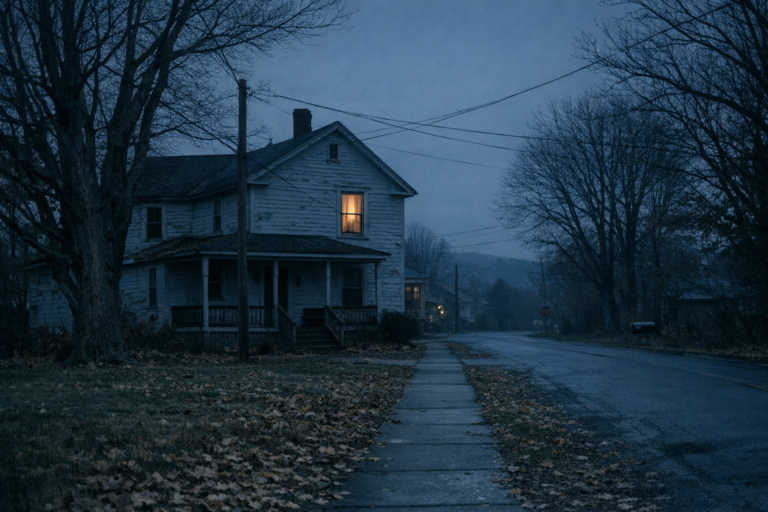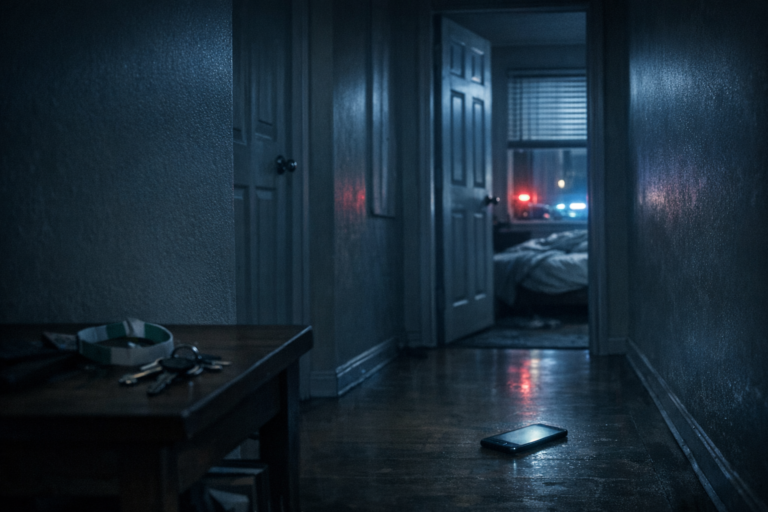
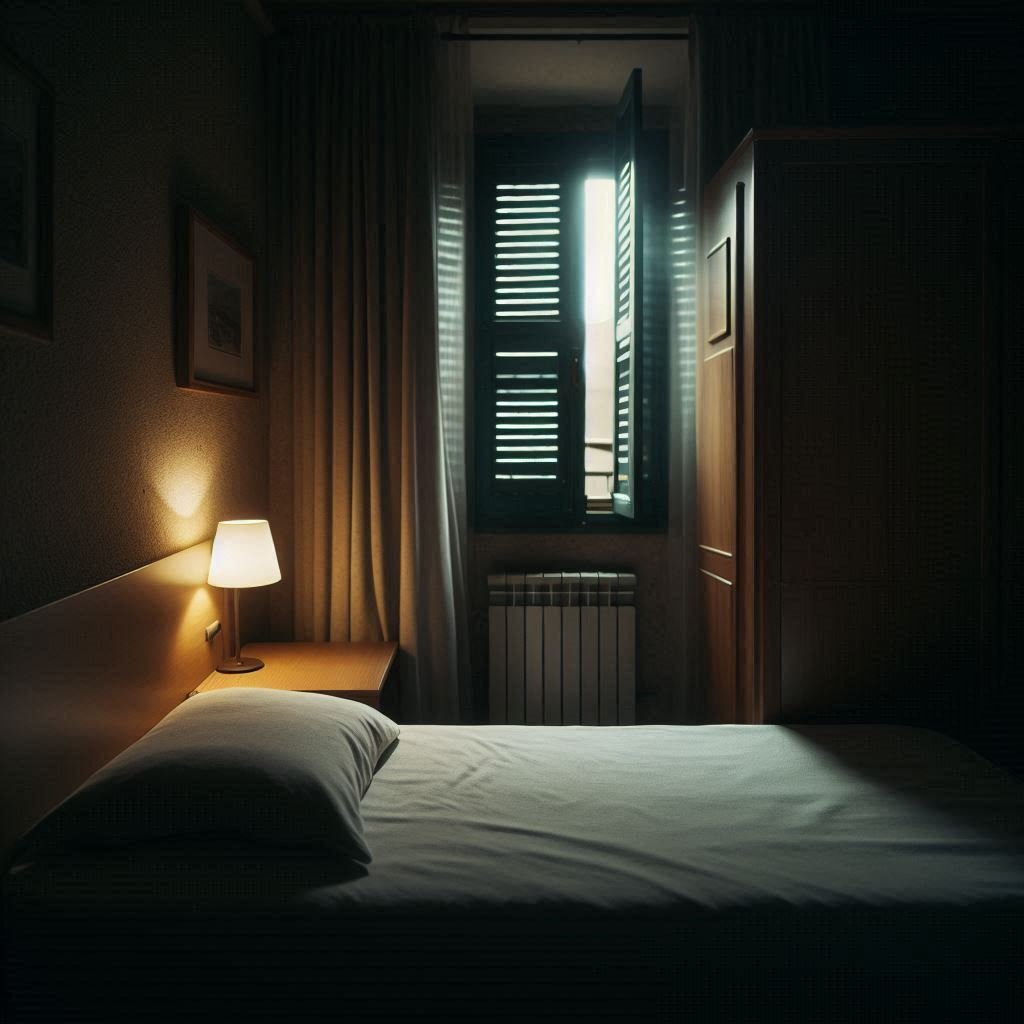
At 10 o’clock on a warm Thursday night in Praia da Luz, Kate McCann walked back toward Apartment 5A expecting the same quiet scene she had seen on other evenings: three children asleep, curtains drawn, the ordinary stillness of a family holiday. Instead, she stepped into a room that felt wrong before she even understood why. The bedroom door was wider than she had left it. The air moved differently. And when she looked at the bed where her three-year-old daughter should have been, there was only an empty space where Madeleine McCann had been minutes before.
Listen to “Who Took Madeleine” on Spreaker.
The Madeleine McCann disappearance became one of the most heavily followed missing child cases in modern history after she vanished from a holiday apartment in Portugal on May 3, 2007. Nearly two decades later, the case still matters because the timeline is so narrow, the scene is so ordinary, and the unanswered questions are still disturbing enough to keep the world looking back.
That is part of what makes this case sit beside stories like Maura Murray’s disappearance: there is no clean ending, no single piece of evidence that settles everything, and no version of events that removes the feeling that the truth came within reach and then slipped away.
The Apartment Night
The McCanns were on a spring holiday with friends at the Ocean Club resort, a place that looked safe in the way vacation places often do. Palm trees, bright walls, families moving between pools and restaurants, the soft confidence of people who believe they have stepped outside ordinary risk for a week. Their apartment, 5A, sat on the ground floor. It was close enough to the tapas restaurant that the adults felt they could manage dinner and still check on the children every so often.
That routine is now one of the most debated parts of the story, but on its face it was simple: the children were put to bed, the parents ate nearby, and the adults rotated back to their apartments to make sure everything was fine. It had worked on previous nights. Nothing about the resort looked like the opening scene of a global mystery.
Timeline of Events
- Around 8:30 p.m. — The adults gather at the tapas restaurant near the apartments while the children sleep.
- About 9:05 p.m. — Gerry McCann checks Apartment 5A and later says Madeleine is still in bed.
- Roughly 9:15 p.m. — A friend, Jane Tanner, reports seeing a man carrying a child near the apartment area.
- Around 9:30 p.m. — Another friend checks but does not raise any alarm.
- 10:00 p.m. — Kate McCann enters the apartment, finds Madeleine missing, and raises the alarm.
- Later that night — Staff, guests, and police begin searching, but the apartment is not fully sealed off as a protected scene.
That compressed sequence is why the case has never loosened its grip on people. If Madeleine was taken by an outsider, the window was frighteningly small. If the sighting was unrelated, then one of the most important moments in the case points nowhere at all.
The Final Timeline That Still Won’t Settle
When Gerry checked the apartment, he later said everything looked normal. The children were asleep. He returned to dinner. Not long after, another friend moved through the apartment area. Around the same period, Jane Tanner said she saw a man carrying a small child away from the direction of the resort. That account would later become one of the most discussed witness statements in the entire investigation.
Then came Kate’s check. She noticed the bedroom door, the movement of air, the open window area, the impossible absence. Her two younger children were still there. Madeleine was not. In an instant, the holiday apartment stopped being a private family space and became one of the most photographed and argued-over crime scenes in modern Europe.
The problem is that the timeline is both vivid and unstable. People remember what they did and when they checked, but memory under pressure does not behave like video. A case like this can be ruined not only by a lack of evidence, but by just enough evidence to produce multiple stories that almost fit.
That is one reason the case still draws the same kind of attention as Jennifer Kesse’s disappearance and Brian Shaffer’s disappearance. The last confirmed moments are close enough to feel knowable. And yet the core event itself remains hidden.
What Investigators Know vs. What the Public Believes
Investigators have long worked from facts that are narrower than the public conversation around the case. They know Madeleine disappeared from Apartment 5A on the evening of May 3, 2007. They know the family’s routine placed the adults at a nearby restaurant. They know witness accounts emerged that seemed to suggest a man carrying a child. They know the case later expanded into a multinational investigation involving Portuguese police, British police, and eventually German authorities.
The public, meanwhile, has spent years living inside the fog around those facts. Was this a planned abduction? A crime of opportunity? Did an intruder watch the family for days? Were early investigative mistakes so damaging that the strongest clues were lost before they could be understood? Every one of those questions survives because the case has never produced the kind of decisive public evidence that ends argument.
That gap between official certainty and public suspicion became even wider when the case turned toward Madeleine’s parents. For a period, the investigation began moving away from the stranger-abduction theory and toward the possibility that Madeleine had died in the apartment and that the scene had been staged. It was a brutal shift, and one that changed the emotional shape of the case forever. Once a missing child investigation becomes a public referendum on the parents, every new detail is filtered through two different stories at once.
What Doesn’t Add Up
- The scene was chaotic too early. People moved through the apartment and nearby area before everything was fully controlled, which may have damaged or blurred important evidence.
- The timing is too tight for comfort. If the abduction theory is right, whoever took Madeleine likely acted inside an incredibly narrow window.
- The witness sightings never fully locked together. Some reports sounded powerful, but not all of them pointed in one clean direction.
- The dog alerts fueled suspicion without resolving it. They intensified debate, but they did not produce a body, a confession, or a forensic conclusion strong enough to close the case.
- The most dramatic later developments still left silence at the center. Even when new suspects emerged, the public was not given the kind of full evidentiary picture that would make the story feel finished.
That last point matters. A mystery can survive for years on absence alone, but this one survived because every apparent turn also created fresh uncertainty. Each development seemed like it might be the breakthrough, and each time the case settled back into the same unresolved shape.
The Investigation’s Most Controversial Turn
Months after Madeleine disappeared, the investigation took one of its most explosive turns. British sniffer dogs alerted in the apartment and later in connection with the family’s rental vehicle. But alerts are not verdicts. They can redirect an investigation and intensify suspicion, but they do not replace a body, a proven forensic chain, or a successful prosecution.
Even so, the damage was done. Kate and Gerry McCann were made formal suspects by Portuguese authorities. The case stopped being only about a missing child and became a global media storm about parental guilt, police failure, and whether one side was misreading the evidence to cover the weakness of the other. In a case already built on fear, that shift added another layer: now people were not only asking what happened to Madeleine, but whether the investigation itself had lost the plot.
Later, British investigators with Operation Grange returned focus to the stranger-abduction theory. They revisited witness statements, reconstructed movements, and treated the disappearance as a criminal act by an outsider. That reorientation did not erase the earlier suspicion. It simply proved how fractured the case had become. One investigation leaned in one direction, another pulled hard in the other, and the public was left staring at the same apartment night with no stable answer.
The Suspect Who Reopened Everything
In 2020, the case shifted again when German authorities publicly identified Christian Brückner as their prime suspect. He was a convicted sex offender with a criminal history and connections to the Algarve region. Authorities said they believed Madeleine was dead and suggested they had evidence strong enough to focus on him seriously.
And yet, even this development carried the familiar shape of the entire case: it sounded enormous, but it did not produce public closure. No body was recovered. No trial on Madeleine’s disappearance has settled the matter in open court. The announcement was significant, but significance is not the same thing as resolution.
That unresolved ending is what keeps the case alive inside broader disappearance archives and collections like Disappearances Caught on Camera and Disappearances That Were Never Meant to Be Solved. Madeleine’s case sits inside a pattern readers recognize immediately: a final ordinary moment, a narrow timeline, and then a blank space no investigation has managed to fill.
Why This Case Still Gets Attention
Some cases fade because the facts eventually settle into a sad but understandable shape. This one never did. It has a child at the center, a holiday setting that should have felt secure, a timeline that seems solvable, and a record of investigative conflict that left nearly everyone feeling unsatisfied. It also has something even more haunting: the sense that the answer may have been present from the beginning, hidden inside minutes that were misunderstood, mishandled, or simply lost.
That is why people keep returning to it. Not because the story is sensational, but because it feels intolerably close to being knowable.
FAQ
What happened to Madeleine McCann?
Madeleine McCann disappeared from her family’s holiday apartment in Praia da Luz, Portugal, on the night of May 3, 2007. Her exact fate has never been publicly established, and the case remains unresolved.
Is the Madeleine McCann case still unsolved?
Yes. Investigators in different countries have pursued major leads over the years, and German authorities have identified a prime suspect, but the disappearance itself has not been conclusively solved in court.
Why does this case still get so much attention?
It still draws attention because the victim was a very young child, the timeline is unusually tight, and the investigation produced years of conflicting theories without a final answer.
What is Operation Grange?
Operation Grange is the Metropolitan Police investigation launched in the United Kingdom to review and investigate Madeleine McCann’s disappearance. It helped shift renewed focus back toward the possibility of a stranger abduction.
Was there ever a confirmed sighting of Madeleine after she disappeared?
No sighting after the disappearance has been publicly confirmed as the moment that explains what happened to her. Several witness reports became important, but none fully resolved the case.
🔎 Related Investigation:
🔎 If this story stayed with you, the author suggests these real cases next:
- The crash scene where Maura Murray seemed to disappear into thin air
- The bar-night vanishing that still leaves no exit for Brian Shaffer
- The morning Jennifer Kesse vanished before work and left only silence behind
- Disappearances where the final footage only made the mystery worse
- The cases captured on camera that still didn’t explain where anyone went
Explore more Disappearances stories here: