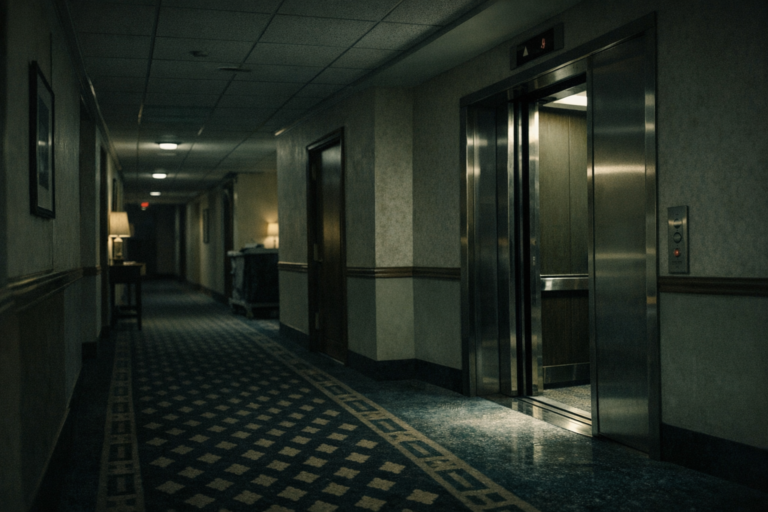
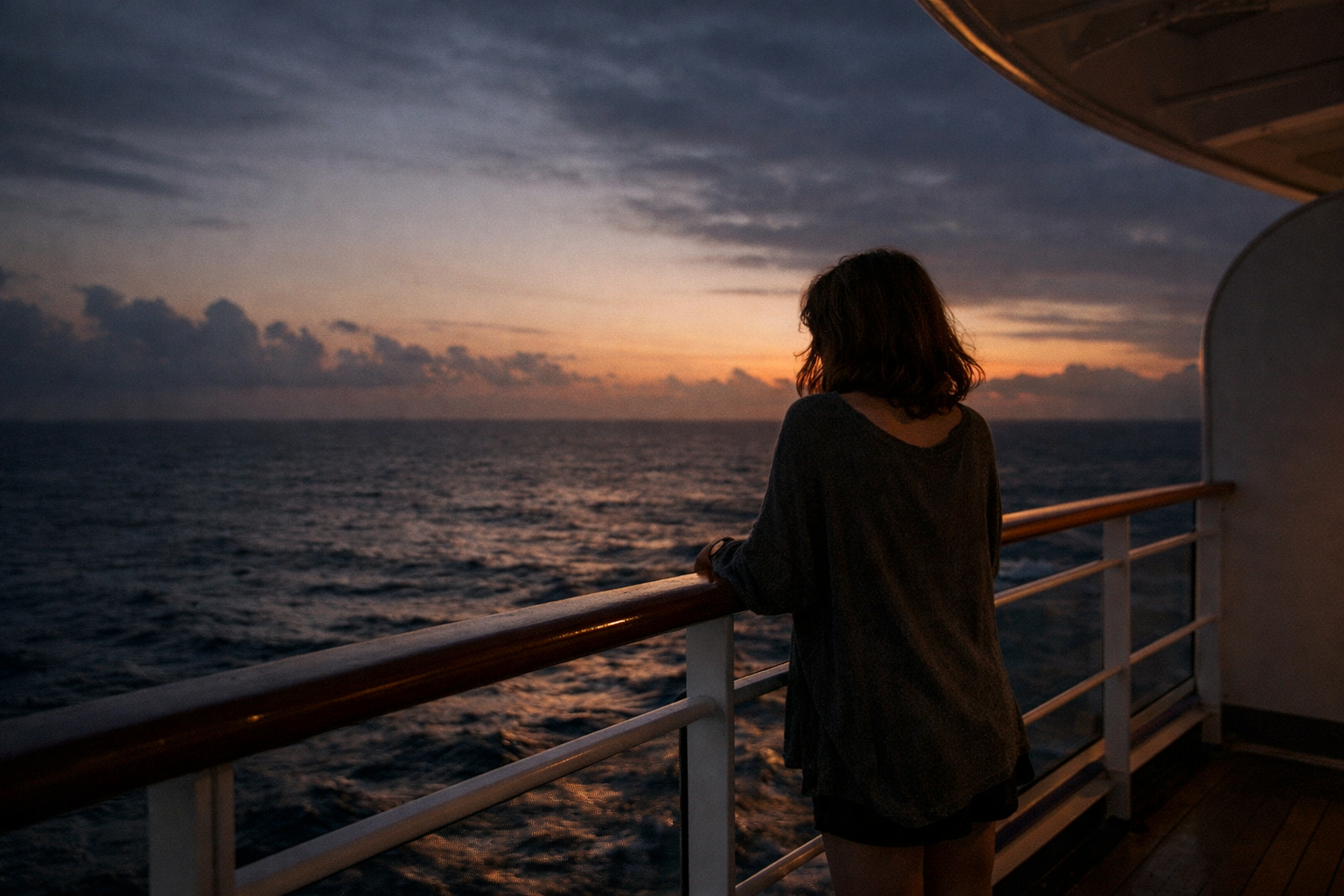
A balcony sighting, a missing daughter, and a ship approaching port: those are the pieces around which Amy Bradley’s disappearance is usually told. The setting feels bounded. The evidence has never supplied an equally clear ending.
The Amy Bradley disappearance began on March 24, 1998, when the 23-year-old vanished from Royal Caribbean’s Rhapsody of the Seas shortly before it docked in Curacao. The case still matters because the setting should have narrowed the answers: a ship, a cabin, a balcony, a passenger list, and a limited window of time. Instead, every solid detail seems to open another door.
For readers drawn to cases where the setting becomes part of the mystery, Amy’s story belongs beside other water-edge disappearances where the sea never gave back a clear answer.
The Family Vacation That Turned Into a Search
Amy was traveling with her parents, Ron and Iva Bradley, and her younger brother, Brad. It was supposed to be a warm family trip: music, late nights, bright water, and the strange comfort people feel when a ship seems to carry every worry away from shore.
Netflix’s account places Amy in the ship’s nightclub before a final family sighting on the cabin balcony. Her father’s account is central to the reported timeline. It does not establish what happened after that sighting.
When he woke again, Amy was gone.
At first, her absence could still be explained in harmless ways. Maybe she had gone for coffee. Maybe she had stepped onto an upper deck to watch the ship approach port. Maybe she was doing the kind of casual wandering people do on vacation, when clocks feel less serious and the world seems contained. Reports about belongings left behind should not be treated as proof of how she disappeared. The available official notice does not establish whether she left voluntarily, suffered an accident or encountered foul play.
The Ship Was Docking, and Time Was Disappearing
The timing made everything worse. The Rhapsody of the Seas was arriving in Curacao, which meant people would be able to move between the vessel and the island. If Amy had fallen overboard, every minute mattered. If she had been taken from the ship or moved ashore, every minute mattered even more.
The Bradley family has long said they pushed for urgency and wanted the ship secured before passengers left. Their frustration became part of the story: the fear that the most important window was allowed to open and close before everyone understood they were not dealing with a wandering passenger. They were dealing with a missing young woman whose last confirmed movements sat inside a very narrow band of time.
That is why Amy’s case continues to appear in broader unsolved disappearance archives built around timelines, sightings, and cases that refuse to end. The problem is not only that Amy vanished. It is that she vanished from a place where the boundaries should have helped investigators.
Theories That Never Fully Fit
An accident at sea is one proposed explanation. Abduction and voluntary departure have also been suggested. None has been established by the public record reviewed for this article. Physical fitness cannot rule out a fall or drowning, and an absence of recovered remains does not establish foul play.
The other theory was darker: that Amy left the cabin or was lured away, and that someone else controlled what happened next. Later alleged sightings helped keep this possibility in public discussion. They remain unconfirmed. Netflix’s account says investigators found no evidence to charge the entertainer who had danced with Amy; he denies involvement. Attention from another passenger or crew member should not be presented as proof of abduction.
What Evidence Actually Exists?
The strongest parts of the case are also the most painful because they define the limits of certainty.
- Last family sighting: Ron Bradley reported seeing Amy on the balcony in the early morning hours.
- Limits of the record: reports about cabin belongings do not establish the mechanism of her disappearance.
- No recovered body: the absence of remains kept the overboard theory from becoming conclusive.
- Reported later sightings: accounts from Curacao and later alleged encounters kept alive the possibility that Amy survived the ship.
- FBI attention: Amy’s case remained public through reward notices, age-progressed images, and renewed media coverage.
This is where the mystery becomes dangerous for readers and painful for families. Sightings can be hope, but they can also become traps. Netflix’s documentary coverage includes retired Navy seaman Bill Hefner’s claim that he encountered a woman he believed was Amy in Curaçao in January 1999. The report is an allegation, not a confirmed identification. Such accounts deserve careful checking without being converted into a documented trafficking narrative.
Timeline of the Amy Bradley Disappearance
- March 23, 1998: Amy spends the evening aboard the Rhapsody of the Seas, including time in the ship’s disco with her brother.
- Early March 24: Amy returns to the family cabin after the late-night activities.
- Before sunrise: Ron Bradley says he sees Amy on the cabin balcony.
- Early March 24: Amy is reported missing; the FBI dates her disappearance to that morning.
- Morning arrival in Curacao: the ship docks, and the critical early search window becomes tangled with passengers leaving the vessel.
- Later years: reported sightings, FBI appeals, and media investigations keep the case alive without resolving it.
What Still Does Not Add Up
The case remains so unsettling because no theory explains everything cleanly. The public evidence reviewed here does not establish a fall, a voluntary departure or an abduction. Questions about each theory remain questions. They should not be turned into proof simply because another explanation is also incomplete.
That same broken-timeline feeling runs through other missing-person stories, including unsolved disappearances where the timeline still does not add up and cases where the evidence appears to point in one direction but never quite closes the door.
Why the Sightings Still Haunt the Case
The reported sightings changed the emotional shape of Amy’s disappearance. Without them, many people might file the case away as a tragic fall at sea. With them, the story becomes harder to breathe around. If even one sighting was real, then Amy may have been alive after the ship docked. She may have been close to help. Someone may have seen her and not understood the emergency in time.
That is what makes the case linger. It is not just the unknown. It is the possibility of proximity: that the answer, or Amy herself, may have passed near people who did not yet know what they were looking at.
The Cruise Ship as a Blind Spot
Cruise ships feel secure because they are contained. There are manifests, cameras, crew corridors, locked doors, and limited exits. But containment can create its own illusion. A ship is also a city with hidden workspaces, thousands of strangers, loud entertainment areas, stairwells, service routes, and moments where everyone assumes someone else is watching.
Amy’s disappearance lives inside that contradiction. The ship should have made the investigation simpler. Instead, it created one of the most claustrophobic mysteries in modern disappearance history: a young woman seen near dawn, then gone before port, with the ocean on one side and an island waking up on the other.
Why This Case Still Gets Attention
The Amy Bradley case keeps returning because it has the shape of a documentary nightmare. There is a final family sighting. There is a narrow window. There is a public setting that should have produced answers. There are reported sightings that cannot be ignored emotionally, even when they cannot be proven legally. And at the center is a family forced to become the keepers of every detail.
That is why Amy’s story sits naturally alongside cases like disappearances where the last sighting changed everything and unsolved cases where the evidence seems to point one way but never fully settles.
Nearly three decades later, the most haunting part is still the simplest. A father saw his daughter on the balcony. The ship was almost at port. Morning was coming. Then the ordinary world ended without leaving behind the one thing everyone needed: a final, certain answer.
FAQ
What happened to Amy Bradley?
Amy Bradley vanished from Royal Caribbean’s Rhapsody of the Seas on March 24, 1998, shortly before the ship docked in Curacao. Her exact fate remains unknown.
Did Amy Bradley fall overboard?
An accidental fall is one theory, but the public sources reviewed here do not confirm it. The lack of a resolution also does not prove that she was abducted.
Was Amy Bradley seen after she disappeared?
Several reported sightings surfaced over the years, including accounts from Curacao and later alleged encounters. None has been officially confirmed as proof of Amy’s whereabouts.
Is the Amy Bradley disappearance still unsolved?
Yes. Amy Bradley remains missing, and the case is still discussed because the timeline, the ship’s response window, and the later sightings have never produced a definitive answer.
Why does the Amy Bradley case still get attention?
It combines a contained cruise ship setting, a narrow missing-hours timeline, unsettling reported sightings, and a family that has never stopped searching for the truth.
Research Sources
The following resources were consulted to verify and update this article.
- FBI: Amy Lynn Bradley missing-person notice
Official disappearance date, voyage and current request for information. - Netflix Tudum: Amy Bradley Is Missing
Filmmaker interviews and the documentary’s account of family sightings. - Netflix Tudum: Theories and alleged sightings
Attributed leads and competing explanations covered in the documentary.
Continue exploring:
- The diver who vanished into an underwater cave and left more questions than answers
- Disappearances where the vehicle stayed behind but the person never came back
- Brandon Swanson’s disappearance after a roadside call
- The vacationer who ran from an airport and vanished in daylight
- The dark-road crash that became one of America’s most debated disappearances
More Disappearances stories: