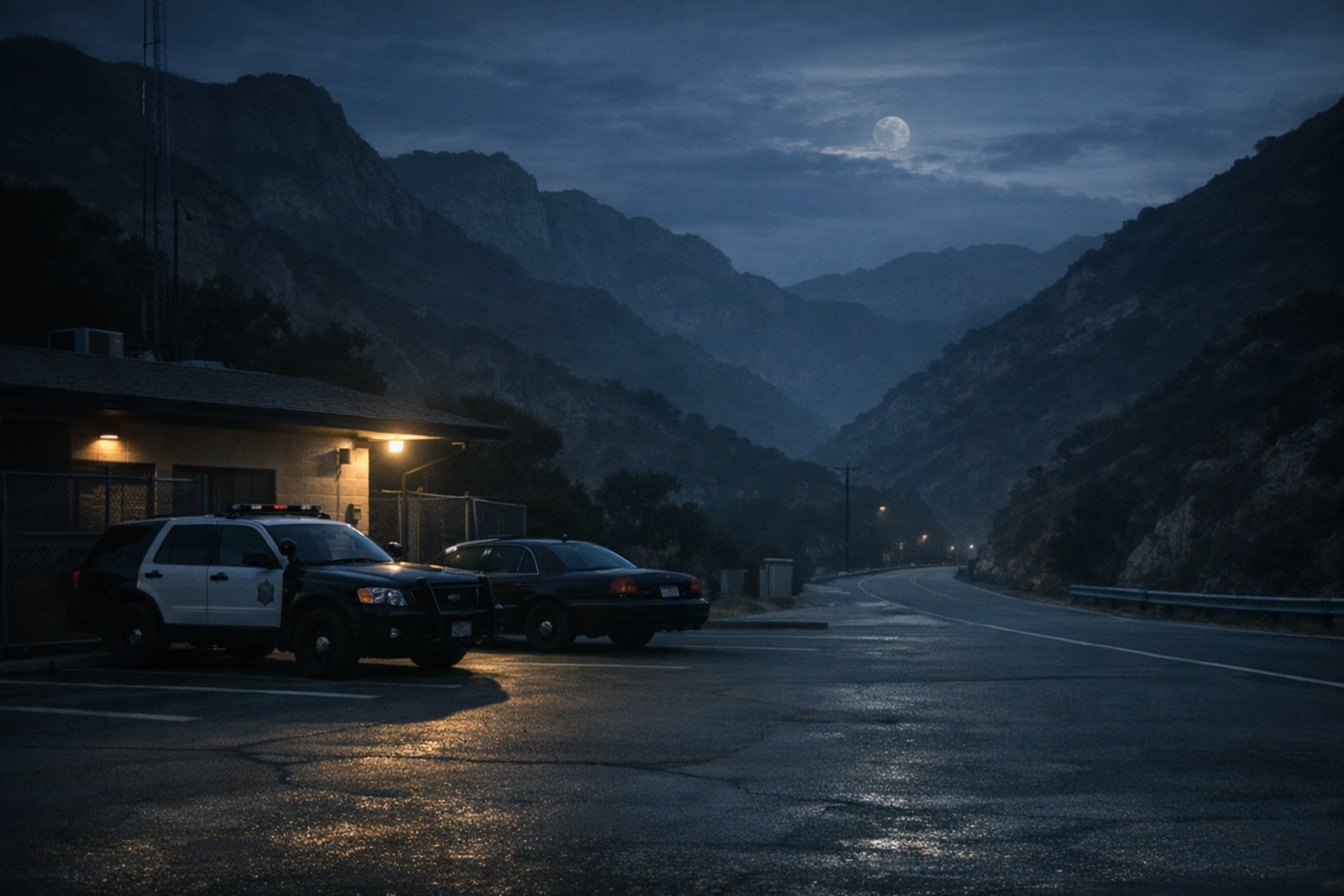
Mitrice Richardson left the Lost Hills sheriff’s station in Calabasas shortly after midnight on September 17, 2009.
She had no car, phone, purse or money with her. The route she took after leaving custody has not been established.
That evening, Mitrice drove to Geoffrey’s, an upscale restaurant in Malibu. Staff and customers later described her behavior as strange and unsettling. She reportedly spoke in ways that did not make sense, said she was from Mars, and acted so erratically that people became alarmed. She also could not pay her bill. Deputies were called.
Her mother expressed concern about her daughter’s condition and release. The family’s and deputies’ differing accounts should remain attributed.
That decision is why the case still belongs beside stories like the Maura Murray disappearance, where the final known timeline leaves a gap nobody has ever been able to close. In both cases, the official record contains a clean sequence of events. But when people look closer, that sequence begins to feel less like closure and more like the beginning of the real mystery.
The jailer said she could remain voluntarily in the lobby and declined. That account does not resolve the family’s concerns or establish what happened after she left.
Timeline of Events
- Evening of September 16, 2009: Mitrice Richardson arrives at Geoffrey’s in Malibu and begins behaving erratically, alarming staff and diners.
- Later that night: Deputies arrest her over the unpaid bill and marijuana possession. A field sobriety test and an assessment for a psychiatric hold are distinct issues.
- Late night booking: Mitrice is taken to the Lost Hills/Malibu sheriff’s station while her belongings remain tied to her impounded car.
- Shortly after midnight, September 17: She leaves custody alone.
- That morning: A Monte Nido resident reports seeing Richardson in his backyard.
- Afterward: Her whereabouts remain unknown and a missing-person investigation follows.
- August 2010: Her remains are found in a remote area of Malibu Canyon, shifting the case from disappearance to a second, darker mystery.
Two mysteries layered on top of each other. First, how did Mitrice move through those hours after release? Second, once her remains were found, why did the answers still feel so incomplete?
The reported backyard sighting provides a possible later point in the chronology. It does not establish how she reached the property or where she went afterward.
A witness report should be distinguished from a continuous record of her movements.
Her remains were identified in August 2010 after being discovered in Dark Canyon. The discovery did not establish how or when she died.
Because when remains are found, people expect the mystery to narrow. With Mitrice, it widened.
Her family challenged the handling of the recovery scene. Those concerns deserve attribution; they do not themselves establish criminal misconduct or a cause of death.
🔎 Related Investigation:
If this case pulled you deeper into the mystery, continue into:
What Doesn’t Add Up
- The release decision: The family disputed whether she should have been released.
- The belongings problem: Mitrice reportedly left custody without the practical means to call for help, drive away, or safely reach home.
- The Monte Nido report: It leaves her route and subsequent movements uncertain.
- The remains discovery: Instead of settling public doubts, the recovery raised new arguments about search effectiveness, scene integrity, and whether every forensic question was properly preserved.
- The unresolved death: Neither public criticism nor official reviews establish how she died.
The circumstances of release require careful examination, while the cause of death remains a separate question.
That is where the second mystery begins. Once Mitrice’s remains were found, the story was no longer only about disappearance. It became about trust: trust in police judgment, trust in investigative handling, trust in whether the public had been given the full truth.
Descriptions of apparent distress should not become a diagnosis or a substitute for evidence about her death.
The release decision, recovery procedures and cause of death are separate questions. They require separate evidence.
Why This Case Still Gets Attention
Mitrice Richardson’s disappearance continues to come up because it sits at the intersection of several issues people never stop arguing about:
- how police should handle adults in visible distress
- whether “technically legal” decisions can still be reckless
- how public confidence collapses when recovery scenes are disputed
- why some missing-person cases never feel closed even after remains are found
Accidental death and homicide cannot be ranked from the information presented here. A 2017 state review found insufficient evidence for prosecution. Her cause of death remains undetermined.
🔎 Related Investigation:
🔎 Related Investigation:
Research Sources
The following resources were consulted to verify and update this article.
- ABC7 Los Angeles — Mitrice Richardson: An ABC7 investigation
Interviews, testimony and review of her release and the unresolved death. - LAist / KPCC — LA County Sheriff finds remains of Mitrice Richardson
Contemporary reporting on the identification of her remains. - Los Angeles Times — State review
Prosecution decision.
🔎 If this story stayed with you, the author suggests these real cases next:
- The disappearance where the final hours still feel like a locked room with no answer
- Maura Murray’s disappearance after an evening crash
- Jennifer Kesse’s disappearance and the unresolved timeline
Explore more Disappearances stories here: