
When Elisa Lam’s family stopped hearing from her in early 2013, police had an image they could show the public. A hotel elevator camera had recorded her in downtown Los Angeles. Someone might recognize the young woman in the recording and remember seeing her somewhere else. That was the reason to release it. Only later did the clip become the part of her story most people knew.
Listen to “The Elevator to Nowhere” on Spreaker.
Lam was 21 and visiting California from Vancouver. She was staying at the Cecil Hotel. For her family, the immediate question was where she had gone. For strangers encountering the footage later, the question often became what her gestures meant. Those were very different questions. More accounts of the search for missing people are in the Disappearances archive.
That is also why it belongs beside pages like Disappearances Caught on Camera. Elisa was not just another mystery that went viral after the fact. Her case became a permanent public obsession because the footage arrived before the story felt finished, and once millions of people watched it, they started building their own version of what must have happened.
The search at the Cecil Hotel
The trip had taken Lam away from Vancouver on her own, but she remained in touch with her parents. When the expected contact stopped, they had reason to worry. In Los Angeles, the appeal for information eventually put a portion of her stay into public view. The video offered a place and a face at a time when police were trying to find a traveler.
Investigators searched the hotel. Thousands of people elsewhere could now examine the same short stretch of hallway, but nobody watching it could extend the view even a few feet beyond the edge of the frame. The fact that a person is looking in a direction cannot tell a viewer what is there.
What the camera recorded
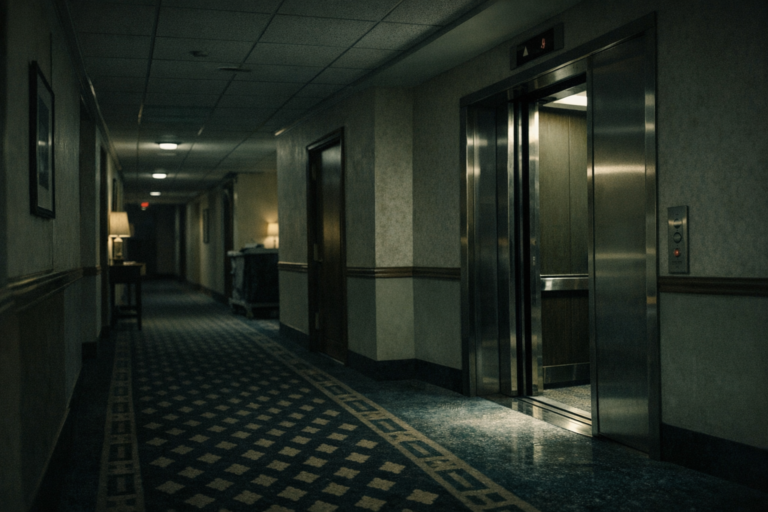
Lam presses several elevator buttons. She steps into the hallway, moves her arms, returns and eventually leaves the camera’s view. The footage shows no one attacking her. It also gives no record of her route from that floor to the roof. Trying to fill the gap frame by frame confuses detail with coverage. The camera never recorded the journey people wanted it to explain.
The discovery on February 19
A maintenance worker named Santiago Lopez checked one of the hotel’s rooftop water tanks after complaints about the water pressure. In a declaration he gave later, Lopez described finding the hatch open. Looking inside, he saw a woman in the water. Authorities identified her as Lam.
Two different barriers had often been folded into a single puzzle. A Los Angeles police sergeant explained that the door providing access to the roof had a lock and an alarm. The hatch of the water tank itself had no lock. What Lopez saw on February 19 establishes its condition when he reached it. It does not reconstruct precisely how or when Lam got there.
The coroner’s finding
The Los Angeles County coroner concluded that Lam drowned and classified the death as accidental. The report identified bipolar disorder as a contributing condition. The finding does not require people watching the video to diagnose her state of mind from a gesture. The coroner considered medical and investigative information that the recording never contained.
🔎 Related Investigation:
What later proceedings clarified
Lam’s parents brought a civil negligence case against the hotel. In 2015 a judge dismissed it. That proceeding concerned the hotel’s legal responsibility. It also preserved Lopez’s account of what he actually saw at the tank, a detail often missing from stories about a supposedly sealed lid.
Other cases, including Jennifer Kesse’s disappearance and Brian Shaffer’s disappearance, show how much attention a camera can draw in a search. In Lam’s case, the public record extends past the last available frame to the discovery and the examination that followed.
That is also why Elisa Lam sits naturally beside cases like Rebecca Coriam’s last-seen-on-camera disappearance and Lauren Spierer’s final-night mystery. In each case, the pressure comes from a final window of visibility. We can get close to the moment when something went wrong, but not close enough to follow the person all the way through it.
Her family’s search ended on the roof of the Cecil Hotel. The film still circulating online was made before anyone knew where she would be found. Watching it with that knowledge can change how a gesture looks, even though nothing in the recording has changed.
🔎 Related Investigation:
If this case pulled you deeper into the mystery, continue into:
?? Related Investigation:
If this case pulled you deeper into the mystery, continue into:
Why the chronology matters
The elevator footage became public while Lam was missing. The worker found her on February 19. The coroner’s ruling followed in June. Reading those events in sequence restores something the viral account often loses. A family asked for help finding someone. A medical investigation later answered how she died.
FAQ
What happened to Elisa Lam?
She was found in a rooftop water tank at the Cecil Hotel in February 2013. The coroner ruled her death an accidental drowning.
What did the recording establish?
It showed Lam in and near an elevator during her stay. It did not record her arriving at the tank.
Was the tank sealed when she was found?
The maintenance worker said the hatch was open when he inspected the tank.
What did the coroner say about her health?
The report listed bipolar disorder as a significant contributing condition.
What happened to the civil lawsuit?
In 2015 a judge dismissed the parents’ negligence suit against the hotel.
Research Sources
The following resources were consulted to verify and update this article.
- Los Angeles County coroner, Elisa Lam autopsy report — Records the cause and manner of death and the contributing condition. This is a public copy of the county report.
- LAist, judge dismisses the Cecil Hotel negligence lawsuit — Reports the outcome of the civil suit and the maintenance worker’s statement about the open tank hatch.
- Los Angeles Times, coroner’s toxicology findings — Reports the coroner’s conclusions and describes the release and content of the elevator recording.
- ABC7, discovery at the Cecil Hotel — Reports the identification and police comments distinguishing the roof door from the unlocked tank hatch.
🔎 Related Investigation:
- Last Seen on Surveillance: 6 Disappearances Where the Final Footage Only Deepened the Mystery
- Vanished Into the Frame: 8 Disappearances Where the Final Footage Only Deepened the Mystery
🔎 If this story stayed with you, the author suggests these real cases next:
- Other disappearances where the final footage became part of the mystery itself
- The daytime vanishing that left investigators with a camera angle but no answer
- The cruise ship case where one last camera moment only deepened the questions
- The bar-night disappearance where a man seemed to step out of the story entirely
- The internet mystery that turns missing context into its own kind of obsession
Explore more Disappearances stories here: