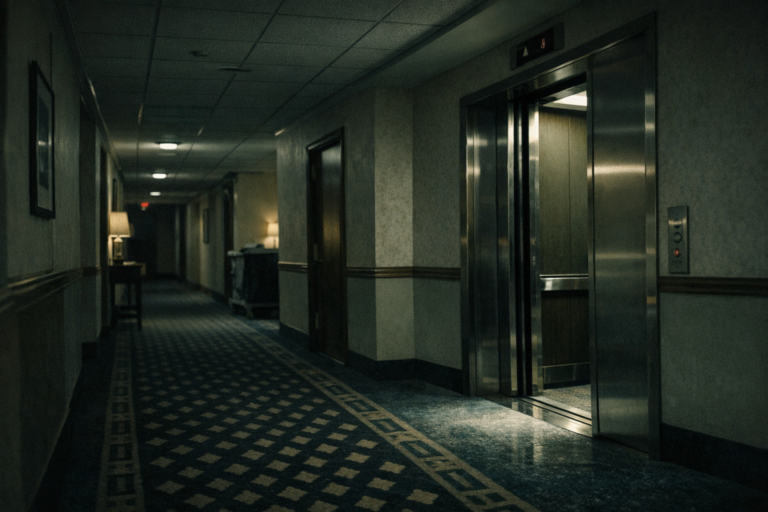
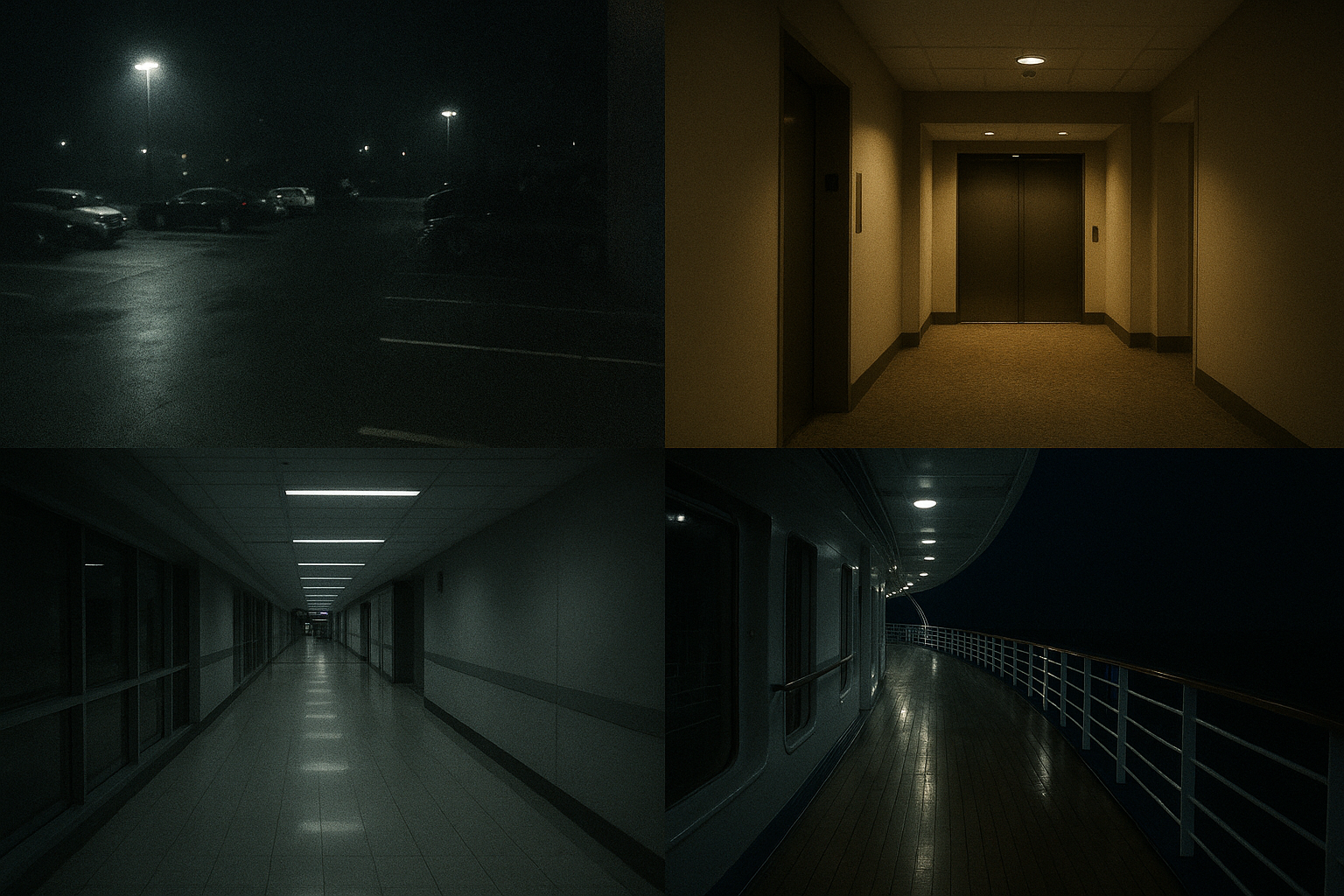
Security footage is supposed to make a mystery smaller.
It freezes a person in one exact place at one exact time. A hotel elevator. An airport hallway. A parking lot. A ship corridor. A neighborhood street. A bar entrance. A public sidewalk. For investigators, that should be a gift. It gives them what older missing-person cases often lack: a final confirmed image.
But some disappearances became more disturbing after the camera got involved.
Because the footage did not solve the mystery.
It preserved the last ordinary moment.
A person walking. Waiting. Turning. Leaving. Hesitating. Looking around. Moving through a place where cameras, witnesses, or controlled access should have narrowed the truth.
Then the story slips out of frame.
These nine cases illustrate different limits of visual evidence. Several have significant surveillance records. Amy Bradley and Natalee Holloway are broader comparisons about last sightings and public settings, rather than examples of a final CCTV clip. Elisa Lam was found dead, and Natalee Holloway’s case later produced a confession. Their outcomes must be read alongside the cases that remain unresolved.
Why Surveillance-Footage Disappearances Hit So Hard
Most disappearances begin with absence.
These begin with presence.
That is what changes everything.
With Lars Mittank, we can picture him leaving Varna Airport because the camera caught the moment. With Elisa Lam, we can watch the elevator footage and feel as if the answer must be hiding somewhere inside those movements. With Jennifer Kesse, we know a person walked away from her car because surveillance captured it — and somehow hid the person’s face at the same time.
That is why this sub-cluster is so powerful inside the larger Disappearances archive. Readers are not only looking for a missing-person story. They are looking for the frame. The clip. The last sighting. The strange behavior. The blind spot. The one image that feels like it should have explained more than it did.
The camera creates a promise.
It says: look closely enough, and you may understand.
But in these cases, looking closer often makes the mystery worse.
Cases Compared: When the Camera Should Have Helped
| Case | Setting | What Makes It Haunting |
|---|---|---|
| Lars Mittank | Airport | He was filmed running away, then vanished. |
| Elisa Lam | Hotel elevator | She was found dead; the coroner ruled accidental drowning. |
| Jennifer Kesse | Apartment complex / parking area | An unidentified person of interest was recorded after parking her car. |
| Rebecca Coriam | Cruise ship | A controlled ship environment still produced no clear answer. |
| Mekayla Bali | Public locations | Her movements were traceable, but the final explanation was not. |
| Steven Koecher | Suburban neighborhood | He was seen walking into a neighborhood and never clearly leaving. |
| Brian Shaffer | Bar district | The investigation has not established his departure route. |
| Amy Bradley | Cruise ship | A contained setting somehow became a vanishing point. |
| Natalee Holloway | Tourist nightlife area | A 2023 confession changed the case; no final CCTV clip anchors this comparison. |
Airport and Travel Cases Where the Trail Went Cold
Lars Mittank
What Happened to Lars Mittank? The Tourist Who Ran from the Airport and Vanished remains one of the strongest surveillance-footage disappearances because the final image is so direct.
Lars was not vaguely seen by a witness. He was not only described later by someone trying to remember. He was caught on camera at Varna Airport, suddenly running out of the terminal and into the unknown.
That is what makes the case so unsettling. Airports are designed around movement control. People pass through cameras, checkpoints, entrances, exits, staff areas, and public zones. A man running from an airport should leave behind a trail that investigators can follow.
Instead, the footage became the moment everyone remembers.
Not the beginning of the solution.
The ending.
The footage records Lars running. His reasons and subsequent whereabouts have not been established.
Hotel Footage That Created More Questions Than Answers
Elisa Lam
Elisa Lam: The Elevator Footage and the Accidental-Drowning Finding may be the most famous example of a disappearance transformed by video.
The elevator footage did not simply become part of the case.
For many people, it became the case.
Elisa’s elevator movements became the focus of widespread speculation. The clip does not establish an unseen pursuer or another person’s involvement.
Her body was recovered from a hotel rooftop water tank in February 2013. The coroner ruled her death an accidental drowning, with bipolar disorder a significant contributing condition. Details of her final movements remain incomplete, but an incomplete sequence does not erase the official finding.
Cruise Ship Disappearances and Controlled Spaces
Rebecca Coriam
Rebecca Coriam Disappearance — The Cruise Ship Mystery Captured on Camera shows why disappearances inside controlled environments feel especially impossible.
A cruise ship should be one of the hardest places for someone to vanish without explanation.
There are crew systems. Passenger records. Staff schedules. Corridors. Decks. Cameras. Access points. A fixed structure surrounded by water. In theory, the ship itself should narrow the mystery.
But Rebecca’s final recorded moments aboard the Disney Wonder did not bring closure. They became a fragment — a piece of a much larger question.
That contradiction is what gives the case its force. The setting feels contained, but the uncertainty feels enormous. The camera confirms that Rebecca was there. It gives the story a visible anchor. But it does not explain how a person inside a monitored ship could slip from known movement into lasting disappearance.
Rebecca’s case shows the limits of assumptions about monitored spaces. Shipboard records and cameras do not guarantee a complete record of someone’s movements.
Amy Bradley
Amy Bradley Disappearance — What Happened to the Woman Who Vanished From a Cruise Ship? belongs beside Rebecca Coriam for the same reason: the setting itself should have made the truth easier to find.
Amy vanished from a cruise ship, a place where movement feels limited by design. There are only so many decks, corridors, cabins, and exits. There should be records. There should be witnesses. There should be a tighter explanation than a disappearance that stretches on for decades.
And yet Amy’s case became one of the most enduring cruise-ship mysteries because the expected certainty never arrived.
Her story is important to this page because not every surveillance-style case depends on one famous clip. Sometimes the haunting part is the logic of the location. A ship should compress the search area. It should make disappearance feel almost impossible.
Instead, it became the stage for a mystery that still refuses to settle.
Neighborhood and Apartment Cases Where One Frame Was Missing
Jennifer Kesse
Jennifer Kesse Disappearance — The Woman Who Vanished in Broad Daylight may be one of the most frustrating surveillance cases ever recorded.
The camera captured what investigators desperately needed.
Almost.
Jennifer’s car was found away from her apartment. Surveillance footage showed a person walking away from it. That should have been a major breakthrough. A face. A body type. A direction. A clue.
The recorded person remains unidentified; investigators sought help identifying this person of interest.
It is hard to imagine a more painful example of visual evidence failing at the exact moment it mattered most.
Jennifer’s case belongs here because the footage is both powerful and maddening. It records a person parking the car and leaving. It does not establish who that person was, what happened to Jennifer or her exact movements that morning.
The camera gave investigators the outline of a person.
Not the person.
Steven Koecher
Steven Koecher Disappearance — The Man Who Walked Into a Neighborhood and Vanished is haunting because the footage appears so ordinary.
There is no dramatic chase. No visible struggle. No obvious emergency. Steven is seen arriving in a neighborhood, leaving his car, and walking away.
Then the story stops making sense.
That is what makes the case linger. The visual record seems clean and simple. A man parks. A man walks. A man enters a normal suburban space.
But the next expected part of the sequence never comes.
No clear exit. No clear destination. No confirmed explanation.
Steven’s case is a perfect example of the “missing next frame” problem. The footage does not look frightening on its own. It becomes frightening because of what never appears after it.
A normal walk becomes a permanent threshold.
Mekayla Bali
What Happened to Mekayla Bali? The Disappearance Timeline and Sightings That Still Don’t Make Sense belongs in this hub because her case has the kind of public-movement timeline that should have created clarity.
Mekayla’s day was not completely invisible. Her movements through school, public places, and familiar areas created a sequence people could study. That makes the case especially unsettling because the mystery is not built from total darkness.
It is built from partial visibility.
There are enough sightings and timeline pieces to follow her path for a while. But not enough to explain where that path truly led.
That is what makes Mekayla’s case valuable inside this surveillance-footage cluster. It shows that even when a person moves through public spaces, even when pieces of the day can be reconstructed, the most important transition can still disappear.
Did she leave voluntarily? Was she meeting someone? Did something change quickly? Did one hidden contact or one unseen movement alter everything?
The timeline gives shape to the mystery.
It does not solve it.
Cases Where Cameras Missed the One Moment That Mattered
Brian Shaffer
Brian Shaffer Disappearance — The Bar Exit Nobody Saw and the Timeline That Still Refuses to Close is one of the most famous examples of a surveillance gap becoming the center of a disappearance.
Brian was seen inside a nightlife environment where cameras should have helped establish who came in and who went out. That is what makes the case feel so impossible. The question is not only where Brian went.
It is how the cameras failed to show him leaving clearly.
That missing exit became the mystery’s gravity. People return to the case because the setting feels like it should not allow this kind of uncertainty. A bar. Entrances. Exits. Friends. Crowds. Cameras. A night that should be reconstructable.
But the final clean answer never appears.
Brian’s case expands this page’s authority because it shows a different kind of surveillance mystery. Sometimes the haunting footage is not the clip everyone sees.
Sometimes it is the clip that should exist — and does not.
Natalee Holloway
Natalee Holloway: The 2005 Disappearance and 2023 Confession is a comparison about public sightings, not a documented final CCTV sequence.
In 2023, Joran van der Sloot confessed to killing her and disposing of her body at sea. His U.S. conviction was for extortion and wire fraud, not her murder. The confession changed a case that had long been presented as unanswered.
What These Disappearances Have in Common
These cases do not share one location, one suspect type, or one theory.
What they share is a failure of visibility.
In each story, the public is given just enough structure to believe the answer should be nearby. A camera angle. A ship. A hallway. A parking lot. A neighborhood. A bar entrance. A tourist district. A final movement pattern.
The record is incomplete. Outcomes differ from case to case.
Readers who become interested in Jennifer Kesse often understand the pull of Lars Mittank. Readers who study Elisa Lam’s elevator footage naturally move toward Rebecca Coriam, Brian Shaffer, or Steven Koecher. The details are different, but the emotional experience is similar.
One visible passage.
One missing answer.
One moment that should have produced certainty and never did.
This is also why surveillance-footage disappearances are so bingeable. The reader becomes more than a reader. They become a watcher. They pause the scene mentally. They imagine the blind spots. They ask what happened just before the footage began and just after it ended.
That act of looking is part of what keeps these mysteries alive.
🔎 Related Investigation:
If this case pulled you deeper into the mystery, continue into:
What Doesn’t Add Up Across These Cases?
The strangest part is not always the disappearance itself.
It is the mismatch between the setting and the outcome.
Airports are monitored. Hotels have cameras. Cruise ships are controlled. Apartment complexes have gates, parking lots, and neighbors. Bars have entrances and exits. Tourist areas have crowds.
These are not places where someone should vanish cleanly.
Yet that is exactly what appears to happen.
Again and again, the key moment falls into a gap:
- Lars Mittank is seen running, but not where he ultimately went.
- Elisa Lam is seen in the elevator, but the footage does not explain her final path.
- The person recorded parking Jennifer Kesse’s car remains unidentified.
- Rebecca Coriam and Amy Bradley were on ships that should have narrowed the search.
- Steven Koecher is seen walking into a neighborhood, but not clearly beyond it.
- Brian Shaffer is seen inside a bar, but not clearly leaving.
- Mekayla Bali’s day can be partly traced, but not completed.
- Natalee Holloway’s case later produced a confession, rather than a final camera sequence.
That is the real pattern.
The camera does not fail completely.
It fails selectively.
A partial recording must be considered alongside later evidence and findings.
The Missing Frame
The most disturbing thing about surveillance-footage disappearances is not the lack of evidence.
It is the presence of evidence that cannot finish the story.
A camera catches the last ordinary motion. A person enters a hallway, steps into an elevator, walks away from a car, moves through an airport, crosses a public area, or disappears into the routine noise of a place that should have remembered them better.
Then the record breaks.
That is what makes these cases different from ordinary mysteries. They are not empty spaces. They are broken sequences. They give us a beginning, sometimes even a middle, but deny us the frame that would make the ending make sense.
The footage survives. Its limits matter as much as its contents.
And somewhere in that split between what can be seen and what still cannot be known, these disappearances continue to live.
Research Sources
The following resources were consulted to verify and update this article.
- Schleswig-Holstein State Police — Missing person Lars Mittank
Official appeal records his departure from Varna Airport. - CityNews Vancouver — Elisa Lam death ruled accidental drowning
Reports her recovery and the coroner’s accidental-death finding. - FBI — Jennifer Joyce Kesse
Identifies the recorded car-mover as an unidentified person of interest. - Royal Bahamas Police Force — Missing Person Rebecca Coriam: News Release 425-2011
Documents shipboard searches and examination of CCTV. - Saskatchewan Crime Stoppers / RCMP — Missing: Mekayla Bali
Reconstructs public movements from footage and witness accounts. - Utah Department of Public Safety — Steven Thell Koecher
Records the missing-person case and abandoned Henderson vehicle. - FBI — Brian Randall Shaffer
Records Shaffer’s disappearance after his Columbus bar visit. - FBI — Amy Lynn Bradley
Maintains the appeal for Bradley’s cruise-ship disappearance. - VPM / NPR — Missing Alabama teenager Natalee Holloway’s killer has confessed
Reports van der Sloot’s 2023 confession and distinguishes it from a murder conviction. - U.S. Department of Justice — Joran van der Sloot Pleads Guilty and Is Sentenced for Extortion and Wire Fraud
Documents the federal plea, sentence and disclosure agreement. - The Charley Project — Steven Thell Koecher
Describes neighborhood footage of Koecher parking and walking out of view. - The Charley Project — Brian Randall Shaffer
Summarizes the camera record and unresolved departure from the bar.
🔎 If this story stayed with you, the author suggests these deeper investigations next:
- The Unsolved Disappearances Archive — Timelines, Surveillance, Sightings, Vehicles, and the Cases That Still Refuse to End
- The Final Timelines That Still Don’t Close: 9 Disappearances Reconstructed Minute by Minute
- Disappearances Solved Years Later: The Cases That Went Cold Until One Break Reopened Everything
Explore more Disappearances stories here: