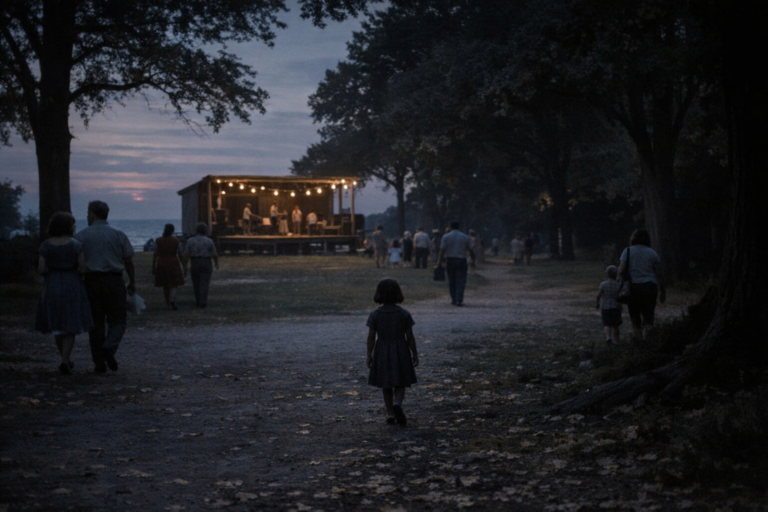

Before dawn, while rain moved across Shelby and most houses on Oakcrest Drive stayed dark, a 9-year-old girl opened a door she had no reason to open and stepped into weather that should have sent anyone back inside. The image that still clings to this case is almost too simple to process: Asha Degree alone on the roadside, small against the storm, walking toward something no one else could see.
For more than two decades, the Asha Degree disappearance has remained one of North Carolina’s most haunting unsolved child cases. What keeps pulling people back is not only that she vanished, but that the known facts form a path that feels impossible: home, highway, witness sightings, a roadside shed, and then a backpack found miles away long after the search had gone quiet.
Her story also sits inside a larger pattern of cases in the site’s Missing Children and Teens Archive, where a normal routine breaks for one terrible moment and never fully repairs itself.
Asha was nine years old when she disappeared from her family’s home in Shelby, North Carolina, on February 14, 2000. She was known as cautious, shy, and close to her family. That matters because this mystery never begins with a child people thought might run. It begins with a child who, by almost every account, should have been in bed until morning.
The storm that night has become part of the case’s emotional weight. The power went out at the Degree home, the roads were wet, visibility was poor, and somewhere in that stretch of darkness the case stopped behaving like anything that made ordinary sense.
When Asha’s parents realized she was gone, the first instinct would have been the same instinct any parent would have: search the rooms again, call her name again, check the bathroom, the closets, the corners, the yard. People always expect the first answer to be small. Maybe a child is hiding. Maybe there is a misunderstanding. Maybe the fear is about to collapse under something harmless.
But the fear did not collapse. It expanded.
Reports said Asha had taken her backpack. Some accounts also said clothing and personal items were inside. That single detail changed the tone of the mystery. This did not look like a child wandering in confusion for a few seconds. It suggested movement with some kind of purpose, even if that purpose was shaped by fear, trust, pressure, or instructions no one else heard.
Timeline of Events
- Late night into early morning: A storm passed through Shelby, and the power briefly went out at the Degree home.
- Early morning hours on February 14, 2000: Asha left the house while her family was asleep.
- Before dawn: Drivers on Highway 18 reported seeing a small girl walking south along the roadside in the rain.
- One witness turns around: After realizing how unusual the sight was, a motorist circled back. When approached, the girl reportedly ran from the road into the woods.
- Search begins: Family, volunteers, law enforcement, dogs, and air support searched the area around Shelby.
- Roadside shed becomes important: Items believed to be linked to Asha were reportedly found in or near a shed close to where witnesses saw a child walking.
- August 2001: A backpack linked to Asha was found buried in plastic bags along Highway 18 in Burke County, roughly 26 miles north of Shelby.
That timeline is why the case still feels so unnerving. The movement is traceable in fragments, but never enough to become a complete picture. Every clue suggests forward motion. None of them explains who or what was waiting at the end of it.
The Highway 18 sightings remain the point where the case turns from strange to unforgettable. One of the most chilling details is not simply that a child may have been seen on the road. It is that the scene was unusual enough to make grown adults stop, question what they were seeing, and try to make sense of it in real time. A child out there before dawn, in bad weather, by herself, did not fit the hour, the road, or the conditions. It looked wrong immediately.
And when one driver reportedly turned back, trying to check on the figure, the child ran off the road into the woods. That moment has always carried a terrible split in interpretation. On one hand, it can sound like the reaction of a frightened child who sees headlights, hears a vehicle slow down, and wants to avoid a stranger. On the other hand, it raises a darker question: if she was avoiding help, what had already convinced her she could not safely accept it?
That is part of why this case connects so naturally to other stories in the Missing After a Short Walk archive. The distance involved can be painfully small. The break in safety can happen between a home and a road, or between one ordinary decision and the next. The horror is how fast the familiar world becomes unreachable.
It also belongs beside older cases like Jason Jolkowski and Brandon Swanson, where the last known route matters almost as much as the missing person because the final movement becomes the mystery’s most fragile map.
Searchers then found what felt like the first physical trace of Asha’s route: a roadside shed near where witnesses had reported seeing a child. Over the years, reports connected the location to items such as candy wrappers, a pencil, a hair bow, and other belongings associated with her. If she did stop there, even briefly, then the case acquires an almost unbearable intimacy. You can imagine the noise of rain on the roof, the smell of damp dirt, the pause of a child trying to decide whether to keep moving or wait for daylight.
But even that possible shelter does not resolve the central contradiction. If she left under some kind of plan, why choose a route so exposed and dangerous? If she left in fear, why not wake someone in the house? If she was meeting a person she trusted, when had that trust been built, and how had it escaped notice?
Key Evidence and Clues
- The departure from home: The fact that Asha appears to have left the house on her own remains one of the strangest features of the case.
- The witness sightings on Highway 18: These reports are crucial because they suggest she was alive and moving after leaving home.
- The roadside shed: If the items reported there were connected to Asha, the shed may mark a brief stop in the sequence of events.
- The buried backpack: Found roughly 18 months later and wrapped in plastic, it suggested concealment rather than accidental loss.
- The later vehicle lead: Investigators publicly discussed interest in an older green car, adding weight to the possibility that another person crossed Asha’s path.
The backpack changed everything because it made random wandering feel less likely. A lost child might drop belongings. A child in panic might leave a trail by accident. But a backpack buried in plastic bags miles away feels different. It feels handled. It feels hidden. That does not reveal who hid it, when it was hidden, or what happened just before. It does, however, sharpen the suspicion that Asha’s path intersected with someone else’s control.
That is why so many theories eventually circle back to grooming or luring. Not because the public enjoys the darkest theory, but because the known facts keep pushing people toward the idea that Asha may have been responding to a plan she did not fully understand. If that is true, then the crucial moment in this case did not begin on Highway 18. It began earlier, in some interaction that looked harmless at the time or was never recognized at all.
At the same time, the case has resisted any theory that tries to make itself too comfortable. A simple runaway explanation never fits well. A pure accident theory struggles against the buried backpack. A clear abduction-from-home scenario does not line up neatly with the witness sightings of a child walking. Each explanation solves one section and then runs into another wall.
That same uneasy mix of traceable movement and stubborn uncertainty is part of what makes cases like Kyron Horman and Timmothy Pitzen so hard to shake. In each case, the clues suggest intent or intervention, but never enough to close the gap between possibility and proof.
What Doesn’t Add Up
- Why leave at all? Nothing about Asha’s known personality makes a pre-dawn walk in stormy weather feel natural.
- Why that route? Highway 18 was exposed, dark, and dangerous, especially for a 9-year-old.
- Why avoid a driver? Running from an approaching motorist suggests fear, but fear of what or whom remains unclear.
- How did the backpack travel so far? Its later discovery miles away strongly suggests later movement by another person.
- What role did the vehicle lead play? Investigators’ interest in an older green car kept alive the possibility of contact on or near the highway.
What makes the Asha Degree disappearance so emotionally powerful is that the mystery keeps changing shape depending on which clue you focus on. Start at the house, and it feels impossible that she would leave. Start at the road, and it feels impossible that nobody definitively stopped the sequence. Start with the backpack, and it feels impossible that she remained alone for long.
For Asha’s family, the wound has never been abstract. The case is not a puzzle first. It is a daughter and sister who should have been home by morning. And for everyone following the case from the outside, it remains one of the clearest examples of how a disappearance can grip people for years without offering the relief of a stable explanation.
If the truth ever comes, it may depend on one tiny missed detail: one conversation, one remembered vehicle, one witness who did not realize what mattered. Until then, the Asha Degree case endures as the story of a child stepping out of safety and into a night that still has not given her back.
FAQ
What happened to Asha Degree?
Asha Degree disappeared from her family’s home in Shelby, North Carolina, during the early morning hours of February 14, 2000. Witnesses later reported seeing a young girl walking along Highway 18 in the rain, but what happened after that has never been fully explained.
How old was Asha Degree when she disappeared?
She was 9 years old. That fact is a big part of why the case remains so unsettling: her age makes the decision to leave home alone in the dark feel almost impossible to understand.
Was Asha Degree seen walking on the highway?
Yes. Witnesses reported seeing a small girl on Highway 18 before dawn. One motorist reportedly turned around to check on her, and the girl ran from the road into the woods.
Where was Asha Degree’s backpack found?
Her backpack was found in August 2001 along Highway 18 in Burke County, about 26 miles north of Shelby. Reports said it had been wrapped in plastic bags, which made the discovery feel more like concealment than accidental loss.
Why does the Asha Degree case still get attention?
It still gets attention because the case combines strong witness sightings, physical evidence, and a deeply unsettling timeline without ever producing a complete answer. The mystery begins at home, moves onto a highway, and then opens into years of unresolved questions.
🔎 If this story stayed with you, the author suggests these real cases next:
- The baby who disappeared from her crib and left a house full of questions behind
- The school-day disappearance that never gave Kyron Horman’s family a clear ending
- The boy whose mother left behind a message that made the mystery even darker
- Cases where the distance was short, the break was sudden, and the answers never came
Explore more Disappearances stories here: