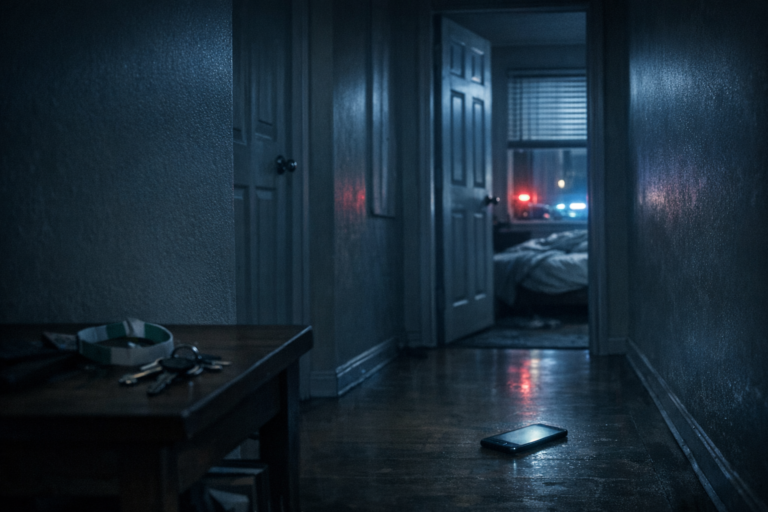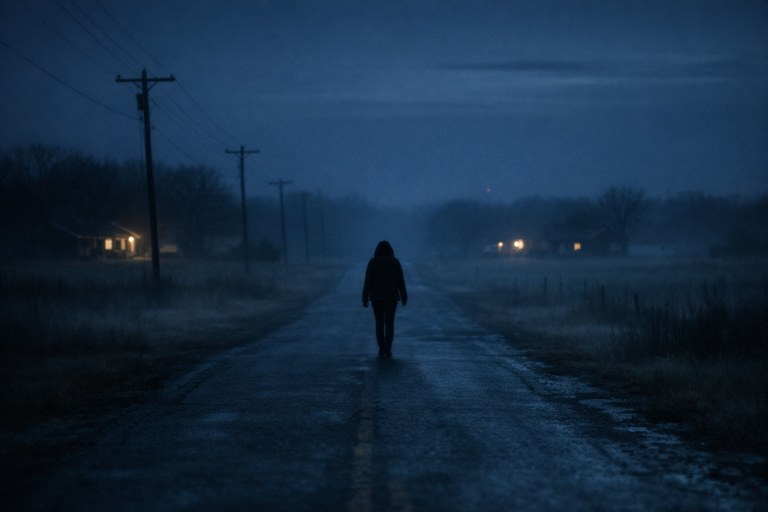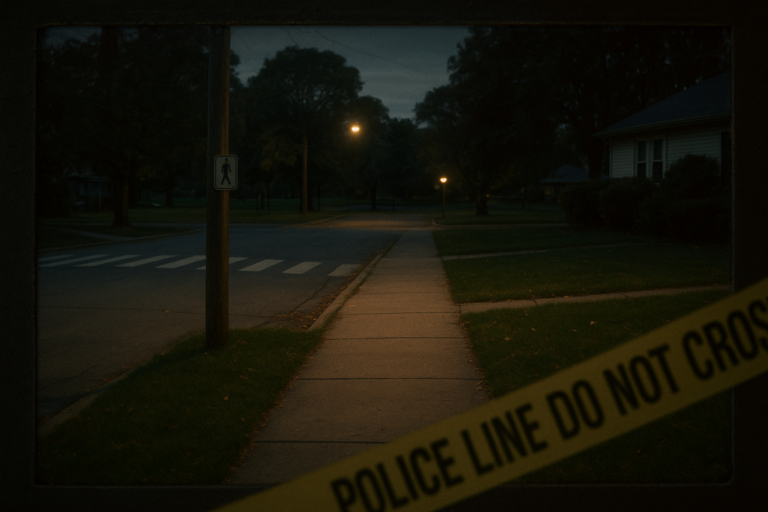
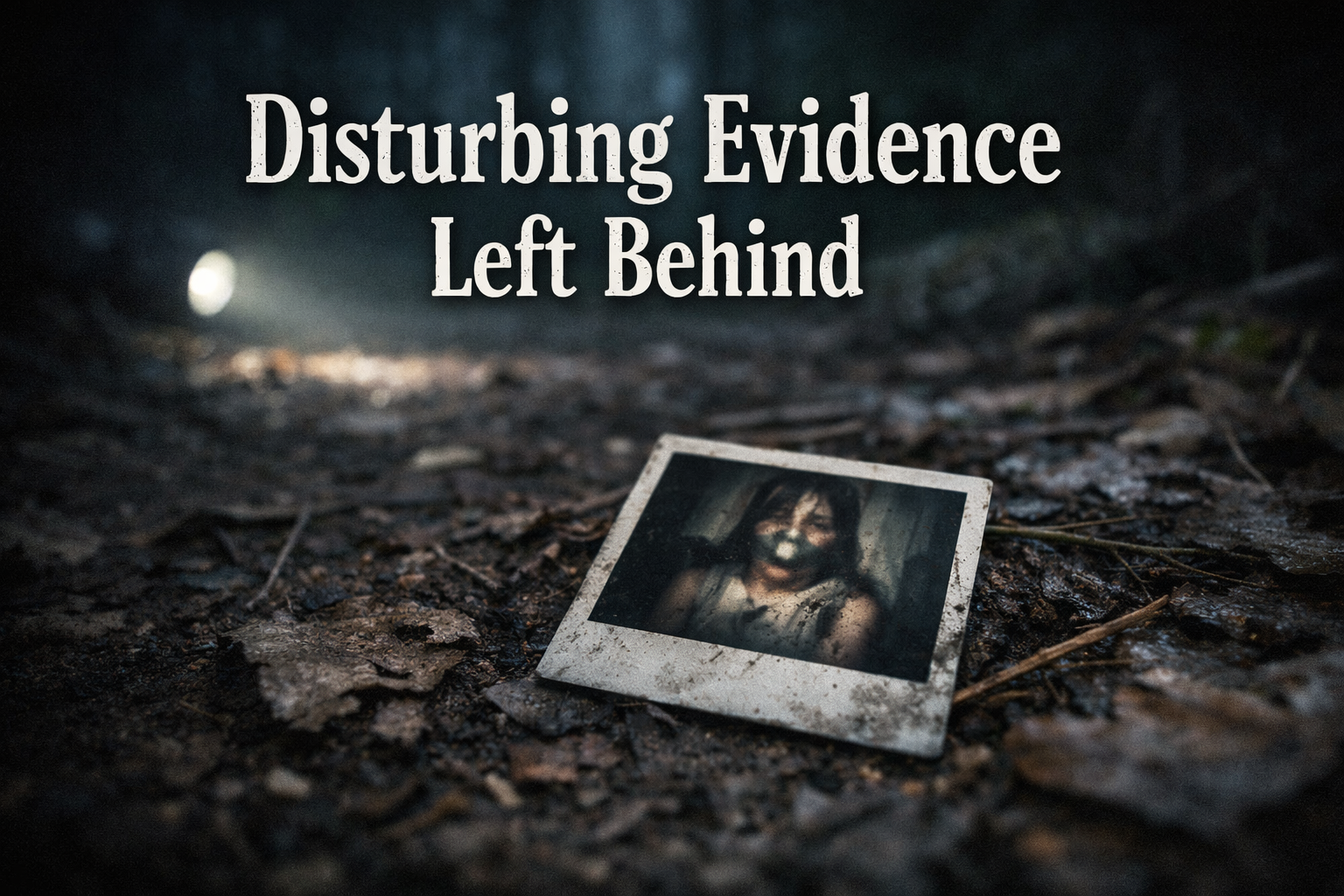
The strangest thing about some disappearance cases is not the silence.
It is what gets left behind.
A Jeep in the desert. A car parked where it should not be. A photo that may or may not show a missing girl. A hotel camera that records almost everything except the one moment everyone needs. A phone full of signals, searches, or unanswered calls that feels less like a solution and more like a locked door.
Disappearances with disturbing evidence left behind stay with people because the clue survives when the person does not. The evidence seems to promise an answer, but when investigators and families lean closer, it often deepens the mystery instead. This page collects those cases as a documentary-style evidence wall: vehicles, belongings, surveillance gaps, physical traces, and digital breadcrumbs that made the story harder to walk away from.
One of the clearest examples is the Daniel Robinson disappearance, where a wrecked Jeep in the Arizona desert became less of an ending than a new beginning for the questions.
The Object Remained, but the Person Was Gone
In a simple investigation, evidence narrows the road. A witness points one way. A camera confirms a time. A phone record fills the empty space. But in the cases below, the object does the opposite. It creates a shape around the absence.
That is why these stories feel different from ordinary missing-person timelines. The evidence is not just a detail. It is the last physical thing still speaking. Sometimes it says someone was scared. Sometimes it says someone changed direction. Sometimes it says nothing at all, and that silence is what makes it unbearable.
The cases already linked from this archive form a pattern. Cars are found without drivers. Cameras catch a person walking into a frame but never out of the mystery. Notes, photos, phones, and last sightings become anchors for families who are trying to hold on to something solid.
Vehicles That Came Back Without Their Drivers
Few clues hit harder than an abandoned vehicle. A car is supposed to be movement, shelter, control. When it is found empty, it feels like the story has split in two: the machine reached the world again, but the person inside it did not.
Daniel Robinson: the Jeep in the Arizona desert
Daniel Robinson vanished after leaving a worksite in Buckeye, Arizona. Later, his Jeep was found wrecked in a desert ravine. That discovery should have made the case clearer. Instead, the location, the condition of the vehicle, and questions around the timeline kept the mystery alive. The Jeep became the center of the story because it was physical, visible, and still unable to explain where Daniel went.
Bryce Laspisa: the wrecked car near Castaic Lake
Bryce Laspisa’s disappearance is built around a long, strange drive and a final scene that still feels unfinished. His vehicle was found crashed near Castaic Lake, but Bryce was gone. The evidence suggested he had reached that place, but it did not explain why the hours before were so unusual or where he went afterward.
Leah Roberts: the road trip that ended with a found vehicle
Leah Roberts left on a road trip that seemed full of personal meaning, then her vehicle was found in Washington state. The scene had enough evidence to prove something had happened, but not enough to prove what. In cases like Leah’s, the vehicle becomes both map and wall: it shows the route, then blocks the ending.
Phoenix Coldon: the running SUV and the missing hours
Phoenix Coldon’s case is haunting because of how ordinary the beginning seemed. Her SUV was later found, reportedly still running, but Phoenix was not with it. That detail gives the case its pressure. People do not usually abandon a running vehicle without a reason, yet the reason has never become clear.
Related road-and-vehicle cases:
Personal Belongings That Felt Like Messages
Some evidence is small enough to fit in a hand, but heavy enough to change the entire mood of a case. A note. A photograph. A backpack. A trace of something left in the wrong place. These clues do not always solve anything. Sometimes they make the room feel colder.
Timmothy Pitzen: the note that promised he would never be found
Timmothy Pitzen’s disappearance became even more chilling because of what his mother left behind. The message suggested he was safe but would not be found. For investigators, that created a terrible problem: it offered a claim without a location, a reassurance without proof, and a mystery that still leaves his family suspended between hope and dread.
Tara Calico: the Polaroid that would not let the case die
Tara Calico vanished during a bike ride in New Mexico. Later, a Polaroid found in Florida drew national attention because some believed it might show Tara. The image was never conclusively proven to be her, but it lodged itself in the public memory. That is the dangerous power of uncertain evidence: even when it cannot confirm the truth, it can keep pulling everyone back.
Asha Degree: belongings, sightings, and the walk into the dark
Asha Degree’s case is one of the most haunting missing-child stories in the archive. Witnesses reported seeing a young girl walking along a highway during a stormy night, and later evidence tied to the case gave investigators pieces to examine. But the central question remains almost impossible to shake: why would a nine-year-old leave home in those conditions, and where did the path truly lead?
If the clue feels like a message, read next:
Surveillance Gaps: When the Camera Almost Catches the Answer
Surveillance footage feels modern, objective, and hard to argue with. It should make a case easier. But some of the most frustrating disappearance evidence comes from cameras that capture just enough to prove a person was there, then fail to capture the one movement that matters.
Jennifer Kesse: the person of interest hidden in plain sight
Jennifer Kesse vanished in Orlando, and her car was later found away from her home. Surveillance footage showed a person parking it, but a fence obscured their face at the worst possible moment. The camera did its job and still failed the case. That tiny visual obstruction became one of the most agonizing details in modern disappearance coverage.
Andrew Gosden: the one-way ticket and the last known images
Andrew Gosden traveled to London on a one-way ticket, and CCTV captured part of his final known journey. The footage confirms movement, but not motive. It shows a teenager arriving in the city, then leaves the story suspended. In Andrew’s case, the camera creates a last doorway rather than a final answer.
Kenneka Jenkins: the hotel night and the camera trail
Kenneka Jenkins’ case drew intense attention because hotel surveillance became part of the public conversation around what happened. Footage can calm a case when it builds a clear sequence. Here, for many readers, it had the opposite effect: every gap, angle, and unanswered movement made the night feel more difficult to process.
Mekayla Bali: public movements that still led nowhere
Mekayla Bali was seen at multiple locations before she disappeared, leaving investigators and online researchers with a trail that feels both helpful and maddening. There are movements to study, but not enough certainty to understand what they mean. The evidence gives shape to the day, then stops before the truth arrives.
For more camera-and-timeline mysteries:
Digital Breadcrumbs and Physical Traces
Phones, photos, emergency calls, and searches can feel like the most intimate evidence of all. They come from the person’s pocket, their hand, their last known routine. But digital evidence can also be cruel. A phone can record activity without explaining who was holding it. A call can capture fear without naming the danger. A photo can become famous without becoming proof.
Kris Kremers and Lisanne Froon: phones, photos, and the Panama timeline
After Kris Kremers and Lisanne Froon disappeared in Panama, recovered phones and camera material became central to how the public understood the case. Emergency call attempts, photographs, and the timeline of activity made the mystery feel painfully close. Yet even with those fragments, the final sequence remains debated and emotionally difficult.
Brandon Lawson: the 911 call that still unsettles listeners
Brandon Lawson’s disappearance is remembered in large part because of the emergency call connected to his final known movements. Calls are supposed to bring help. This one became a recording people listen to again and again, trying to hear certainty inside confusion. That is what makes audio evidence so powerful: it preserves fear in real time.
Sneha Philip: a timeline swallowed by a historic day
Sneha Philip vanished around September 11, 2001, which made every ordinary timeline question harder. Her last known movements became tangled with the chaos of a national disaster. In some cases, evidence is missing because no one was looking. In Sneha’s, part of the tragedy is that the entire city was suddenly overwhelmed by something larger than any one investigation.
Kyron Horman: the school morning that never settled
Kyron Horman disappeared after a school science fair morning that should have been crowded, ordinary, and safe. The case is disturbing because the setting feels controlled: a school, adults, hallways, a normal day. Yet the evidence never produced the clean answer everyone needed.
Emanuela Orlandi: calls, claims, and a mystery around power
Emanuela Orlandi’s disappearance became a global mystery because the evidence and claims around it reached far beyond a normal missing-person case. Calls, theories, and institutional shadows kept the story alive for decades. The longer a case like this goes on, the harder it becomes to separate proof from rumor, and silence from strategy.
Why Evidence Can Deepen a Mystery Instead of Solving It
Evidence is powerful because it gives people something to hold. But it can also mislead, fragment, or create false confidence. A clue may prove where someone was without proving why they were there. A camera may show movement without showing danger. A car may mark a location without explaining whether the person left willingly, under pressure, injured, confused, or with someone else.
That is why these disappearance stories continue to pull readers in. They are not empty mysteries. They are crowded with objects, traces, images, and records. The problem is that every piece seems to point toward a door that stays closed.
- Vehicles can confirm a route while hiding the final movement.
- Belongings can feel personal, but still lack context.
- Surveillance can be accurate and incomplete at the same time.
- Digital evidence can preserve activity without proving who controlled it.
- Witness sightings can help a timeline while still leaving room for doubt.
The most disturbing cases are the ones where investigators are not starting from nothing. They have something. They can point to it, replay it, photograph it, test it, and map it. And still, the person is gone.
What These Cases Have in Common
Across these stories, the pattern is not just disappearance. It is interruption. A normal object appears in an abnormal place. A routine trip stops making sense. A camera catches the middle but not the ending. A note sounds like an answer until you realize it does not tell anyone where to search.
That is what makes evidence-left-behind cases so hard to forget. They invite the reader into the investigation. You look at the same object everyone else looked at and feel the same pressure: surely this should mean something. Surely this should lead somewhere.
But sometimes the most haunting evidence does not close the case. It becomes the reason people keep opening it.
FAQ
What are disappearances with disturbing evidence left behind?
They are missing-person cases where investigators or families have physical, digital, or witness evidence, but the evidence does not fully explain what happened. The clue may be a vehicle, photograph, phone record, note, surveillance image, or recovered belonging.
Why do abandoned vehicles appear in so many disappearance cases?
A vehicle often marks the last confirmed location or route, which makes it one of the strongest pieces of evidence. But if the person is gone and the circumstances are unclear, the vehicle can create more questions about whether they left voluntarily, were injured, met someone, or were forced away.
Can surveillance footage solve a disappearance?
Sometimes it can, especially when it clearly shows who was present and where they went. But many cases are frustrating because footage is partial, blocked, too blurry, or missing the exact moment investigators need.
Why do these cases still get attention years later?
They remain compelling because the evidence feels close to an answer. Readers can see the car, hear the call, study the photo, or follow the timeline, but the final step is missing. That unfinished feeling keeps the cases alive.
Are these disappearance cases still unsolved?
Many of the cases linked here remain unresolved or continue to be debated because key questions about the final movements, evidence, or timeline have never been fully answered.
🔎 If this evidence wall pulled you in, the author suggests these related real cases next:
- The desert Jeep clue in Daniel Robinson’s disappearance
- The surveillance gap that still defines Jennifer Kesse’s case
- The phones and photos from the Panama hiking mystery
- The Polaroid that kept Tara Calico’s mystery alive
- The running SUV in the Phoenix Coldon case
Explore more Disappearances stories here: