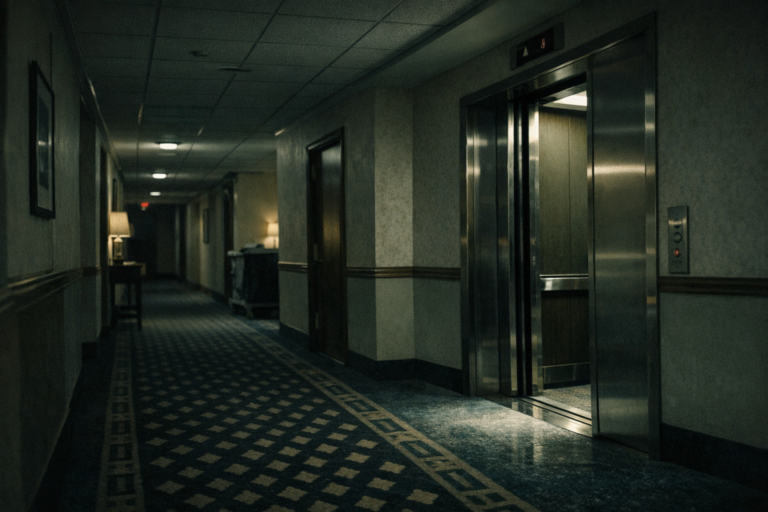
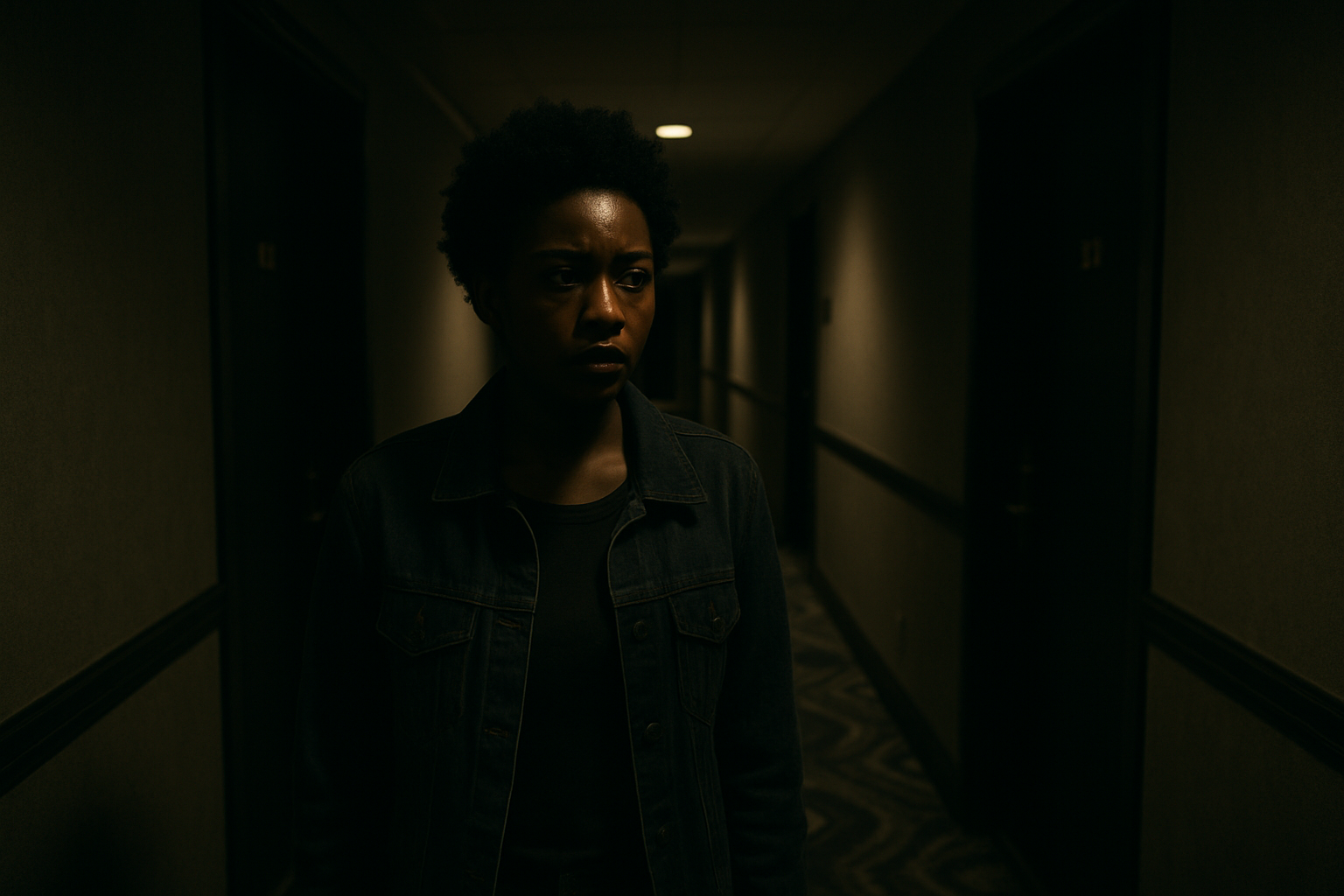
The hallway looked like every hotel hallway is supposed to look at that hour?dim, over-carpeted, and forgettable. But in the surveillance footage tied to Kenneka Jenkins’s final known movements, that ordinary setting becomes the kind of place people can’t stop replaying. A nineteen-year-old woman drifts through a building that should have been full of doors back to safety, and yet every turn seems to carry her farther from it. By the time anyone understood how wrong the night had gone, the hotel already felt less like a party scene and more like a maze that had swallowed someone whole.
Kenneka Jenkins’s disappearance began after a hotel party at the Crowne Plaza in Rosemont in September 2017. What keeps the case alive is not only where she was eventually found, but how the timeline fractured around her final hours. Even with surveillance footage, public attention never fully let go of the question that haunted the case from the start: how could a young woman vanish inside a modern hotel and remain out of reach for so long?
That uneasy feeling is part of why stories about final surveillance footage that only deepens the mystery keep pulling readers back in. In Kenneka’s case, the cameras recorded movement, but they never gave the emotional closure people expected from video evidence.
The Hotel Night Started Like Something Forgettably Normal
On September 8, Kenneka went out with friends to a party at the Crowne Plaza Hotel. There was nothing about the plan itself that sounded unusual. It was the kind of late-night gathering thousands of young people walk into every weekend without imagining it could become a headline by morning. Music, phones, hotel-room noise, people stepping in and out, everybody assuming the night is still under control even after it stops being clear who is where.
That is one of the reasons the case still hits so hard. It did not begin in some isolated wilderness or on a deserted highway. It began in a place filled with walls, elevators, banquet spaces, and other people. Yet the same environment that should have made it easier to locate someone instead created layers of confusion.
As the night wore on, Kenneka became separated from the people she had arrived with. Public reporting and later discussion around the case made clear that the earliest hours were chaotic. Her friends realized she was missing, but like so many last-seen cases, the first problem was uncertainty itself. Who had seen her last? Was she just in another room? Had she gone downstairs? Was she on her way back? Nobody seemed able to answer with the kind of confidence that matters when time is slipping away.
That confusion widened once her mother, Tereasa Martin, learned her daughter was missing and came to the hotel. From that point on, the case was no longer just a missing-person puzzle. It became a story about delay, access, and the fear that the building held answers no one was reaching fast enough. For a family in that moment, every locked door feels personal. Every policy sounds colder than it should. Every minute starts to feel like evidence of a system moving too slowly.
The Surveillance Footage Changed Everything Without Ending the Doubt
When surveillance footage later entered public view, it did not settle the case in the way many people assume video should. If anything, it intensified the unease. The clips appeared to show Kenneka moving alone through hallways and service areas in the early hours of September 9. She seemed disoriented. At times she looked unsteady, as if she was trying to understand where she was while the hotel kept opening into more unfamiliar space around her.
That visual record is what made the case so hard to look away from. There was no clear confrontation on screen. No obvious abductor stepping into frame. Instead, viewers watched a young woman move through a place that felt increasingly wrong for a guest to be in. The footage offered visibility, but not certainty. People could see her. They just could not see enough.
That gap is what pushed the case into the same emotional territory as stories like Jennifer Kesse’s disappearance, where the existence of footage only sharpened the public obsession with what the cameras missed. In Kenneka’s case, every pause, every hallway turn, every timestamp became part of a larger argument over whether the available record told a complete story or only the pieces people were allowed to see.
By then, the hotel itself had become the central image of the mystery. In daylight, hotels feel standardized and controlled. At four in the morning, they can become stranger than people expect. Guests know the front desk, the elevator bank, maybe the room number and the parking lot. They do not know the banquet backways, the unused kitchen paths, the service doors, the tucked-away cold rooms, or the parts of the building that stop feeling public the second you step through the wrong opening. In Kenneka’s case, that hidden geography mattered.
The Discovery in the Freezer Turned a Search Into a National Obsession
Eventually, Kenneka was found inside a walk-in freezer in an unused kitchen area of the hotel. That detail is the one that transformed the case from local tragedy into something much larger. It sounded impossible in the way real cases sometimes do?too stark, too strange, too cinematic to accept without resistance. A teenager goes to a hotel party, disappears inside the building, and is later found in a freezer. For many people, that ending did not feel like an answer. It felt like the beginning of a second mystery.
Investigators later said the evidence supported the conclusion that Kenneka entered the freezer on her own and died of hypothermia. Her death was ruled accidental. Public reporting also pointed to intoxicants in her system as an important part of the explanation for her condition and judgment that night. In the official version, the case was a devastating chain of disorientation, environmental danger, and missed intervention rather than a hidden attack.
But public doubt did not disappear just because an official conclusion existed. It rarely does in a case where the images are this haunting and the final location is this shocking. The very strangeness of the ending guaranteed that people would keep circling back, asking whether anything had been overlooked. Once a case crosses that line, it stops living only in police statements and autopsy conclusions. It moves into internet culture, into amateur frame-by-frame analysis, into rumor, into distrust, into the permanent afterlife of unresolved feeling.
Timeline of Events
- September 8, 2017: Kenneka Jenkins goes to a party at the Crowne Plaza Hotel in Rosemont.
- Late night into early morning: She becomes separated from the group she was with, and confusion begins over who last saw her clearly.
- September 9, early hours: Surveillance footage later shows Kenneka moving alone through hotel hallways and behind-the-scenes areas.
- Morning search period: Her family pushes urgently for answers as questions grow about search access, video review, and how quickly the building can be fully checked.
- Later on September 9: Kenneka is found inside a walk-in freezer in an unused kitchen area.
- Aftermath: The death is ruled accidental, but the footage, hotel setting, and delays keep the case in public debate for years.
What Doesn’t Add Up to the Public Even If the Official Case Closed
Authorities reached a conclusion. The public, however, kept reacting to unresolved emotional pressure points inside that conclusion.
- The surveillance footage feels incomplete even when it is informative. People tend to believe video should remove doubt. Instead, the footage left viewers with a sense of partial visibility.
- The search delay became part of the story. Once a family believes crucial time was lost, that belief never really detaches from the rest of the case.
- The hotel setting feels wrong in a uniquely modern way. A person disappearing inside a monitored building triggers a different kind of fear than a disappearance in the open.
- The freezer location is psychologically hard to accept. Even people who understand the official explanation often struggle with how bizarre the final discovery feels.
That same tension is why the case connects naturally to stories such as Rebecca Coriam’s disappearance and Steven Koecher’s disappearance, where recorded last movements and ordinary-looking spaces somehow lead into blankness instead of clarity.
Why the Case Stayed So Alive Online
Some cases remain famous because of legal twists. Others stay alive because there is a piece of evidence people cannot stop looking at. Kenneka Jenkins’s case had that second kind of gravity. The footage did not just document her final known movements. It invited endless interpretation. People slowed it down, compared clips, argued about edits, argued about timing, argued about whether the official story answered the emotional logic of what they were seeing.
That is one reason the case lasted far beyond the first news cycle. It hit several modern fears at once. The fear of being vulnerable in a place that looks safe. The fear that a building can hide danger in plain sight. The fear that footage exists and still does not feel complete. The fear that a loved one can be in crisis while everyone nearby misreads the situation as temporary confusion.
This is best understood not as a conspiracy performance or a solved-and-forgotten file, but as a tragedy with an official conclusion and a cultural aftershock that never really ended. At the center of every argument is a nineteen-year-old woman who went out for a night that should have ended with a ride home.
Cases like this also feed directly into larger archive trails such as disappearances with disturbing evidence left behind and the unsolved disappearances archive, because readers keep returning to the same unbearable pattern: the clues exist, the images exist, the timeline exists, and still something essential feels missing.
FAQ
What happened to Kenneka Jenkins?
Kenneka Jenkins disappeared after attending a hotel party in Rosemont, Illinois, in September 2017. She was later found in a walk-in freezer inside an unused kitchen area of the hotel, and authorities ruled her death accidental.
Is the Kenneka Jenkins case still unsolved?
Officially, no. Investigators concluded that Kenneka entered the freezer on her own and died of hypothermia. But the case still gets discussed as if it were unresolved because many people remain troubled by the footage, the timeline, and the delays surrounding the search.
Why did the surveillance footage create so much debate?
The footage showed Kenneka moving alone through the hotel, but it did not provide the clean, complete explanation people expected from video evidence. Instead of closing the story, it left viewers with more questions about what happened in the gaps.
Why does this case still get attention years later?
It combines several fears that stay with people: a young woman separated from friends, a public building that became a maze, unsettling footage, and a final discovery that felt almost impossible. Even with an official conclusion, the emotional weight of the case never really faded.
Continue exploring:
- The final camera footage that only made six disappearances feel stranger
- The surveillance gap that made Jennifer Kesse’s morning vanish into silence
- The cruise ship camera mystery that still refuses to sit right
- The man who walked into a quiet neighborhood and was never seen again
- Cases where the evidence left behind only deepened the dread
More Disappearances stories: