After the raft accident, Yossi Ghinsberg waited for Kevin Gale to reappear. He had reached the bank of the Tuichi River, but his traveling companion was gone. In a 2024 interview, Ghinsberg said it took four days for the hope of an immediate reunion to give way to the recognition that he was alone. He did not know whether Kevin was still alive.
Listen to “Lost in the Green Hell” on Spreaker.
The Yossi Ghinsberg survival story was more than a young traveler lost in the Amazon for about three weeks. It was a jungle ordeal shaped by an expedition that went wrong, physical collapse, hallucinations, and a rescue that depended on the friend he had lost.
It belongs among real survival stories that sound impossible, but its power lies in the people behind the survival: four men entered the forest together, then each pair disappeared from the other’s view.
Before the Jungle Turned Hostile
In 1981, Yossi Ghinsberg was 22, recently out of the Israeli military, and traveling through South America. He had already met Marcus Stamm, a Swiss schoolteacher, near Lake Titicaca before going to Bolivia. Kevin Gale was an American photographer. In La Paz came Karl Ruprechter, an Austrian who claimed he could lead them to places outsiders rarely saw.
Karl offered the prospect of an isolated Indigenous community and gold in the rivers. Looking back in his Goodnet interview, Ghinsberg described the attraction as the romance of adventure. He had grown up reading exploration stories and wanted to step into one himself. The four men headed toward the Bolivian Amazon.
Then the expedition began breaking down. According to Ghinsberg’s interviews, supplies dwindled, Marcus became too weak to continue, and the group decided to turn back. The destination that had drawn them into the forest had not been reached. Returning now meant confronting the distance they had already traveled, with a companion whose condition was deteriorating.
Ghinsberg’s later recollections are sometimes sharply critical of Karl. They cannot establish everything Karl intended. What matters to the next stage is more concrete: the group needed a way out, and they were no longer agreed on how to travel together.
The Decision That Changed Everything
As tension inside the group grew, the men built a raft to travel down the Tuichi River. On paper it sounded like relief: a way to leave without retracing the whole journey on foot. But the river line on a map did not show them how to control their homemade craft through the water ahead.
In his GDA podcast interview, Ghinsberg described the raft becoming difficult to handle and the men arguing aboard it. The attempt to escape the exhausting walk created another problem. Staying on the raft meant accepting the river’s risks; abandoning it meant returning to the forest.
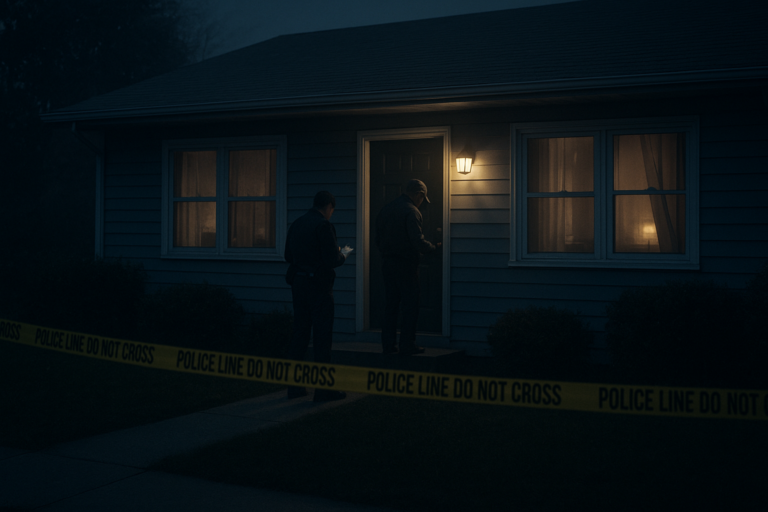
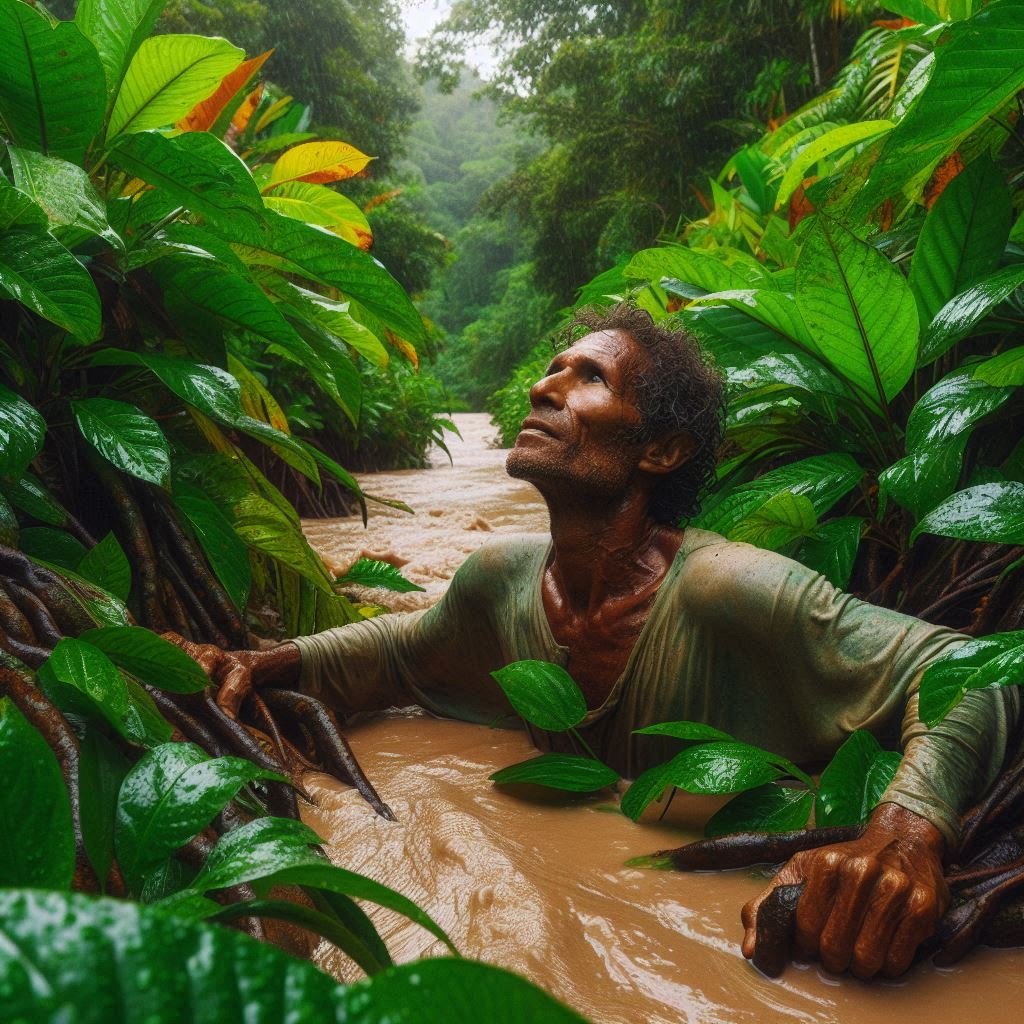
The men had already split into two pairs. Karl and Marcus left on foot; Yossi and Kevin continued on the raft. When the raft reached dangerous rapids and a waterfall, Kevin reached the bank while Yossi was swept downstream. According to Ghinsberg’s account, that river accident separated the two men; Karl and Marcus were not aboard at that point.
The separation left two survival stories unfolding out of sight of each other. Yossi could not see Kevin’s efforts to reach help. Kevin did not know where the current had taken Yossi.
Timeline of the Ordeal
This sequence follows the survivors’ retrospective accounts of the 1981 expedition; it is not a day-by-day contemporary log.
- La Paz: Ghinsberg meets Karl; Marcus is already a traveling companion, and Kevin joins the expedition.
- Into the Bolivian jungle: The group follows Karl into remote rainforest territory.
- Conditions worsen: Supplies diminish and Marcus becomes too weak to continue, according to Ghinsberg.
- The raft plan and split: The men build a raft, then split into pairs; Karl and Marcus leave on foot while Yossi and Kevin continue on the Tuichi River.
- Rapids and separation: Yossi and Kevin lose each other at a waterfall; Kevin reaches the bank and Yossi is carried downstream.
- About three weeks alone: Ghinsberg describes surviving through hunger, foot injuries, fear and isolation.
- Rescue: Kevin returns with local help and finds Yossi alive.
Alone in the Green Hell
Ghinsberg describes being alone for about three weeks, but a duration cannot capture the experience. He still had to find a direction, something to eat, and a way to continue with injured feet. The same river that had separated him from Kevin remained the clearest route through country he did not know.
Rain and wet conditions became central to his account. In the GDA interview, he described his feet as bloody and infected and his body becoming painfully thin. These are his recollections of the ordeal, rather than findings from a medical record. They explain why progress became harder: walking was his means of seeking help, while his feet were increasingly unable to carry him.
The problem was not simply choosing a direction once. It was finding enough food and strength to keep pursuing it. He could not count on a meal at the end of a day’s effort or assume that a night of rest would restore what the journey had taken away.
Ghinsberg scavenged what he could. In his CNN interview, he recalled eating snakes, taking eggs from nests, and using fallen fruit when fresh fruit was beyond his reach. He followed the river downstream. Each of those actions addressed an immediate need, without telling him how much farther he would have to go.
How He Stayed Alive
- He kept adapting: His account describes repeatedly returning to the immediate tasks of finding food and moving along the river.
- He used the environment even while fearing it: Rivers were dangerous, but they also offered direction and the possibility of human contact.
- He scavenged calories wherever he could: His interviews describe opportunistic food gathering rather than a reliable supply.
- He kept moving through pain: His injured feet made the effort to reach help increasingly difficult.
- He stayed emotionally attached to life: His recollections include both despair and renewed determination; his confidence was not constant.
What nearly killed him was not one cinematic enemy. Hunger, injured feet, exposure and isolation accumulated. Nor can the outcome be credited to willpower alone. Kevin’s survival, the assistance he received, and the search that followed were as necessary to the ending as anything Yossi did by himself.
When the Mind Starts to Break
One of the most unsettling parts of the story comes from Ghinsberg’s account of his own perceptions. He told CNN that an aircraft passed overhead without seeing him. Later, he experienced the presence of a woman beside him. He believed he needed to care for her, and that responsibility helped him continue. In the interview, he was clear that she was not real.
That detail matters without requiring a clinical explanation. In Ghinsberg’s recollection, the imagined companion gave him someone to act for when acting for himself had become difficult. It is an intensely personal part of the story, and should remain identified as his experience rather than a general lesson about how hallucinations work.
His story also resists the idea of an unbroken heroic resolve. At some points he described feeling capable; at others he described wanting the ordeal to end. The return of determination did not remove the physical danger. He still needed someone to find him.
The Rescue
By the time rescue came, Ghinsberg was severely weakened. But outside his field of view, Kevin had been fighting his own way out. In a 2019 Ynet interview, Gale described spending five days alone before local hunters brought him to safety. Reaching help did not end his involvement: he joined the search for Yossi.
Kevin returned with local help, including a boat owner identified as Tico in Ynet’s photograph of the rescuers. This was not a lone traveler simply walking out of the forest; other people went back into it to look for him.
When Yossi heard the boat’s motor, he told CNN, he initially mistook it for an insect. Even on seeing people, he was unsure whether they were real. But the boat was real. Kevin was real. After about three weeks alone, Yossi Ghinsberg was back among other people.
What Remains Unanswered
The rescue did not account for everyone. Marcus and Karl had left on foot before the river accident. Their fate remains unresolved in the June 2026 account published by IFLScience, which reports that searches found no trace of them. The evidence does not establish where they died or what happened after the two pairs separated.
There is also a distinction between the expedition’s broad outcome and every remembered scene. In Ynet’s 2019 interview, Kevin disputed aspects of the way arguments and responsibility were portrayed in retellings. Ghinsberg responded that he respected Kevin’s version but had written what he remembered. Their disagreement is a reason to attribute recollections carefully, not to invent an explanation for the missing men.
Like the USS Indianapolis survival story, this account turns on what happened after people became separated from safety. Yossi’s ending depended on someone returning. It is moving because Kevin came back, and incomplete because Marcus and Karl did not. The rescue restored one friendship to the world without resolving the loss of the other two men.
FAQ
How long was Yossi Ghinsberg lost in the Amazon?
Ghinsberg describes surviving alone in the Bolivian Amazon for about three weeks after the river accident separated him from Kevin Gale. Karl and Marcus had already left on foot.
What nearly killed Yossi Ghinsberg?
In his account, hunger, injured and infected feet, exposure and isolation left him severely weakened.
How was Yossi Ghinsberg found?
Kevin Gale survived separately, reached safety, and returned with local help to search for him. The returning search party found him alive.
Is the Yossi Ghinsberg survival story true?
Yes. Ghinsberg and Gale survived the 1981 expedition and have both described it. Ghinsberg’s memoir is published in English as Jungle or Lost in the Jungle. Some remembered details are disputed; a dramatization should not be treated as a record of every event.
Sources & References
These interviews provide firsthand recollections, not independent confirmation of every scene. Differences and source limitations are identified below.
- Yossi Ghinsberg — The Amazon Survival Story That Became a Hollywood Film
Later website retelling. Its claim that Marcus survived conflicts with the recorded interviews and reporting below; that claim is not relied on here. - CNN — Larry King Live interview, April 27, 2006
Ghinsberg’s firsthand description of three weeks alone, scavenged food and Kevin’s return with local rescuers. - GDA Backstage Pass Podcast — Episode 28: Yossi Ghinsberg
Transcript covering how the group formed, the raft and split, foot injuries and the return of rescuers. - Goodnet — interview with Yossi Ghinsberg, December 6, 2024
His attraction to the expedition and recollection that he initially expected Kevin to return. - Ynet — Kevin Gale interview and Ghinsberg’s response, 2019 (Hebrew)
Gale’s survival and search account, a rescue photograph identifying Tico, and disagreements over later portrayals. - IFLScience — the expedition and the missing companions, June 8, 2026
Recent retrospective reporting that the fate of Karl and Marcus remains unresolved.
Related stories
Explore this topic
Watch This Story on YouTube
Prefer to watch? See the full story on our YouTube channel.