John List left messages for the people who might notice his family was missing: teachers, employers, the post office, even the milkman. Inside the house in Westfield, New Jersey, he left something else—a confession addressed to his minister.
By the time the bodies of his wife, mother and three children were discovered in December 1971, List had been gone for nearly a month. The notes had given the family’s absence an explanation. The house held the truth.
That distance between what a home appears to contain and what has happened inside it runs through these seven cases. But it leads in very different directions: a fugitive living under another name, a guilty plea, an unresolved homicide and an acquittal.
Some of these deaths were caused by relatives; others by intruders, or by someone whose identity remains unknown. The homes connect the stories. The evidence separates them.
John List: a house left behind, a face brought back
The victims in the John List case were Helen, his wife; Alma, his mother; and his teenage children, Patricia, John and Frederick. Their deaths ended five lives while List began another, using the name Robert P. Clark.
Years passed. Photographs of a man wanted since 1971 could no longer show exactly what a neighbor might see in 1989. The search needed a face that had aged.
The FBI’s account describes an age-enhanced image produced in 1987, followed two years later by a sculpted likeness shown on America’s Most Wanted. A former neighbor recognized the man. Her tip supplied his address in Virginia; fingerprints helped establish the identity he denied.
Agents arrested List near Richmond on June 1, 1989. In April 1990, a jury convicted him of five counts of first-degree murder. The man living as Robert Clark was now answerable for the family he had left in Westfield.
Chris Watts: the appeal for a return
List had left before anyone found his family. Decades later, another father remained in public view, asking for help. In 2018, Chris Watts appeared in television interviews asking for the safe return of his wife and daughters. Shanann was pregnant. Bella and Celeste were young children. To viewers encountering the story in those first days, this was a family to be found.
Then Watts was arrested. On November 6, he pleaded guilty to all nine charges arising from their deaths. Later that month, he was sentenced to life without parole.
The man who had asked for his family’s return admitted responsibility for their deaths. That admission settled who was responsible. Reconstructing where and how each killing occurred was a separate task; the guilty plea alone did not supply that sequence.
Laci Peterson: a search that reached the bay
Laci Peterson’s family reported her missing on Christmas Eve 2002. She was eight months pregnant. The search continued for months before remains were found along San Francisco Bay in April 2003: first Conner’s, then Laci’s the following day.
Scott Peterson was convicted in 2004 of murdering his wife and their unborn son.
Court challenges continued. The district attorney reported in May 2026 that Peterson’s third habeas petition had been denied on April 27, while a separate appeal remained pending. That was the prosecution’s dated account of specific proceedings, not an end to every legal avenue.
Villisca: two children staying the night
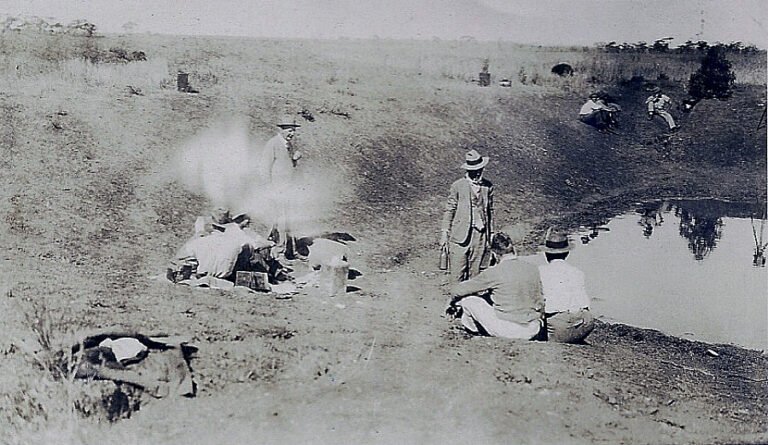
Peterson’s case reached a verdict and years of challenges. At Villisca, the question of who committed the crime never reached such a resolution. The Moore home in Iowa held more than one family on the night of the 1912 killings. Two Stillinger children were staying over with the Moore children. Eight people died: the six members of the Moore family and their two young guests.
That overnight visit is a small detail with an enormous consequence. The crime reached beyond the people who lived in the house to children who had come there temporarily. In the Villisca axe murders, the setting survives more clearly than the identity of the killer.
The preserved house is now a historic attraction. Its operator continues to describe the murders as unsolved. Visitors can enter the building, but the survival of the rooms has not supplied the answer the investigation failed to find.
JonBenét Ramsey: found where the search began
On December 26, 1996, the family of six-year-old JonBenét Ramsey reported finding a ransom note in their Boulder home. She was reported missing. Later that day, she was found dead inside the same house.
The search had begun with a ransom note suggesting that JonBenét had been taken away. Finding her inside the house made the note itself part of a different question: how did its account fit the killing? The discovery established where she was found, while leaving the author of the note and the sequence of events unresolved.
Boulder Police still describes the case as an open homicide investigation. Its December 2025 update reported further interviews, new evidence, and testing or retesting of other evidence. Those steps represent work toward an answer; the department has not announced a solution.
Caylee Anthony: a verdict that did not explain a death
Two-year-old Caylee Anthony was reported missing in July 2008. Months later, her remains were found in woods near the family home. The discovery ended the search for her, but it did not settle the competing accounts that reached court.
Casey Anthony’s trial ended with a murder acquittal in July 2011. The search had established that Caylee was dead. The prosecution had not persuaded the jury that her mother murdered her. Those are different findings, and the acquittal left the circumstances of the child’s death without a complete explanation.
The Petit family: getting out of the basement
William Petit escaped the basement of his Cheshire home after breaking the restraints on his hands. Injured, he reached a neighbor for help. His wife, Jennifer Hawke-Petit, and daughters Hayley and Michaela did not survive the 2007 attack.
Steven Hayes and Joshua Komisarjevsky were convicted of the Cheshire home invasion murders. The violence had come from intruders. Petit survived and, years later, remarried and had a son. His later family life did not erase the lives the attack had ended.
Hayley was seventeen, preparing to begin at Dartmouth. Michaela was eleven. The foundation established in their names and Jennifer’s has supported education, people living with chronic illness and those affected by violence. At the site of the former Cheshire home, neighbors, friends and strangers created gardens.
Questions Still Open
- Villisca: Who killed the eight people in the Moore home? The overnight guests widened the loss beyond one household, but their presence does not tell us whom the killer intended to target.
- JonBenét Ramsey: How does the ransom note fit the killing? Her discovery inside the house made the note’s purpose and the sequence of events crucial questions, alongside the killer’s identity.
- Caylee Anthony: What happened before her remains were left in the woods? Recovery established her death; the acquittal did not supply a complete account of it.
What remains of a home
List tried to leave his family’s house behind and live under another name. At the end of these stories, other people have had to decide what to preserve: a building, an investigation, or work undertaken in the names of those who died.
At Villisca, visitors can still enter the house. In Cheshire, neighbors and strangers planted gardens where the Petit home once stood. The address remained, but what people came there to do had changed.
Frequently Asked Questions
Were all these killings committed by relatives?
No. List and Watts killed members of their own families, and Peterson was convicted of murdering Laci and Conner. The Petit family was attacked by intruders. Villisca and JonBenét Ramsey’s homicide remain unsolved. Casey Anthony was acquitted of murder.
How does a home connect these cases?
A family home can be a crime scene, a recovery site or the starting point of a disappearance. Caylee Anthony’s remains were found in nearby woods; Laci and Conner Peterson’s were found by San Francisco Bay. This collection does not place every killing inside a house.
How was John List finally identified?
A former neighbor recognized the likeness shown on America’s Most Wanted and supplied a tip. The FBI describes fingerprints as part of the identification that led to his 1989 arrest.
Has the JonBenét Ramsey case been solved?
No solution has been announced on Boulder Police’s case page, checked October 21, 2026. Its most recent annual update there is dated December 2025 and describes continuing interviews and evidence testing.
What happened in Scott Peterson’s 2026 court proceedings?
His third habeas petition was denied on April 27, according to the district attorney’s May 12 release. That release also listed a separate pending appeal; it does not establish the status of every later challenge.
Sources & References
Primary records and reporting supporting the seven cases. The account was reviewed against available source material on October 21, 2026:
- Villisca Axe Murder House — About Us: victims, overnight guests and the surviving historic house.
- FBI Law Enforcement Bulletin — Forensic Imaging Comes of Age, January 1994: List’s changed appearance, recognition and fingerprint identification.
- TIME — Heartbreaking Details From the Connecticut Home Invasion: Petit’s escape, the victims, convictions and later family life.
- Weld County District Attorney — 2018 news archive: the dated entry records the nine-count plea, corroborated by the contemporaneous ABC7 report below.
- Petit Family Foundation — History and purpose: Hayley’s college plans, Michaela’s age, memorial work and gardens at the former home.
- FOX 9 — Chris Watts sentenced to life in prison, November 19, 2018: his public appeals and sentencing.
- Boulder Police — JonBenet Ramsey homicide case page: discovery in the house, open status and December 2025 update.
- Boulder Police — December 2023 investigation update: the reported ransom note and initial missing-child report.
- ABC News — DNA Testing Identifies Child’s Remains as Caylee Anthony: police confirmation of the discovery near the family home.
- TIME — What to Know 5 Years After Casey Anthony’s Murder Acquittal: Caylee’s disappearance, recovery and the 2011 verdict.
- State v. List — New Jersey appellate decision, June 21, 1993: the notes, confession, departure, discovery and convictions.
- AP — List arrest report, June 2, 1989: arrest date.
- AP — List sentencing report, May 1, 1990: family names and conviction date.
- ABC7 / WTVD — Watts guilty plea, November 6, 2018: contemporaneous reporting confirms all nine charges.
- Stanislaus County District Attorney — May 12, 2026 post-conviction update: Peterson case history, the April ruling and separately pending appeal. This is the prosecution’s account.