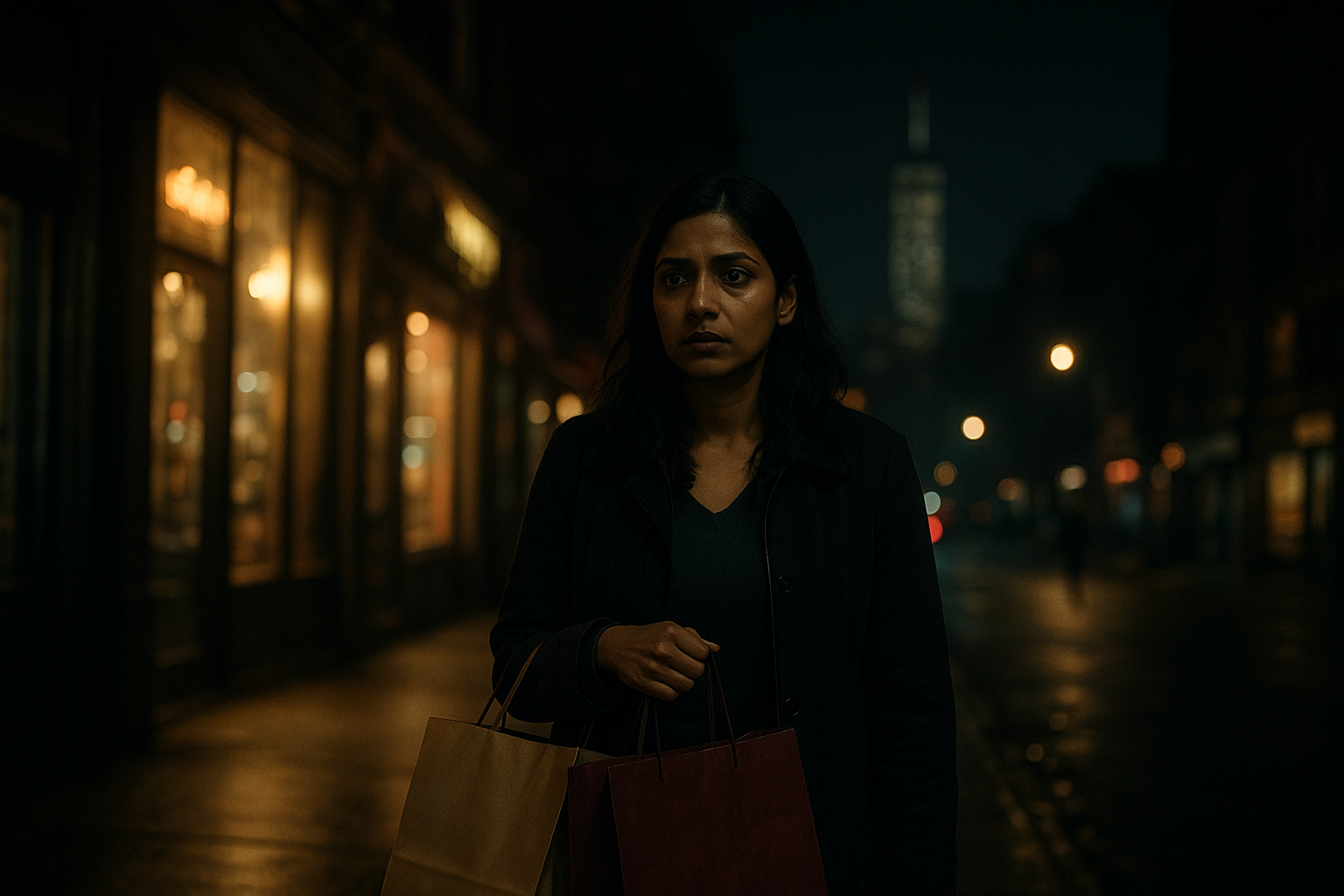
By the time the sun came up over Lower Manhattan on September 11, 2001, Dr. Sneha Philip had already slipped into one of the most difficult missing-person cases in modern American memory. Somewhere between an ordinary evening of errands and the morning the towers were hit, her trail went cold. And what makes the case so haunting is not just that she vanished. It is that history exploded around the exact space where the answer should have been.
Dr. Sneha Philip disappeared on the night before 9/11 after she was last confirmed shopping near the World Trade Center. Her case still matters because it sits at the intersection of a missing-person mystery, a national tragedy, and a timeline that has never fully closed. Like other disappearances where the last confirmed sighting only made the story more unsettling, the final known hours raise more questions the closer you look.
On September 10, Sneha was off work. She had spoken with her mother online for hours that afternoon. She mentioned plans, errands, ordinary things. Nothing about that conversation suggested that by the next day her name would become attached to one of the strangest unresolved disappearances in New York history.
Later that day, she dropped off clothes at a dry cleaner and went shopping at Century 21 near the World Trade Center. Credit card records and store surveillance place her there buying clothing, bed linens, and shoes. It is the kind of evidence investigators usually dream of at the start of a case: time-stamped, concrete, anchored in a real place. But in Sneha Philip’s story, even the strongest facts feel like they are standing at the edge of a cliff.
Because after that, the certainty ends.
Her husband, Ron Lieberman, returned home after midnight and realized she was not there. At first, that absence did not necessarily mean danger. New York is full of late nights, changed plans, and people who drift home later than expected. But by the following morning, normal explanations had been crushed under something far larger. At 8:46 a.m., American Airlines Flight 11 struck the North Tower. In minutes, lower Manhattan became a scene of smoke, sirens, dust, and panic.
And Sneha Philip was still missing.
That is the split at the center of this case. One possibility is almost unbearable because it sounds noble: a doctor living close to the towers saw disaster unfolding and ran toward the wounded. The other is colder and somehow even more disturbing: whatever happened to Sneha may have begun before the attacks, and 9/11 may have destroyed the evidence that could have explained it.
Timeline of Events
- Afternoon, September 10, 2001: Sneha chats online with her mother for roughly two hours.
- Later that afternoon: She goes out in Lower Manhattan, drops off clothes, and shops at Century 21.
- Evening, September 10: Credit card records show purchases including clothing, bed linens, and shoes.
- After midnight: Ron Lieberman comes home and finds that Sneha has not returned.
- Around 4:00 a.m., September 11: A call is later traced from the apartment phone to Ron’s cell phone.
- 8:43 a.m.: Lobby surveillance reportedly captures a woman entering the apartment building shortly before the first plane hits, though the image is too unclear for certainty.
- 8:46 a.m.: Flight 11 strikes the North Tower.
- After the attacks: No confirmed trace of Sneha Philip is ever found.
That possible 8:43 a.m. sighting is one of the details that keeps this case alive. The figure on the tape was only visible in silhouette. Some believed the woman’s build, hair, and movement were consistent with Sneha. Others argued the footage was far too indistinct to trust. If it was her, then she may have made it back to her building just minutes before the first impact. If it was not, then her last confirmed movements remain locked in the previous evening.
And that difference changes everything.
If she returned home that morning, maybe she witnessed the first strike from close range and rushed out to help. If she never returned, then the mystery opens in a very different direction. Then the missing hours are not just unexplained. They become the whole case.
What makes Sneha Philip’s disappearance so difficult is that the story contains two timelines layered on top of each other. One is the final ordinary timeline: shopping bags, city sidewalks, a husband coming home late, a missing night. The other is the national timeline everyone remembers: hijacked planes, towers burning, streets filling with ash, communication collapsing all at once. Most missing-person investigations depend on careful reconstruction. This one was swallowed by chaos before it even had time to breathe.
Her family came to believe she died in the attacks, possibly while trying to help victims. It is not an impossible theory. She was a physician. She lived close to the World Trade Center. The courts ultimately recognized her as a 9/11 victim. But recognition is not the same thing as certainty, and certainty is what this case has never offered.
Confirmed Facts, Assumptions, and the Space Between Them
Confirmed facts:
- Sneha Philip was last definitively documented on September 10, 2001.
- She was captured on surveillance video shopping at Century 21.
- Credit card records support those purchases.
- She did not come home that night, or at least was not there when her husband returned.
- No confirmed sighting after the shopping trip has ever been publicly established.
Strong but unresolved points:
- The 4 a.m. call from the apartment phone to her husband’s cell.
- The unclear 8:43 a.m. lobby footage that may show Sneha returning.
- The theory that she ran to help after the attacks began.
Assumptions that keep shaping the case:
- That because she was a doctor, she would have rushed toward the disaster.
- That because no trace emerged afterward, she must have died in the collapse zone.
- That the attacks themselves explain every gap in the timeline.
This is where the case becomes so unnerving. Each theory seems emotionally convincing right up until it collides with the missing evidence. If Sneha died at Ground Zero, why is there no witness who could place her there with confidence? If she vanished for unrelated reasons before the attacks, why did no credible sign of her ever surface again? If she spent the night with someone, why has that missing piece never resolved the story?
Cases like Jennifer Kesse’s disappearance and Rebecca Coriam’s disappearance haunt people for a similar reason: a person is seen, or almost seen, at the edge of the answer, and then the trail breaks in a way that feels impossible. Sneha’s case is even more brutal because the broken point sits beside one of the most documented catastrophes in history.
What Doesn’t Add Up
- No verified final destination: After the shopping trip, no one can say for sure where Sneha went.
- No bags in the lobby footage: If the woman on tape was Sneha, where were the shopping bags from Century 21?
- No confirmed emergency-response record: There is no clear public record placing her among documented responders that morning.
- No later financial or identity trail: There is no strong evidence that she started a new life.
- The timing is almost too destructive: If a separate crime or accident happened that night, 9/11 may have buried the very evidence needed to solve it.
There were also pressures in her life before she vanished, including professional and personal strain, and those details have fueled years of debate over whether the disappearance began as a private crisis rather than a disaster-related death. But even that line of thinking runs into the same wall: stress may explain vulnerability, yet it does not explain total disappearance. Not in a city this dense. Not over this much time. Not without leaving something behind.
That is why the case keeps pulling people back. It is not just sad. It is structurally maddening. Every path seems to end with a missing piece that should exist but does not.
If she died in the attacks, she became one of the most unusual victims of 9/11: a woman whose final movements remain partly unaccounted for and whose last hours were never fully reconstructed. If she disappeared before the attacks, then the worst terror event in modern American history may have accidentally erased the route to the truth. Either version feels tragic. Neither version feels complete.
And that incompleteness is what gives the story its long shadow.
Most unsolved disappearances harden over time into a familiar shape. There is the road, the trail, the motel, the car, the last call, the one witness nobody can verify. Sneha Philip’s case refuses that pattern because history invaded it in real time. The streets around her apartment became a disaster zone. Records, memories, routines, and the city’s normal rhythm were shattered in a single morning. For investigators, it was like trying to solve a vanishing inside an earthquake.
Years later, the central image still lingers: a doctor walking through Lower Manhattan on a normal September evening, carrying shopping bags, moving through a city that had no idea what was coming. Within hours, the skyline would break open. The air would turn white with dust. Thousands of names would be spoken. And hers would remain caught between categories: missing woman, presumed victim, unresolved mystery.
That is why the case still gets attention. It is not only about what happened to Sneha Philip. It is about how close a person can be to history and still disappear inside it.
FAQ
What happened to Sneha Philip?
No one knows for certain. The last confirmed evidence shows her shopping near the World Trade Center on September 10, 2001. After that, the timeline becomes uncertain, and debate has continued for years over whether she died in the 9/11 attacks or disappeared before they began.
When was Sneha Philip last seen?
Her last confirmed sighting was on surveillance footage at Century 21 on the evening of September 10, 2001. There was also later discussion of unclear lobby footage from the morning of September 11, but that image has never resolved the case with certainty.
Was Sneha Philip officially considered a 9/11 victim?
Yes. After legal proceedings, she was officially recognized as having died in the September 11 attacks. That ruling gave the case an official conclusion in legal terms, but it did not answer every factual question surrounding her final hours.
Why does the Sneha Philip case still get so much attention?
Because it combines an ordinary missing-person mystery with one of the most extraordinary mornings in modern history. The overlap between her disappearance and 9/11 created a gap in the evidence that has never fully closed.
Is the Sneha Philip case solved?
Legally, her death was tied to 9/11. Emotionally and investigatively, many people still see the case as unresolved because there is no complete, proven account of where she went after her last confirmed shopping trip.
🔎 If this story stayed with you, the author suggests these real cases next:
- The woman who vanished in daylight and left only a ghost on camera
- The cruise-ship disappearance where the final footage solved nothing
- Disappearance cases that collapse at the last known moment
- The archive of cases built from broken timelines, sightings, and silence
Explore more Disappearances stories here: