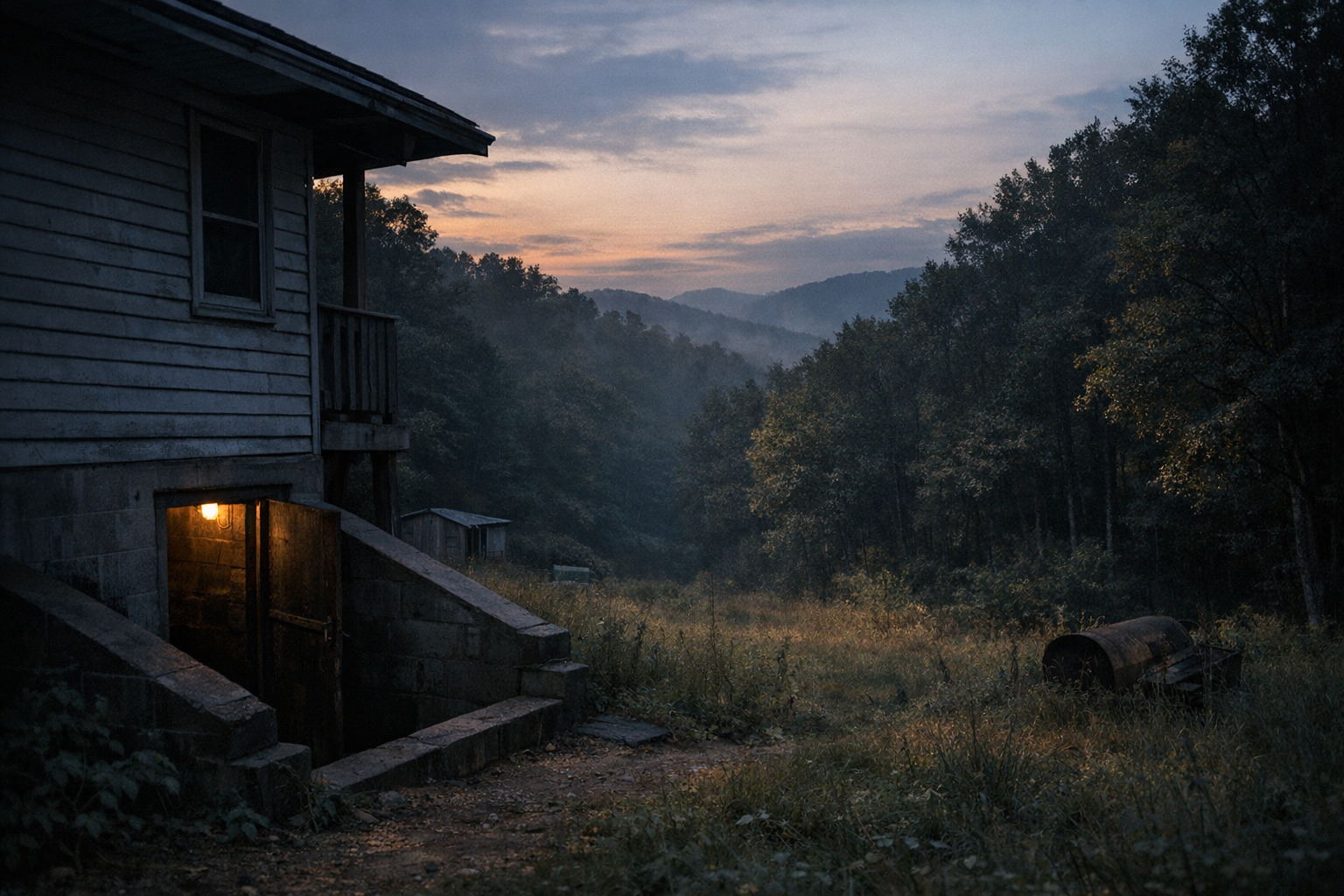
The last thing anyone expected on that Tennessee hill was for an ordinary evening to split open in a matter of minutes.
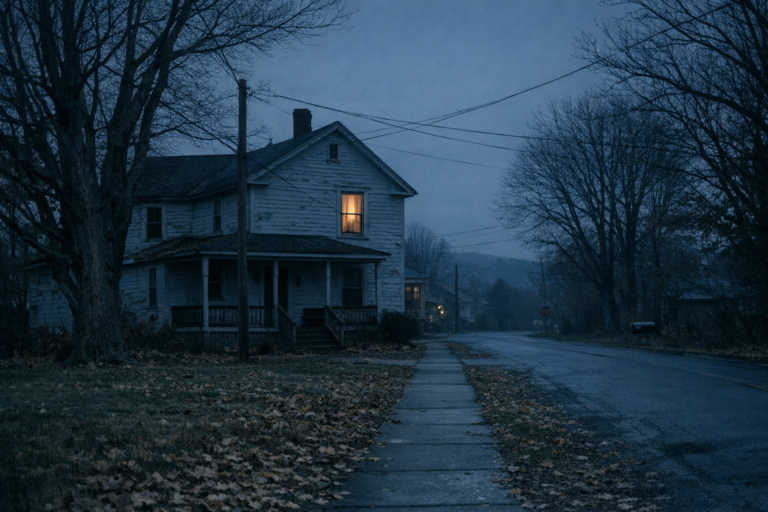
It was still light outside. The house sat back from the road, tucked into rough country where a child could disappear behind a line of trees almost as fast as someone could call her name. Inside, the rhythm of the day seemed painfully small: family, chores, a walk through the house, a trip toward the basement stairs. Then, almost at once, that rhythm was gone. A five-year-old girl who had been there one moment was suddenly nowhere.
And that is why the Summer Wells case still grips people. Not because it began with a dramatic public scene, but because it began with something so ordinary it feels impossible to accept. A child was supposedly only a few steps away. Then she was missing.
Summer Wells is at the center of one of Tennessee’s most haunting missing person cases — an unsolved disappearance that still draws national attention years later because the gap between “she was just here” and “she’s gone” has never been convincingly closed. Around the five-year mark in June 2026, the case resurfaced again because that narrow window of missing minutes, the conflicting recollections around the home, and the scale of the search continue to leave the public with the same question: how does a child vanish from such a short stretch of time?
That question also places Summer’s case beside other stories in the site’s Missing Children and Teens Archive, where the most unsettling cases often begin with an everyday routine that should have been safe.
Summer Wells was five years old when she was reported missing from her family’s home on Ben Hill Road in Hawkins County, Tennessee, on June 15, 2021. According to the account repeated in coverage of the case, the final ordinary moments involved Summer being outside with family, going back toward the house, and then moving toward or inside the basement area shortly before she could no longer be found. That detail — the basement stairs, the brief movement through the home, the sense that she was last known to be in a place that should have been contained — has shaped public memory of the case ever since.
Because when people hear “missing child,” they often picture a crowded park, a roadside stop, a stranger’s van, a sudden break in public view. Summer’s disappearance feels different. It feels domestic. Close. Claustrophobic. The timeline does not open with chaos. It opens with a family property, a house on a hill, a child expected to still be nearby, and a set of minutes that somehow widened into one of the largest searches the region had seen.
Timeline of Events
- June 15, 2021, late afternoon: Summer is at home in rural Hawkins County, Tennessee.
- Shortly before the 911 call: Family accounts place her near the house, with the basement stairs becoming one of the most discussed last-known details.
- Around 6:30 p.m.: Summer is reported missing.
- That night: Search teams begin combing the steep, wooded area around the home.
- Days that follow: State and local agencies expand the operation, using search crews, dogs, aviation support, and repeated ground efforts.
- Months and years later: The case remains unsolved, with investigators continuing to ask for tips while public debate intensifies around the timeline and family statements.
- June 2026: The five-year mark brings renewed media attention, new public discussion, and the same unanswered questions about the missing-minute window.
The land around the home mattered immediately. Ben Hill Road was not the kind of setting where a search could be clean or simple. The area was rough, uneven, heavily wooded in parts, and capable of swallowing sightlines almost instantly. That fueled one theory early: maybe Summer wandered away and became lost. In another case, that possibility might have felt straightforward. Here, it collided almost immediately with the uncomfortable fact that searchers moved fast and searched hard.
This was not a casual neighborhood check. Summer’s disappearance triggered a major response. Investigators and volunteers searched through the night. More teams came. More resources came. The surrounding terrain was examined again and again. And as the scale of that search became clearer, the simplest explanation began to feel less simple to a lot of observers.
If she wandered, where was the trace that should have followed?
If someone took her, when did that opportunity open?
If the last known minutes inside the home were remembered correctly, how did the case turn outward so fast into woods, roads, and possibilities that seemed to multiply instead of narrow?
That is the fracture point in the Summer Wells case. There are missing-child investigations that become mysteries because there is almost no starting information. This one became a mystery because the starting information seemed too small, too close, and too ordinary to explain what came next.
What Doesn’t Add Up
- The missing-minute window is extremely short. Public interest never moved past that because it suggests whatever happened may have happened very quickly.
- The home setting should have limited possibilities. A child being near or inside the house feels different from vanishing in a public crowd.
- The search was extensive. The scale of the response made many people question whether a simple wandering scenario fully explains the lack of resolution.
- Accounts and interpretations have often felt inconsistent. That does not prove a crime, but it does keep suspicion and debate alive.
- No definitive public answer has closed the loop. Years later, the case still has no public resolution strong enough to settle the central timeline.
The reason these points matter is not because every contradiction proves one specific theory. They matter because Summer’s case lives in the space between competing explanations, and none of them has ever fully absorbed the details.
The wandering theory has always had emotional force because the property was rural and the terrain unforgiving. Children can move faster than adults expect. Small bodies disappear into brush and ravines more easily than people want to admit. But the counterweight is obvious: an enormous search effort without the kind of ending that wandering cases often eventually produce.
The abduction theory has its own force because the disappearance window is so abrupt. If Summer truly moved back toward the house and vanished in a matter of minutes, some people argue that an outside actor may be the only explanation that fits the speed and the absence. But that theory brings its own problems. Rural properties are not invisible stages. A stranger would still need timing, access, luck, and a way to leave without leaving behind the kind of clear answer investigators could lock onto.
Then there is the third layer — the one that keeps the public from letting the story rest. It is not a single theory so much as a feeling that the true shape of the final minutes may never have been cleanly established in public. In some cases, that uncertainty fades with time. Here, it hardened. The more people revisited the sequence, the more they focused on the ordinary domestic details: who was where, when Summer was last seen, how long the gap really was, and whether the first version of events captured the truth or only the panic after it.
That is where becomes impossible to ignore. Summer Wells did not disappear from a highway shoulder or from a giant public venue. She disappeared from a tiny pocket of normal life: stairs, a basement, a walk through the house, a few minutes nobody thought they would need to preserve forever. That smallness is exactly what makes the case so hard to shake.
It also explains why the story keeps resurfacing. Anniversaries bring attention, but this case has more than an anniversary effect. It has unresolved domestic tension built into it. Every time people hear the basic outline, they instinctively reconstruct the scene in their heads. They imagine the hill, the doorway, the basement steps, the rooms, the yard, the brief passage of time. Then they reach the same dead stop investigators reached: there should be more here than there is.
Why This Case Still Gets Attention
- Summer was very young. Child disappearances carry a different emotional weight, especially when the last known window is so short.
- The timeline is easy to remember and hard to accept. People do not forget stories built around “she was just here.”
- The search was massive. A large response with no clear public resolution keeps interest alive instead of settling it.
- The family-home setting makes the case feel intimate. It turns the mystery into something people can picture too easily.
- Public debate never really cooled. Contradictions, speculation, and anniversary coverage keep pulling the case back into view.
Five years later, that attention is still not just internet noise. It reflects a genuine structural tension in the case. The public does not usually stay locked onto a disappearance for this long unless the story contains a detail that feels like it should unlock everything. In Summer’s case, that detail is the final ordinary sequence itself.
The basement stairs have become more than a location detail. They symbolize the entire unsolved problem. They mark the point where the story narrows so tightly it should become easier to solve, but somehow it does the opposite. The closer the final movements seem, the less believable the disappearance feels. And because it feels unbelievable, people return to it again and again, searching for the one missed detail that would finally make the story hold together.
There is also a broader reason the case fits so strongly inside the Disappearances archive. Summer Wells belongs to a specific and deeply unsettling group of cases: children who vanish in the middle of ordinary family time, leaving investigators to work backward from a tiny domestic window instead of a long public trail. It is the same kind of emotional territory that makes readers keep moving from one case to another, comparing the final minutes, the search patterns, the witness gaps, and the ways a single afternoon can collapse into years of uncertainty.
And that comparison matters. Cases like this are not remembered only because they are sad. They are remembered because they resist narrative closure. The public wants one clean sentence: she wandered, she was taken, this is the missing step, this is what everyone missed. But Summer’s case has never delivered that sentence. Instead, it offers fragments — a home, a short timeline, a search, years of debate, and a child still missing.
That is what makes the case so difficult to rank away as “old news.” The five-year mark in 2026 did not create interest from nothing. It exposed how little emotional distance the story has gained. Summer Wells is still frozen at the same unbearable point in public memory: five years old, on that property, moving through what should have been a safe evening, and then suddenly gone.
Until that missing-minute window is convincingly explained, the case will continue to divide people. Some will believe the answer lies out in the landscape around the house. Others will believe the key was always closer in, inside the original sequence and the people who lived it. But everyone is trapped by the same fact: the final known stretch of Summer’s day was so ordinary that it should have been easy to understand. Instead, it became the part nobody can stop questioning.
And maybe that is the real reason this story lingers. Not just because a child disappeared, but because the disappearance began in the kind of moment families live through every day without fear. A set of stairs. A house on a hill. A parent thinking there is still time. Then the instant after that — the instant nobody can reconstruct well enough — becomes a hole large enough to swallow an entire case.
🔎 If this story stayed with you, the author suggests these real cases next:
- The child disappearance that began with a walk into the dark
- The playground vanishing that still has no ending
- The Tennessee timeline that still refuses to make sense
Explore more Disappearances stories here: