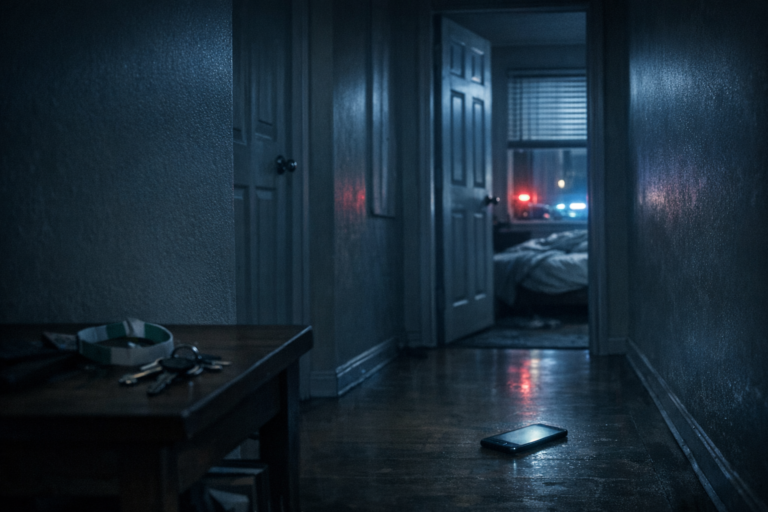
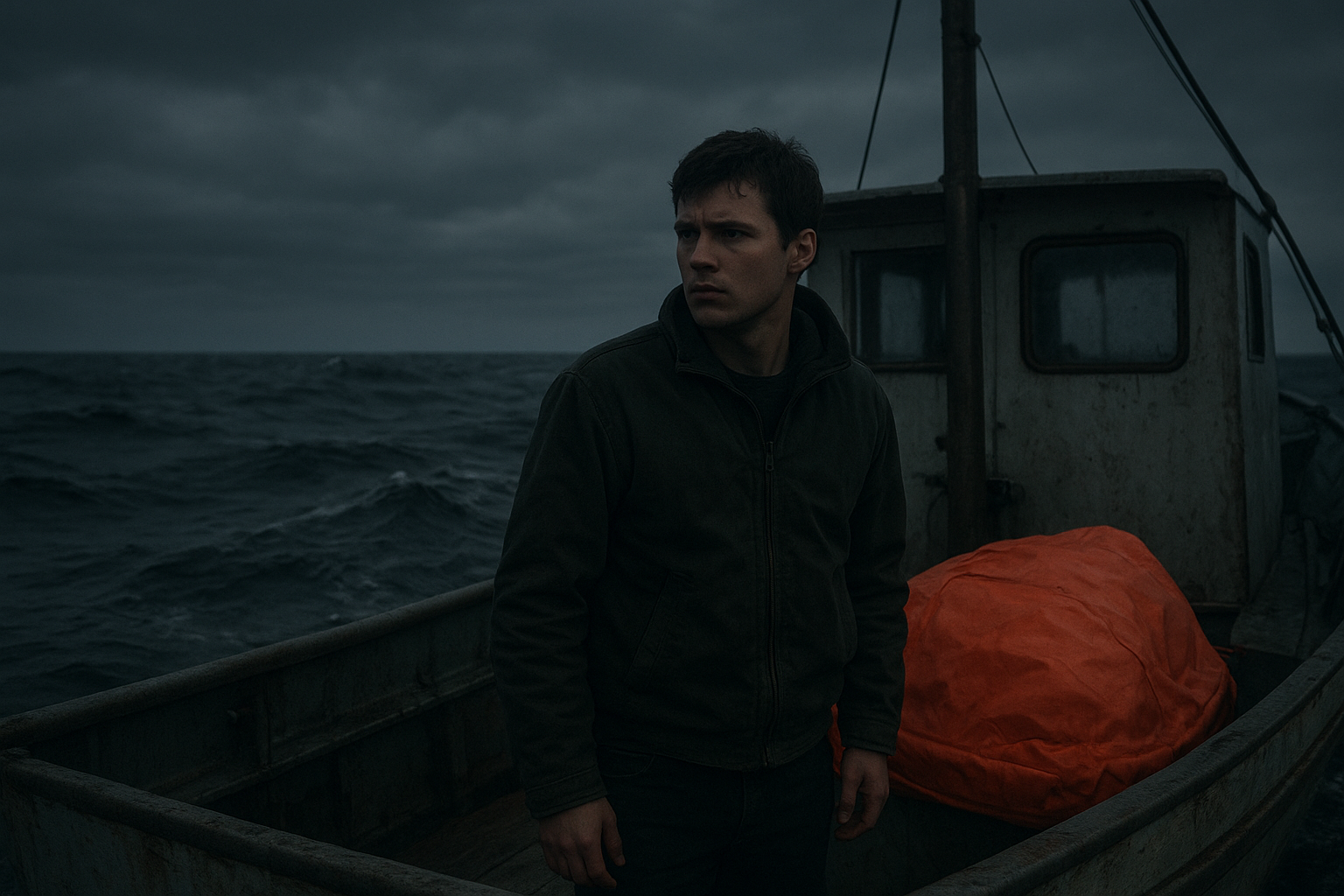
The ocean gave rescuers one survivor in a life raft. It did not give them Linda Carman.
By the time Nathan Carman was spotted drifting in the Atlantic, eight days had passed since he and his mother left Rhode Island for a fishing trip. He was alive, sunburned, dehydrated, and alone. His mother was gone. The boat was gone. Behind that empty water sat another family mystery that made the rescue feel less like an ending.
The Nathan Carman and Linda Carman case remains one of the strangest modern true crime stories because it never reached the place where the public expected answers: a trial. It connects a missing mother, a sunken boat, an earlier family killing, inheritance questions, and a defendant who died before a jury could decide what the evidence proved.
For readers drawn to cases where family, money, and suspicion collide, it sits near stories of bloodlines turning dangerous, including the family man who murdered his loved ones and vanished into a brand-new life. But the Carman story has its own dread: the most important crime scene may have disappeared beneath the sea.
The Trip That Came Back With Only One Person
In September 2016, Nathan Carman and his mother, Linda Carman, left Ram Point Marina in South Kingstown, Rhode Island, aboard a boat called the Chicken Pox. On paper, it was a mother-and-son fishing trip off the New England coast. A small boat. Open water. An ordinary plan that thousands of people make without imagining it will become the last confirmed moment of someone’s life.
But the Carman family was not entering that day as a clean slate. Years earlier, Linda’s father, John Chakalos, an 87-year-old real estate developer, had been shot to death in his Windsor, Connecticut, home. There was no public resolution, no conviction, and no simple answer. Nathan, his grandson, had been looked at by investigators and by the public, though he had not been charged in that killing.
When the Chicken Pox did not return, the story first looked like a maritime emergency. Boats break down. Weather changes. Small mistakes become deadly fast when land falls away and the horizon looks the same in every direction. Searchers were not looking for a national mystery. They were looking for a missing mother and son.
Then Nathan was found alone in an inflatable life raft south of Martha’s Vineyard. He told rescuers the boat had taken on water and sunk. He said he had tried to help his mother, but she did not make it into the raft. Linda Carman’s body was never recovered.
The Family Story Beneath the Water
To understand why the case became so disturbing, the timeline has to move backward before it moves forward. John Chakalos’s death in 2013 was already a family rupture. He had money, property, and heirs. After his killing, grief mixed with estate questions, legal fights, and suspicion.
Linda Carman was not just Nathan’s mother. She was also one of Chakalos’s daughters and part of the family structure around that inheritance. When she vanished at sea, investigators did not view the fishing trip in isolation. They looked at the earlier killing. They looked at the money. They looked at Nathan’s position after both events.
None of that, by itself, proves murder. Motive is not proof. An awkward personality is not proof. A family argument is not proof. But true crime cases often turn on the way separate facts begin to lean toward each other. In the Carman case, every new question seemed to touch an old one.
Why had the boat gone where it went? Why had Linda not survived? What condition was the vessel in before launch? What did Nathan know about the risks? And why did the same young man stand close to two catastrophic family losses?
The Boat Became the Evidence
Because Linda was never found, the Chicken Pox became one of the most important pieces of the story — even though the boat itself was also gone. Investigators and civil attorneys focused on reports that Nathan had worked on the vessel before the trip. Questions emerged about its seaworthiness, its repairs, and whether changes may have affected its safety.
That is where the case became colder. If the sinking was a terrible accident, then the boat was a fragile machine that failed in the worst possible place. If prosecutors were right, then the boat was not just transportation. It was part of a plan.
Nathan maintained he had done nothing criminal. Those reluctant to assume guilt without a trial could point to the uncertainty of ocean cases. Water destroys evidence. Panic scrambles memory. Survivors do not always behave the way strangers expect them to behave.
Still, the allegations kept tightening. Prosecutors later accused Nathan of killing Linda during the fishing trip and framing the disaster as an accident. They also alleged that he had killed John Chakalos years earlier as part of a broader scheme tied to family wealth, even though the grandfather’s case had never produced a separate conviction.
That made the coming trial feel enormous. It would have tested the boat evidence, the money theory, the family history, and Nathan’s own account under the pressure of a courtroom.
Timeline of Events
- December 2013: John Chakalos, Linda Carman’s father and Nathan Carman’s grandfather, is found shot to death in his Connecticut home. The case remains unresolved in court.
- After Chakalos’s death: Family inheritance disputes and suspicion deepen around the estate and the people closest to it.
- September 2016: Nathan and Linda Carman leave Rhode Island on the Chicken Pox for a fishing trip.
- Days later: The boat does not return, and search efforts begin across open water.
- Eight days after departure: Nathan is found alive in a life raft. Linda is missing and is never recovered.
- Following years: Insurance disputes, civil litigation, and investigative scrutiny focus on the boat, Nathan’s account, and possible financial motives.
- 2022: Nathan is indicted in federal court on charges connected to his mother’s death and alleged fraud. He pleads not guilty.
- June 2023: Nathan dies in custody while awaiting trial. The case never receives a jury verdict.
What Doesn’t Add Up
The strange power of the Carman case comes from the way the questions stack. One or two unsettling details might be explainable. Together, they create a pressure that never fully releases.
- The missing body: Without Linda, the case lacked the kind of forensic evidence that can confirm or challenge a theory of violence.
- The missing boat: The vessel’s sinking meant investigators had to work from records, testimony, expert opinions, and disputed claims about its condition.
- The route and preparation: Questions about where the boat went, how it was equipped, and what had been changed before launch became central to the prosecution theory.
- The inheritance backdrop: Money did not prove guilt, but it gave investigators a possible motive that connected Linda’s disappearance to the earlier family tragedy.
- The unfinished grandfather case: John Chakalos’s killing hung over every interpretation of Nathan’s later behavior.
Cases with this kind of unresolved evidence often keep readers searching because they are not built around one clean clue. They are built around a pattern. That is also why the story belongs near broader evidence-driven mysteries like The Cold Cases Solved Years Later Archive — DNA Breakthroughs, Old Lies, Preserved Evidence, and the Moments Dead Cases Started Speaking Again. The Carman case shows the opposite problem: what happens when the evidence never quite comes back from the water.
Why the Ending Feels Unfinished
In 2022, prosecutors brought a federal indictment. Nathan was accused of murdering his mother at sea and participating in a broader fraud scheme. He pleaded not guilty, and the most serious claims were never tested before a jury.
Then, before trial, Nathan died in jail in June 2023. That single fact froze the entire case in an uneasy position. Prosecutors would not get to present their full story to jurors. Defense attorneys would not get to challenge the theory in open court. Linda’s family would not get the kind of legal ending that sometimes gives grief a shape, even if it does not heal it.
That is why this case should be told carefully. It is tempting to force an ending because the pattern feels so dark: a grandfather shot, a mother lost at sea, a son rescued alone, and financial questions in the background. But the final legal answer never arrived.
The Sea-Ordeal Angle That Makes the Case So Hard to Shake
There is another reason the Carman story lingers: the rescue itself feels wrong. In most lost-at-sea survival accounts, someone makes it through the impossible and the reader exhales.
Here, the rescue only sharpened the dread. Nathan’s survival did not close the story. It created the question that swallowed the story: why him and not Linda?
That question is not proof. People survive disasters others do not. But instinct is hard to silence. In this case, people saw a life raft and wondered whether it was evidence.
The Family-Crime Shadow
The Carman case also belongs to a darker category of true crime where the most frightening possibility is not a stranger in the night but danger inside the family system itself. That is what makes cases like the Menendez brothers case and the Casey Anthony case so persistently debated. The legal questions matter, but so does the emotional shock of asking what can happen behind familiar doors.
With Nathan and Linda, the “door” was a boat. A small one. Far from shore. No witnesses close enough to settle the final minutes. If Linda was killed, then she may have been trapped with the person she trusted enough to leave land with. If she was not, then Nathan died under a cloud of suspicion that was never lifted by a completed trial. Both possibilities are grim in different ways.
FAQ
What happened to Linda Carman?
Linda Carman disappeared during a 2016 fishing trip with her son, Nathan Carman, off the New England coast. Nathan was later found alive in a life raft, but Linda was never recovered.
Was Nathan Carman convicted of killing his mother?
No. Nathan Carman was indicted and pleaded not guilty, but he died in custody in 2023 before the case went to trial. Because of that, there was no jury verdict on the murder allegation.
How was Nathan Carman rescued?
He was found eight days after the trip began, drifting alone in an inflatable life raft south of Martha’s Vineyard. He said the boat had taken on water and sank.
Why is John Chakalos important to the Carman case?
John Chakalos was Linda Carman’s father and Nathan Carman’s grandfather. He was shot to death in 2013, and prosecutors later alleged Nathan was connected to that killing, though the allegation was never resolved through a trial.
Why does the Nathan and Linda Carman case still get attention?
It combines a missing mother, a lone survivor at sea, boat questions, an earlier family killing, inheritance issues, and a trial that never happened.
In the end, Linda Carman never came home, John Chakalos never received a final courtroom answer, and Nathan Carman never stood before the jury that might have tested every allegation. The case remains caught between evidence and absence.
Some mysteries fade because time smooths the edges. This one does the opposite: a dead grandfather, a mother stepping onto a boat, a son found alive, and the Atlantic holding the witness no one could question.
Continue exploring:
- A cruise ship disappearance where the ocean kept the answer
- Final timelines where one missing stretch changes everything
- Hollywood’s most infamous killing and the mystery that still refuses to die
- The night an entire household was slaughtered while they slept
More True Crime stories: