
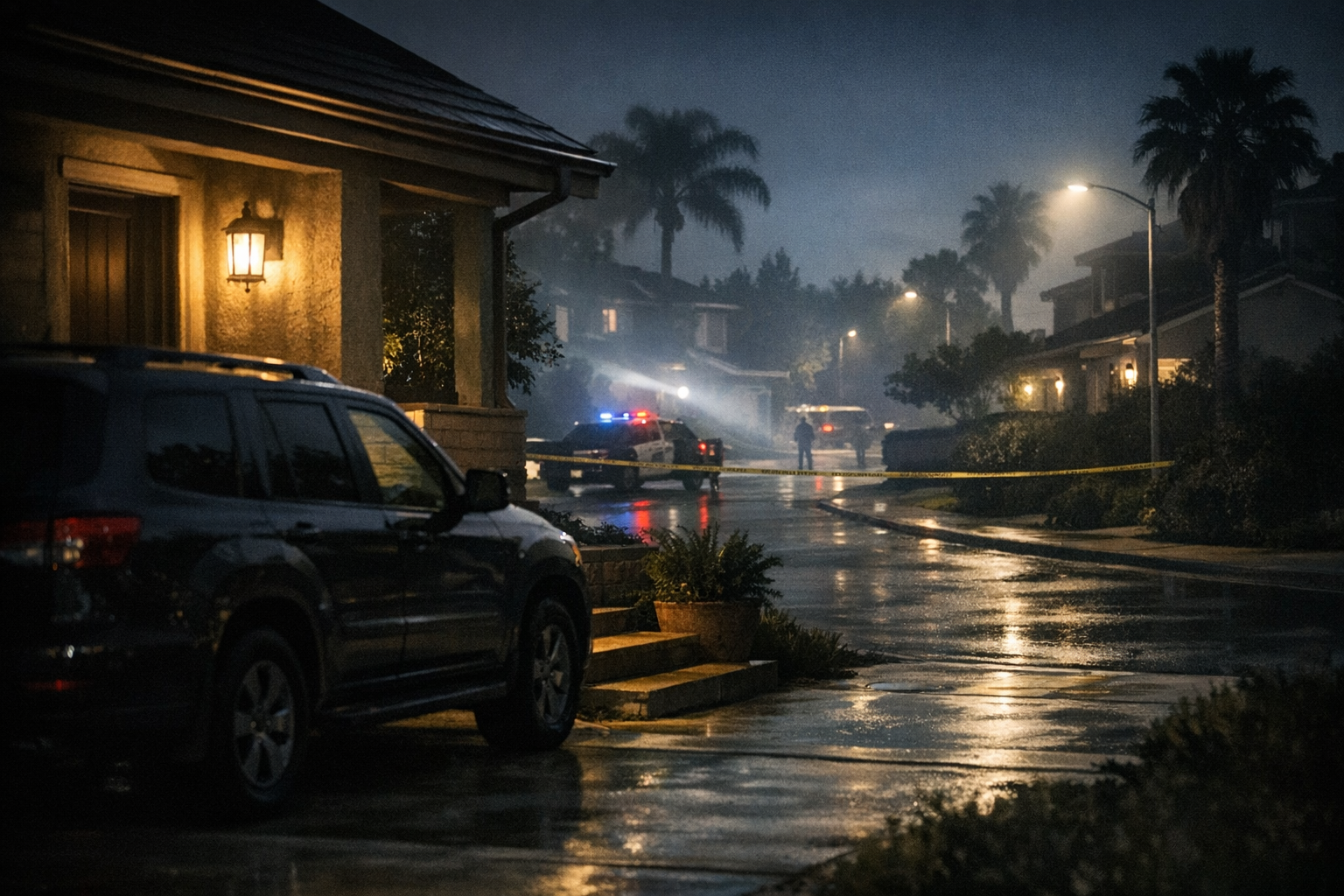
The house on Paseo Los Gatos looked ordinary from the street. Porch light. Driveway. Quiet Chula Vista neighborhood. Inside, a family of five was supposed to be settling into another January night. Instead, according to investigators, something happened in that house that would split a family apart, ignite years of public suspicion, and leave behind one of California’s most haunting modern mysteries. By morning, Maya Millete was gone. No confirmed sighting. No body. Just a trail of digital clues, strange movements, and a final stretch of hours that still refuses to sit right.
Maya Millete’s unsolved disappearance matters because it sits in that terrifying space between a missing person case and a murder prosecution. The 39-year-old mother of three vanished from her Chula Vista home on January 7, 2021, and even with years of investigation, public searches, and criminal charges against her husband, the central question has never gone away: what really happened in Maya’s final hours?
That tension is part of what makes this case so hard to shake. If you have followed cases like the Jennifer Kesse disappearance, you know how chilling it is when a person seems to vanish while daily life is still in motion. But Maya Millete’s case feels even more claustrophobic, because so much of the mystery appears to circle back to one house, one marriage, and one narrow stretch of time.
By early January 2021, Maya was not drifting aimlessly through her life. She was making moves. She had been telling people she wanted out of her marriage. Prosecutors later argued that her relationship with her husband, Larry Millete, had been deteriorating for months. Friends and relatives described stress, jealousy, control issues, and fear. Court testimony would later paint a picture of a woman trying to create distance while the person closest to her became more frantic.
In the days leading up to January 7, Maya reportedly told people she was serious about divorce. Testimony from the preliminary hearing indicated she had been planning for separation, worrying about money, and trying to figure out how to move forward. One report said she texted about needing funds for a divorce attorney. Another witness said Maya had warned that Larry threatened to ruin her professionally. It did not sound like a woman preparing to disappear on her own. It sounded like a woman trying to leave.
Then came January 7.
That afternoon, surveillance footage captured Maya arriving home in Chula Vista. Investigators would later argue this was likely the last confirmed visual record of her alive. She had also made contact with a divorce-related legal office that day, a detail that turned the timeline from troubling into explosive. If Maya was actively taking steps toward ending the marriage, then the final hours of that evening may have carried far more weight than anyone outside the home could see.
According to testimony summarized in later reporting, a neighbor’s security system picked up loud bangs that night. Hours later, Maya’s phone activity stopped. Not days later. Not after some long unexplained road trip. That same night. Prosecutors say that matters because it narrows the window dramatically. The case begins to feel less like someone wandered off and more like everything slammed shut in one violent burst of time.
Timeline of Events
- January 4, 2021: According to hearing testimony, Maya texted about needing money for a divorce attorney.
- January 6, 2021: A former employer later testified Maya said she was divorcing Larry and feared he could try to damage her career.
- January 7, 2021 afternoon: Surveillance footage captured Maya returning home in Chula Vista.
- January 7, 2021: Maya contacted a divorce-related legal office, a detail later highlighted by prosecutors.
- Night of January 7: A neighbor’s camera reportedly captured a series of loud bangs.
- 1:25 a.m., January 8: Prosecutors said Maya’s phone stopped using data, with later analysis pointing back to the family home.
- Morning of January 8: Larry Millete drove the family’s black Lexus away for many hours. Investigators later said hundreds of miles on the vehicle were not accounted for.
- January 9: Maya was reported missing after family members could not reach her.
- October 2021: Larry Millete was arrested and charged with Maya’s murder and with possession of an assault weapon.
- 2025-2026: Trial delays kept the case in the public eye, extending the wait for answers while Maya still had not been found.
The next morning is where the story gets even darker. Investigators said Larry left in the family’s black Lexus and was gone for much of the day on January 8. At one point, he reportedly claimed he went out with his son toward the beach. But according to testimony, authorities found no support from state parks personnel or an on-duty lifeguard for that account. Later, analysts said hundreds of miles on the Lexus were not clearly accounted for.
And this is where Maya Millete’s case stops feeling like a typical missing-person mystery and starts feeling like a locked-room timeline problem. If Maya did leave voluntarily, when exactly did she do it? After arriving home on camera? After contacting a legal office? After phone activity ended at the house? If she walked away, why has there never been a confirmed trace of her beyond that point? The timeline does not stretch outward. It collapses inward.
Digital evidence became one of the most important reasons the case continued to grip the public. At the preliminary hearing, prosecutors pointed to phone data, internet activity, emails, and other records to show a marriage unraveling in private long before Maya vanished in public. There was testimony about Larry searching terms related to sedatives and subliminal messages. There was testimony that Maya felt watched, tracked, and manipulated. There were also startling allegations involving paid spell-casting services, which prosecutors used to argue obsession and desperation, though the oddness of that detail never distracted from the much simpler and more frightening point: Maya was trying to leave, and investigators believe someone close to her could not accept it.
🔎 Related Investigation:
If this case pulled you deeper into the mystery, continue into:
What Doesn’t Add Up
- The final contact: Maya’s known actions on January 7 do not line up with someone preparing a secret fresh start. They line up more with someone handling a separation crisis.
- The phone shutdown: Her phone activity reportedly stopped in the early hours of January 8, and investigators tied its last location back to the home.
- The missing-body problem: Prosecutors charged murder without recovering Maya’s body, which shows how strongly they viewed the surrounding evidence.
- The Lexus mileage: Investigators testified that hundreds of miles driven on January 8 were not clearly explained.
- Conflicting explanations: Family members said Larry gave varying stories early on about where Maya might have gone.
- No voluntary trail: No verified sightings, financial trail, or clear digital footprint has emerged showing Maya built a new life elsewhere.
Those details are a big reason the case never cooled off. Plenty of disappearances go cold because there is too little to examine. This one stayed hot because there was almost too much that felt suspicious. Every time the trial date moved, the same unresolved questions surged back into the news: If prosecutors are so certain, where is Maya? If the defense says she left, where is the proof of that? And if the truth lives in the final 72 hours around January 7 and January 8, why does that window still feel so incomplete?
There is another layer that makes the story stick. Maya was not isolated from people who cared about her. Her family noticed quickly that something was wrong. She missed moments that mattered, including family time she would not normally skip. Search teams formed. Volunteers kept showing up month after month, combing remote areas east of San Diego and beyond. The public response was not driven only by headlines. It was driven by the sense that Maya’s disappearance did not fit her life, her routines, or her bond with her children.
Key Evidence and Clues
- Surveillance footage: Maya was seen arriving home on January 7, making the house the center of the final known timeline.
- Divorce-related contact: Reports and hearing testimony indicate she reached out for legal help the same day she vanished.
- Phone data: Prosecutors said her device stopped using data at 1:25 a.m. on January 8.
- Vehicle movements: The family Lexus left the home on January 8 and, according to testimony, later showed a large block of unexplained mileage.
- Relationship evidence: Witnesses described separation plans, fear, jealousy, and escalating tension.
- No recovery of remains: Even without a body, investigators believed the combined timeline and digital evidence justified a murder charge.
That absence of a body has always been central to the case. It creates both emotional pain and legal tension. For Maya’s loved ones, it means there has been no final act of bringing her home. For the public, it leaves just enough empty space for competing theories to survive. And for prosecutors, it means the case depends heavily on the idea that the timeline itself tells the story. Not perfectly. Not completely. But forcefully enough that they believe it points to murder.
The defense, meanwhile, has pushed back for years, arguing that Maya had left before and suggesting she could have disappeared voluntarily. That argument matters because, without recovered remains or classic physical evidence like a murder weapon, the case becomes a battle over inference. One side says the digital and behavioral clues form a tight, logical chain. The other says suspicion is not proof.
Still, the timeline keeps dragging attention back to the same uncomfortable center. Maya arrives home. She has been talking about divorce. Loud bangs are heard. Her phone goes dark. The Lexus travels with unexplained miles. Then silence. That sequence is why the case continues to feel less like a mystery with endless possible paths and more like a story with one path that investigators believe has simply not been fully uncovered yet.
Years later, that is also why Maya Millete’s disappearance still resonates beyond Southern California. It taps into a fear many people instantly understand: the idea that the most dangerous moment in a troubled relationship can be the moment someone finally tries to leave. The case also reflects a modern truth about crime and disappearance investigations. Today, people leave behind digital shadows everywhere. Phones, car data, surveillance cameras, messages, searches. But even with all that, a person can still vanish so completely that the final answer stays just out of reach.
And that may be the most haunting part of Maya’s story. Not that there were no clues. There were many. Not that nobody cared. Thousands did. Not that the case was forgotten. It never was. The nightmare is that even with the timeline narrowed, the devices analyzed, the searches repeated, and the charges filed, Maya herself is still missing.
So what happened to Maya Millete? The honest answer is that the public still does not have the final piece. But the final 72 hours left behind a shape that is hard to ignore: a woman trying to leave, a marriage under pressure, a digital trail that suddenly ended, and a missing mother whose absence still demands an ending the case has not yet delivered.
🔎 Related Investigation:
🔎 Related Investigation:
🔎 If this story stayed with you, the author suggests these real cases next:
- The college night out where Lauren Spierer seemed to vanish into nothing
- The child who walked into the dark and was never seen again
- The graduation trip disappearance that still refuses to close
Explore more Disappearances stories here: