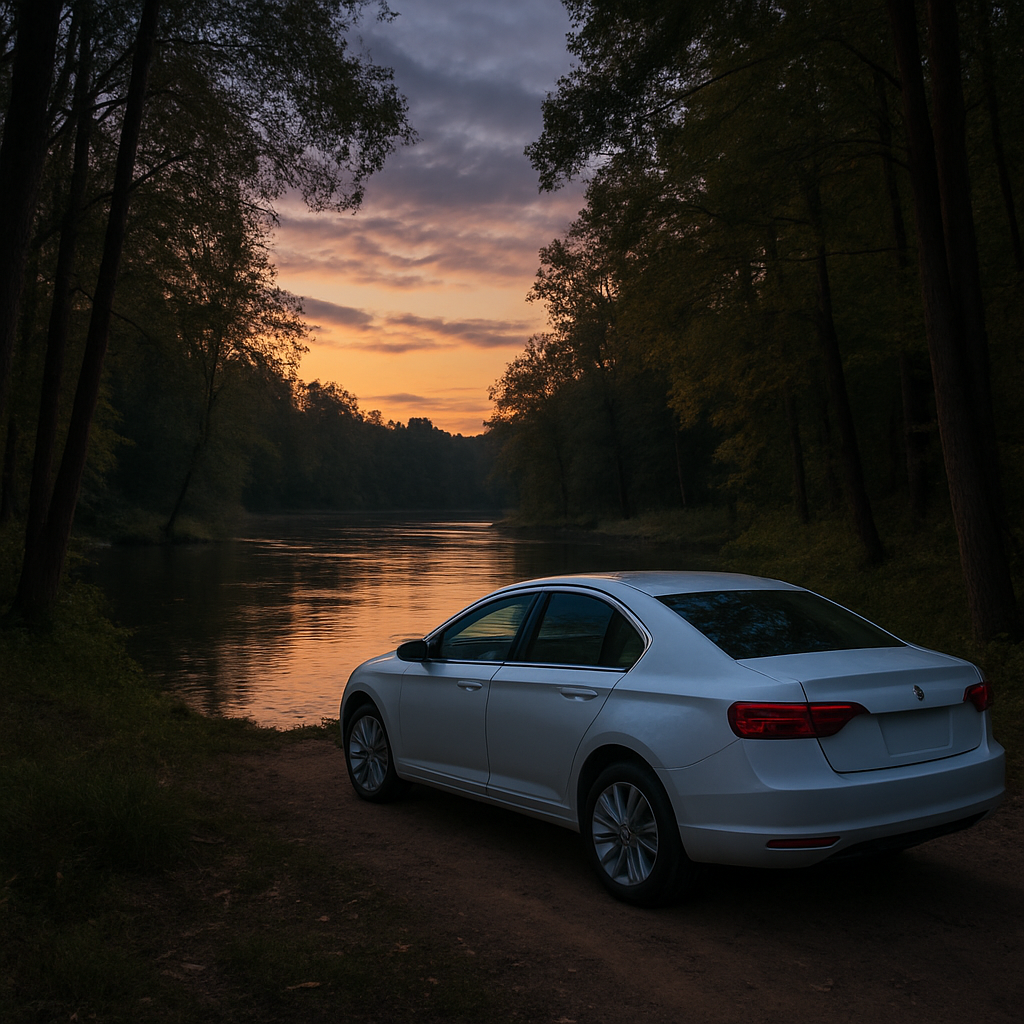
By the time the white Chrysler 300 was found tucked behind trees near a YMCA in Peru, Illinois, it already looked like a scene someone wanted discovered late. The driver was gone. The doors were open to questions. And the trail, instead of getting clearer, seemed to split in every direction at once.
Jelani Day had not simply missed a call or drifted off schedule. In the span of a few days, an ordinary routine collapsed into one of the most debated missing person cases in Illinois—a disappearance that still feels unfinished because every major answer arrived late, damaged, or surrounded by doubt.
Jelani Day was a 25-year-old Illinois State University graduate student whose missing person case drew national attention in 2021. It still matters because his final movements, the discovery of his car, and the long delay before his body was identified left his family—and the public—with the same question:
How did so much happen, and still explain so little?
That strange mix of movement and silence is what keeps this case alive. It’s part of what makes stories like the Rey Rivera disappearance linger too—not just because someone vanished, but because the evidence seems to point everywhere except toward a clean answer.
The Morning Everything Went Sideways
On August 24, 2021, Jelani Day moved through what should have been an ordinary day.
He was a graduate student in speech pathology—smart, driven, and close with his family. The kind of person whose life had structure. The kind of person people notice when he suddenly stops answering.
Security footage captured him that morning at a Beyond/Hello dispensary in Bloomington. That clip matters because it became one of the last confirmed pieces of his timeline—one of the last moments where the case still looked normal.
He walks in. He exists in a place, at a time, on camera.
Then the story begins to drift.
What happened next is where the case stops behaving like a typical missing person investigation. Jelani’s final movements were not completely invisible. His car would be found. His body would be found. His phone would eventually surface.
And yet each discovery raised as many questions as it answered.
That is the core of the Jelani Day mystery:
This is not a case with no evidence.
It is a case where the evidence refuses to line up.
Timeline of Events
- August 24, 2021: Jelani Day is last publicly confirmed on surveillance footage in Bloomington, Illinois.
- August 25: He is reported missing after family members realize something is wrong.
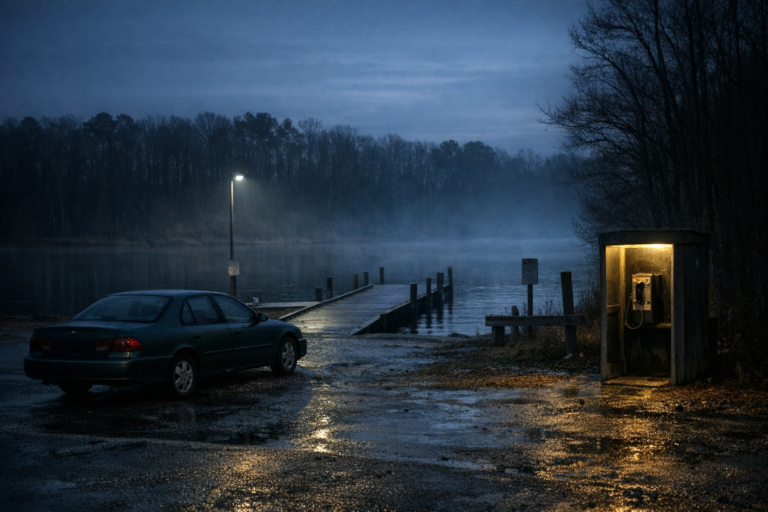
- August 26, 2021: His white Chrysler 300 is found in a wooded area behind the YMCA in Peru, about an hour away.
- September 4, 2021: A body is recovered from the Illinois River near Peru and La Salle County.
- September 23, 2021: The body is identified as Jelani Day—nearly a month after he disappeared.
- Later developments: Authorities pointed toward drowning, with no clear evidence of assault, though the manner of death remained disputed.
That timeline is why the case still sticks.
Not because one detail is strange—but because every major turn arrives with a delay.
A missing day.
A hidden car.
A body found—but not identified for weeks.
It gives the entire case a broken rhythm.
The Car in the Woods
When investigators found Jelani’s Chrysler, it didn’t solve the mystery.
It deepened it.
The car wasn’t in a parking lot or somewhere visible. It was hidden in a wooded area behind the Illinois Valley YMCA.
That detail matters.
A hidden car changes the logic of the case. It suggests movement with purpose—either by Jelani, by someone else, or by circumstances still not understood.
And once the car entered the story, everything shifted.
Jelani’s life was centered in Bloomington. Now the case stretched into LaSalle County. The question was no longer just what happened—but how did he end up here at all?
Cases like the Daniel Robinson disappearance show how powerful a vehicle can become in an unsolved case.
A car should anchor the narrative.
Instead, sometimes it becomes the center of a second mystery.
That’s exactly what happened here.
The Chrysler was real, physical evidence—but it didn’t point cleanly toward accident, suicide, or homicide.
It just sat there, forcing one question:
If this was the right place… why did nothing else make sense around it?
What Doesn’t Add Up
- The distance: The car was far from Jelani’s normal routine.
- The concealment: The wooded location didn’t feel random.
- The identification delay: The body took nearly three weeks to identify.
- The evidence chain: Phone data, clothing, and clues never formed a clear sequence.
- The conclusion: Drowning was suggested—but the story leading to it never felt complete.
The identification delay changed everything emotionally.
For weeks, Jelani’s family lived between hope and dread.
By the time confirmation came, trust had already begun to break.
That frustration only grew as details surfaced. Jelani’s mother publicly challenged investigators, arguing that leads were missed and the urgency wasn’t there.
Whether every claim proves something specific or not, one thing is clear:
Trust broke early—and never fully recovered.
The Body, the River, and the Problem With Simple Answers
On September 4, a body was recovered from the Illinois River.
When it was identified as Jelani Day, the case should have moved toward closure.
Instead, it became more complicated.
The official view leaned toward drowning. No clear evidence of assault was found—but the condition of the body limited certainty.
On paper, that narrows possibilities.
In reality, it did the opposite.
Because a medical conclusion is not the same as a complete story.
If Jelani drowned:
How did he get there?
Why was the car hidden?
What explains the gaps in time?
Those unanswered questions are what keep the case from settling.
🔎 Related Investigation:
If this case pulled you deeper into the mystery, continue into:
🔎 Related Investigation:
If this case pulled you deeper into the mystery, continue into:
Key Evidence and Clues
- Surveillance footage: Last confirmed sighting in Bloomington.
- The Chrysler 300: Found hidden behind the YMCA in Peru.
- The river recovery: Adds distance and uncertainty.
- The phone: Later became part of investigative criticism.
- Family advocacy: Kept the case alive publicly.
None of these clues are meaningless.
But they don’t fit together.
One places him in Bloomington.
Another puts his car in Peru.
Another places his body in the river.
Instead of building toward clarity, the evidence creates layers.
That’s why the case still resonates.
It mirrors cases like:
Once the timeline breaks, every missing minute becomes more important than the hours around it.
The Most Likely Explanation — and Why It Still Feels Incomplete
The cautious conclusion is that Jelani ended up in Peru under circumstances that led to drowning, without enough evidence to prove homicide.
That aligns with official findings.
But here’s the problem:
An official conclusion only works when the path to it makes sense.
And in this case—it doesn’t.
The car.
The distance.
The timeline gaps.
The delayed identification.
They don’t form a clean story.
So the case remains stuck between two things:
A declared cause… and an unresolved narrative.
That’s why people keep coming back to it.
Not because it’s dramatic—but because it feels unfinished.
A young man disappears.
A car appears where it shouldn’t.
A body is found days later… and identified weeks after that.
The evidence exists.
But the truth still feels just out of reach.
🔎 Related Investigation:
- Unsolved Disappearances Where the Final Hours Still Don’t Add Up
- 10 Unsolved Disappearances Where the Timeline Still Doesn’t Add Up
If this story stayed with you, the author suggests these real cases next:
- The engineer whose Jeep turned up alone in the desert
- The midnight 911 call that made his final hours even stranger
- The man who walked into a neighborhood and was never seen again
Explore more Disappearances stories here: