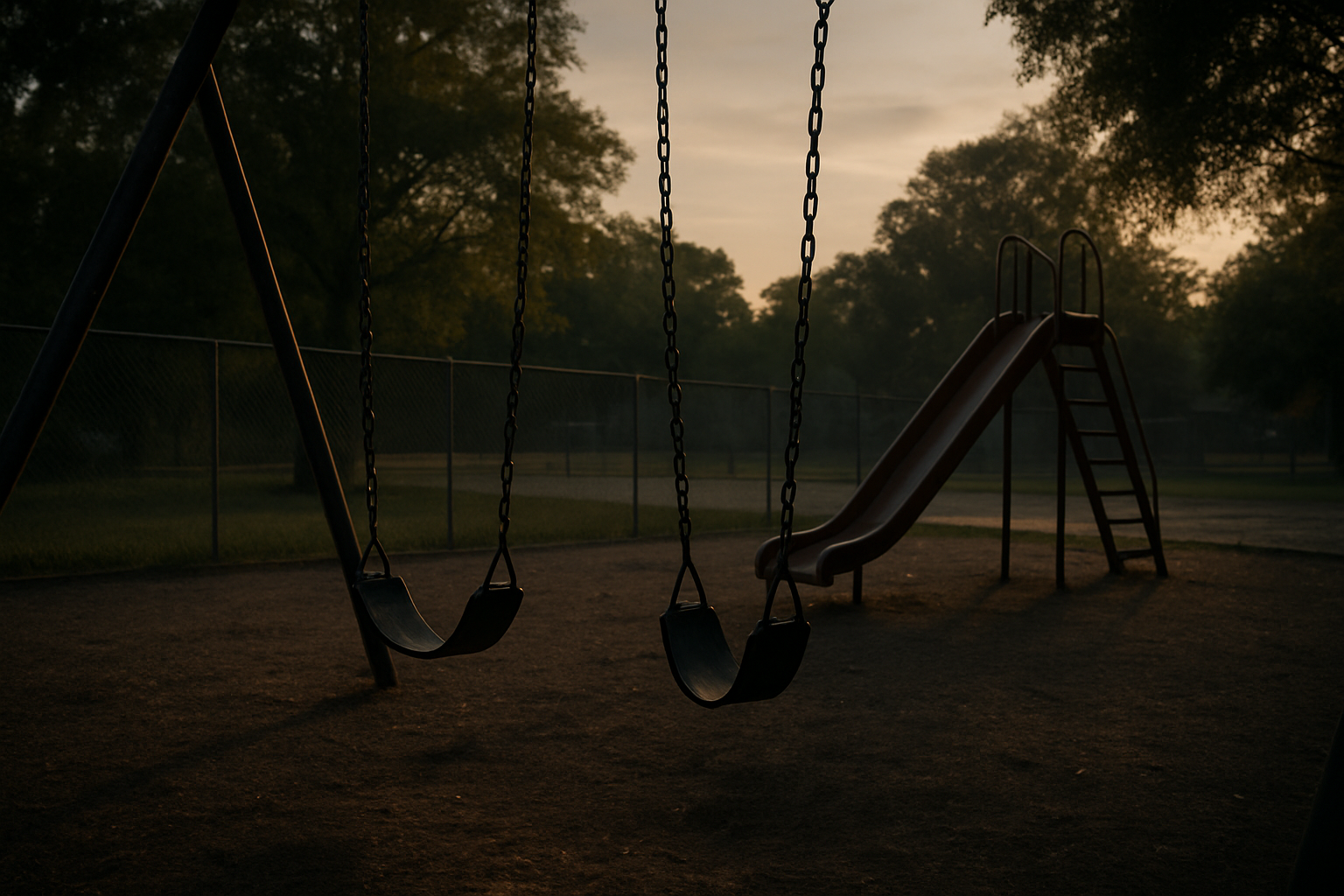
The little girl ran toward the swings while the late afternoon light still sat over the park. Kids were yelling. Cars were moving in the distance. A basketball court was close by. Nothing about Bridgeton City Park looked like the kind of place where a child could disappear so completely that, years later, nobody could say for certain who took her, where she went, or how they got out unseen.
And that is what still makes this case so chilling. Dulce Alavez did not vanish on a remote road, in deep woods, or in the middle of the night. She disappeared from a public park in the middle of the day, inside a tiny window of time, with other people nearby.
Dulce Maria Alavez is the center of one of New Jersey�s most haunting unsolved disappearance cases. Her missing person case still matters because it forced investigators and the public to confront a terrifying question: how can a child vanish from a busy playground with almost no usable trace left behind?
That narrow gap between �she was just there� and �she was gone� is part of what makes cases like Asha Degree�s disappearance stay in people�s minds for years. In both stories, the timeline is short, the victim is young, and the missing answer sits inside a handful of lost minutes.
The Afternoon Everything Changed
On September 16, 2019, 5-year-old Dulce Maria Alavez went to Bridgeton City Park in Bridgeton, New Jersey, with family members. The park sat behind Bridgeton High School and was not some hidden corner of town. It was a public place people knew. That fact is impossible to ignore, because the entire mystery begins with the setting itself.
According to reporting and investigator statements, Dulce was playing near the swings with her younger brother. Her mother remained nearby in a car with Dulce�s younger sibling, helping her sister with homework. The distance was not enormous. It was close enough that nothing should have felt truly out of control. Close enough that a child playing at a park would normally seem safe for a few minutes.
Then, suddenly, Dulce�s brother was found alone and crying.
Dulce was gone.
That moment is the crack in the entire case. Not because it gives answers, but because it does the opposite. There was no long period where nobody knew where she was. No overnight gap before alarm bells started ringing. No complicated travel trail stretching across several states. Instead, the timeline appears to collapse into a brutally short witness window.
Investigators later focused on reports that a man may have approached the playground area and led Dulce away. A description circulated of a young, light-skinned Hispanic male, roughly 5-foot-6 to 5-foot-8, thin, possibly wearing orange sneakers, red pants, and a black shirt. There were also reports involving a red van near the park. But descriptions are not the same as proof, and witness memory inside a sudden, chaotic event is rarely perfect.
That is why the public setting matters so much. A public park should create witnesses, noise, interruptions, and friction. If someone abducted Dulce there, they either moved very fast, looked ordinary enough not to trigger panic, or struck during the exact sliver of time when everyone�s attention drifted somewhere else.
Timeline of Events
- Late afternoon, September 16, 2019: Dulce Alavez arrives at Bridgeton City Park with family.
- Minutes before she vanished: Dulce and her younger brother are reportedly on or near the swings while family remains nearby.
- Shortly after: Dulce�s brother is found alone and upset. Dulce is nowhere in sight.
- Immediate response: Family members begin searching the park area and calling for help.
- That evening: Police, volunteers, and search teams comb the park, nearby roads, and wooded areas.
- Following weeks: Investigators release suspect information, seek witnesses, and widen public appeals.
- Later years: The FBI, NCMEC, age-progressed images, and renewed public pushes keep the case active, but Dulce is still missing.
Why the Park Timeline Is So Hard to Explain
The park timeline, the witness window, and the fact that the setting should have made a disappearance harder, not easier.
If Dulce had wandered off on her own, investigators might reasonably expect some trail, some sighting, some clue near the water, woods, or paths around the park. But large-scale searches did not produce a clear answer. If she was taken by force in a chaotic, obvious struggle, you would expect screaming, immediate attention, or multiple solid witnesses. That also did not happen.
So the most troubling middle ground is the one investigators and outside observers keep circling back to: a fast abduction inside a short gap, possibly by someone who knew how to approach a child without causing instant alarm.
That possibility makes the setting even more disturbing. A playground is built around trust. Adults assume other adults will look harmless there. Children are used to being spoken to, redirected, or called over. In a public place, danger does not always look dramatic. Sometimes it looks normal for just long enough.
That is why the witness window matters more than almost anything else in this case. Whoever knows what happened to Dulce likely saw something during those few minutes: a man walking with a little girl, a vehicle leaving at the wrong time, a child who seemed to be following someone instead of resisting. A case like this may hinge not on a hidden clue in the woods, but on one memory from one person who did not realize they were watching the key moment.
What Doesn�t Add Up
- A public location: Bridgeton City Park was not isolated, which should have increased the chance of witnesses.
- A tiny time window: Dulce appears to have vanished within minutes, leaving almost no time for a complicated scenario.
- No clear physical trail: Searches did not produce the kind of evidence many people would expect in a child disappearance.
- Witness uncertainty: Descriptions of a possible suspect and vehicle helped shape the case, but did not lead to a public resolution.
- Ordinary setting, extraordinary result: The biggest mystery is still how something so extreme happened in a place that should have made it harder.
The Search That Found Almost Nothing
Once Dulce was reported missing, the response was immediate and intense. Police searched the park. Volunteers joined. Nearby wooded areas were checked. Public attention spread fast because the facts sounded impossible: a 5-year-old had vanished from a playground in daylight.
But urgency does not always produce answers. In some cases, the first few hours create a trail that can still be followed days later. In Dulce�s case, the early search did not unlock the kind of hard evidence that would tell investigators exactly which direction to go. That absence is part of why the case remains so painful. There was no decisive breakthrough. Only an expanding circle of questions.
Authorities later kept the case in front of the public with age-progressed images and continued appeals. The FBI also publicized the case, and investigators repeatedly returned to the idea that somebody out there knows more than they have said. Over time, the case became one of those modern disappearances where the passage of years makes every missed detail feel heavier.
Because if Dulce was taken quickly from a public park, then this was not a mystery built on endless locations or countless unknown hours. It may have been decided in a matter of moments.
What Investigators May Have Missed
No criticism of an investigation should pretend hindsight is easy. Child disappearance cases move fast, witnesses get frightened, and early reports are often messy. Still, the structure of this case raises a painful possibility: if the key clue existed, it may have looked too ordinary at the time to stand out.
- A routine-looking interaction: A child walking with an adult might not trigger alarm if nobody realizes the adult should not be with that child.
- A witness who assumed someone else reported it: Public places create a dangerous illusion that somebody else must have seen more clearly.
- Vehicle movement that blended in: If a suspect left in a normal-looking car or van at the right moment, it may not have seemed memorable until much later.
- The importance of timing over distance: Investigators may not have needed a large radius at first as much as they needed an exact minute-by-minute reconstruction.
This is also what makes the case a strong fit for readers searching not just for the story, but for the core mystery behind it. The question is not simply �Where did Dulce go?� It is �How did someone make a child disappear from a playground without triggering a clear, immediate chain of witness evidence?�
That is the part that still refuses to sit right.
And it is why the case belongs in the same conversation as other timeline-heavy disappearances, like the final timeline in Sebastian Rogers� unsolved disappearance, where the smallest gap in attention becomes the entire mystery.
?? Related Investigation:
If this case pulled you deeper into the mystery, continue into:
🔎 Related Investigation:
If this case pulled you deeper into the mystery, continue into:
🔎 Related Investigation:
If this case pulled you deeper into the mystery, continue into:
The Most Likely Explanation
Without verified answers, any explanation has to stay careful. But based on the known shape of the case, the most likely broad explanation is still the one investigators have publicly leaned toward: a rapid, opportunistic abduction in a public space.
That theory fits several hard facts at once:
- The disappearance appears to have happened very quickly.
- The setting had enough activity that a suspect may have blended in instead of standing out.
- The lack of a strong trail near the park weakens the idea that Dulce simply wandered off and remained nearby.
- The witness window suggests someone may have acted during a moment when nearby adults and children were each focused on something else.
That does not answer the most important questions, including whether the suspect had been watching the park ahead of time, whether Dulce was specifically targeted, or whether the abductor was simply waiting for any vulnerable child. But it does match the part of the case that remains hardest to ignore: this does not feel like a disappearance that slowly unfolded. It feels like one that happened all at once.
The Silence After the Swing Set
Years have passed since Dulce Alavez vanished, but the emotional shape of the case has not changed. People still return to the same image: a child at a playground, an ordinary afternoon, a few lost minutes, and then nothing. No answer solid enough to close the case. No recovery. No public resolution that explains how a park full of normal life turned into the site of one of New Jersey�s most disturbing missing child mysteries.
Some disappearances grow stranger with time because more clues appear and none of them fit. Dulce�s case feels different. It grows heavier because the central event still seems too simple to have remained unsolved. A child was there. Then she was not. In a public place, during daylight, inside a timeline that should have been easier to reconstruct than this.
That is why the case still lingers. Not only because Dulce deserves answers, but because the setting challenges our basic assumptions about safety. If a child can disappear from a playground and leave behind almost no clear path, then the scariest part of this case is not just what happened. It is how little time it may have taken.
?? Related Investigation:
?? Related Investigation:
?? If this story stayed with you, the author suggests these real cases next:
- The school-day vanishing of Kyron Horman that still troubles investigators
- The final morning of Jodi Huisentruit and the timeline that still won�t settle
- The night Asha Degree walked into darkness and was never seen again
Explore more Disappearances stories here: