By the time lunch hour started thinning out in Yorkton, Saskatchewan, the day had already gone strange.
A 16-year-old girl had shown up at school, opened her locker, and then slipped back out. She had gone to a pawn shop, a bank, a Tim Hortons/Wendy’s, and the bus depot. She had walked in circles, checked her phone over and over, spoken to strangers, and sent messages that sounded like she needed help—then, minutes later, sounded like she had figured something out.
It was not the pattern of a normal school day. It was the pattern of someone waiting for something, arranging something, or trying to meet someone she did not fully trust.
Then Mekayla Bali disappeared
Mekayla Bali is at the center of an unsolved disappearance that has haunted Canada since April 12, 2016, when the 16-year-old vanished from Yorkton, Saskatchewan after a day of unusual movements caught on surveillance and remembered by witnesses. The case matters because it is not a mystery built on one missing hour—it is a missing person case built on a visible timeline, repeated public sightings, and the unresolved question of whether Mekayla was trying to meet someone before she was last seen.
That is what gives this case such a different kind of tension. In some disappearances, the story turns dark in one sudden moment. But in cases like the Lauren Spierer disappearance, the anxiety builds because the timeline is active, public, and full of movements that look meaningful without ever becoming clear.
On the morning of April 12, 2016, Mekayla left home and went to Yorkton Regional High School as if it were a normal day. According to later police reconstructions, she arrived, put a binder in her locker, and then left through the back entrance not long after. That small decision matters, because it set the tone for everything that followed. Mekayla was not simply absent. She was moving with purpose.
From there, the route grows stranger by the minute.
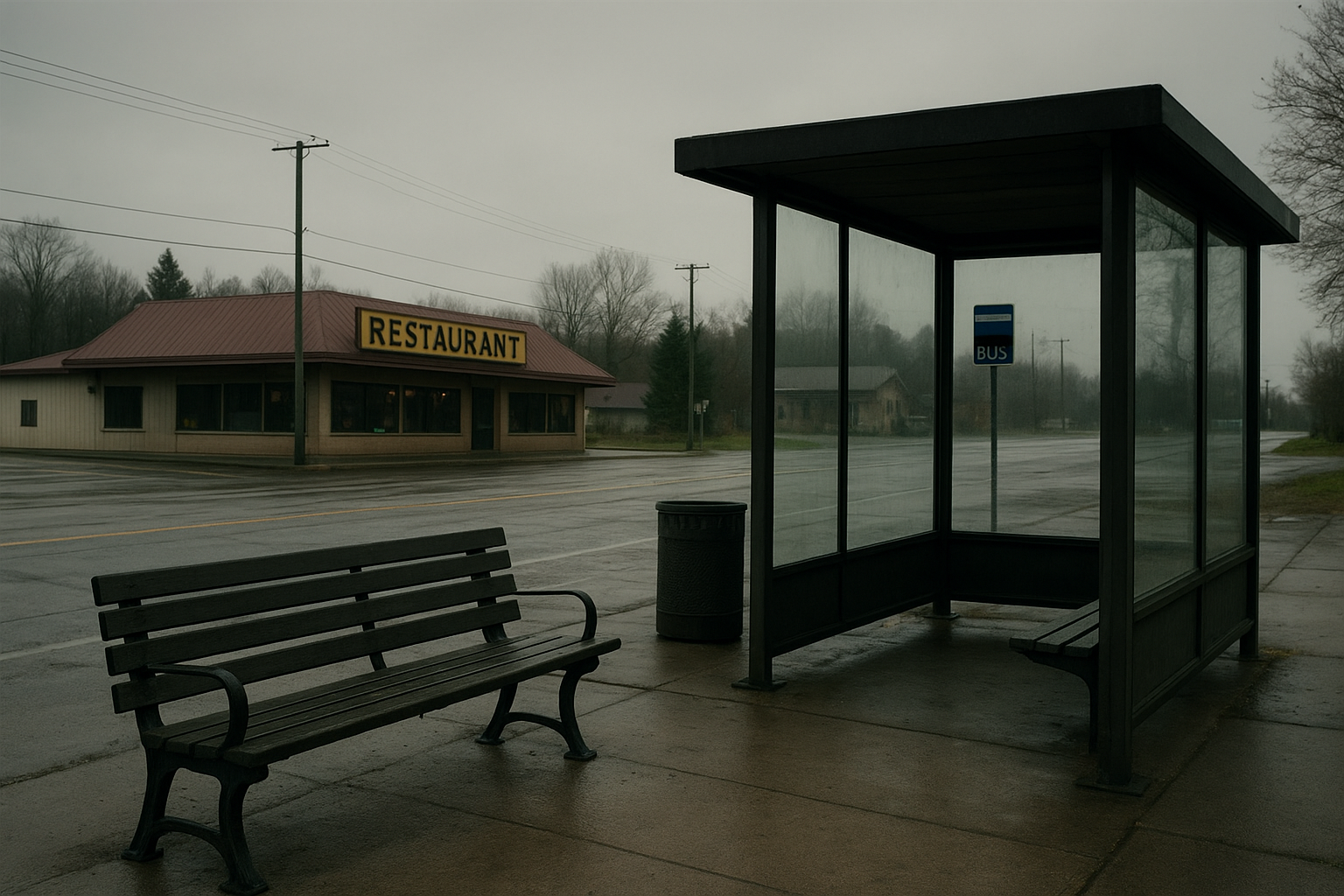
She was seen near the railroad tracks. She went to a pawn shop and reportedly tried to pawn a silver ring, but the item was too low in value. She then went to a bank and withdrew money from her account. Soon after that, surveillance placed her at a combined Tim Hortons and Wendy’s, where she bought a drink, sat down, used her phone repeatedly, left, came back, left again, circled the area, then returned once more.
If you only saw one piece of that behavior, it might not seem meaningful. Teenagers change plans. They waste time. They wander. But when you line the whole morning up, it starts to look less random and more like someone stalling, coordinating, or waiting for contact that had not happened yet.
One of the most discussed details in Mekayla Bali’s disappearance is that she appeared to keep checking her phone, and at one point she seemed to take it apart and put it back together. Investigators later said that although she appeared to be making calls, no traditional phone calls were registered by her provider. That helped fuel the belief that she may have been using social media or messaging apps to communicate with someone in a way that was harder for police to immediately reconstruct.
That possibility hangs over the entire case, because it offers a reason for why her movements looked so scattered while still seeming directed.
At one point that morning, Mekayla reportedly asked a woman for help renting a hotel room. The woman refused. That is one of those details that sounds so specific it almost feels like it should unlock the case by itself. Why would a 16-year-old need help getting a hotel room in her own town in the middle of a school day? Was she planning to meet someone older? Was she trying to create a place for a conversation she did not want happening in public? Or was she improvising after another plan fell apart?
Those questions get sharper, not softer, as the day goes on.
Timeline of Events
- Early morning, April 12, 2016: Mekayla sends messages about getting to the bank.
- About 8:10 to 8:20 a.m.: She arrives at Yorkton Regional High School.
- 8:21 a.m.: Surveillance shows her putting a binder in her locker.
- About 8:30 a.m.: She leaves the school through the back entrance.
- 8:40 to 8:50 a.m.: A pawn shop worker later says she tried to pawn a silver ring.
- About 8:50 to 8:55 a.m.: She withdraws money from her bank account.
- About 9:10 a.m.: She enters the Tim Hortons/Wendy’s and begins a long stretch of unusual movement in and around the restaurant.
- 10:12 a.m.: She texts a friend, “Hey, I need help,” then later says, “Nevermind I figured it out.”
- About 10:43 a.m.: She asks an older woman for help renting a hotel room.
- Late morning: She goes to the bus depot and asks when the next bus to Regina leaves, but does not buy a ticket.
- 11:59 a.m.: She briefly returns to school and tells other students she plans to take a bus to Regina.
- 12:03 p.m.: Surveillance shows her leaving school again.
- Early afternoon: She is seen at the Trail Stop Restaurant attached to the bus depot.
- Shortly after 1:00 p.m.: Mekayla Bali is last known to have been seen in the bus depot area. Police later confirmed she did not board a bus that day.
That timeline is the reason this case remains so sticky in people’s minds. It is detailed enough to suggest intention, but not detailed enough to reveal the plan.
Mekayla’s case has a lot of information—just not the one piece that tells you what all the other pieces mean.
For example, her brief return to school around lunchtime is especially strange. If she had already decided to leave town, why go back? If she was simply skipping class, why spend the morning bouncing between a bank, a restaurant, and the bus depot? If she planned to meet someone, was that return to school a way to keep up appearances, buy time, or check in with friends before she left for good?
The public sightings matter because they show that Mekayla was moving through businesses and sidewalks where other people saw her. That should have made the case easier to solve. Instead, every sighting adds another branch in the road.
🔎 Related Investigation:
🔎 Related Investigation:
If this case pulled you deeper into the mystery, continue into:
🔎 Related Investigation:
If this case pulled you deeper into the mystery, continue into:
Key Evidence and Clues
- Locker footage: Mekayla arrived at school and left quickly, showing that the day’s unusual movements started almost immediately.
- Bank withdrawal: She took money out that morning, which suggests preparation rather than spontaneous wandering.
- Phone behavior: She repeatedly used her phone, but police later said no normal calls were logged through her provider.
- “I need help” text: Her message to a friend remains one of the clearest signs that something felt urgent or unstable that morning.
- Hotel room request: Asking a stranger for help renting a room strongly suggests she believed she needed access to adult identification or was trying to facilitate a meeting.
- Bus depot question: She asked about a bus to Regina, but investigators determined she did not board one.
- Trail Stop Restaurant sighting: Her last confirmed movements placed her in the bus depot area shortly after 1 p.m.
If you step back and look at all of that together, one idea keeps pushing its way forward: Mekayla may have been trying to meet someone.
Not because one fact proves it beyond doubt, but because so many of her actions make more sense in that light than they do in isolation. The money withdrawal. The bus questions. The waiting. The circles around the restaurant. The messages. The attempt to get a hotel room. It all feels less like aimless drifting and more like a teenager trying to make contact with someone whose plans kept changing, or someone she was not fully comfortable naming.
That does not prove she successfully met anyone. But it explains why the day looks active without looking normal.
What Investigators May Have Missed
- App-based communication may have hidden the real conversation. If Mekayla was using social media or messaging apps instead of normal calls and texts, the key exchange may never have been fully visible early on.
- Her changing route may have reflected changing instructions. Instead of random wandering, her movements could show a plan being updated in real time.
- The hotel-room request may point to an older contact. A teen asking for help renting a room raises the possibility that the intended meeting involved someone who either could not or would not book it themselves.
- The bus depot may have been a meeting point, not a destination. Because she never boarded a bus, the depot may have mattered less as transportation and more as a place to connect with someone.
This is where the case becomes so haunting. Every theory has to respect the fact that Mekayla seemed engaged in her own movements. She was not simply snatched off a sidewalk with no visible lead-up. Her behavior suggests planning, decision-making, and adaptation. But that does not mean she was safe. In fact, it may mean the danger entered the story earlier than anyone around her realized—through a conversation, a promise, a secret plan, or an online relationship that looked manageable until it wasn’t.
Police have spent years working through tips, surveillance, witness statements, and reported sightings. More than 1,000 tips have been reviewed. Her family has kept pushing for answers, refusing to let the case go quiet. Yet the central mystery remains where it started: what was the real plan behind that day?
There have been reported sightings over the years, including in other cities, but none has resolved the case. That matters, because sightings in missing-person cases can create hope without certainty. They keep a door open, but they do not tell you which door to walk through. In Mekayla’s case, the public debate has often swung between two poles: either she left voluntarily with someone she expected to meet, or she was manipulated into a situation she did not understand until it was too late.
A teenager can make a voluntary plan and still walk straight into danger. A meeting can begin as a choice and end as a trap. That is one reason the Mekayla Bali disappearance still unsettles so many people. The timeline reads like a day that was building toward contact.
And then, just when the pieces should finally meet, the story loses her.
That is why the case keeps drawing people back. The surveillance does not show a girl fading into nowhere. It shows a teenager moving through a town with apparent purpose, leaving behind just enough evidence to suggest there was an explanation, and then withholding that explanation completely.
Cases like the Steven Koecher disappearance and Leah Roberts disappearance haunt people for a similar reason: the person’s route seems meaningful, but the meaning never fully arrives. In Mekayla’s case, the sightings make it even harder to accept. She was seen. She was remembered. She left a visible trail across Yorkton. But somewhere after the bus depot, that trail broke.
Maybe the answer lives in a deleted conversation. Maybe it sits in the memory of someone who saw her waiting with purpose and never realized how much that detail would matter. Maybe it belongs to a person who knows exactly who she meant to meet and has spent years staying quiet.
Until that silence breaks, the disappearance of Mekayla Bali remains one of the most unsettling missing-teen cases in Canada—not because nothing is known, but because so much is known right up until the moment it matters most.
🔎 Related Investigation:
🔎 Related Investigation:
🔎 If this story stayed with you, the author suggests these real cases next:
- The final-night timeline of a student who kept moving until the trail broke
- A road-trip disappearance built on clues that seemed to point somewhere
- The man whose calm public movements only made his vanishing stranger
Explore more Disappearances stories here: