Who Was the Somerton Man? The Body on the Beach, the Secret Message, and the Identification That Solved Only Part of the Mystery
9 min readJuly 25, 2025
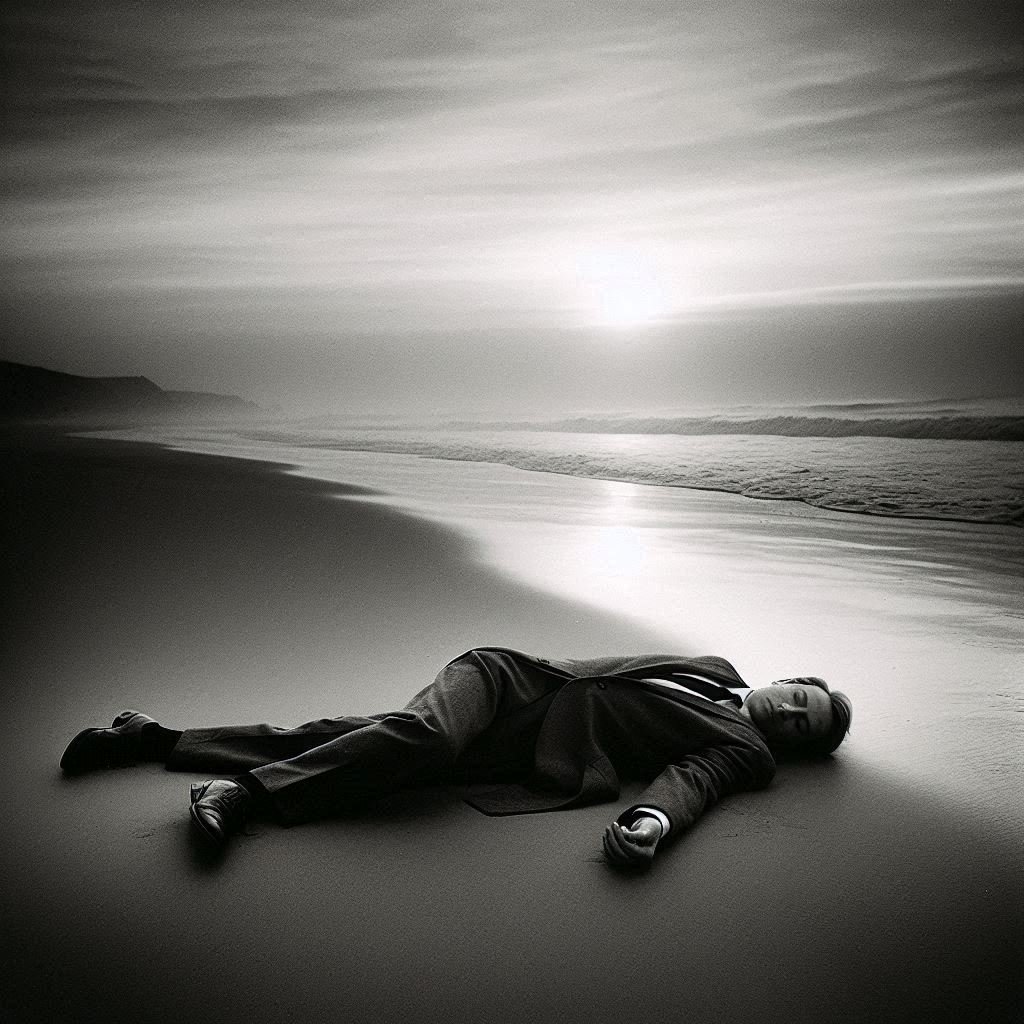
Before sunrise on December 1, 1948, Somerton Beach looked almost peaceful enough to erase whatever had happened there overnight. The tide moved in and out. The seawall held the dark edge of the sand. And against it sat a man who, at first glance, did not look dead at all. He looked like someone who had stepped out of the night to rest for a moment in a suit and polished shoes. But when daylight sharpened the scene, that ordinary image turned unnerving. His body was too still. His posture was too neat. And by the time police understood what they were looking at, one of the strangest identity mysteries of the twentieth century had already begun.
The Somerton Man case began with that discovery on an Australian beach, but it never stayed a simple unidentified-body mystery. It became a story about a hidden scrap of poetry, a code no one could convincingly crack, a suitcase that raised more questions than it answered, and a modern DNA identification that solved only one part of the puzzle.
That is part of why the case still lingers alongside mysteries like the Somerton Man code mystery: the facts are real, the evidence is tangible, and yet the center of the story still refuses to come fully into focus.
The Morning That Turned a Beach Into a Crime Scene
Witnesses later said the man had been seen the night before, leaning against the seawall near Somerton Beach, just outside Adelaide. One person thought he had lifted an arm. Another assumed he was drunk or sleeping off a long night. Nothing about him seemed chaotic. He was dressed too carefully for that. Jacket, tie, pressed shirt, polished shoes. No sign of a struggle. No obvious wound. No one standing over him. No one hurrying away.
Even before the autopsy, the scene had details that felt wrong in a very specific way. The dead man looked groomed and composed, but his identity had been stripped from him. Every label had been cut from his clothing. That is the kind of detail that changes the emotional temperature of a case immediately. A nameless body is tragic. A body that appears deliberately made nameless feels planned.
Timeline of Events
Evening of November 30, 1948: Witnesses notice a man near the Somerton Beach seawall. Some believe he moves slightly, which helps create the impression that he is merely resting.
Morning of December 1: The man is found dead in the same position, well dressed and without visible signs of violence.
Early investigation: Police discover that clothing labels have been removed and that his pockets contain small personal items but no identification.
Autopsy period: Doctors suspect poison, but no specific poison can be confirmed.
Weeks later: A suitcase linked to the dead man is found at Adelaide Railway Station, again containing clothing with identifying labels removed.
Later discovery: A hidden scrap reading Tamám Shud is found in a small fob pocket inside his trousers.
Book connection: A copy of the Rubaiyat of Omar Khayyam turns up with the matching torn section missing, a phone number, and a sequence of mysterious letters.
Modern era: DNA work and genealogical research suggest the man was likely Carl “Charles” Webb.
The Autopsy Did Not Calm Anything Down
If the beach scene was eerie, the medical findings made it worse. Doctors found congestion in several organs and other signs that led them to suspect poison. Yet no poison could be conclusively identified. That gap is one of the reasons the Somerton Man case still pulls people back in. The official language suggested a poisoning, but the laboratory certainty that might have anchored the story never arrived.
That left investigators in a deeply uncomfortable position. If this was murder, then the murder weapon might have vanished into the bloodstream without leaving a readable signature. If it was not murder, then the body and the removed labels still created a pattern of suspicion too strong to ignore.
The Suitcase, the Scrap, and the Code
A suitcase left at Adelaide Railway Station was connected to the dead man. Inside were clothes and basic personal items, but the same strange pattern appeared again: labels had been removed. One name, “T. Keane,” survived on one item, but it never led to a reliable identification. Like so many clues in this case, it felt less like an answer than a door opening into another hallway.
The most famous clue arrived with even more drama. Hidden in a tiny fob pocket in the man’s trousers was a scrap of paper printed with the words Tamám Shud, usually translated as “it is finished” or “ended.” Investigators traced the phrase to the Rubaiyat of Omar Khayyam. Then, in one of those details that would sound too literary if it were fictional, a man came forward with a copy of the book found in a car near the beach. The torn final page matched the scrap.
Inside that book were two things that changed the story forever: a phone number and a penciled sequence of letters that looked like a cipher. Suddenly the case no longer felt like a lonely unexplained death. It felt like a locked box with multiple keys scattered around the city.
The phone number led police to a nurse often referred to publicly as Jestyn. Her reaction when shown the dead man’s likeness became part of the case mythology almost immediately. Reports said she appeared shaken, possibly close to fainting, though she denied knowing him. That single moment was enough to keep alive the idea that the mystery was personal as well as strange.
What the Identification Solved — and What It Did Not
For years, the Somerton Man remained exactly that: a title built around an unknown dead man on a beach. Then advances in DNA and forensic genealogy appeared to break the case open. In 2022, research led by Professor Derek Abbott strongly suggested the man was Carl, or Charles, Webb, an electrical engineer born in Melbourne in 1905.
It gave the mystery a likely real-world identity instead of a placeholder.
But the identification did not solve the story in the way people often imagine. It answered who he may have been. It did not answer why he was on that beach, how exactly he died, why his clothing labels were removed, what the code meant, or what relationship, if any, he had to the woman linked to the book.
What Doesn’t Add Up
The removed labels: This is still one of the hardest details to dismiss. It suggests deliberate concealment, not random misfortune.
The uncertain cause of death: Investigators suspected poison, but no definitive toxic answer closed the loop.
The hidden Tamám Shud scrap: It feels purposeful, almost staged, yet its meaning remains interpretive.
The code: If it is meaningful, the key has never surfaced. If it is meaningless, it is a remarkably effective piece of noise in an already overloaded case.
The nurse’s reaction: Whether it meant recognition or not, it kept suspicion alive around a possible personal connection.
The public placement of the body: If foul play was involved, leaving him in such a visible location seems either reckless or intentional.
Theories That Refuse to Die
The espionage theory has always had obvious appeal. The timing was early Cold War. The unidentified man had no labels, no clear history, and a possible coded message in a book. Adelaide was not far from defense-sensitive sites. Lay those details side by side, and the spy narrative almost writes itself.
But it is worth being careful here. Spy stories survive partly because they explain the mood of the evidence even when they cannot fully explain the evidence itself. The Somerton Man case certainly feels like espionage. That does not mean espionage is proven.
A more personal explanation has always competed with it. Perhaps the dead man had some connection to the woman whose phone number was found in the book. Perhaps the poetry mattered because the relationship mattered. Perhaps the code was intimate rather than geopolitical.
And there is a third possibility that keeps the case haunting: that several strange details may be real at once without belonging to one elegant master explanation. He could have been Webb, estranged from his old life, while the removed labels and uncertain medical evidence created a mystery that never fit one clean story.
If this kind of unresolved evidence-driven mystery pulls you in, it sits naturally beside stories like the lost tomb of Alexander the Great, where the central question survives not because people stopped searching, but because every answer still leaves an empty space behind it.
Why the Case Still Feels Alive
Most cold cases fade because the emotional charge drains out of them over time. The Somerton Man case did the opposite. Every decade seemed to add one more unforgettable element: the beach, the hidden pocket, the Persian phrase, the nurse, the code, the suitcase, the exhumation, the DNA.
It also lives in that narrow corridor between solved and unsolved. We may now have the most credible answer to the question of identity, but the case still resists closure where it matters most. People do not obsess over the Somerton Man because there was once an unidentified body in Australia. They obsess because the likely name did not dissolve the atmosphere around the death.
That same feeling runs through other cases built around a clue that should have explained everything but somehow explained almost nothing, from the strange final evidence in the Tunguska mystery to the brutal unanswered details of Dyatlov Pass.
Walk the beach in your mind one more time and the image still lands with the same force: a neatly dressed man, sitting alone near dawn, carrying the final line of a poem in his pocket. Modern science may have recovered his probable name. But the story he was living in those last hours remains just out of reach, as if the case itself has chosen to hold that final piece back.
FAQ
Who was the Somerton Man?
The strongest modern identification points to Carl “Charles” Webb, a Melbourne-born electrical engineer. That likely solves the identity question better than any earlier theory, but it does not explain the circumstances surrounding his death.
What does Tamám Shud mean?
Tamám Shud is a Persian phrase commonly translated as “it is finished” or “ended.” The words were found on a hidden scrap of paper that had been torn from a copy of the Rubaiyat of Omar Khayyam.
Was the Somerton Man a spy?
There is no proof that he was. The removed clothing labels, the possible code, the uncertain poison theory, and the Cold War setting make espionage a durable theory, but it remains a theory rather than a confirmed explanation.
Is the Somerton Man case solved?
Only partly. The probable identification as Charles Webb is a major breakthrough, but the cause of death, the meaning of the code, and the reasons behind several key clues are still unresolved.
Why does the Somerton Man case still get attention?
Because it combines hard evidence with unresolved meaning. The beach scene, the hidden note, the coded letters, and the modern DNA result all feel significant, yet they do not come together in a way that fully closes the mystery.
🔎 If this story stayed with you, the author suggests these real cases next: