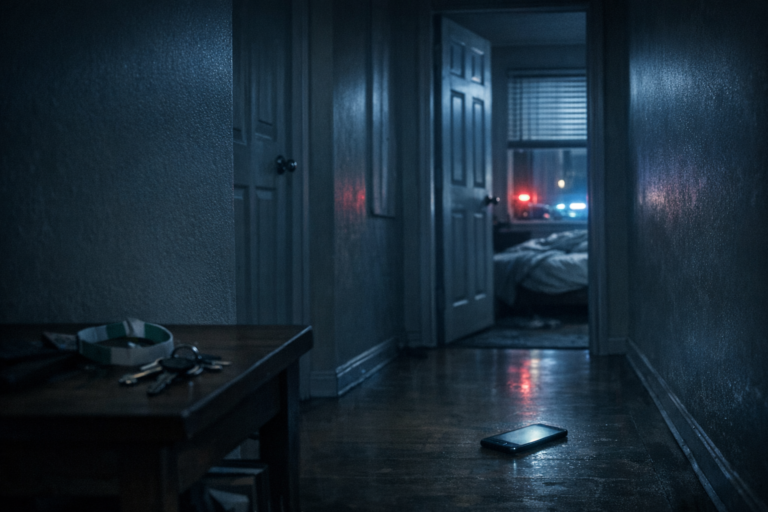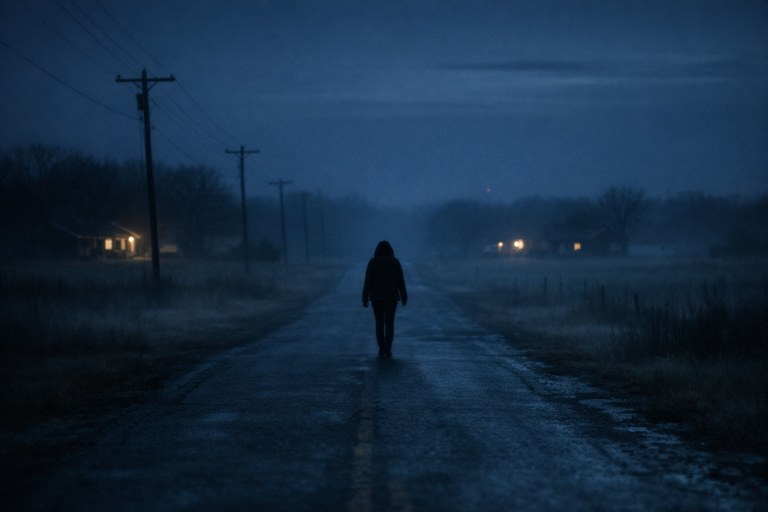
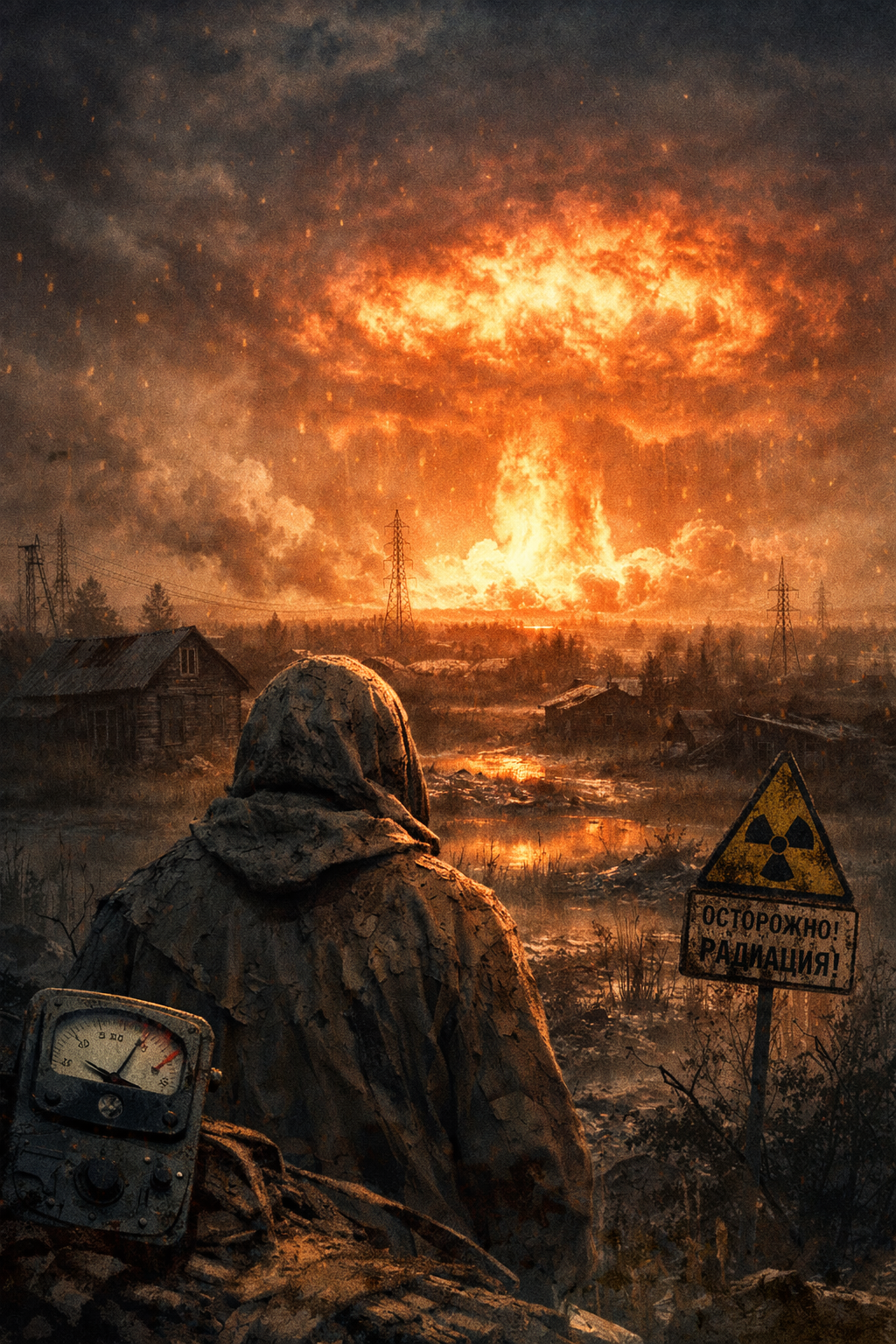
One of the most frightening things about the Kyshtym disaster is that, for the people living near Mayak in September 1957, the night did not look like the beginning of history’s worst nuclear accidents. It looked like an ordinary shift change, an ordinary village evening, an ordinary Soviet sky over a place the outside world was not even supposed to know existed. Then something inside the nuclear complex failed, a storage tank exploded, and the silence that followed would wound people almost as deeply as the radiation itself.
The Kyshtym disaster was a Soviet nuclear accident at the Mayak plutonium production site on 29 September 1957. It still matters because survivors were not only caught in contamination. Many were trapped inside secrecy, delayed evacuations, and years of official half-truths that made the disaster feel even more unreal. Stories like this also belong inside the site’s broader Survival Stories Archive, because this was not a clean rescue narrative. It was a long, invisible ordeal that began with one blast and kept unfolding long after the smoke had vanished.
Early on, that same pattern of ordinary life tipping into catastrophe echoes through other disaster survival accounts, including Disaster Survival Stories: Earthquakes, Tsunamis, Fires, and Collapses Where Ordinary Days Turned Into Rescue Clocks. But Kyshtym carries a special dread because the danger could not be seen clearly, named openly, or escaped quickly by the people already standing in it.
The Night the Sky Burned and Nobody Was Told the Truth
Mayak was built in the frantic early Cold War years, when speed mattered more than safety and secrecy covered almost everything. The complex processed plutonium for the Soviet weapons program, and the surrounding settlements existed in the strange half-life of closed cities: workers had jobs of national importance, but their lives were fenced in by censorship, guarded roads, and information they were never allowed to carry home.
On the night of 29 September 1957, one of the facility’s underground waste storage tanks exploded after a cooling system failure allowed heat to build inside highly radioactive liquid waste. This was not a reactor core explosion in the Chernobyl sense, and it was not a nuclear detonation. It was a violent chemical explosion. But that distinction did not make the human consequences smaller. The blast tore through the storage area, hurled a massive concrete lid aside, and sent radioactive contamination into the air over a wide stretch of the southern Urals.
For workers on site, the first experience was confusion. There was a shock wave. Broken glass. Dust. Alarms, commands, running feet. Then came something worse than panic: uncertainty. In disasters, people can sometimes respond quickly when the threat is obvious. Fire means run. Flood means climb. Collapse means dig or call out. Radiation does not offer that clarity. It leaves people staring at a normal-looking hallway, a normal-looking yard, a normal-looking sky, while danger settles over everything.
That was the horror at Mayak. The explosion was only the beginning. The real ordeal came in the hours and days that followed, when workers, medics, soldiers, and nearby civilians were forced to move through contaminated spaces without being told plainly what had happened or how much exposure they faced.
Timeline of the Kyshtym Disaster and Its Aftermath
- Before 29 September 1957: radioactive waste at Mayak is stored in tanks that require cooling to remain stable.
- 29 September 1957: a cooling failure in one of the waste tanks leads to overheating and a chemical explosion.
- Immediately after the blast: workers confront damage, confusion, and contamination across the facility.
- Within hours: radioactive material begins spreading beyond the site in what became known as the East Ural Radioactive Trace.
- In the days that follow: some nearby villages are evacuated, but not all at once, and many residents receive little or no honest explanation.
- In the months and years after: contaminated land is restricted, records are controlled, and the scale of the disaster is hidden from the wider world.
- Decades later: the accident becomes internationally recognized as one of the worst nuclear disasters in history.
The timeline matters because Kyshtym was not one clean moment of survival. It unfolded in stages. First there was the blast. Then there was exposure. Then came delayed evacuations, illness, secrecy, and the long psychological damage of not knowing what people had absorbed or what had been done to them.
What Survival Looked Like When the Threat Was Invisible
For plant workers, survival began with the immediate emergency. Men were sent to damaged areas. Injured workers had to be moved. Equipment had to be checked. Some people were likely exposed while doing exactly what industrial workers are trained to do in a crisis: keep functioning, keep carrying, keep obeying, keep fixing what still can be fixed.
For families in nearby villages, survival looked different. It looked like children playing outside under a contaminated sky. It looked like livestock feeding on poisoned ground. It looked like laundry drying in open air while radioactive particles settled across fabric and soil. In several places, people were not evacuated right away. Some were moved days later. Some received no meaningful explanation beyond instructions to leave.
That delay is one of the most chilling parts of the Kyshtym story. A visible disaster terrifies you all at once. An invisible one steals certainty first. People continue with ordinary motions because they have no choice but to interpret the world through what they can see. If nobody tells them the dust is dangerous, the dust remains dust.
In survival stories about buried victims or trapped survivors, like The Knock Under the Ruins or the mother who kept her baby alive under Armenian rubble, danger is brutal but legible. The body knows it is in a fight. Kyshtym is harder to process because the body often learned the truth after the fact, through nausea, lesions, fatigue, vomiting, fear, and years of unanswered medical questions.
What Investigators and Historians Say Happened
The strongest evidence points to a failure in the cooling system for stored nuclear waste. Without proper cooling, the contents of the tank overheated. Chemical reactions intensified. Pressure built. Eventually the tank exploded, releasing massive contamination.
That core explanation matters because disasters like Kyshtym often attract rumor, myth, and distortion. The secrecy surrounding Mayak almost guaranteed that. When governments hide basic facts, people fill the silence with everything from worst-case truth to total speculation.
But the proven reality is already devastating enough:
- The facility handled extremely dangerous radioactive waste.
- A critical safety failure was not prevented in time.
- The explosion contaminated a huge area.
- Nearby populations were not warned with the speed or honesty the situation demanded.
- Long-term health and environmental consequences followed.
That is the part that should stay at the center. Kyshtym was not terrifying because it produced a dramatic mushroom-cloud image for the world. It was terrifying because so much suffering happened inside controlled silence.
Secrecy, Rumor, and the Reality People Were Forced to Live Inside
One reason the Kyshtym disaster still grips people is that it sits at the intersection of two kinds of fear. The first is the fear of contamination itself. The second is the fear that authorities knew more than they admitted while ordinary people paid the price.
That is where this story overlaps naturally with unease-driven pieces like The Night the Sky Started Acting Wrong. When the sky, the air, or the landscape begins to feel wrong, people do not just fear the event. They fear the gap between what is happening and what they are being told.
At Kyshtym, that gap was enormous. The Soviet state controlled information, restricted maps, suppressed discussion, and buried the true scale of the accident for years. Villages disappeared. Land was fenced off. Medical language was softened or obscured. Survivors were often left with fragments rather than answers.
That changes the emotional shape of the story. Instead of a single rescue climax, Kyshtym leaves behind a slower aftershock. The question becomes not only “Who lived?” but “What did survival cost them afterward?” A person might survive the initial emergency and still spend decades carrying illness, fear for their children, distrust of officials, and the private knowledge that the state treated their suffering as something to be managed rather than acknowledged.
Why the Kyshtym Disaster Still Feels So Disturbing
Part of it is scale. Kyshtym is widely regarded as one of the worst nuclear accidents in history. Part of it is atmosphere: a secret industrial city, a night explosion, radioactive fallout drifting over villages that did not know they were inside a disaster zone. But the deepest reason may be simpler than that.
Kyshtym attacks a basic human instinct. People want danger to announce itself. We want smoke to mean fire and sirens to mean run. We want the world to look dangerous when it is dangerous. This story strips that away.
The workers at Mayak did not get a clean narrative. Neither did the families downwind. They got scattered symptoms, partial evacuations, coded language, and the long shadow of uncertainty. Survival became less about one heroic moment than about enduring a reality that kept refusing to explain itself.
That is why this story belongs beside other ordeals where the environment itself turns hostile, from the tsunami that sent the ocean into a hospital to the wider archive of disaster and wilderness survival. Different settings, same cold truth: ordinary life can vanish in minutes, and when it does, people are left to improvise meaning while trying to stay alive.
By the time the world fully grasped what Kyshtym had been, the people closest to it had already spent years living with the consequences. Some had fallen ill. Some had been relocated. Some had watched the land itself become a quiet warning. The secrecy never erased the event. It only delayed the language people needed to understand it.
And that may be the final wound in this story. A disaster can kill. Silence can keep killing the same event long after the blast is over.
FAQ
What was the Kyshtym disaster?
The Kyshtym disaster was a major Soviet nuclear accident at the Mayak facility on 29 September 1957. A waste storage tank overheated after a cooling failure and exploded, releasing radioactive contamination over a large area.
Why is the Kyshtym disaster considered one of the worst nuclear accidents?
It is considered one of the worst because of the scale of the contamination, the number of people affected, the long-term environmental damage, and the fact that much of the truth was hidden for years.
Were people evacuated immediately after Kyshtym?
No. Some evacuations happened only after delays, and many residents were not given a clear explanation of the danger they were facing at the time.
Why does the Kyshtym disaster still get attention today?
Because it combines nuclear contamination, Cold War secrecy, and a deeply human survival story in which many people endured harm without even being told exactly what had happened.
How was Kyshtym different from Chernobyl?
Kyshtym involved a chemical explosion in a nuclear waste storage tank, not a reactor explosion like Chernobyl. But both disasters revealed how catastrophic nuclear secrecy and delayed transparency can become.
🔎 If this story stayed with you, the author suggests these real cases next:
- The voice beneath the wreckage that told rescuers someone was still alive
- The mother who kept her baby alive under rubble while the cold closed in
- When the sea invaded a hospital and survival turned into room-by-room triage
- Disaster survival stories where normal days turned into rescue clocks
- A wider archive of real survival ordeals that refuse to let go
Explore more Survival Stories here: