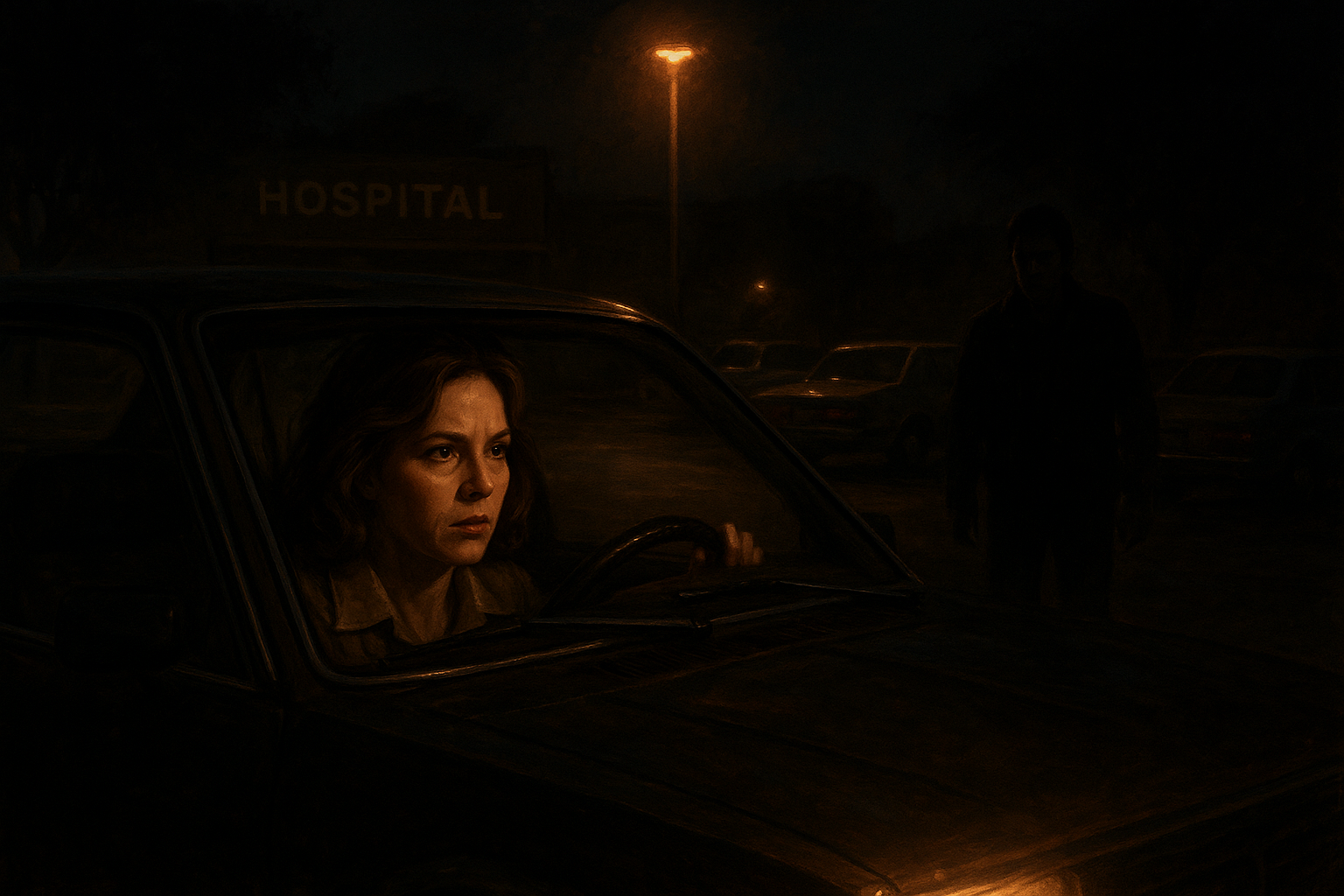
The hospital parking lot should have been the safest part of the night.
Bright lights. Nurses moving in and out. Cars close by. Other people just a few steps away. Dorothy Jane Scott only went to bring her car around so her coworkers would not have to walk far after a late-night emergency room visit. It was a small, kind thing to do. The kind of decision that usually disappears into ordinary life without leaving a mark.
Instead, it became the last moment anyone could clearly place her in the world.
Dorothy Jane Scott’s disappearance remains one of California’s most haunting unsolved cases because it began with months of stalking, escalated in a hospital parking lot in May 1980, and never produced the clean answer investigators needed. What makes the case so difficult to shake is not only that Dorothy vanished, but that she had already warned people she was being watched before the night finally broke open.
That feeling of a case tightening around one final unexplained moment is part of what links Dorothy’s story to other cases in the Unsolved Disappearances Archive, where the timeline is visible just long enough to become unbearable.
In the months before May 28, 1980, Dorothy told people she was receiving strange and threatening phone calls. The voice would shift from obsession to menace. One moment the caller claimed he loved her. Another moment he threatened to kill her. On at least one occasion, he described what she was wearing, making it clear he could see her without her seeing him. That detail changed everything. Anonymous calls are frightening enough. Calls from someone close enough to watch you in real time belong to a different category of fear.
Dorothy took that fear seriously. She reportedly began self-defense classes and changed some of her habits. But stalking creates a special kind of exhaustion. It turns ordinary routines into pressure points. The drive to work feels different. A ringing phone feels different. A parking lot feels different. The whole world remains technically normal, but the person living inside it knows the edges have changed.
Then came the night that made all of those warnings feel like the first chapter of something worse.
On May 28, Dorothy was at work in Anaheim when one of her coworkers became ill with what was believed to be a spider bite. Dorothy and another coworker went with him to UC Irvine Medical Center in Orange. Hospitals at night have their own atmosphere—too bright, too awake, full of machines and fluorescent calm. People come and go. Doors slide open. Footsteps echo. It feels like the kind of place where danger would have trouble hiding.
At some point, Dorothy left the building to get her car and bring it to the emergency entrance. Her coworkers waited for her outside. Then Dorothy’s white Toyota station wagon came racing toward them at a speed and angle that made no sense. It did not stop. It did not even slow. It flew past the entrance and disappeared into the night.
That was the last confirmed sighting of Dorothy Jane Scott alive.
Timeline of Events
- Months before May 1980: Dorothy reportedly receives threatening phone calls from a man who sometimes says he loves her and other times says he will kill her.
- Before the disappearance: She tells people she feels watched and reportedly takes self-defense classes.
- Night of May 28, 1980: Dorothy goes with coworkers to UC Irvine Medical Center after one of them becomes ill.
- Later that night: Dorothy leaves the hospital to bring her car to the emergency entrance.
- Moments later: Her car speeds past her waiting coworkers without stopping.
- May 29, 1980: Dorothy’s white Toyota station wagon is found burning in an alley in Santa Ana. Dorothy is gone.
- After the disappearance: Dorothy’s family begins receiving disturbing calls from a man who asks for her and at times claims he killed her.
- 1984: Human remains found in Santa Ana Canyon are identified through dental records as Dorothy Jane Scott.
- Years later: No one is ever charged with her abduction or murder.
If Dorothy’s coworkers had not seen the car tear past them, the case might feel different. That one image gives the disappearance its lasting speed and violence. It suggests interruption. Panic. Control. Maybe Dorothy was already under threat by the time the car reached the entrance. Maybe someone was forcing the movement. Maybe she was trying to escape. The problem is that the case never gave investigators enough evidence to settle which possibility is closest to the truth.
By the next day, her burned car had been discovered in a Santa Ana alley. That detail pushed the case out of the realm of a simple missing-person mystery. A vehicle found on fire suggests more than disappearance. It suggests staging, destruction, and someone thinking ahead about what evidence might survive the night. It is also one reason Dorothy’s case naturally belongs beside stories like these disappearance cases where one final sighting changed everything. One moment remained visible. Everything after it dissolved.
What Was Known Before She Vanished
- She had already reported being frightened. Dorothy was not describing vague nerves after the fact. She had warned people before the disappearance that someone was calling and watching her.
- The caller blended obsession with threat. That pattern matters because it suggests fixation, not a random opportunist. The emotional tone was personal, even if the identity was not.
- The stalker appeared to know her movements. Describing her clothing during a call strongly suggests proximity and surveillance.
- Her routines had already changed. Self-defense classes and added caution imply she believed the danger was real and escalating.
- The final setting was public but not protected. A hospital parking lot feels safer than it actually is. It offers light and people, but also vehicles, blind spots, and the assumption that nobody would choose that place for an attack.
That is what makes Dorothy’s story feel so sinister. Many cases begin with confusion and only later reveal warning signs. Here, the warning signs were already there. The fear came first. The disappearance came second. In hindsight, the whole story reads like a tightening spiral around a woman who understood the threat before anyone could name the man behind it.
And then came the part that kept the wound open for years.
After Dorothy disappeared, her family began receiving more phone calls. The man would ask whether Dorothy was home. Sometimes he said he had killed her. Then he would hang up. That behavior is one of the most psychologically chilling elements in the case. These were not practical calls. They were not ransom demands. They were acts of domination. Whoever made them seemed less interested in negotiating than in reminding Dorothy’s family that he still existed just outside their reach.
Cases shaped by that kind of contradiction—where a voice, clue, or detail seems to reveal everything and nothing at once—often stay alive for decades. Dorothy’s belongs with other disappearances where one stubborn detail refused to fit cleanly. The calls feel revealing, yet they never became the key that unlocked the case.
What Doesn’t Add Up
- The stalker seems real, but still faceless. Dorothy’s fear was specific and consistent, yet no definitive public identification ever closed the loop.
- The hospital setting should have helped more than it did. Public places create witnesses, but they can also create false confidence. Dorothy vanished from a place full of light and people without leaving a clear rescue path behind.
- The speeding car remains hard to interpret. It points to urgency, but not motive. Was Dorothy fleeing, being forced, or already overpowered?
- The burned vehicle suggests intent. Burning the car feels less like panic and more like someone trying to sever the evidence trail early.
- The calls after her disappearance were taunts, not resolution. They deepened the case emotionally while doing very little to solve it legally.
In 1984, human remains discovered in Santa Ana Canyon were identified through dental records as Dorothy Jane Scott. That ended one layer of uncertainty for her family, but it did not bring justice. The case did not suddenly sharpen into a single prosecutable narrative. It remained what it had always been: a stalking case that turned into an abduction and murder without ever fully exposing the person at the center of it.
That unresolved structure is one reason Dorothy’s disappearance still leads readers toward similar cases involving women who seemed to sense danger before the public understood it. The emotional logic overlaps with stories like Jennifer Kesse’s disappearance, where ordinary movement through a parking area turned into one of the most frustrating blank spots in modern investigations, and Tara Calico’s disappearance, where one day’s routine exit became a mystery that still refuses to settle.
What lingers most in Dorothy’s case is not only the violence of the outcome. It is the slow approach. A caller who kept getting closer. A woman who recognized the danger. A public place that still failed to protect her. A family left answering a phone that seemed to ring straight out of the dark. Most unsolved disappearances leave one central image behind. Dorothy’s leaves several: a hospital entrance under hard white lights, a station wagon tearing past the curb, a burned car in an alley, and a voice on the line asking for a woman who was already gone.
That is why the case still feels immediate. It never settles into the past. Dorothy Jane Scott tried to keep living while someone watched from the edge of her life. Then one night, that edge disappeared.
And that may be the most disturbing part of all: she vanished from a place that was supposed to make danger feel impossible.
FAQ
What happened to Dorothy Jane Scott?
Dorothy Jane Scott disappeared on the night of May 28, 1980, after leaving a hospital to bring her car around for coworkers. Her car was later found burning in Santa Ana, and her remains were identified in 1984. No one was ever charged in her case.
Was Dorothy Jane Scott being stalked before she vanished?
Yes. According to family and other accounts, Dorothy had been receiving threatening phone calls before her disappearance from a man who sometimes claimed he loved her and other times threatened to kill her.
Why is the Dorothy Jane Scott case still unsolved?
The case remains unsolved because the evidence never produced a provable suspect, the threatening calls were never turned into a decisive break, and the critical moments in the hospital parking lot were never fully reconstructed.
Where was Dorothy Jane Scott last seen?
She was last confirmed seen at UC Irvine Medical Center in Orange, California, after leaving to bring her car to the emergency entrance for her coworkers.
Why does this case still get so much attention?
It still draws attention because it combines stalking, a terrifying final sighting, a burned vehicle, taunting phone calls, and the lingering feeling that Dorothy knew she was in danger before anyone could stop it.
🔎 If this story stayed with you, the author suggests these real cases next:
- The disappearances where one final sighting made the whole mystery darker
- The cases where one piece of evidence kept breaking the timeline apart
- The office parking-lot disappearance that still feels impossible to explain
- The bike ride that ended in one of the most debated missing-person mysteries
- The disappearances where the vehicle stayed behind and the person never came back
Explore more Disappearances stories here: