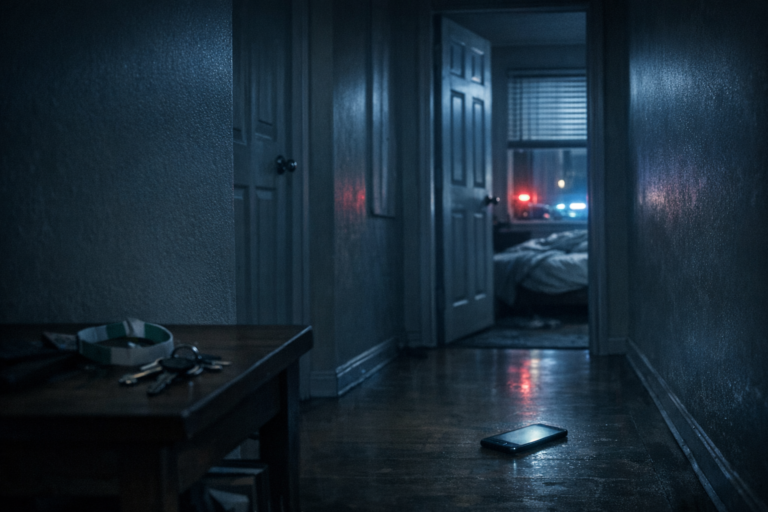
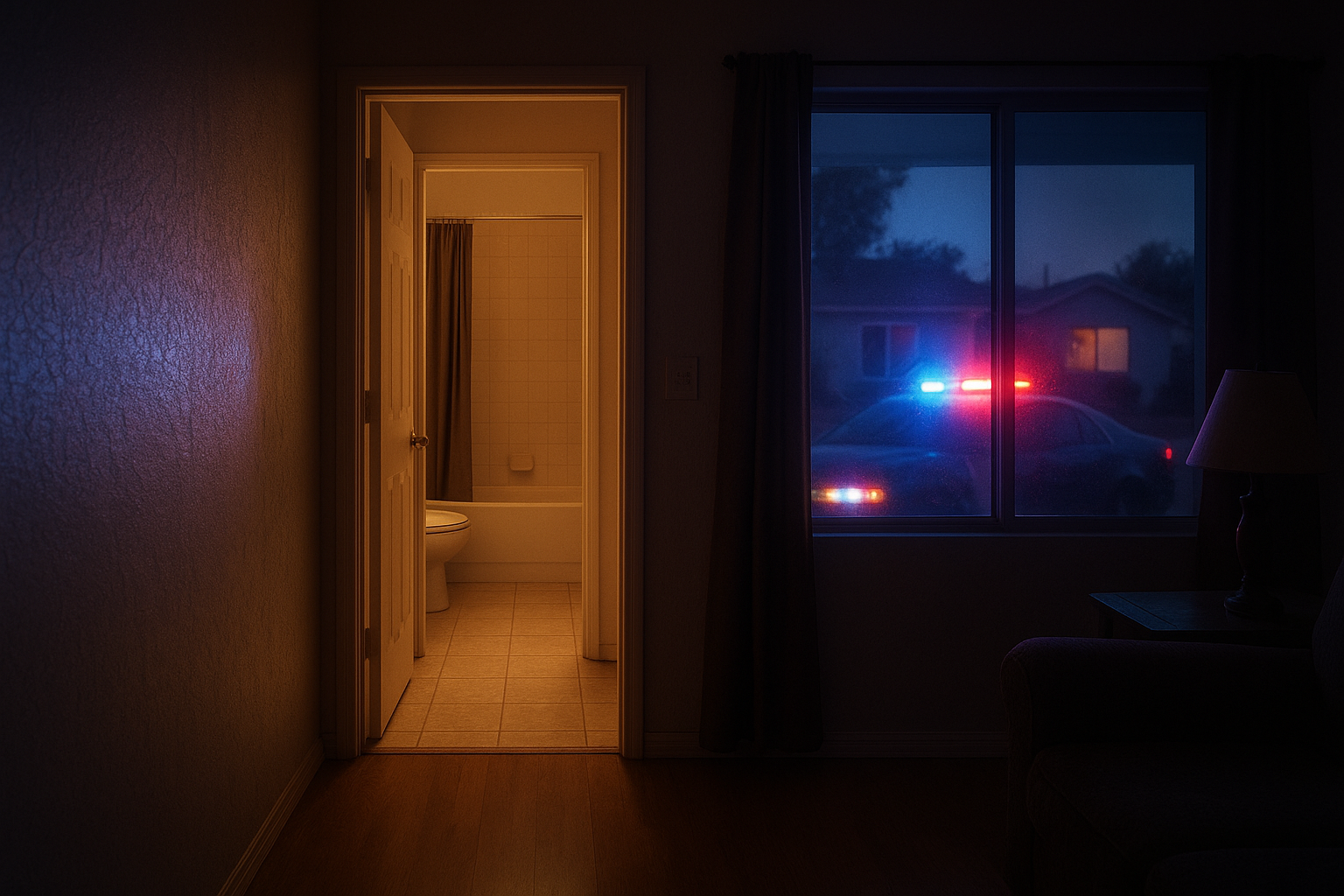
The courtroom made the story feel almost contained. Rows of benches. A judge at the front. Cameras pointed toward a woman who often looked calm enough to unsettle people. But everything in the Jodi Arias case kept pulling the room back to one small bathroom in Mesa, Arizona, where Travis Alexander’s final day had been frozen by a camera nobody managed to destroy.
The Jodi Arias case is the true crime story of Travis Alexander’s 2008 murder, the evidence that exposed Jodi Arias’s shifting explanations, and the murder trial that turned a private relationship into a national spectacle. It still matters because the case was not just about who killed Travis. It was about how obsession, digital evidence, courtroom strategy, and public fascination collided around one brutal act.
For a closer look at the victim behind the headlines, read the Travis Alexander murder story, because the center of this case was never the media storm. It was the life that ended inside that house.
The Relationship That Would Not End Cleanly
Travis Alexander had the kind of public energy people remembered. He was ambitious, social, religious, and driven. Friends described him as warm and funny, a person who seemed to be building a future one conversation at a time. He worked in sales and carried himself like someone trying to climb toward a better life.
Jodi Arias entered that life in 2006 after the two met at a conference in Las Vegas. At first, the connection looked intense in the way new relationships often do. There was attraction, long conversation, and the feeling that two people had found something magnetic. But intensity is not the same thing as safety, and over time the heat around it began to look less romantic and more unstable.
They dated, broke up, reconnected, and kept circling each other. Travis lived in Mesa. Jodi had ties to California. Distance should have created space, but the relationship seemed to keep pulling itself back together. Friends later said Travis had concerns about possessiveness, strange appearances, and boundary-crossing. By the summer of 2008, Travis appeared to be trying to move forward. He had plans, friends around him, and a coming trip to Cancun. That detail matters because so much of this case would eventually turn on the idea of control — who had it, who was losing it, and what someone might do when the future no longer included them.
The Day Travis Alexander Was Found
On June 4, 2008, Travis was killed inside his home. For days, the outside world did not know it. Then he missed an important conference call. Friends became worried, went to his house, and found the scene that would later be described in court with almost unbearable detail.
Travis was found in the shower. He had been stabbed many times, shot, and his throat had been cut. The violence was close, physical, and deeply personal. This was not the kind of crime that looked distant or accidental. It looked like a confrontation that had exploded into rage.
Investigators quickly focused on people close to him. Jodi Arias was not a stranger. She was not a random name pulled from the edges of his life. She was a former girlfriend with a complicated history, and when detectives began looking at her movements, her first explanations did not hold.
At first, Jodi said she had not been there. Then evidence began narrowing the space around that claim.
The Camera That Changed the Case
The most haunting evidence was found in a washing machine: a digital camera. It had been damaged, apparently in an attempt to get rid of what it contained, but investigators were still able to recover images from the memory card.
Those photos became the spine of the prosecution’s timeline. Some showed Travis alive on the day he died. Some placed Jodi with him. Others appeared to capture the moments after the attack began, including images that seemed accidental, blurred, and terrifying because they did not feel composed. They felt like evidence left behind in panic.
That camera did something rare. It cut through argument. It placed Jodi inside Travis’s home when she had said she was not there. It gave prosecutors a timeline built from timestamps, not just memory or motive.
In many true crime cases, the public argues over gaps. Here, one of the reasons the case became so consuming was that the evidence seemed to close those gaps while Jodi’s explanations kept changing around them. If you are interested in cases where evidence and testimony pull a trial in different directions, the site’s true crime archive follows other cases shaped by DNA, appeals, old lies, and public doubt.
The Stories Jodi Arias Told
Jodi’s versions of events shifted in stages. First, she denied being involved. Then she claimed two intruders had entered the home and killed Travis while sparing her. Later, when that explanation could no longer survive the evidence, she admitted she killed him but said she had acted in self-defense.
That sequence became central to how the public understood the case. It was not merely that Jodi lied. It was that each version seemed to arrive after the previous one became impossible. The truth did not come forward cleanly. It had to be dragged into view by the camera, the physical evidence, the travel records, and the contradictions.
Prosecutors argued the killing was premeditated. They pointed to her long drive, the rental car, questions about gasoline cans, phone activity, and the effort to destroy evidence. The defense argued a very different story: that Travis had been abusive and that Jodi had feared for her life. The trial became a fight over which narrative could explain the brutality inside that bathroom.
Timeline of Events
- 2006: Jodi Arias and Travis Alexander met at a Las Vegas conference and began an intense relationship.
- 2007: The relationship became unstable and eventually ended, though contact between them continued.
- Early June 2008: Jodi traveled from California toward Arizona. Prosecutors later argued the travel pattern and related details showed planning.
- June 4, 2008: Travis was killed inside his Mesa home. Recovered camera images helped place Jodi there that day.
- June 9, 2008: Friends found Travis dead after he had missed expected communication.
- After the murder: Jodi first denied being present, then claimed intruders killed Travis, then admitted killing him but claimed self-defense.
- 2013: Jodi Arias was convicted of first-degree murder.
- 2015: She was sentenced to life in prison without the possibility of release.
Key Evidence and Clues
- The recovered camera: The damaged camera and memory card placed Jodi and Travis together on the day he died.
- The timestamps: The recovered photos helped investigators narrow the final window of Travis’s life.
- The changing accounts: Jodi’s explanations moved from denial to intruder story to self-defense.
- The crime scene: The severity and nature of Travis’s wounds became a major challenge to the defense theory.
- Travel and phone details: Prosecutors used surrounding records to argue that the trip was not innocent or spontaneous.
What made the evidence so powerful was not one clue alone. It was the way each clue pressured the next. The camera challenged the denial. The wounds challenged the self-defense claim. The timeline challenged the idea that this was a sudden, chaotic accident that no one could have seen coming.
The Trial That Became a Spectacle
By the time the case reached trial, it was no longer only a local murder prosecution. It had become a televised event. People watched Jodi Arias on the stand as the state pressed her on details and the defense tried to reframe Travis, the relationship, and the final moments.
But that attention came with a risk. The spectacle could swallow the victim. The trial’s drama, interviews, and commentary sometimes pulled focus away from the simplest truth: Travis Alexander was killed in his own home, and the people who loved him had to watch the worst parts of his private life become public evidence.
Other public trials have created that same uncomfortable collision between grief and obsession. The Casey Anthony case became a national argument over evidence and reasonable doubt, while the Scott Peterson case showed how a relationship narrative can become the center of a murder trial. Jodi Arias belongs in that same uneasy category: cases where the courtroom became part legal proceeding, part national mirror.
What Doesn’t Add Up
The case is legally resolved, but certain tensions still make people revisit it. Not because the conviction left the central question unanswered, but because the path to the truth was so distorted.
- Why did the story keep changing? Jodi’s explanations seemed to adapt only when evidence forced them to.
- Why was the camera left behind? If the goal was to erase evidence, the failed destruction of the camera became one of the biggest mistakes in the case.
- How much was planned? The prosecution argued premeditation, while the defense tried to frame the killing as fear and survival.
- Why did the case become so public? The combination of cameras, graphic evidence, and courtroom performance turned it into a cultural event.
Those questions are why the story still circulates. Not because people do not know who was convicted, but because the case shows how messy the road to truth can become when intimacy, violence, and self-preservation collide.
Why This Case Still Gets Attention
The Jodi Arias case still gets attention because it feels like a warning disguised as a courtroom drama. It shows how a relationship can look passionate from the outside while becoming corrosive behind closed doors. It shows how a person can appear calm while the facts underneath are horrifying. And it shows how digital evidence can turn a private lie into a public timeline.
In the end, the most chilling part is not the media spectacle. It is the quiet before it. Travis alive in his own home. A camera nearby. A relationship already broken but not fully over. A future waiting for him that he would never reach.
Jodi Arias was convicted, and the legal question was answered. But the emotional question remains harder to put away: how does something that once looked like love become so violent that a courtroom has to reconstruct it frame by frame?
FAQ
What happened in the Jodi Arias case?
Jodi Arias was convicted of murdering Travis Alexander in his Mesa, Arizona home in June 2008. The case became nationally known because of the recovered camera evidence, Jodi’s changing stories, and the televised trial.
Was Jodi Arias convicted?
Yes. In 2013, Jodi Arias was convicted of first-degree murder. In 2015, she was sentenced to life in prison without the possibility of release.
What evidence was important in the Jodi Arias trial?
The recovered digital camera was one of the most important pieces of evidence because it placed Jodi with Travis on the day he died and helped build the timeline. Prosecutors also relied on the crime scene, phone and travel details, and the contradictions in Jodi’s statements.
Why did the Jodi Arias case get so much attention?
The case drew attention because it combined a brutal relationship murder, graphic evidence, shifting explanations, and a televised courtroom battle.
Is the Jodi Arias case still active?
The main criminal case is resolved. Jodi Arias remains imprisoned for the murder of Travis Alexander, but the case continues to be discussed because of the trial footage, the recovered photos, and the disturbing relationship dynamics behind the crime.
Continue exploring:
- The final hours inside the Travis Alexander case
- Trials, appeals, and evidence battles that refused to stay closed
- The public trial that split viewers down the middle
- Another family betrayal that looked calm from the outside
- The hidden recording that changed how a crime was understood
More True Crime stories:
Watch This Story on YouTube
Prefer to watch? See the full story on our YouTube channel.