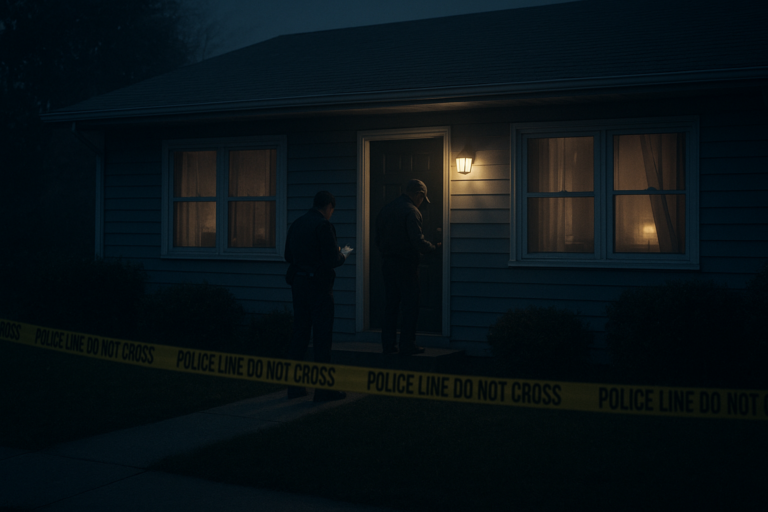
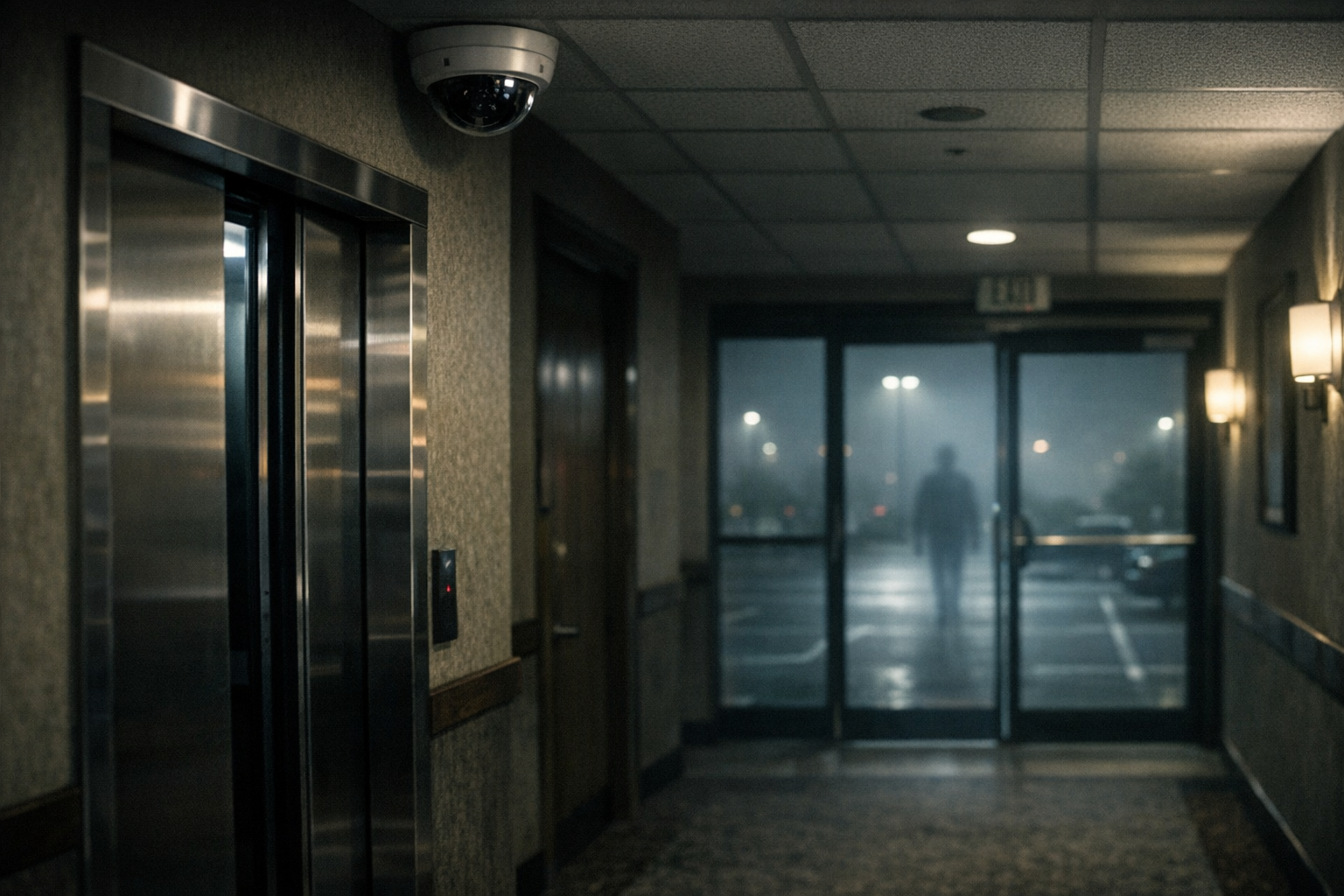
Security cameras are supposed to reduce chaos. They freeze a hallway, a parking lot, a hotel corridor, an elevator, a lobby, a street corner. They turn panic into sequence. But in some disappearance cases, the camera does something crueler: it gives the world one last visual record and still refuses to explain what actually happened. The footage survives. The person does not. And the gap between those two facts becomes the whole reason the case stays alive.
That is what makes surveillance-driven disappearances so hard to shake. A witness statement can blur with memory. A timeline can bend under rumor. But video feels different. It feels objective. It feels like the truth must be sitting somewhere inside the frame, waiting for the right pair of eyes to pull it free. Yet some of the most haunting cases in the archive prove the opposite. The camera can preserve motion without preserving meaning. It can capture a person’s final visible minutes and still leave investigators arguing over sequence, state of mind, opportunity, and what happened just outside the recorded edge.
This page covers disappearance cases shaped by surveillance footage, public-space visibility, and final visual records that should have clarified the story but only deepened it. Some involve famous elevator or hotel clips. Others are driven by last-seen environments so public, monitored, or reconstructable that readers cannot stop asking the same question: how did someone vanish from a place that should have held onto them more clearly than this?
Readers looking for surveillance-footage disappearances are not just looking for any missing-person story. They are looking for the cases where a camera, a resort setting, a shipboard environment, a downtown street, or a dense urban timeline created the feeling that the answer should be visible. That is a very specific documentary pattern, and it makes these stories unusually sticky for both search and binge reading.
When several footage-driven cases are examined side by side, patterns emerge: controlled environments that still produced blind spots, public places that failed to protect clarity, and visual evidence that became endlessly replayable without becoming decisive. The result is not just a list of mysteries. It is a structured archive page about how visibility can fail.
The Cases Where the Camera Kept Rolling but the Explanation Never Arrived
Elisa Lam
Few disappearance cases have been burned into public memory the way Elisa Lam’s final elevator footage has. In February 2013, Lam disappeared from the Cecil Hotel in Los Angeles. Days later, the now-infamous elevator video became the visual center of the case: Lam stepping in and out of the elevator, pressing buttons, glancing into the hallway, and moving in ways viewers have argued over for years. The footage gave the world a last visual record, but not a final answer.
This case fits the surveillance-footage angle almost too perfectly. The clip is short, grainy, and incomplete, yet it became the most replayed artifact in the entire mystery.
The key mystery point is that the video feels like evidence that should explain the case, but in practice it became evidence people could project onto. It turned the final visible moments into a permanent argument over fear, confusion, pursuit, mental state, and what may have happened in the unseen minutes after the doors closed again.
There is also a broader archive reason this case belongs in a hub like this. Surveillance footage changes how readers experience disappearance stories. It creates the illusion of proximity. Viewers feel one replay away from insight. That is why footage-driven cases often outperform ordinary summaries: people are not only reading what happened. They are mentally trying to solve what the camera failed to settle.
A case shaped by elevator footage naturally connects to hotel-hallway mysteries, resort disappearances, cruise-ship environments, public-space last sightings, and urban cases where expected visibility somehow failed. The camera is not just a clue in these stories. It is part of the emotional architecture that keeps readers clicking deeper.
Read the full case here: Elisa Lam Disappearance: The Elevator Footage, the Final Timeline, and the Questions That Still Won’t Go Away.
Amy Lynn Bradley
Amy Lynn Bradley vanished from a Royal Caribbean ship just before dawn in 1998, and what keeps her case so alive is not only the narrow final timeline but the unsettling sense that she remained visible around the edges of the story. Cruise-ship disappearances are already claustrophobic because the setting should limit the possibilities. In Amy’s case, the ship environment, the public spaces, and later reported sightings created a mystery that feels disturbingly close to being reconstructable, without ever getting all the way there.
Amy’s disappearance belongs here because surveillance-led mysteries are not always built around one perfect CCTV clip. Sometimes the haunting visual record is broader: decks, corridors, a confined vessel, possible onboard movement, and later claims that suggest the story may not have ended where the official timeline first seemed to stop. The result is a camera-adjacent disappearance where visibility only widened the field of uncertainty.
The key mystery point is whether the closed environment of the ship should have made the truth easier to find. Instead, the setting created one of the most maddening paradoxes in the cluster: a disappearance that happened in a highly controlled public environment and still refused to resolve.
There is also a broader archive reason this case belongs in a hub like this. Surveillance footage changes how readers experience disappearance stories. It creates the illusion of proximity. Viewers feel one replay away from insight. That is why footage-driven cases often outperform ordinary summaries: people are not only reading what happened. They are mentally trying to solve what the camera failed to settle.
A case shaped by elevator footage naturally connects to hotel-hallway mysteries, resort disappearances, cruise-ship environments, public-space last sightings, and urban cases where expected visibility somehow failed. The camera is not just a clue in these stories. It is part of the emotional architecture that keeps readers clicking deeper.
Read the full case here: What Happened to Amy Lynn Bradley? The Cruise Ship Timeline and the Sightings That Still Raise Questions.
Madeleine McCann
The Madeleine McCann case became global almost immediately, but one reason it stayed fixed in the public imagination is the constant role of visual reconstruction. Holiday-resort layouts, apartment sightlines, public appeals built around what people may have seen, and the wider attempt to map movement around the resort all turned this disappearance into a case that felt permanently half-visible. Even without one definitive final camera clip, the case lives inside the tension between a public place and a missing child who should have been seen more clearly than she was.
The surveillance-footage cluster is really about last visible record — and sometimes that record is fragmented across sightings, resort movement, and public-space reconstruction rather than one famous video. The case became a global exercise in trying to turn visibility into certainty, and failing.
The key mystery point is that a disappearance from a crowded vacation setting should have generated stronger visual certainty than it did. Instead, the public was left with a case where every reconstruction of the scene only sharpened the feeling that the critical movement happened just outside the part anyone could actually prove.
There is also a broader archive reason this case belongs in a hub like this. Surveillance footage changes how readers experience disappearance stories. It creates the illusion of proximity. Viewers feel one replay away from insight. That is why footage-driven cases often outperform ordinary summaries: people are not only reading what happened. They are mentally trying to solve what the camera failed to settle.
A case shaped by elevator footage naturally connects to hotel-hallway mysteries, resort disappearances, cruise-ship environments, public-space last sightings, and urban cases where expected visibility somehow failed. The camera is not just a clue in these stories. It is part of the emotional architecture that keeps readers clicking deeper.
Read the full case here: Madeleine McCann Disappearance — The Case That Still Has No Answer.
Emma Fillipoff
Emma Fillipoff was seen in downtown Victoria behaving erratically, anxious, and exposed in the hours before she vanished. The public-space element is what gives the case its strange pull. Emma was not disappearing from a wilderness trail or from a sealed private room. She was in view, moving through a city, close enough to help and close enough to be remembered. That makes the case feel as if the last chapter should be recoverable.
Emma belongs in this roundup because some of the most unsettling disappearance stories are built on street-level visibility rather than clean security footage. People saw her. The setting was public. The final movements feel close enough to reconstruct. Yet the case still dissolved into uncertainty. That same contradiction — being seen but not secured into explanation — is the spine of the surveillance cluster.
The key mystery point is why a disappearance with such a visible emotional lead-up still failed to produce a stable answer. Her final hours created a vivid last-seen record, but that record never matured into a true endpoint.
There is also a broader archive reason this case belongs in a hub like this. Surveillance footage changes how readers experience disappearance stories. It creates the illusion of proximity. Viewers feel one replay away from insight. That is why footage-driven cases often outperform ordinary summaries: people are not only reading what happened. They are mentally trying to solve what the camera failed to settle.
A case shaped by elevator footage naturally connects to hotel-hallway mysteries, resort disappearances, cruise-ship environments, public-space last sightings, and urban cases where expected visibility somehow failed. The camera is not just a clue in these stories. It is part of the emotional architecture that keeps readers clicking deeper.
Read the full case here: Emma Fillipoff Disappearance — The Barefoot Vanishing.
🔎 Related Investigation:
Kenneka Jenkins
Kenneka Jenkins disappeared after a hotel party in 2017, and the hotel footage became inseparable from the case. Hallway movement, uncertain timing, online rewatching, and the hotel setting all combined to create one of the most visually scrutinized modern disappearances on the site. The footage made the case feel almost mechanically solvable. Yet the more people watched, the more the case turned into a struggle over interpretation, accountability, and sequence.
If Elisa Lam is the archetypal elevator-footage disappearance, Kenneka is the hotel-surveillance counterpart. The cameras did not erase uncertainty. They redistributed it. Viewers could see fragments of movement, but not enough to settle the emotional and investigative fight over what those fragments actually proved.
The key mystery point is that hotel footage is supposed to narrow a mystery into a timeline. In Kenneka’s case, the footage became part of the mystery itself — a visual trail that looked authoritative while still leaving painful room for dispute.
There is also a broader archive reason this case belongs in a hub like this. Surveillance footage changes how readers experience disappearance stories. It creates the illusion of proximity. Viewers feel one replay away from insight. That is why footage-driven cases often outperform ordinary summaries: people are not only reading what happened. They are mentally trying to solve what the camera failed to settle.
A case shaped by elevator footage naturally connects to hotel-hallway mysteries, resort disappearances, cruise-ship environments, public-space last sightings, and urban cases where expected visibility somehow failed. The camera is not just a clue in these stories. It is part of the emotional architecture that keeps readers clicking deeper.
Read the full case here: Kenneka Jenkins Disappearance — The Hotel Night That Ended in a Locked Freezer.
Sneha Philip
Sneha Philip vanished on the night before the September 11 attacks, and her disappearance has remained trapped between city anonymity and possible visibility ever since. Last-known movements through lower Manhattan, uncertainty about whom she was with, and the problem of whether she was seen in the critical final hours all give the case a surveillance-era tension even where the record is incomplete. It is a disappearance built on urban density without urban clarity.
Surveillance-driven mysteries are often really stories about expected visibility. A doctor moving through one of the most intensely observed cities in the world should not be able to slip out of the record so completely. Yet that is exactly what happened. The city feels like it should have captured more than it did.
The key mystery point is whether the final answer was lost in an ordinary city-night gap or inside the catastrophic historical context that followed. Either way, the case remains haunted by the sense that the visual trail should have been stronger than the one investigators were left with.
There is also a broader archive reason this case belongs in a hub like this. Surveillance footage changes how readers experience disappearance stories. It creates the illusion of proximity. Viewers feel one replay away from insight. That is why footage-driven cases often outperform ordinary summaries: people are not only reading what happened. They are mentally trying to solve what the camera failed to settle.
A case shaped by elevator footage naturally connects to hotel-hallway mysteries, resort disappearances, cruise-ship environments, public-space last sightings, and urban cases where expected visibility somehow failed. The camera is not just a clue in these stories. It is part of the emotional architecture that keeps readers clicking deeper.
Read the full case here: Sneha Philip Disappearance — The Doctor Who Vanished on 9/11.
🔎 Related Investigation:
If this case pulled you deeper into the mystery, continue into:
Why These Disappearances Still Don’t Make Sense
What these cases have in common is not one kind of suspect, one setting, or one ending. It is a more disturbing pattern: the final chapter seems like it should be more visible than it is. The case either contains actual footage, a closely monitored environment, strong public-space last-seen evidence, or a visual timeline that should have narrowed the uncertainty. And yet the mystery survives anyway.
That contradiction matters because surveillance changes the emotional math of a disappearance. In a case with no camera and no witness, the unknown can feel bleak but abstract. In a case with a last visible record, the unknown feels personal and immediate. People replay the clip. They study body language. They zoom in on shadows, doorways, timestamps, and pauses. They assume the answer must be encoded in the evidence they can see. When it does not yield, frustration hardens into obsession.
There is also a practical investigative pattern here. Cameras rarely cover everything. They cover angles, not entire realities. They miss stairwells, loading areas, exits, blind spots, and the subtle context that turns movement into understanding. A final clip can show a person entering an elevator, walking a hallway, or moving through a public area — but not what happened a minute later, who was waiting outside frame, or what the missing person believed was unfolding around them. That is why footage often sharpens the emotional mystery more than the legal one.
From a site-structure point of view, this is exactly the kind of hub that builds authority. Footage-driven cases naturally connect to final-hours disappearances, witness-sighting cases, hotel and travel mysteries, cruise-ship vanishings, and evidence-first archives. Readers who finish one such case are primed for the next because the tension is recognizable: a visible trail that should have narrowed the truth and somehow only made it more elusive.
The deeper reason these stories rank and linger is simple. Modern readers trust the visual record almost by instinct. When the visual record fails, it produces a special kind of cognitive itch. The case stops feeling merely unsolved and starts feeling unresolved in a way that seems almost offensive to common sense. That is the exact energy that keeps surveillance-footage disappearances alive in public memory for years.
Conclusion
Some disappearances haunt people because there is no clue at all. The cases in this collection haunt people for a different reason: there was something to see. An elevator clip. A hotel path. A city street. A resort layout. A ship deck. A final visible world that should have tightened into meaning and never did.
That is why footage-driven cases hit so hard. They give the public a last point of contact that feels concrete enough to trust and incomplete enough to torment. The camera turns absence into a frame, but not into closure. It gives investigators sequence without explanation and gives readers something almost worse than darkness: partial light.
Being seen is not the same as being understood. And in some of the most haunting disappearance mysteries on the site, the final visual record did not solve the story at all. It simply made the story impossible to forget.
🔎 If this story stayed with you, the author suggests these deeper investigations next:
- Disappearances where the timeline itself still refuses to cooperate
- Cases where later sightings only made the mystery stranger
- Disappearances where the evidence seems to lean in one direction
- The Final Timelines That Still Don’t Close: 9 Disappearances Reconstructed Minute by Minute
- Vanished Into the Frame: 8 Disappearances Where the Final Footage Only Deepened the Mystery
Explore more Disappearances stories here: