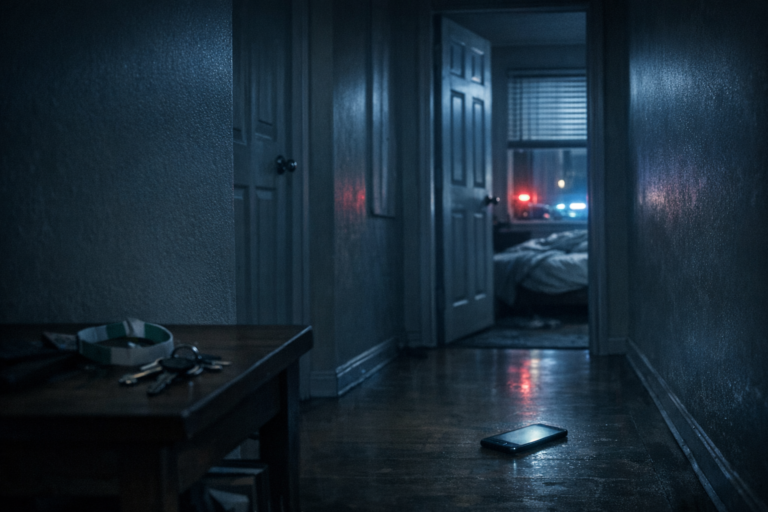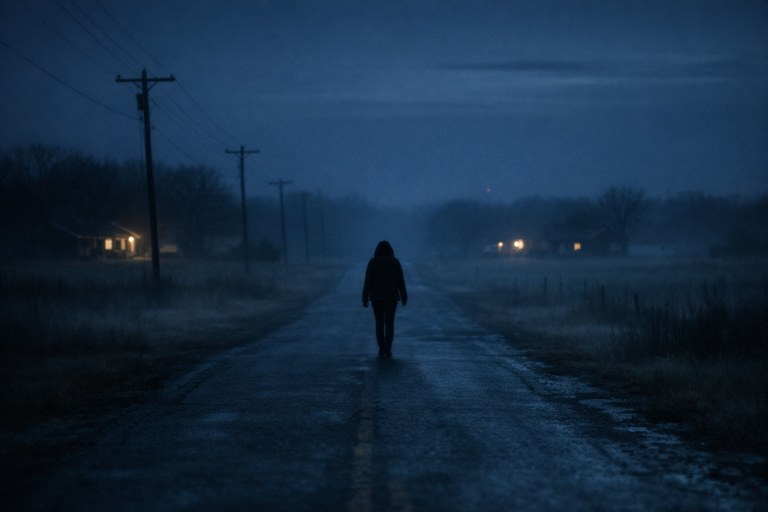
When John White stepped back onto Roanoke Island in August 1590, he was not walking into a ruined battlefield. He was walking into something somehow worse. The settlement where 117 English colonists had been left behind three years earlier was silent. No smoke rose above the trees. No voices carried across the sand. The houses were gone. The fort had been taken down. And somewhere in that stillness, the future of an entire colony had vanished.
The Lost Colony of Roanoke is one of the oldest unsolved mysteries in American history because it asks a simple question that has never received a simple answer: what happened to the 1587 settlers who disappeared from Roanoke Island? More than four centuries later, the case still matters because it sits at the collision point between survival, colonization, fear, and the limits of the historical record.
The Settlement That Was Supposed to Survive
Roanoke was not England’s first attempt to put a foothold on the Atlantic edge of North America, but by 1587 it was supposed to be the serious one. Sir Walter Raleigh had already sponsored earlier expeditions. One had explored. Another had tried and failed to hold a military outpost on Roanoke Island. The third attempt was meant to feel different. This time the voyage included families. Women. Children. People who were not just arriving to scout or fight, but to stay.
John White was named governor of the colony. He had already seen how fragile English plans could become once distance, weather, and hunger began to work against them. Still, the 1587 expedition carried hope with it. There were 117 colonists, including White’s daughter Eleanor Dare and her husband Ananias Dare. On Roanoke, Eleanor would give birth to Virginia Dare, remembered as the first English child born in the Americas.
The original plan was to settle farther north in the Chesapeake region, which was considered a more promising location. But the colonists never made it there. Their pilot, Simon Fernandez, put them ashore at Roanoke instead, on ground already haunted by an earlier failed English effort. The decision left them trying to build a future in a place where English relations with local Indigenous groups were already strained and where the memory of past conflict had not faded.
The Moment the Colony Was Left Alone
It did not take long for the practical problems to sharpen into danger. Supplies were thin. Conditions were uncertain. The colony needed help quickly if it was going to last. The settlers pushed John White to sail back to England and return with provisions and reinforcements.
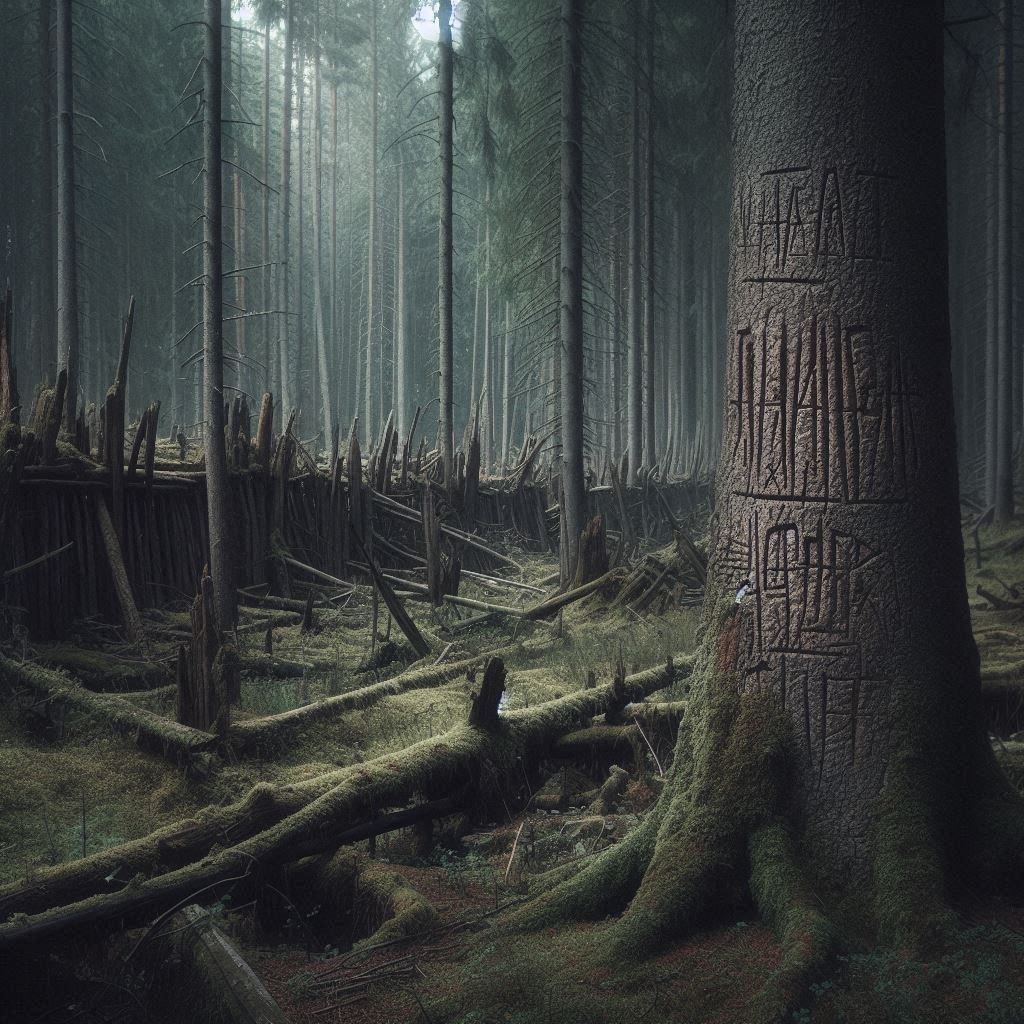
For White, leaving meant walking away from his daughter, his granddaughter, and dozens of people who were depending on him to come back fast. Before he departed, he told the colonists that if they moved, they were to carve the name of their destination into a tree or post. If they left under force or distress, they were supposed to carve a cross as a warning.
White sailed for England in late 1587 expecting the separation to be brief. Instead, events on the far side of the Atlantic swallowed his timetable whole. England was bracing for conflict with Spain. Ships were being redirected toward national defense. The coming clash with the Spanish Armada made colonial rescue look minor in the eyes of the Crown. White tried repeatedly to secure passage back. He failed. Months became years. By the time a return voyage was possible, the delay had stretched to nearly three years.
That delay is one of the coldest parts of the Roanoke story. If the colony failed, it failed in slow motion, cut off from the one person who had promised to return. If it survived, it survived without the support England had sworn to send.
Timeline of the Roanoke Disappearance
- 1584: Raleigh receives a charter to explore and colonize land in North America.
- 1585: An earlier English group establishes a post on Roanoke Island but abandons it after supply problems and conflict.
- May 1587: John White’s colony sails from England with 117 settlers.
- Summer 1587: The group lands at Roanoke instead of the Chesapeake Bay, their intended destination.
- August 18, 1587: Virginia Dare is born on Roanoke Island.
- Late 1587: White returns to England for supplies after colonists plead for help.
- 1588: War with Spain and the Armada crisis delay White’s return.
- August 1590: White finally reaches Roanoke and finds the settlement deserted.
- 1590 discovery: The word CROATOAN is carved into a post, and CRO is found carved elsewhere, with no cross indicating distress.
When White Came Back, the Colony Was Gone
By the time White finally returned in August 1590, what he found was not chaos. It was absence arranged into a kind of message. The houses had been dismantled rather than burned. The fortifications were down. There were no bodies, no obvious signs of battle, and no clear evidence of sudden destruction. That keeps pulling historians in the same direction: whatever happened probably involved movement, not instant ruin.
Then White saw the carving: CROATOAN. Croatoan was the name of an island to the south, now associated with Hatteras Island, and also the name of an Indigenous group considered friendlier to the English than some of their neighbors. Just as important, there was no cross carved with the word. Under White’s own instructions, that suggested the colonists had not been carried off in visible distress. Maybe they had simply relocated to the place they thought offered the best chance of survival.
But the Roanoke mystery hardens right there, because White never got to follow the clue the way he wanted. Bad weather rolled in. The ship captains transporting him were not interested in risking their vessels or delaying their own plans. White was forced away before he could fully investigate Croatoan. He had come back for answers and instead left with a single carved word and a lifetime of uncertainty.
What Doesn’t Add Up
- No signs of violent destruction: If the colony was massacred at Roanoke, the site did not advertise it.
- No cross with the carving: White’s own distress signal appears to be missing, which weakens the idea of a panicked last message.
- An orderly dismantling: The homes and fort seem to have been taken down deliberately, suggesting planning rather than sudden catastrophe.
- No confirmed final destination: Even with the Croatoan clue, historians cannot prove the entire group settled there permanently.
- Later claims conflict: Some later English and Indigenous accounts point toward assimilation, others toward violence, and none close the case cleanly.
The Theories That Still Define the Case
The most durable explanation is not the most dramatic one. It is assimilation.
In that theory, the Roanoke colonists moved away from the original site and joined Indigenous communities, most likely on Croatoan or among nearby groups. The case for this is stronger than people sometimes realize. The carved message points toward relocation. The absence of a distress cross leans in the same direction. Archaeologists and historians have also spent years studying reports that later observers noticed European features, objects, or traditions among some Indigenous communities in the region. None of it becomes courtroom-grade proof. But taken together, it forms the theory that best fits the surviving clues without forcing them.
Another possibility is that the colonists split up. Some may have gone to Croatoan. Others may have tried moving inland. If Roanoke scattered into smaller groups, that would help explain why the trail becomes so difficult to follow.
Then there is the massacre theory. It has never gone away, partly because later accounts from the Powhatan sphere seemed to describe English colonists being attacked. But the abandoned site White found does not feel like the immediate aftermath of slaughter. That does not make violence impossible. It just makes a simple massacre narrative feel too neat.
Environmental collapse also deserves a place in the conversation. Drought conditions in the late 1580s may have made survival much harder than the English expected. Even if nature did not destroy the colony outright, it may have shaped every desperate decision that followed.
Key Evidence and Clues
- The carving “CROATOAN”: Still the single most important clue left at the scene.
- The missing distress cross: Suggests the move may not have been recorded as forced or catastrophic.
- Dismantled structures: Indicates the settlement may have been intentionally broken down before departure.
- Later reports of European traits or artifacts: Often cited in support of assimilation, though still debated.
- Climate evidence: Studies of regional drought support the idea that food shortages may have intensified the crisis.
That combination is what keeps Roanoke from settling into myth alone. There is enough evidence to point in a direction, but not enough to seal it. It is the same maddening middle ground that makes cases like the Babushka Lady mystery and the search for Alexander the Great’s lost tomb so hard to let go of.
Why the Lost Colony Still Gets Attention
Roanoke endures because it is more than a puzzle about missing settlers. It feels like the first American vanishing story, one built from fear, distance, empire, and silence. There is something uniquely unsettling about a whole community disappearing before the historical record fully catches up to it.
It also survives because every answer changes the meaning of the story. If the colonists were absorbed into Indigenous communities, Roanoke becomes a story about adaptation and identity rather than supernatural disappearance. If they died from violence, disease, or starvation after relocating, then the mystery is not that they vanished but that history failed to preserve the end of their struggle. Either way, the legend grew because the evidence stopped just short of resolution.
That is why the case continues to show up in documentaries, books, archaeology projects, and theory debates. It still delivers the same hook it did centuries ago: a place was supposed to hold human life, and then one day it held only a word carved into wood.
If this side of the archive pulls you in, the Nazca Lines mystery is another strong next step, because it turns a landscape itself into the clue.
FAQ
What happened to the Lost Colony of Roanoke?
No one knows for certain. The leading theory is that the settlers left Roanoke Island and were absorbed into Indigenous communities, possibly on Croatoan, after supply failures and long delays left them stranded.
What does CROATOAN mean in the Roanoke mystery?
CROATOAN was the word John White found carved at the abandoned settlement in 1590. It likely referred to Croatoan Island or the Croatoan people, and it remains the clearest clue the colonists left behind.
Was the Lost Colony of Roanoke ever found?
Not in any final, universally accepted way. Archaeologists and historians have uncovered leads, artifacts, and competing theories, but no discovery has completely resolved where all 117 settlers went or how their story ended.
Why is the Roanoke colony still considered unsolved?
It is still unsolved because the surviving evidence points in multiple directions without proving one conclusion. The carvings, the dismantled settlement, later historical accounts, and regional climate evidence all matter, but none close the case completely.
🔎 If this story stayed with you, the author suggests these real cases next:
- An ancient message that still refuses to be read with certainty
- The unidentified woman who may have filmed one of history’s darkest moments
- The giant desert markings that still raise the same impossible question
- The conqueror whose missing tomb became a mystery of its own
Explore more Historical Mysteries stories here: