Copper Scroll Mystery – The Treasure List, the Missing Hoard, and the Clues Buried in Metal
9 min readJuly 30, 2025
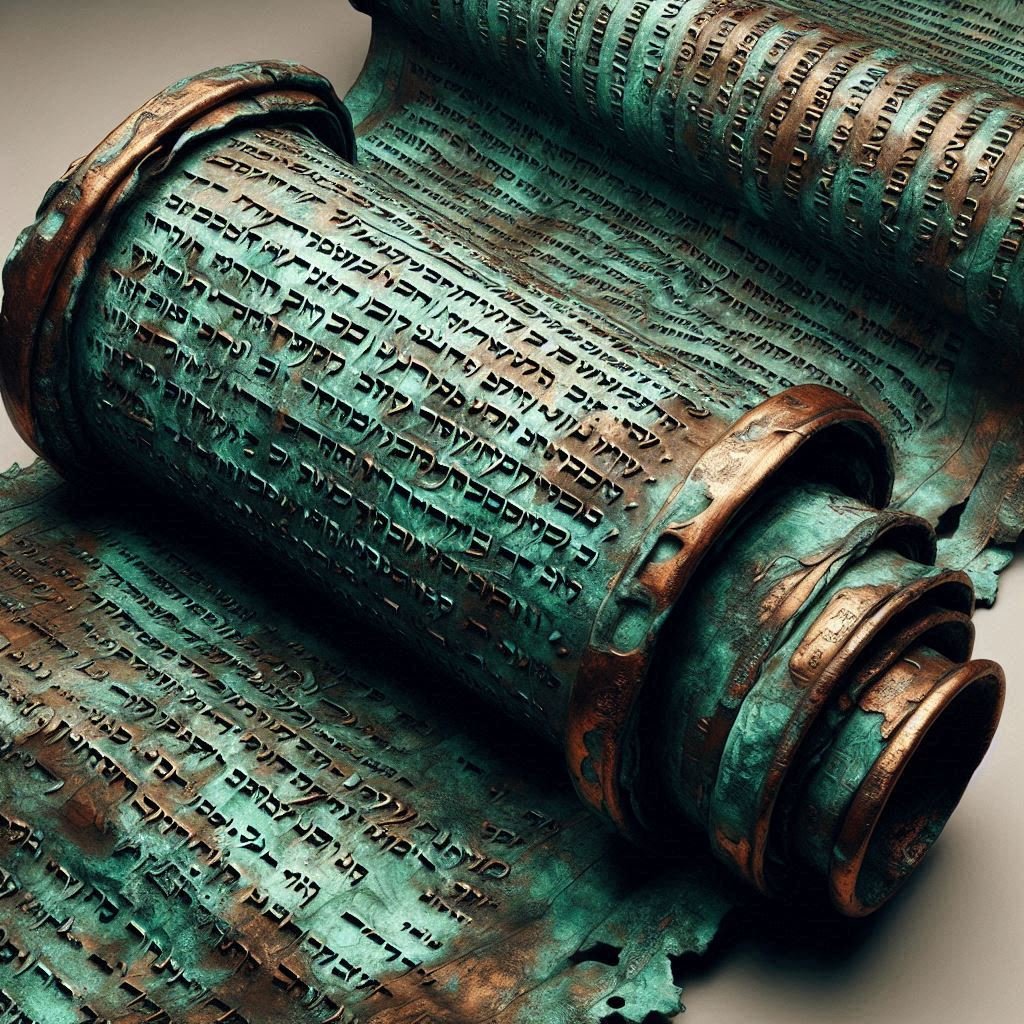
Before anyone translated a single line, the object itself was already unsettling. Deep in a cave near Qumran, archaeologists found a scroll that did not look like the others. It was not parchment. It was not papyrus. It was metal—heavy, corroded, and so damaged that nobody could simply unroll it and read what it said. And when experts finally forced the secret open, they found something that sounded less like scripture and more like instructions left behind by someone who expected to come back for buried treasure.
The Copper Scroll is one of the strangest Dead Sea Scrolls ever discovered, and the mystery has never really loosened its grip. Instead of prayers, laws, or sacred commentary, this ancient text appears to describe hidden treasure locations—dozens of them—along with quantities of gold, silver, and precious vessels that would amount to an astonishing fortune if the list were real. That is why the Copper Scroll mystery still matters: it sits at the crossroads of archaeology, lost history, and one of the oldest treasure hunts on earth.
What makes the story even more compelling is that it does not stand alone. Like the undeciphered symbols of the Phaistos Disc mystery, the Copper Scroll keeps pulling researchers back because the artifact is real, the wording is specific, and the answer remains just out of reach.
By the time the Copper Scroll was found in 1952 in Cave 3 near Qumran, the region was already famous for earlier Dead Sea Scroll discoveries. Scholars expected more religious or community texts from the Second Temple period. Then this thing appeared.
It did not look holy. It barely looked readable. The scroll had been made from thin sheets of copper, and centuries underground had left it oxidized and brittle. It could not be opened the normal way, so specialists eventually cut it into sections and read the inscription piece by piece.
And what emerged was not theology, poetry, or prophecy. It was a list of places, hidden deposits, and what appeared to be treasure buried in sixty-four separate locations.
Some entries described silver. Others described gold. Some mentioned vessels. Some gave directions with landmarks, structures, steps, ruins, cisterns, and measurements. The tone was oddly practical. It did not read like myth. It read like a set of retrieval notes written for people who already knew the landscape and only needed enough detail to find what had been concealed.
That is the part that has always made the Copper Scroll feel different from ordinary legends. A fantasy usually blurs around the edges. The Copper Scroll does not. It sounds administrative. Cold. Useful. More like a storage record than a story meant to inspire belief.
1947: The first Dead Sea Scrolls are discovered near Qumran, drawing global attention to the caves around the Dead Sea.
1952: The Copper Scroll is found in Cave 3 near Qumran.
Mid-1950s: Because the artifact is too corroded to unroll, specialists cut it into strips so the inscription can be read.
After publication: Scholars, archaeologists, and treasure hunters begin debating whether the listed hoards were real, symbolic, already recovered, or impossible to locate with certainty.
Decades later: No confirmed cache from the Copper Scroll’s list has been recovered, and the argument over its meaning continues.
That timeline matters because it shows why the mystery refuses to die. This was not a rumor whispered centuries after the fact. It was an actual object, recovered by archaeologists, then painstakingly opened and translated in the modern era. Every stage of the story is documented. The uncertainty begins only after the text starts making its claims.
And those claims are huge.
Depending on how the entries are interpreted, the total treasure described in the Copper Scroll would represent an enormous amount of wealth. Some estimates have put the combined value in the modern billions. That figure alone attracts attention, but the real hook is what the treasure might represent. If the list points to genuine hidden deposits from the Second Temple period, then the scroll may preserve evidence of a desperate effort to hide sacred or institutional wealth before war, destruction, or political collapse swept it away.
That leads into the first major theory. Some scholars and writers have argued that the treasure was connected to the Temple in Jerusalem, hidden to protect it from the Romans around the time of the Jewish Revolt. In that version of events, the Copper Scroll is not a fable at all. It is emergency documentation—a practical record of what was hidden, where it was hidden, and how someone might retrieve it once the danger passed.
Another theory shifts the responsibility away from the Qumran community itself and toward temple priests or other custodians of wealth. The logic is simple: the resources named in the text sound too large and too important to belong to a small desert sect. If that is true, then the Copper Scroll could be a surviving fragment of a much bigger story about what people tried to save before catastrophe arrived.
But the more dramatic the theory becomes, the harder it is to prove. The location descriptions are ancient, the terrain has changed, and two thousand years of construction, erosion, looting, and political upheaval have a way of destroying confidence in any map. A direction that made perfect sense in the first century may be almost useless now. A landmark may be gone. A staircase may have collapsed. A ruin may lie under something modern.
That uncertainty is part of why treasure hunts based on the Copper Scroll have produced more fascination than results. Searchers have gone looking. Researchers have compared sites, measurements, and historical geography. But no definitive hoard has been publicly confirmed as the long-sought answer to the scroll’s list.
What Doesn’t Add Up
Why use copper? Most Dead Sea Scrolls were written on parchment or papyrus. Choosing metal suggests the information was meant to survive.
Why so specific? The entries sound like practical directions, not symbolic religious writing.
Why has nothing been found? If the list was literal, the continued failure to recover the treasure creates a serious problem.
Why is the tone so different? The Copper Scroll stands apart from the rest of the Dead Sea Scroll collection in both material and purpose.
That first question—why copper—may be the most important clue in the whole mystery. If someone wanted to preserve a normal teaching text, copper would be excessive. Heavy. Expensive. Inconvenient. But if someone needed to preserve information that could not be trusted to fragile material, then copper starts to make sense. You carve something into metal when losing it would matter.
And that is exactly why so many people resist the idea that the scroll is purely symbolic. Symbolic writing does not usually need this much engineering. The Copper Scroll feels like the product of urgency. It feels like someone trying to make sure a critical record survived time, moisture, decay, and disaster.
Still, there are real reasons for caution. Some scholars have suggested that the list could be exaggerated, ceremonial, or otherwise disconnected from an actual recoverable treasure. Others argue that even if a cache once existed, it may have been emptied long ago. A perfectly real list can still become a dead map if the goods were already removed centuries before modern archaeologists arrived.
That possibility gives the mystery a more haunting shape. Maybe the Copper Scroll was never false. Maybe the people it was written for never returned. Maybe the list survived, but the treasure did not.
Then there is the outer ring of speculation—the theories that move beyond cautious archaeology and into legend. Some writers have linked the Copper Scroll to treasures of the First Temple or even to the Ark of the Covenant. Those claims are dramatic, but the evidence is thin. The hard facts are solid only up to a point: the object exists, it was found near Qumran, it had to be cut open, and it contains a list that appears to describe hidden valuables.
That unresolved edge is why the Copper Scroll belongs in the same long conversation as the Voynich Manuscript and the Antikythera Mechanism. Each artifact is real, tangible, and still somehow just out of reach.
What Researchers Think Was Really Listed
The most grounded interpretation is not that the Copper Scroll points to fantasy treasure, but that it preserves a storage record tied to a period of instability. In that reading, the listed hoards may have been temple wealth, community wealth, or sacred valuables hidden quickly because invasion or destruction made open storage impossible. The text may have been intended for a very small audience—people who already understood the geography and only needed a durable reminder.
That explanation fits several stubborn details at once. It explains the practical tone. It explains the choice of copper. It explains why the list sounds less like literature and more like logistics. It also explains why the entries could become almost impossible to act on after enough time passed. A retrieval document is useful only as long as the world around it still resembles the one its writer knew.
But even the sensible explanation leaves a chill behind. If the Copper Scroll was a real emergency record, then it was created in the shadow of fear. Someone believed valuables had to disappear fast. Someone believed memory alone was not enough. Someone believed the future might contain survivors who would need this list.
That human moment may be the most fascinating part of the mystery: the people deciding what had to be hidden, the people carrying wealth into uncertain places, the people who believed metal would outlast chaos.
In the end, the Copper Scroll does not just ask whether treasure is still buried somewhere in the landscape. It asks whether history sometimes leaves behind records that survive long after the world needed to understand them has vanished. That is why this story lingers. Not just because there might be riches in the ground, but because the scroll feels like a voice from a collapsing world, still trying to tell someone where the important things were hidden.
FAQ
What is the Copper Scroll?
The Copper Scroll is an ancient inscribed text found near Qumran in 1952. Unlike the other Dead Sea Scrolls, it was made of copper and appears to list hidden treasure locations rather than religious writings.
Was the Copper Scroll a real treasure map?
It may have been. The wording is specific enough that many researchers think it recorded real hidden deposits, though no confirmed treasure cache from its list has been publicly recovered.
Why is the Copper Scroll so important?
It matters because it is materially different from the other Dead Sea Scrolls and because it may preserve evidence of hidden wealth from a period of crisis in the ancient Jewish world.
Has anyone found the Copper Scroll treasure?
No confirmed discovery has settled the mystery. Searches and theories have continued for decades, but the central question of whether the hoards were real, symbolic, moved, or already looted remains open.
Why does the Copper Scroll still get attention?
Because it feels halfway between archaeology and legend. The artifact is real, the list is specific, and the lack of a final answer keeps the story alive for historians, treasure hunters, and anyone drawn to unresolved mysteries.
🔎 If this mystery pulled you in, the author suggests these related real cases next: