Villisca Axe Murders — The Night the House Went Quiet and the Case Never Really Closed
9 min readMarch 25, 2026
By the time the lamps went out in Villisca, the house had settled into the kind of silence people trust without thinking. A father was home from church. A mother had finished the ordinary work of the evening. Four children were upstairs. Two young guests had been invited to stay the night. Outside, June air hung over the small Iowa town like any other summer night.
Then, sometime after midnight, that familiar silence turned into something else.
The Villisca Axe Murders remain one of the most infamous unsolved true crime cases in American history because eight people, including six children, were killed inside one quiet home in Villisca, Iowa, during the night of June 9–10, 1912. More than a century later, the case still matters because the crime scene was contaminated almost immediately, the suspect list never truly settled, and the central question has never gone away: who moved through that house in the dark and left without being stopped?
That is part of what connects Villisca to larger rooms in the site’s True Crime Archive: not just brutality, but the feeling that one terrible night created a hole in the story that evidence never managed to close.
On Sunday, June 9, 1912, the Moore family attended a Children’s Day program at the Presbyterian church. Josiah Moore, his wife Sarah, and their children Herman, Katherine, Boyd, and Paul returned home that evening with two sisters, Lena and Ina Stillinger, who had come for a sleepover. Nothing about the walk back to the house suggested that the place waiting for them had already become the center of one of Iowa’s darkest crimes.
That ordinary setup is one reason the case keeps its grip. Villisca was not a faceless city block where strangers vanished into noise. It was a small town where people knew the family, knew the house, knew the routine, and still woke up to something almost impossible to absorb.
By morning, all eight were dead.
The killings were discovered after neighbor Mary Peckham noticed the Moore house was strangely still and no one had come out for morning chores. Ross Moore, Josiah’s brother, used a key to enter. Inside, the guest room revealed the first horror. The rest of the house revealed the scale of it. Investigators found that every victim had been bludgeoned with an axe, likely Josiah Moore’s own, while the family slept.
Evening of June 9, 1912: The Moore family attends a Children’s Day church event in Villisca.
About 9:45–10:00 p.m.: The family returns home with Lena and Ina Stillinger, who are spending the night.
Between midnight and early dawn: The murders are believed to take place inside the Moore home.
About 7:00 a.m., June 10: Neighbor Mary Peckham becomes concerned when the house remains quiet.
Shortly after: Ross Moore enters and the bodies are discovered.
Morning of June 10: News spreads rapidly, townspeople pour into the home, and the crime scene is badly contaminated.
Following years: Multiple suspects emerge, including Reverend George Kelly and local businessman Frank Jones.
1917: George Kelly is tried; one trial ends in a hung jury and another in acquittal.
More than a century later: The case remains unsolved and the house remains one of the most enduring symbols of American true crime mystery.
What happened inside the home was not just savage. It was methodical enough to make the case feel worse the longer you sit with it. Investigators believed most of the victims were asleep when they were attacked. That means the killer may have moved room to room in darkness, guided by memory, touch, or calm certainty. It also means the terror of the case is not built around chase or confrontation. It is built around intrusion. Someone crossed the boundary of the safest place in the story and seemed to control the house once inside it.
Then there were the details that made the scene feel even stranger. Mirrors in the house were covered. Windows were also covered. A slab of bacon had been left out. Bloody water was found in the home. The axe remained at the scene. None of those details have ever settled into one clean explanation. Together they make the house feel less like a simple murder site and more like a place where the killer lingered, adjusted things, and moved with a confidence that still unsettles people today.
That same domestic violation is part of what makes the case sit naturally beside stories like the John List Case — The Man Who Killed His Family and Disappeared, where the home itself becomes inseparable from the crime. In both cases, the setting is not background. The setting is the wound.
And then the investigation began to collapse under the weight of its own moment.
In 1912, police procedure and forensic control were nothing like modern readers expect. Once word spread, the house filled with townspeople before officers could secure it properly. People stepped through rooms, touched surfaces, and disturbed potential evidence. Later accounts describe just how badly the scene was contaminated. That single failure changed everything that came after. Villisca is not only an unsolved murder case. It is also one of those cases where you can feel the answer slipping away almost in real time.
What Doesn’t Add Up
The killer seemed to have time. Covered mirrors, covered windows, leftover food items, and the axe left behind all suggest behavior that feels deliberate rather than frantic.
The house should have been hard to move through quietly. Even now, one of the most haunting questions is how someone could kill eight people in a modest home without bringing the whole house fully awake.
The scene was ruined before it could speak clearly. Once townspeople entered, any later theory had to build on compromised evidence.
Several suspects seemed possible, but none stayed solid. The case kept producing names strong enough to fuel suspicion, but never strong enough to close the story.
The strangeness never narrows into one motive. Personal revenge, sexual compulsion, outsider violence, and serial pattern theories all survive because none can be completely ruled in or out.
That suspect instability is a big part of why Villisca still feels alive. Reverend George Kelly remains the most famous accused figure in the case. He was a traveling minister who had been in town around the time of the murders and later drew intense suspicion because of his behavior, his fascination with the case, and a confession that has been debated for decades. But the confession did not end the mystery. It only shifted it. Kelly later recanted, the reliability of the confession remained deeply questionable, and he was never convicted.
Frank Jones, a powerful local businessman, also became part of the legend surrounding the case because of reported business tension with Josiah Moore. But lore is not proof, and that is the pattern Villisca keeps repeating. One theory sounds persuasive until another missing piece appears. One suspect feels plausible until the evidence turns thin. One explanation seems close, then dissolves back into uncertainty.
That is also why Villisca belongs in the same wider emotional lane as older unresolved killer stories like Jack the Ripper — The Original Unsolved Killer of Whitechapel. The public memory of both cases is built not just on violence, but on unfinished identity. People return because the missing name becomes part of the story’s power.
Key Evidence and Suspect Friction
The strongest way to understand Villisca is not to chase a single perfect theory. It is to look at why every major theory keeps catching on something sharp:
George Kelly theory: His later confession, unusual behavior, and presence in town gave investigators something tangible, but the confession’s credibility never became stable enough to end the case.
Frank Jones theory: Local rivalry and rumor gave the case a personal motive, but rumor has survived far better than evidence.
Serial killer or drifter theory: The overkill, night entry, and family-house pattern make this feel possible, especially to modern readers, but the trail was too damaged to anchor it.
Inside knowledge theory: The killer may have known the house, the family’s schedule, or how to move through the rooms, yet no decisive link ever held.
Each theory explains part of the case. None explains enough of it to silence the others.
That is what keeps Villisca from becoming just an old headline. It has atmosphere, yes, but it also has structural frustration. The case feels as if it should be solvable. There was a house. There was a narrow overnight window. There were local tensions. There was a confession. There were physical details people never forgot. And still the story refuses to lock into place.
For modern true crime readers, that unresolved pressure is the real hook. Cases like the Sam Little Case — The Serial Killer Who Confessed to 90 Murders show what it looks like when buried violence eventually gets dragged into the light. Villisca is the opposite kind of nightmare. It is the case where the darkness stayed ahead.
Even the house itself has become part of the afterlife of the story. Restored and revisited, it now carries more than historical interest. It carries the weight of a scene people can still picture in painful detail: the bedrooms, the staircase, the stillness, the morning discovery. You do not have to believe in ghosts to understand why the house unsettles people. The facts already do that work on their own.
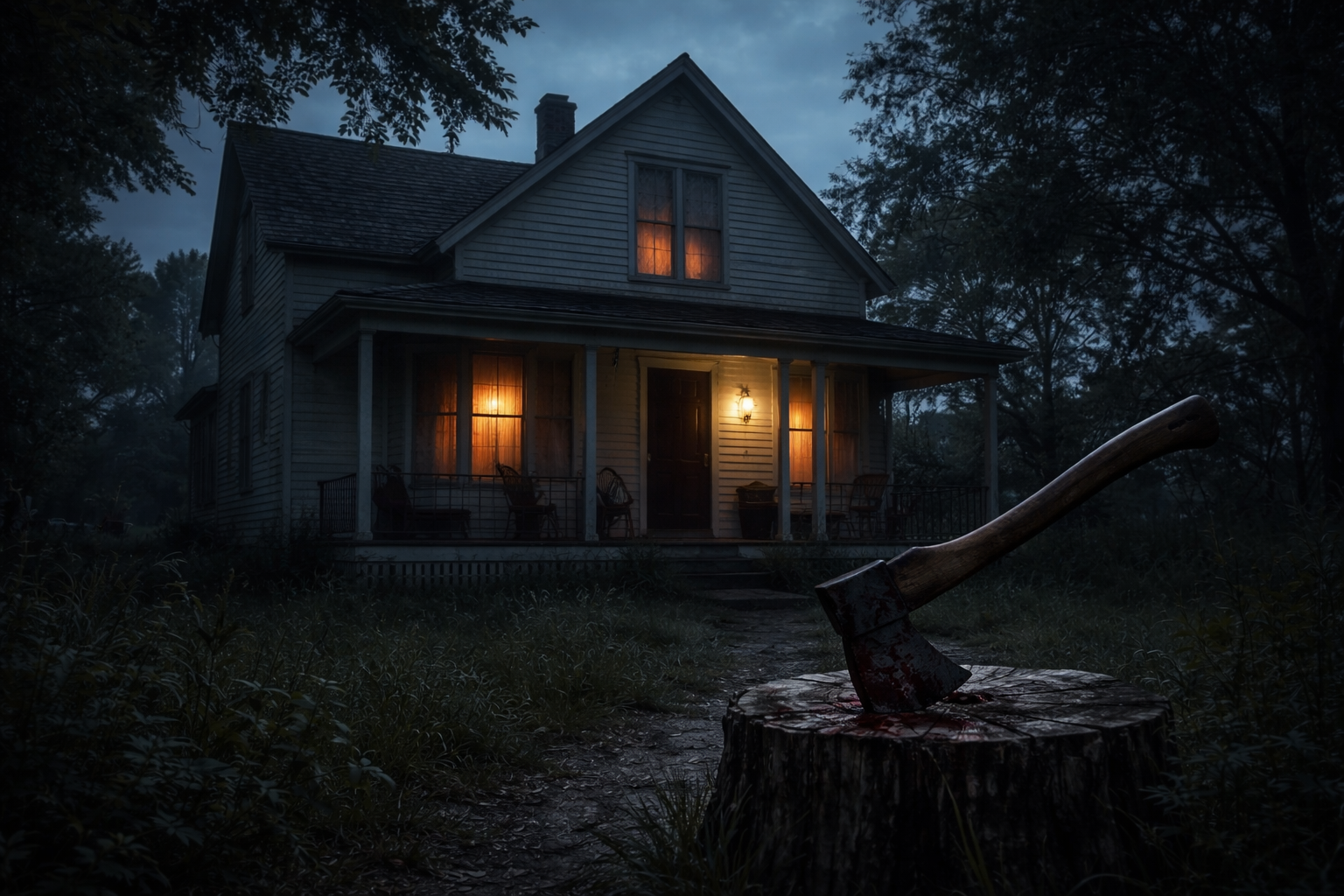
And maybe that is the final reason the case endures. Villisca does not depend on one twist. It works on the reader slowly. First there is the image of the house at night. Then the fact that six of the victims were children. Then the contamination of the scene. Then the suspects who almost fit. Then the realization that more than a hundred years later, the answer is still missing.
That long silence leaves the case standing where it has always stood: in the space between intimate horror and permanent uncertainty. The people in that house expected morning. What they got instead became one of the most haunting unsolved crimes in American memory.
FAQ
What happened in the Villisca Axe Murders?
During the night of June 9–10, 1912, eight people inside the Moore family home in Villisca, Iowa, were killed with an axe. The victims were Josiah and Sarah Moore, their four children, and two young guests, Lena and Ina Stillinger.
Was the Villisca Axe Murders case ever solved?
No. Despite a lengthy investigation, multiple suspects, and even a confession from Reverend George Kelly, no one was ever definitively convicted of the murders.
Who were the main suspects in the Villisca case?
The most discussed suspects have included Reverend George Kelly and local businessman Frank Jones, along with other men proposed over the years. None of the major theories has ever produced a final, accepted resolution.
Why is the Villisca case still so famous?
The case still gets attention because of the number of victims, the age of the children, the eerie details inside the house, the badly contaminated crime scene, and the fact that the murders happened in such an ordinary small-town home.
Can you still visit the Villisca house?
Yes. The Moore house was restored and has become known as the Villisca Axe Murder House. For many people, the setting itself remains one of the most haunting parts of the story.
🔎 If this story stayed with you, the author suggests these real cases next: