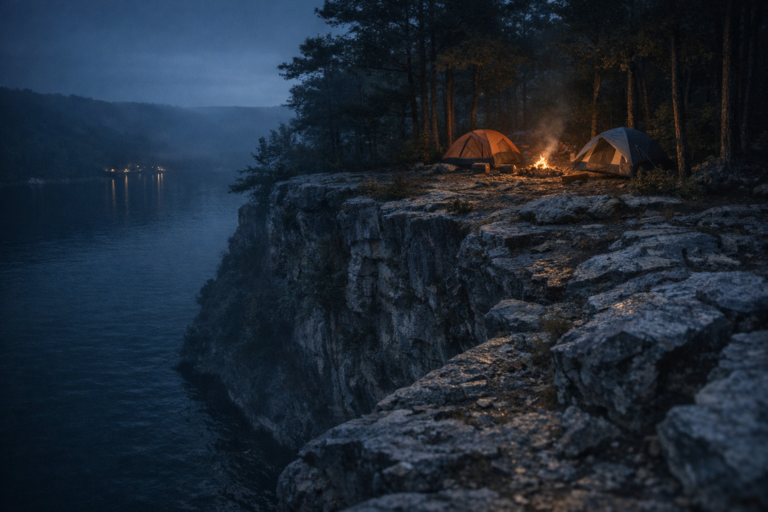
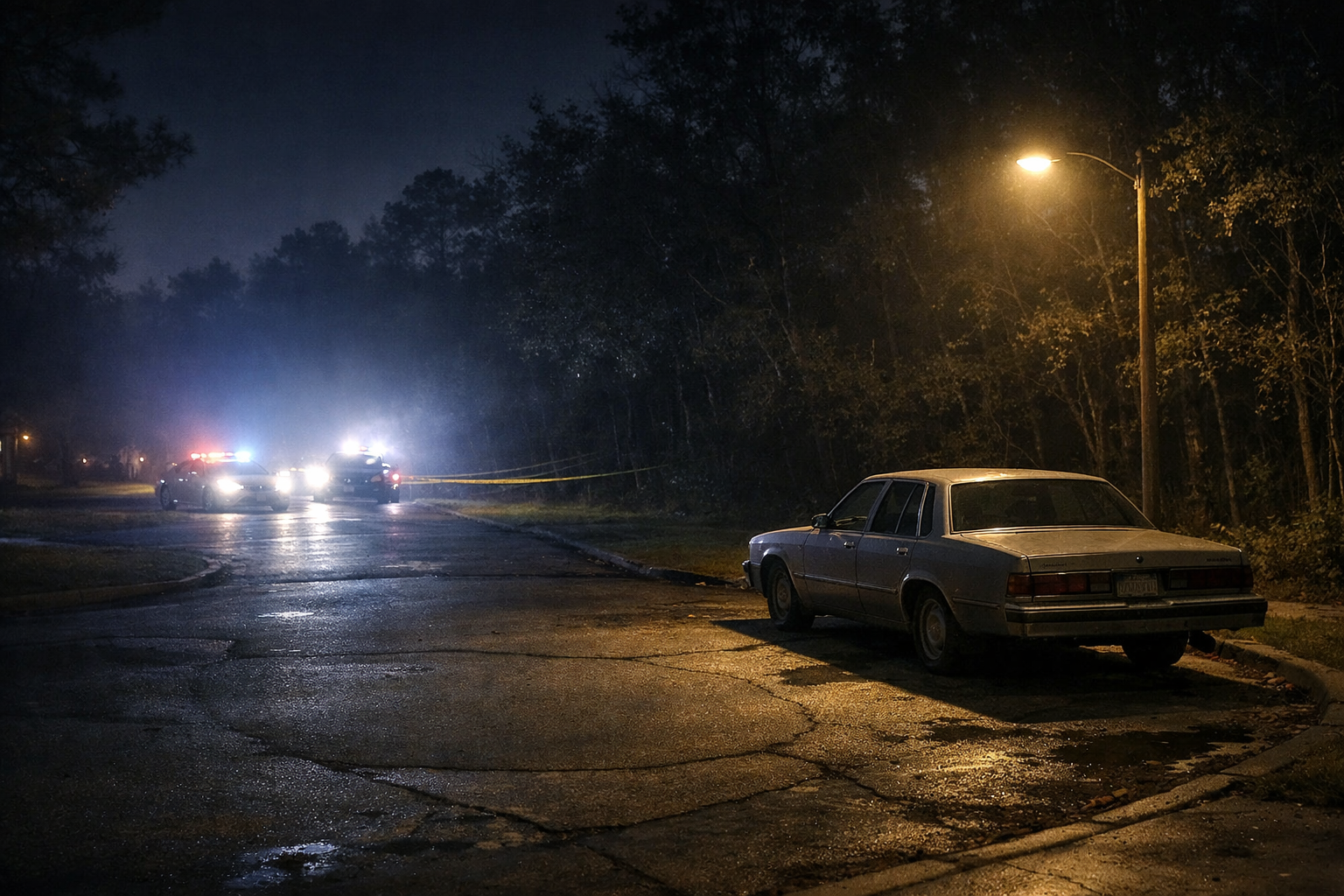
At the edge of west Houston, in a dark cul-de-sac that barely felt connected to the city, a young couple parked for what should have been a private end to a summer night.
By morning, their car was still there. Their belongings were still there. Cheryl Henry and Andy Atkinson were not.
The Houston Lovers’ Lane murders began in August 1990, when 22-year-old Cheryl Henry and 21-year-old Andy Atkinson disappeared after a night out and were later found murdered near Enclave Parkway and Eldridge. The case mattered because it sat unsolved for nearly 36 years, until preserved evidence, DNA databases, and a reopened trail finally pushed one of Houston’s most haunting cold cases toward an arrest.
For readers who follow cases where time does not erase the evidence, this story belongs beside other DNA cold case breakthroughs that turned old files into active investigations again.
The Night West Houston Went Quiet
On August 22, 1990, Cheryl Henry and Andy Atkinson were still at the beginning of knowing each other. They had reportedly been seeing each other for only a few weeks. That night, they went to Bayou Mama’s, a Houston nightclub full of music, heat, and the blurry energy of late summer.
At some point, they left together. To anyone watching, it would have looked like nothing more than two young people heading into the night. A car pulling away. Maybe laughter. Maybe tired voices.
But west Houston in 1990 still had dark edges. Near Enclave Parkway and Eldridge, the landscape was quieter and less developed than it is today. Locals sometimes called the area Lovers Lane. It sounded harmless. In reality, its isolation gave the wrong person exactly what he needed.
The next morning, a security guard noticed a car that had not moved. When he got closer, the scene shifted from suspicious to horrifying. Blood was visible. Cheryl’s purse and shoes were still inside. Nearby, in the tree line, investigators found the bodies of Cheryl Henry and Andy Atkinson.
The Crime Scene That Would Not Let Houston Look Away
The brutality was immediate and impossible to soften. Cheryl had been sexually assaulted. Both victims had been bound and killed. Andy was found near a tree. Cheryl was found nearby. Their night had ended not in confusion or accident, but in controlled, intimate violence.
That is why the Houston Lovers’ Lane murders became one of the city’s darkest case files. The scene did not feel like a random burst of chaos. It felt like someone had used the isolation of that cul-de-sac deliberately, with enough time and control to leave behind a crime scene investigators would replay for decades.
Some reported details made the case feel even stranger. Unusual objects, including golf balls, were described near the scene. A twenty-dollar bill was also found nearby. Not every odd object is a message, but those details raised the possibility of staging, confidence, or a killer who was not simply fleeing in panic.
The nickname made the case memorable, but it also flattened Cheryl and Andy into a headline. Cheryl was a daughter and sister. Andy was 21, with his own family and unfinished life. “Lovers’ Lane” gave the crime a shape. It did not capture the loss.
Why the Case Went Cold
In the beginning, investigators had urgency: a shocking double murder, a sexual assault, physical evidence, and a frightened city. Police chased leads. The Houston Police Department worked the case. The FBI became involved. Over time, investigators reportedly reviewed more than 100 possible suspects.
But a cold case is not always cold because nobody cares. Sometimes it goes cold because the evidence is waiting for tools that do not exist yet. In 1990, DNA testing was real, but databases were limited, forensic genealogy was not a common investigative weapon, and old biological evidence could sit in storage without producing a name.
That is the cruel tension in this case. The clue that mattered most may have been there early. Investigators had DNA from Cheryl Henry’s sexual assault examination. They had something that could speak, but the language of the technology was still developing.
Meanwhile, time attacked everything else. Memories faded. People moved. Witnesses became harder to find. Families lived through every anniversary without an answer. The city changed around the crime scene, but in the file, the night stayed exactly where it was.
The Evidence That Changed the Case
The eventual break did not arrive like a movie confession. It came through the slow, unglamorous work of preserving evidence and returning to old names with new tools.
According to investigators, a 1996 sexual assault case involving Floyd William Parrott became important years later. Parrott reportedly claimed that contact in that case was consensual, and a grand jury did not indict him at the time. For decades, that file might have looked like a separate dead end. But evidence from the case remained, and when DNA from that case was entered into CODIS, investigators said it matched DNA recovered from Cheryl Henry’s sexual-assault examination.
That kind of match changes a cold case instantly. For years, the Lovers’ Lane murders had been a story of absence: no arrest, no public answer, no final courtroom chapter. Then one forensic connection linked an old assault file to Cheryl’s case. Investigators also described a case-to-case hit involving a June 1990 sexual assault, suggesting the past had a pattern.
There was another detail that deepened the unease. Parrott had reportedly faced multiple arrests connected to impersonating law enforcement. That history does not prove how Cheryl and Andy were approached, but it changes the possible threat. A person who can imitate authority can create fear quickly; on a quiet road, that can become a trap.
Stories like this also connect to a wider true-crime pattern: cases that looked frozen until preserved biological evidence finally became useful. The same long arc appears in many cold cases solved by DNA and genetic genealogy, where the evidence was not new. The ability to read it was.
A Timeline of the Houston Lovers’ Lane Murders
- August 22, 1990: Cheryl Henry and Andy Atkinson spend part of the evening at Bayou Mama’s in Houston.
- Late that night: They leave together and head toward the west Houston area later remembered as Lovers Lane.
- August 23, 1990: A security guard notices their car in a cul-de-sac near Enclave Parkway and Eldridge. Investigators find blood, Cheryl’s belongings, and then the bodies nearby.
- 1990s onward: Detectives pursue suspects and leads, but no arrest closes the case.
- 1996: A separate sexual assault case involving Floyd William Parrott is reported. Evidence from that case is preserved.
- Late 2025 into early 2026: Investigators revisit old information, connect the 1996 file to the Lovers’ Lane evidence, and identify a reported DNA match.
- March 2026: Authorities arrest Parrott in Lincoln, Nebraska, nearly 36 years after Cheryl and Andy were killed.
What Still Does Not Add Up
Even with an arrest, the case does not become simple. An arrest answers one question, but it does not automatically explain every minute of the night.
- How did the encounter begin? The public record does not fully explain whether Cheryl and Andy were approached, followed, surprised, or manipulated into compliance.
- Did the killer know the location well? The isolated setting suggests comfort with the area, but that does not reveal whether the spot was chosen in advance or used because the opportunity appeared.
- What did the unusual objects mean? Items reported near the scene may have meaning, or they may be misleading noise. Either possibility matters because crime scenes can invite false certainty.
- Were there other victims? Investigators referenced other sexual-assault evidence connections, which raises the fear that the Lovers’ Lane murders were part of a larger pattern rather than a single eruption of violence.
That uncertainty is why the case still feels active. It is not only whether DNA can name someone. It is how much of the night can ever be reconstructed after so much time.
The Arrest That Brought the Past Back
When Floyd William Parrott was arrested in Nebraska in March 2026, the announcement landed like a door opening in a room people thought had been sealed forever. He was 64 years old. Nearly 36 years had passed since Cheryl and Andy were killed.
For the families, that delay is almost impossible to measure. Birthdays pass. Holidays pass. Parents age. Siblings carry the story into decades Cheryl and Andy never reached. Then, suddenly, the phone rings and the old wound becomes breaking news again. Cold-case breakthroughs bring relief, but not restoration. They can turn silence into a courtroom process, but they cannot return the years stolen at the edge of Houston.
The case also became a reminder of why investigators keep old evidence. A rope, a swab, a file, a report that looks useless in one decade may become the key in another. The same reason people still read about cases like the Roxanne Sharp cold case or the Missy Bevers murder is the same reason Cheryl and Andy’s story resurfaced so powerfully: people want to know whether time protects killers, or whether it quietly builds the case against them.
Why This Case Still Gets Attention
The Houston Lovers’ Lane murders have all the elements that make a case stay in public memory: a young couple, an isolated road, a brutal crime scene, a city that changed around the location, and a forensic break that came decades later. But the deeper reason is simpler. The story feels like a warning about how fast ordinary life can fall through the floor.
One moment, Cheryl and Andy were leaving a nightclub. The next, their families were entering a nightmare that would last most of a lifetime. The gap between those two realities is what makes the case so hard to shake.
It also sits in a larger archive of crimes that refused to stay closed. Some cases turn on surveillance footage and final movements, like other murder cases caught on surveillance footage where timelines and blind spots become central. Others turn on court battles and reopened evidence, like true crime cases reopened by appeals, retrials, and new evidence. Cheryl and Andy’s case belongs to the coldest version of that pattern: the kind where the evidence waits longer than anyone should have to wait.
FAQ
Who were Cheryl Henry and Andy Atkinson?
Cheryl Henry was 22 and Andy Atkinson was 21 when they were killed in Houston in August 1990. They had been seeing each other for only a short time before the night that became known as the Houston Lovers’ Lane murders.
What happened in the Houston Lovers’ Lane murders?
After leaving a Houston nightclub, Cheryl and Andy went to a secluded area near Enclave Parkway and Eldridge. Their car was found the next morning, and their bodies were discovered nearby. Both had been bound and killed, and Cheryl had been sexually assaulted.
How was the case reopened?
Investigators revisited old information and connected preserved DNA evidence from Cheryl Henry’s examination to evidence from a separate 1996 sexual-assault case. That reported DNA match helped move the decades-old case toward an arrest.
Who was arrested in the case?
Authorities arrested Floyd William Parrott in March 2026 in Lincoln, Nebraska. The arrest came nearly 36 years after Cheryl Henry and Andy Atkinson were murdered.
Why does the case still matter?
It matters because it shows how a case can seem silent for decades while evidence is still waiting to be understood. Cheryl and Andy’s story is also a human reminder that cold cases are not old headlines to the families who keep living with them.
Continue exploring:
- Cold cases where old evidence finally started speaking
- The DNA breakthrough archive for cases solved through family trees and forensic persistence
- The family annihilator who vanished into a second life
- The Hollywood killing that became America’s most haunting crime legend
- The midnight axe murders that left an entire house frozen in fear
More True Crime stories: