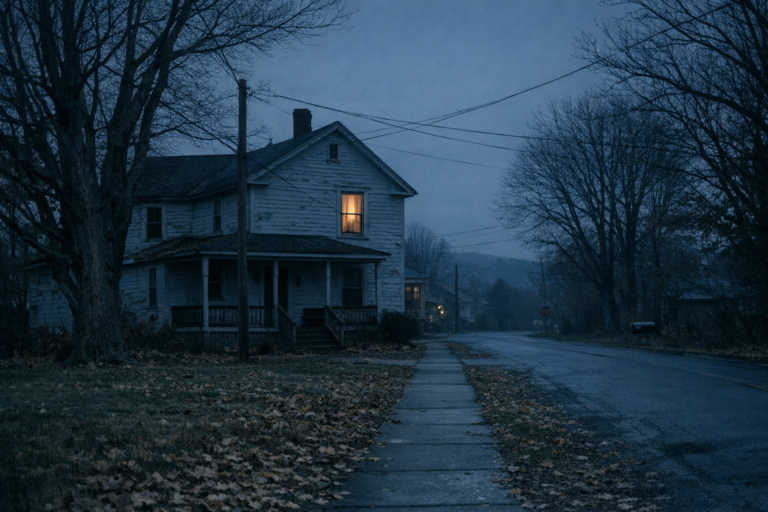
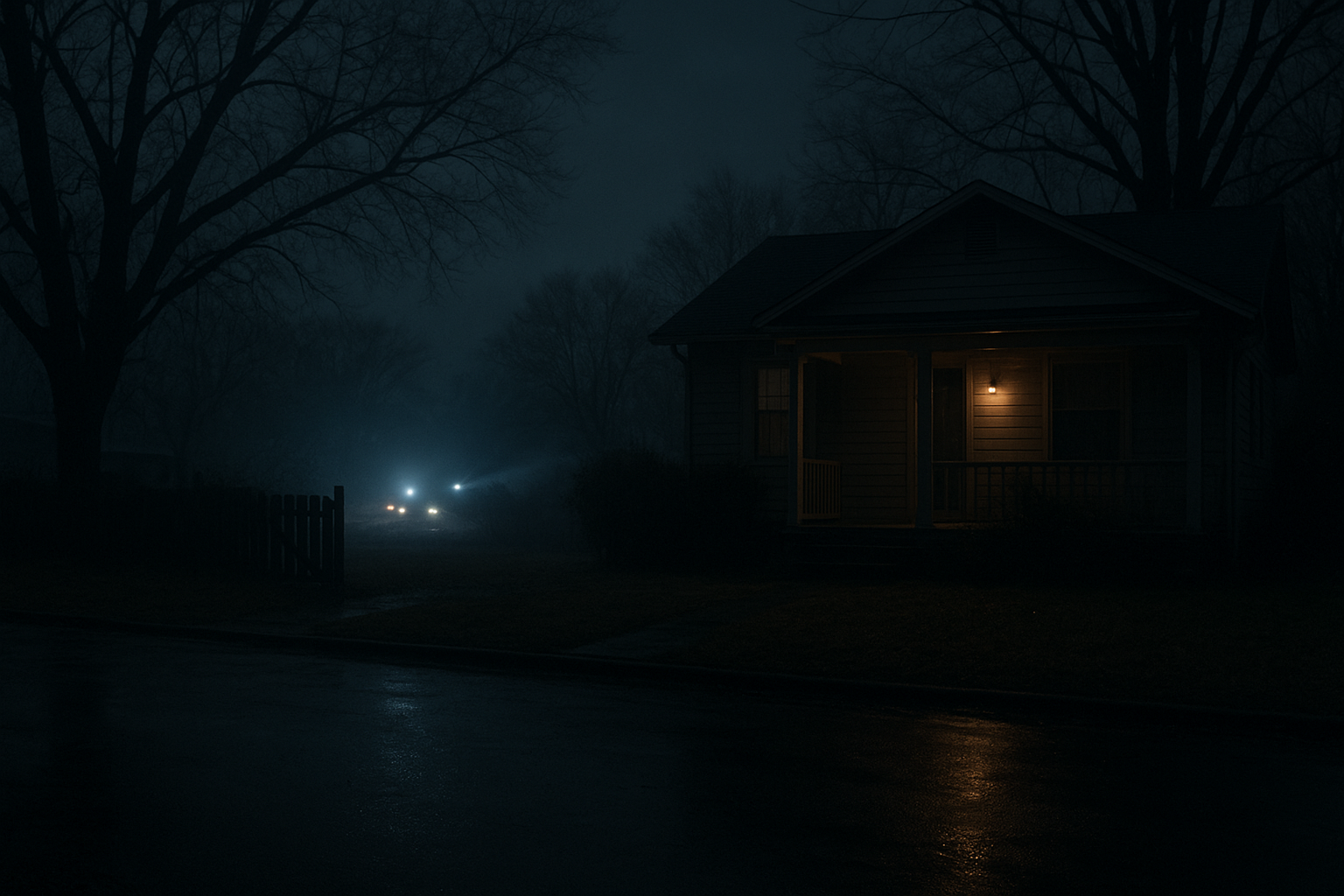
By the time the sun started pushing a weak gray light over the roofs in Hendersonville, the house should have sounded normal.
A parent calling down the hall. A teenager groaning about school. Dogs shifting on the floor. A bedroom door opening.
Instead, there was only the kind of silence that feels wrong the second you hear it.
Sebastian Rogers was not in his bed. He was not in the bathroom. He was not in the kitchen. He was not outside, not in the driveway, not anywhere a 15-year-old boy should have been at six in the morning.
And what made it worse was how ordinary the night had looked just hours earlier. Nothing about it seemed dramatic enough to become a mystery that would spread across Tennessee, pull in the FBI, and leave investigators with almost nothing to hold onto.
What happened to Sebastian Rogers?
Sebastian Wayne Drake Rogers is a Tennessee teen at the center of an unsolved disappearance that has haunted Hendersonville since February 2024. His case matters because despite a massive multi-agency search, an active AMBER Alert, and intense public attention, investigators still have no confirmed sighting, no clear trail, and no answer to the simplest question: how does a boy vanish from home without leaving behind a path that makes sense?
That question is part of what makes this case feel so unsettling. In other disappearances, the mystery often begins far from home. But cases like the final-night mystery of Lauren Spierer remind us that sometimes the most disturbing stories are the ones where the timeline is close, tight, and still full of holes.
According to later updates from law enforcement, the last time Sebastian was confirmed to have been seen was the night of February 25, 2024. His mother said he got ready for bed around 9:00 p.m., told her he loved her, and went to his room. Around 10:00 p.m., she heard a noise from his room, called out, and he answered. That was normal enough that nobody thought twice about it.
But by roughly 6:00 the next morning, he was gone.
At first, the case sounded like a runaway report. That happens in missing teen investigations all the time. But the details here did not fit neatly into that idea. Sebastian, who is on the autism spectrum, reportedly left behind his cell phone, his clothes, his money, his food, and�most strangely�his shoes. His family said every pair they could account for was still at the house. The only item his mother believed might be missing was a small yellow flashlight.
That detail hangs over this case because it changes the picture. If Sebastian walked away on his own, investigators had to imagine a teenager leaving home in the dark, likely barefoot or nearly so, with almost nothing to help him. If someone else was involved, then the lack of evidence becomes even harder to explain.
And that is where the story stops being just a disappearance and becomes a timeline problem.
The first hours after he was discovered missing moved fast. A missing persons report was filed. The Tennessee Bureau of Investigation issued an Endangered Child Alert, and that alert was later elevated to a statewide AMBER Alert. Search teams flooded the area. Because Sebastian loved water, nearby pools were checked. Dive teams searched bodies of water. Ground crews combed wooded areas. Air assets were used. K-9 teams were brought in. Federal agencies joined local and state investigators.
The scale of the search matters because it strips away easy explanations. This was not a small effort. Authorities later described searches stretching across a huge area around the home, with thousands of searchers involved over time and tens of thousands of acres examined. Yet nothing clearly tied to Sebastian was found.
No confirmed trail.
No confirmed sighting.
No piece of clothing in the woods.
No obvious accident scene.
No evidence strong enough to settle the argument over whether he left on his own, got lost, or met someone�or something�before he could come back.
Timeline of Events
- Evening of February 25, 2024: Sebastian is last known by family to be at home in Hendersonville, Tennessee.
- Around 9:00 p.m.: He reportedly gets ready for bed and heads to his room.
- Around 10:00 p.m.: His mother hears a noise from his room, calls out, and Sebastian answers.
- About 6:00 a.m., February 26: He is discovered missing when his mother goes to wake him for school.
- Morning of February 26: Family searches the house and neighborhood; law enforcement is contacted.
- That same day: A missing persons report is filed, then a TBI Endangered Child Alert and statewide AMBER Alert follow.
- Following days and weeks: Massive searches take place on land, in water, and from the air.
- Later official update: Authorities clarify that although he was reported missing on February 26, the last confirmed sighting was actually February 25.
- August 2024: The FBI announces a reward of up to $50,000 for information leading to Sebastian�s location or to the arrest and conviction of those responsible for his disappearance.
- 2025 updates: Officials say the case remains active, the AMBER Alert remains in place, and tips continue to be reviewed.
That one correction from law enforcement�that the last confirmed sighting was February 25, not February 26�may sound small, but it is not small at all. It widens the uncertainty around the case. The timeline becomes less precise. The window in which Sebastian could have left, or been taken, becomes harder to pin down. And in missing-person cases, a fuzzy timeline can be the difference between catching a trail and losing it forever.
There are other details that deepen the confusion. Sebastian was described as loving water, but also having sensory issues with loud noises and a strong dislike of bugs. Those facts have often been repeated because they shape the search logic: where he might go, what environments he might avoid, and whether he was likely to stay hidden if frightened. But those details cut both ways. They offer possibilities without offering certainty.
Then there is the question of whether he intended to leave for long at all.
His mother later said she believed that if Sebastian did leave the house on his own, he probably expected to come back. That matters because it does not sound like a carefully planned disappearance. It sounds more like a short movement that somehow became permanent.
Maybe he stepped outside for a reason that made sense only in that moment. Maybe he got disoriented. Maybe he encountered somebody. Maybe investigators were forced to start with the wrong assumptions because the scene gave them so little to work with.
?? Related Investigation:
If this case pulled you deeper into the mystery, continue into:
🔎 Related Investigation:
If this case pulled you deeper into the mystery, continue into:
What Doesn�t Add Up
- No shoes, phone, or obvious essentials: If Sebastian left voluntarily, why leave with so little?
- No confirmed trace near home: Search teams covered a huge area, yet found no clear trail leading away from the neighborhood.
- The timeline shifted later: Officials eventually clarified that the last confirmed sighting was February 25, which widened the uncertainty around the key overnight hours.
- Major theories have been publicly weakened: Investigators later said suspicious lights seen on security footage were likely a visual distortion tied to a truck farther away, and a separate theory involving a person in a green hoodie was also debunked.
- No confirmed sightings despite heavy publicity: In a case this visible, that silence is hard to explain.
Those last two points are especially important because they show why the case keeps slipping out of reach. Public attention generated possible leads, but some of the most talked-about theories later fell apart. That is a brutal pattern in missing-person investigations: the more desperate people are for answers, the easier it becomes for weak clues to grow into full-blown narratives.
For a while, attention focused on security footage that some believed showed suspicious lights outside Sebastian�s home the night he vanished. But the FBI later said the appearance was misleading�a product of darkness, camera angle, and light from a truck not near the house. Another theory involving a person in a green hoodie seen near Sebastian before he disappeared was also publicly discounted.
When those theories weakened, the case did not become clearer. It became emptier.
That emptiness may be the most chilling thing about Sebastian Rogers� disappearance. There are cases where investigators have too many suspects, too much noise, too many false confessions, too many stories. Here, the problem seems to be the opposite. There is not enough. Not enough evidence, not enough timeline certainty, not enough proof of what direction the truth even points in.
And still, the case has never gone cold.
The TBI has said the alert remains active. The Sumner County Sheriff�s Office has repeatedly stressed that the investigation is ongoing. The FBI later offered a reward of up to $50,000. Officials have urged people to send only credible information because speculation can pull time and energy away from real leads.
That warning matters. Sebastian�s case has become one of those modern mysteries that lives in two places at once: in official files, and online. The official case moves slowly, carefully, tip by tip. The internet version moves fast, fueled by theories, screenshots, clips, and arguments. But the internet cannot solve a disappearance by force of obsession. If anything, too much noise can bury the one detail that actually matters.
So where does that leave the most likely explanation?
The Most Likely Explanation
The strongest conclusion is not a satisfying one: something happened during a narrow overnight window, and the first crucial clue was either missed, destroyed, or never obvious to begin with.
That explanation fits the known facts better than dramatic online theories. Sebastian may have left the house unexpectedly and encountered danger before daylight. Or he may have crossed paths with another person during that vulnerable window. What makes both possibilities difficult is the heart of the story�the timeline is thin where it should be strongest.
There is a final uneasiness to that. Home is supposed to be the place where the timeline is easiest to rebuild. People remember the last words. Rooms hold evidence. Cameras catch motion. Paths are short. If a child vanishes from a remote highway or a crowded city block, confusion is expected. If a teen vanishes overnight from home and leaves almost nothing behind, the case feels wrong in a deeper way.
That is why Sebastian Rogers� disappearance continues to grip people. Not because it is loud, but because it is quiet. Too quiet. A boy says goodnight. A sound comes from his room. Someone answers when called. Then morning arrives, and the trail is already gone.
More than a year later, investigators are still reviewing tips, re-checking evidence, and asking the public for credible information. The reward remains. The AMBER Alert remains. And the central contradiction remains too: a disappearance this high-profile should have produced a break by now, but the timeline still refuses to become a story that makes sense.
Until that changes, Sebastian Rogers stays in that terrible category every family dreads most�not found, not explained, not forgotten.
?? Related Investigation:
?? Related Investigation:
?? If this story stayed with you, the author suggests these real cases next:
- The final days in Jelani Day�s case still raise brutal questions
- The school-day vanishing of Kyron Horman remains one of the most haunting child cases
- Asha Degree�s walk into the dark is another timeline mystery that never let go
Explore more Disappearances stories here: