The Babushka Lady – The Woman Who Filmed the JFK Assassination and Then Disappeared From History
9 min readJuly 30, 2025
In the split second after the gunfire started in Dealey Plaza, most people did what instinct told them to do. They dropped, ran, screamed, or turned away. But one woman near the presidential motorcade seemed to do the exact opposite. She kept her camera raised. While history tore open in front of her, she appeared to keep filming.
Listen to “The Mystery of the Babushka Lady” on Spreaker.
The Babushka Lady mystery begins on November 22, 1963, during the assassination of President John F. Kennedy in Dallas. She became one of the most discussed unidentified witnesses in the JFK case because photos and film appear to show her calmly recording the scene from Dealey Plaza, yet her identity and any footage she may have captured have never been confirmed. That missing gap has kept her at the center of JFK assassination theories for decades.
Part of what makes her so enduring is that the story sits right at the line between documented history and unresolved suspicion. If you have ever gone down the rabbit hole of the JFK assassination conspiracy, the Babushka Lady often appears as one of those frustrating details that feels small at first, then becomes impossible to ignore.
Witnesses that day described a bright, ordinary Dallas afternoon, the kind of public event meant to look cheerful and controlled. The presidential motorcade moved through downtown as crowds pressed in for a better look. Then the shots rang out. In the confusion that followed, investigators and later researchers began studying every photograph, every frame of surviving film, every person visible near the route. That was when attention settled on the woman in the headscarf.
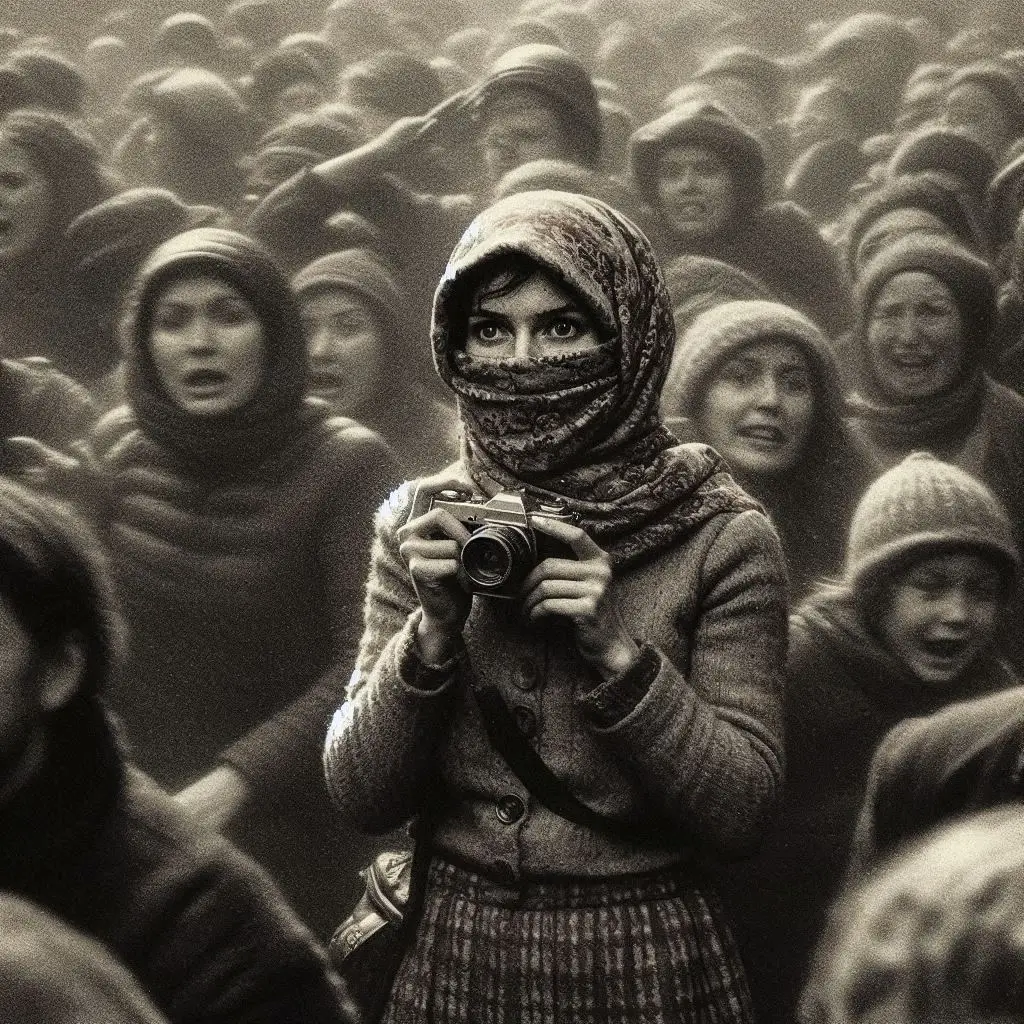
She appeared to be standing on the grass near Elm Street, close enough to have had a direct view of the limousine. Her scarf, tied beneath her chin, gave rise to the nickname. In photographs, she does not look dramatic or theatrical. She looks almost ordinary, which somehow makes the mystery feel stranger. She was not a man running toward the car. She was not a uniformed official. She was simply there, steady, facing the moment everybody else would spend the next sixty years trying to reconstruct.
That is the first reason the Babushka Lady has never quite faded from the story. She was not just another bystander. If she really did record what happened, her film could have captured the assassination from a valuable angle, maybe not a magical solution to every question, but potentially an important visual record from the front side of the motorcade. In a case where timing, direction, and movement have been argued over for generations, even a few seconds of missing footage matters.
November 22, 1963: President John F. Kennedy is assassinated in Dealey Plaza. A woman later nicknamed the Babushka Lady appears in photographs and film from the scene.
Days and weeks after the assassination: Federal investigators ask witnesses to submit photographs and film taken that day.
1960s onward: Researchers repeatedly note the unidentified woman because she seemed to stay in position with a camera while others reacted to the shots.
1970s: Beverly Oliver claims she was the Babushka Lady and says she handed her film to men who identified themselves as FBI agents.
Later analysis: Critics challenge Oliver’s account, especially her statement about using a Yashica Super 8 camera that was not available in 1963.
Present day: No confirmed identity and no verified film from the Babushka Lady have surfaced.
The deeper investigators looked, the more maddening the problem became. The woman was visible enough to be noticed, but not clear enough to identify. Her face was partly obscured. Her clothing was generic. Her angle in the surviving images did not reveal much more than posture and position. It was as if one of the most potentially important witnesses of the day had been recorded just well enough to become famous, and just poorly enough to remain forever out of reach.
That pattern shows up in other historical mysteries too. Sometimes the problem is not that there is no evidence. It is that the evidence survives in a form that keeps inviting interpretation without ever closing the case. That same uneasy feeling sits at the heart of stories like the Somerton Man mystery, where one solved piece can still leave the larger atmosphere of doubt intact.
For the Babushka Lady, the core question is simple: if she had a camera, what happened to the film? In the aftermath of the assassination, investigators collected material from many witnesses. The Zapruder film became the most famous piece of footage, but it was not the only visual record. That is exactly why the absence of any confirmed Babushka Lady film feels so important. In a moment when authorities were actively seeking evidence, why did nothing traceable from her ever appear?
There are cautious explanations and dramatic ones. The cautious explanation is that she may never have captured anything usable at all. She may have been holding a camera but not filming. She may have had a camera malfunction. She may have left before understanding how significant her position was. She may have been interviewed in some form and later lost to poor records, memory gaps, or mistaken identity. In a chaotic national trauma, not every loose end means conspiracy.
But the more dramatic explanation is the one that gives the mystery its charge. If she did capture something important, and if that film disappeared, then the obvious suspicion follows: it was taken, buried, or deliberately withheld. That suspicion thrives because the Kennedy assassination has never been just one event. It became a permanent argument about trust, secrecy, and whether the public ever saw the full truth. In a story already crowded with disputed evidence, an unidentified witness with missing footage is almost guaranteed to become legend.
What Doesn’t Add Up
Her calm posture: In the available images, she appears unusually steady compared with the panic around her.
The missing film: If she truly recorded the scene, no confirmed copy has ever entered the public record.
The failed identification: Despite decades of scrutiny, no widely accepted identification has been made.
The Beverly Oliver problem: The best-known claim of identity runs into serious credibility issues, especially over the camera timeline.
The Beverly Oliver chapter is where the mystery briefly seemed like it might resolve, only to become even murkier. Oliver said she was the Babushka Lady and claimed that after the assassination she handed over her film to men who said they were federal agents. On paper, it sounded like the kind of revelation researchers had been waiting for. In reality, it collapsed under scrutiny. Her statements about the camera model created one of the biggest problems. A Yashica Super 8, the device she said she used, was not on the market at the time of the assassination. That alone did not prove every detail false, but it badly damaged her reliability.
Researchers also questioned whether she matched the figure seen in the surviving images. The woman in the photographs appeared older and heavier than Oliver claimed to have been in 1963. Once those issues surfaced, her story stopped looking like a breakthrough and started looking like another layer of noise around an already chaotic case. Instead of solving the Babushka Lady mystery, the claim reinforced how eager people have always been to step into famous historical gaps.
And maybe that is why the story still works so well as a historical mystery rather than just a trivia footnote. The Babushka Lady is not simply unidentified. She stands at the exact point where eyewitness history becomes myth-making. One generation studies the frames for clues. The next generation brings better scans, new documentaries, online forums, and renewed speculation. But the center stays empty. The woman in the scarf remains a silhouette against one of the most examined crimes in modern history.
There is also a psychological weight to her presence. Many JFK witnesses became known because they spoke, testified, or were pulled into the machinery of the investigation. The Babushka Lady became famous precisely because she did not. She is remembered for absence. No interview that settled things. No confirmed name. No recovered reel. Just the image of someone who may have seen history more clearly than almost anyone else, and then slipped away before history could question her.
That vanishing act gives the case a flavor closer to atmosphere-heavy unresolved stories like the Dyatlov Pass incident or the enduring puzzle of the Lost Colony of Roanoke. The facts are not the same, but the feeling is familiar: a hole in the record big enough that the human mind keeps trying to fill it.
Why This Mystery Still Gets Attention
It still gets attention because it sits inside a much larger unresolved national obsession. People are not just asking who the Babushka Lady was. They are asking whether some missing fragment of film could have changed how the Kennedy assassination was understood. The mystery survives because it combines three things that pull readers in every time: a famous event, a missing witness, and a vanished piece of possible evidence.
It also survives because visual evidence carries unusual emotional power. A testimony can be doubted. A memory can blur. But footage feels like a machine that witnessed the truth. Whether that faith is always justified is another question entirely. Even so, the idea that one unidentified woman may have held a camera on the most disputed seconds in American political history is almost impossible to let go of.
That is why the Babushka Lady keeps resurfacing in books, documentaries, and long-night forum threads. She is not merely an extra standing in the background of the JFK assassination. She represents the part of the story that still feels unfinished. Somewhere between the official investigation, public suspicion, and the limits of what images can prove, she remains one of Dealey Plaza’s last great ghosts.
FAQ
Who was the Babushka Lady?
The Babushka Lady was an unidentified woman seen in photos and film near President Kennedy’s motorcade during the assassination in Dealey Plaza. She appeared to be wearing a headscarf and may have been holding a camera, but her identity has never been confirmed.
Did the Babushka Lady really film the JFK assassination?
She appeared to be filming or photographing the scene, but no verified footage from her has ever surfaced. That is the central reason the mystery still matters.
Was Beverly Oliver really the Babushka Lady?
Most serious researchers do not accept Beverly Oliver’s claim. Her account ran into major credibility problems, especially her statement about using a camera model that did not exist in 1963.
Why is the Babushka Lady important in the JFK case?
If she captured footage from her position in Dealey Plaza, it could have provided another angle on the assassination. In a case argued over frame by frame, even missing seconds of film matter.
Why does the Babushka Lady mystery still get attention today?
Because it combines a world-famous historical event with an unidentified witness and missing possible evidence. It feels like one of those rare loose ends that might never be resolved, but never stops feeling important.
?? If this story pulled you deeper into the record, the author suggests these related mysteries next: