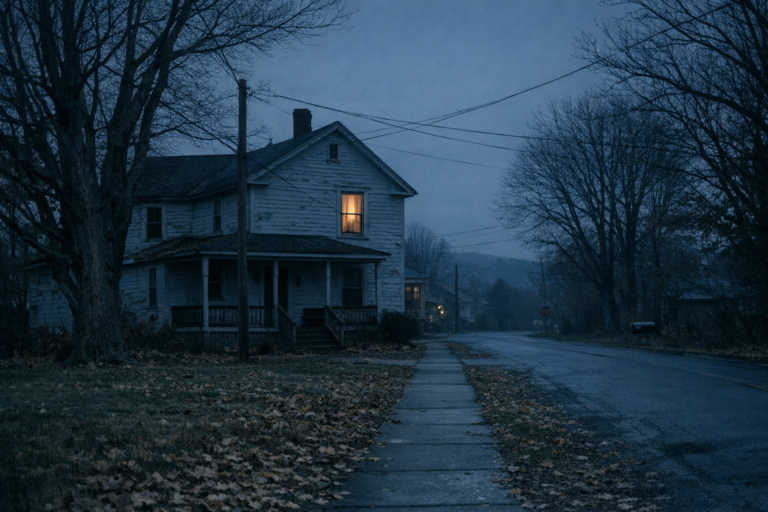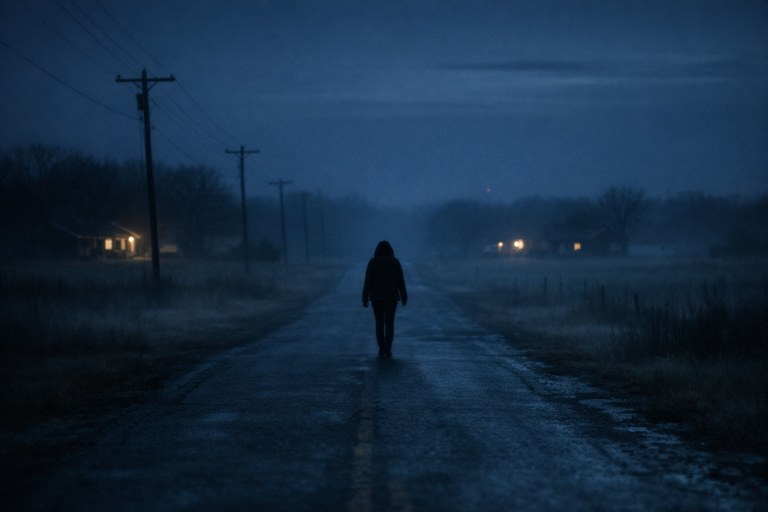
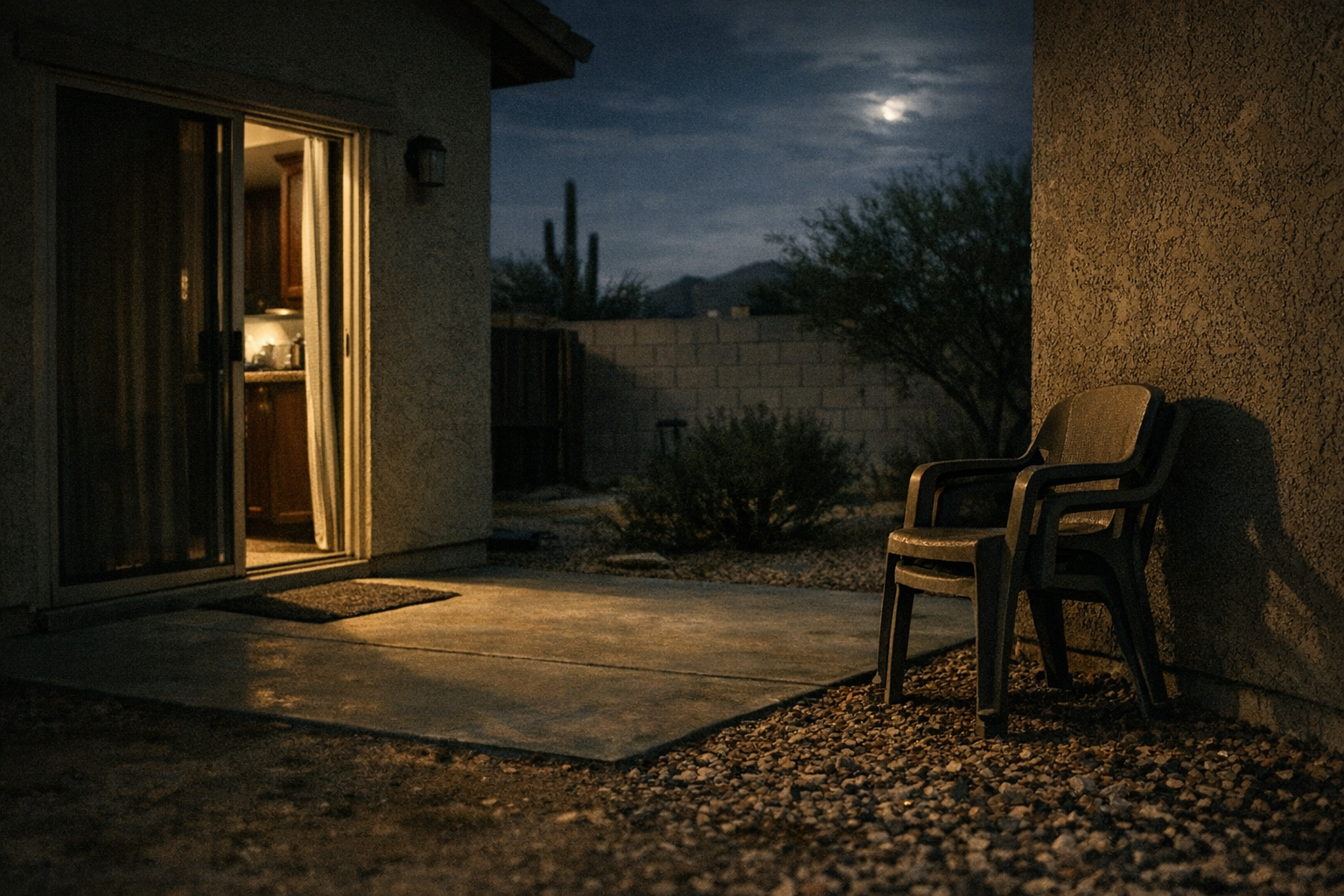
At some point in the night, the house stopped sounding like a house.
The kitchen had gone quiet. The hallway was dark. A mother who had seen her daughter just hours earlier had no reason to think anything had changed. But by morning, a back door stood open, chairs had been stacked against the wall outside, and a 14-year-old girl had slipped into the dark without a goodbye anyone could hear.
What made it feel worse was how small the evidence was. No smashed window. No screaming. No scene that looked violent. Just a note on a bedroom desk, a laptop gone missing, and the kind of silence that can haunt a family for years. Then, after nearly four years of fear, searching, and thousands of tips, Alicia Navarro walked into a police station in Montana and said who she was. It should have felt like an ending. Instead, it opened a different kind of mystery.
Alicia Navarro is at the center of one of the most unusual missing person cases in recent memory: an unsolved disappearance that turned into a reappearance without ever fully answering what happened in between. Her case still matters because even though she was found alive, the deeper questions about how she left, who influenced her, and what really happened over those missing years have never gone quiet.
Cases like this tend to stay with people because they refuse to fit into one clean category. Alicia’s story belongs in the same uneasy conversation as other teen disappearances collected in the Missing Children and Teens Archive, where the hardest part is often not just the vanishing itself, but the terrible uncertainty that follows.
In September 2019, Alicia was living with her family in Glendale, Arizona. According to reporting at the time, she was on the autism spectrum, shy in some social situations, deeply attached to familiar routines, and heavily interested in online gaming. Her mother later said Alicia liked staying in her comfort zone. She wore the same kinds of clothes over and over. She preferred home. She was not the kind of teenager who looked built for life on the run.
That detail matters because it shaped how people understood the case from the beginning. When a teenager disappears, the public often reaches for a simple label: runaway, abduction, rebellion, grooming, misunderstanding. Alicia’s case resisted all of them. There was a note left behind — “I ran away. I will be back. I swear. I’m sorry.” — but even that did not settle anything. Notes can explain a choice, or hide pressure, or say just enough to delay panic. In this case, it only made the silence stranger.
The last ordinary moments now read like the setup to something much darker. Alicia came downstairs around 1 a.m. for a glass of water. Then she went back to her room. Hours later, her mother noticed the back door open and chairs by the wall in the yard, arranged in a way that suggested Alicia may have climbed over and left. Her laptop was gone, but the chargers remained behind. That tiny detail has always carried weight. It suggested planning, but not complete planning. Movement, but not readiness. Intention, but also youth.
As the hours turned into days, the fear changed shape. A missing teen can still feel close after one day, maybe even two. By the time weeks pass, the imagination becomes brutal. Alicia was only 14. She was small for her age. Her family worried she could be vulnerable to manipulation. Her mother publicly feared that someone she met online may have lured her away. It was the kind of possibility that sounds modern and ordinary at the same time — not a stranger in a van, but a stranger behind a screen.
And that is where the case found its first emotional hook with the public. Alicia’s disappearance felt like a warning about the invisible world inside bedrooms: headphones on, game open, chat window alive, parents nearby but not truly able to see who is on the other side. That fear helped keep her case alive. So did the image of a mother refusing to let the story disappear. Over the years, Alicia’s family pushed hard, keeping attention on her face and name while law enforcement followed thousands of tips.
Timeline of Events
- September 15, 2019: Alicia Navarro disappears from her Glendale, Arizona home in the early morning hours.
- Morning of disappearance: Her family finds the back door open, chairs stacked by the yard wall, and a handwritten note saying she ran away and would return.
- 2019–2023: The case draws major public attention, involving Glendale police, the FBI, and the National Center for Missing & Exploited Children. Thousands of tips are reviewed.
- July 2023: Alicia, now 18, walks into a police station in Havre, Montana, identifies herself, and asks to be removed from the missing persons list.
- After reappearance: Police say she appears safe, healthy, and not in trouble, but the investigation remains open.
- 2024–2025: Public attention returns as Edmund Davis, the man she was reportedly living with in Montana, pleads guilty and is later sentenced in an unrelated child sexual abuse material case discovered during the investigation.
Then came the twist that changed everything and somehow settled almost nothing. In July 2023, nearly four years after vanishing, Alicia walked into a police station in Havre, Montana, and identified herself. The scene is almost surreal in its plainness. No dramatic rescue. No wooded discovery. No hidden cellar. She walked in and, according to police, essentially asked for help clearing her name from the missing juvenile list.
That moment should have snapped the case into focus. Instead, it split the story in two.
On one side was relief. She was alive. She appeared healthy. She was able to speak for herself. Police said she was not in trouble. For families who spend years praying for one message, one call, one confirmed sighting, that should have been enough.
But on the other side was the harder truth: being found is not the same thing as being explained.
Investigators made clear that although there were indications Alicia had left home willingly, the dynamics around that decision were still under investigation. That distinction is everything. A teenager can walk out a door on her own feet and still be manipulated, coached, groomed, or controlled long before the moment of departure. In fact, that is often what makes these cases so disturbing. The force is not always physical. Sometimes it is psychological, slow, invisible, and effective enough that by the time someone leaves, it no longer looks like force at all.
The Montana setting only deepened that feeling. Havre is far from Glendale — a small northern town near the Canadian border, thousands of miles from the suburban Arizona home where the case began. Distance matters in stories like this because it speaks to logistics. How did a vulnerable teenager make it that far? Who helped? Who knew? Who stayed silent? The public got the headline that Alicia had been found. What it did not get was a full map of the journey.
🔎 Related Investigation:
🔎 Related Investigation:
If this case pulled you deeper into the mystery, continue into:
🔎 Related Investigation:
If this case pulled you deeper into the mystery, continue into:
What Doesn’t Add Up
- The note explained departure, but not destination. It suggested Alicia meant to leave, yet offered no clue about where she was going or who may have been waiting.
- Her personal profile complicated the “simple runaway” theory. Alicia’s age, small stature, and reported vulnerabilities made long-term survival without outside help hard to picture.
- The reappearance answered the biggest question only halfway. She was alive, but the route from Glendale to Montana remains publicly unclear.
- The investigation stayed open even after she surfaced. That alone tells you authorities believed there were still unanswered issues worth protecting and pursuing.
- The man she was reportedly living with became a major point of concern. Yet the criminal case that later drew headlines was separate from her disappearance, which left the public with more unease than closure.
That last part is where Alicia Navarro’s story becomes emotionally different from a standard missing-person case. Most disappearance stories are built around one terrible question: Where did they go? Alicia’s story now carries a second one that may be even more unsettling: What if finding the missing person still doesn’t let you understand the missing years?
As more reporting emerged, attention turned to Edmund Davis, the man Alicia was reportedly living with in Montana when she was found. Police searched the apartment after her reappearance. Authorities later said child sexual abuse material involving other children was found on electronic devices there, leading to a separate criminal case. Davis ultimately pleaded guilty in that unrelated case and in 2025 was sentenced to 100 years in prison, with 50 years suspended and a lengthy parole restriction.
That sentencing added fresh gravity to Alicia’s case without fully clarifying it. Davis was widely linked to the story, but officials did not publicly answer every question people naturally had about how Alicia ended up there, what the relationship actually looked like over time, or what parts of the story investigators could or could not prove. The result is a case that advanced in a legal sense while remaining emotionally unfinished.
And that unfinished quality is exactly why the story keeps resurfacing. People do not just return to disappearances because they are sad. They return because uncertainty creates a kind of narrative pressure. In Alicia’s case, the pressure is unusually strong. She was found. She spoke. She lived. But the version of the story the public received still has blank spaces where the most human questions belong.
What was she told before she left? Did she believe she was choosing freedom, love, adventure, safety, adulthood? Did those ideas come from her, or were they carefully planted? How much did anyone know during those lost years? And what does “safe” really mean when someone survives something the public still does not fully understand?
Those are difficult questions, and there is a reason investigators are often cautious around them. Real life is messier than internet certainty. A found person may need privacy, trauma-informed handling, and room to rebuild. Public curiosity does not outrank that. But respecting Alicia’s privacy does not erase the deeper significance of the case. If anything, it sharpens it. Her story shows how modern disappearances can move through digital spaces, emotional vulnerabilities, and adult criminal worlds without leaving the kind of trail people expect.
Why This Case Still Gets Attention
Alicia Navarro’s case still gets attention because it overturned the usual emotional rhythm. Normally, a disappearance builds toward either heartbreak or relief. Here, relief arrived first — but closure never did. That leaves readers, investigators, and families in a deeply uncomfortable place where the central figure survives, yet the meaning of the story remains unstable.
It also remains relevant because it touches several fears at once:
- the vulnerability of teenagers online
- the limits of parental visibility inside digital life
- the difference between willing departure and informed consent
- the long-term emotional damage caused by unanswered time
That combination gives the case unusual staying power. It is not only about one night in Arizona. It is about what can happen after one night if the wrong person is already waiting somewhere in the dark.
In the end, Alicia Navarro’s case remains suspended between miracle and warning. A missing girl came back alive. That matters. It matters enormously. But the story also refuses to let anyone pretend that “found” always means “finished.” There are cases where the mystery is a grave, a river, a locked room, a mountain trail. And then there are cases like this one, where the mystery keeps breathing.
That may be the most haunting version of all. Because once Alicia reappeared, the public no longer had to imagine the worst thing that could have happened. Instead, it was left staring at something more complicated: a life that continued, a family that lost years they can never recover, and an investigation that still seems to guard answers behind silence.
For some readers, that makes the case less tragic. For others, it makes it worse. Not because Alicia was not found, but because she was — and even now, the deepest part of the story still feels out of reach.
🔎 Related Investigation:
🔎 If this story stayed with you, the author suggests these real cases next:
- The child disappearance that began with footsteps into the rain
- The teen who seemed to be waiting for someone no one could identify
- The summer ball field case that still terrifies parents
Explore more Disappearances stories here: