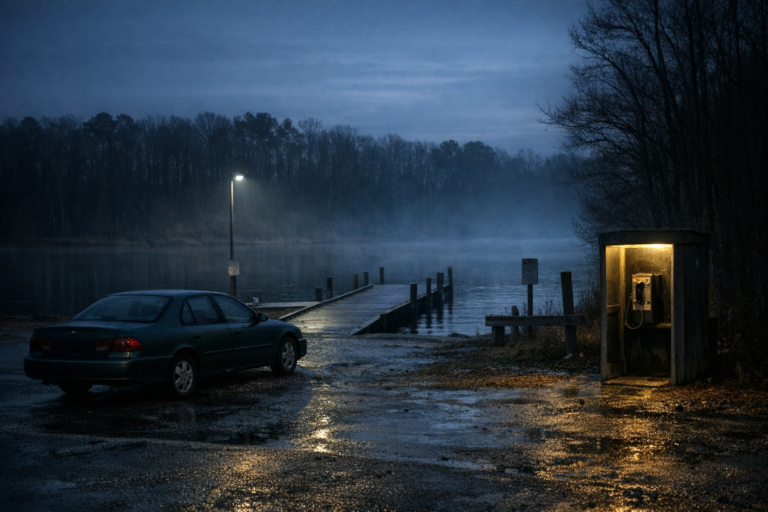
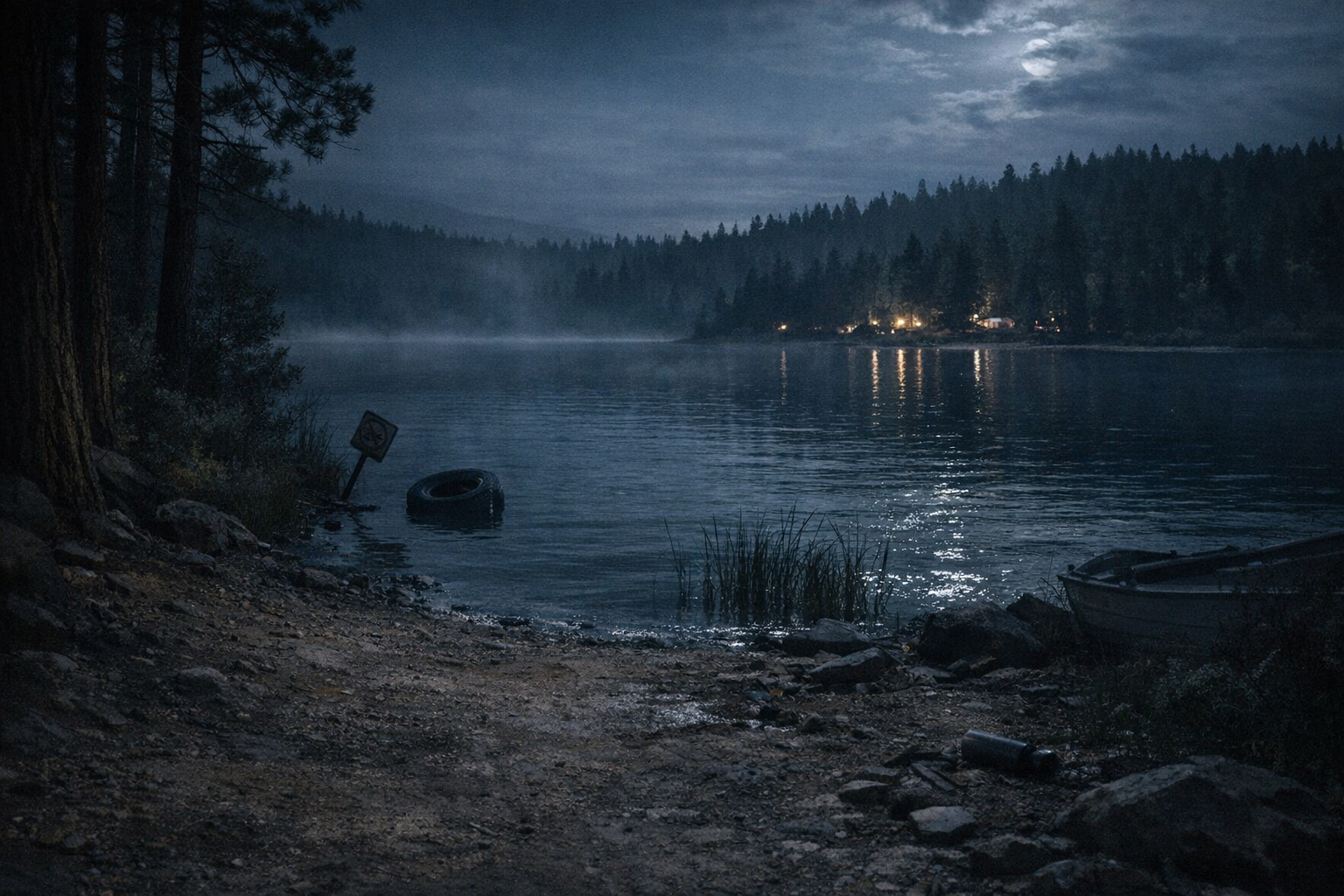
The last time anyone could place Kiely Rodni for certain, the night around Prosser Family Campground was already slipping out of focus. Music was carrying through the trees. Car headlights were cutting weak white tunnels through dust. Teenagers were moving in loose circles near the water, some laughing too loudly, some already looking for rides, some trying to remember who had shown up with whom. Somewhere inside that blur was a 16-year-old girl with a silver Honda CR-V, a dead phone by morning, and just enough ordinary details around her to make what happened next feel like it should have been easy to explain.
But that is not what this case became.
Kiely Rodni’s unsolved disappearance became one of the most watched missing person cases in California because it seemed to sit in two realities at once. Her car and body were eventually found in Prosser Creek Reservoir, yet the full story of how Kiely Rodni went from a crowded party to an upside-down vehicle underwater still leaves people arguing over what was resolved and what never truly was.
That uneasy split is part of why cases in the site’s found vehicle disappearances archive keep pulling readers back: sometimes the object is recovered, but the human story around it still feels broken.
On August 5, 2022, Kiely went to an end-of-summer party near Truckee, California, not far from the Nevada border. The gathering was big, loose, and badly controlled, with hundreds of teenagers and young adults moving around a dark campground near Prosser Creek Reservoir. By itself, that fact sounds almost too ordinary to be ominous. A party. A rural road. A teenager out late in the summer. The kind of night that looks harmless from a distance.
Friends later said she had been drinking. One of the final reported contacts with Kiely came around 12:30 a.m., close to when she was believed to have been last seen. After that, the case began to fracture. People remembered pieces. A phone call. A ride question. A plan to leave. But like so many crowded-night disappearances, the more witnesses there were, the less clear the final picture became.
That is one of the quiet horrors of cases like this. People imagine that being surrounded by others creates safety. Sometimes it does. Sometimes it just creates noise.
By the next morning, Kiely was gone. So was her silver Honda CR-V. Her phone appeared to be off. Search efforts grew fast because the case hit several public pressure points all at once: Kiely was young, the party had been large, the terrain was rough, and there was no clear exit story. A teenager did not just fail to come home. She seemed to have disappeared out of a crowd and taken the answer with her.
Law enforcement agencies, volunteers, and eventually national media attention turned the case into a round-the-clock obsession. Investigators conducted interviews, reviewed tips, searched the area, and tried to build a final timeline from witness memories that were already blurring at the edges. The public kept circling the same questions. Did Kiely leave alone? Did she crash nearby? Did someone else get into the car? Was this a drunken accident, an abduction, or something in between?
Timeline of Events
- August 5, 2022: Kiely Rodni attends a large end-of-summer party near Prosser Family Campground in Truckee, California.
- Shortly after midnight, August 6: She is believed to be last seen near the party area. Friends later describe late-night contact and concern about rides.
- Morning of August 6: Kiely does not return home. Her phone appears to be off, and her silver Honda CR-V is also missing.
- Following two weeks: Massive searches involve law enforcement, volunteers, divers, and national media coverage, but neither Kiely nor her vehicle is found.
- August 21: Volunteer dive group Adventures With Purpose locates a submerged vehicle in Prosser Creek Reservoir.
- After recovery: Authorities confirm the vehicle is Kiely’s and the remains inside are hers.
- Later official findings: Her death is ruled an accidental drowning, with officials saying they found no evidence of foul play.
On paper, that timeline sounds clean. Too clean, maybe. Missing teen. Search. Vehicle found underwater. Death ruled accidental. Case closed in the formal sense. But real people do not live inside paper timelines, and this story kept resisting the comfort of a straight line.
The first reason is simple: finding Kiely ended the search, but it did not answer the emotional shape of the case. Her vehicle was discovered upside down in the reservoir, not far from where she had last been seen. To some people, that made the explanation feel tragically straightforward. A dark rural area. Drinking. A rough road. A car entering water unnoticed.
To others, it made the whole thing feel worse.
Because if that was the answer, how had she stayed hidden there for so long? Why had such a huge search failed to locate the vehicle earlier? Why did the discovery come from a volunteer dive team using sonar rather than from the enormous official effort already in motion? And why did the physical facts of the recovery still leave such a large emotional gap in the middle of the story?
What Doesn’t Fully Settle
- The crowd problem: A large party should have produced a stronger final timeline, but instead it created overlapping, unreliable fragments.
- The vehicle delay: Many people struggled with the fact that Kiely’s CR-V was found in water near the search area only after more than two weeks had passed.
- The found-but-not-finished feeling: Officially, the discovery answered where Kiely was. Unofficially, many people still felt it left open how the final minutes unfolded.
- The tension between evidence and narrative: A body and vehicle can close a search, but they do not automatically produce a story that feels complete.
That last point is, and it is what makes Kiely Rodni such a strong fit for this site. Some cases remain open because no one knows where the person went. Others remain haunting because even after the major physical question is answered, the human sequence still feels partly invisible. Kiely’s case lives in that second category.
It also kept resurfacing because modern true-crime culture is built around exactly this kind of unresolved tension. Documentary specials, recap videos, Reddit threads, and comment-heavy explainers all thrive on stories where the facts appear to point one way while public intuition keeps tugging in another. In that world, discovery is not the same thing as agreement. Closure is not the same thing as belief.
And so the party itself became almost mythic. Not because it was unique, but because it was ordinary in the worst possible way. There were too many people to track cleanly, too much darkness to rely on memory, too much alcohol, too many different versions of what the final half hour looked like. The case became a mirror for a fear many people already carry: that a normal night can go bad in a way that remains permanently blurry.
If you zoom out, Kiely Rodni’s story lines up with other disappearance cases where the last known movements matter more than any single dramatic clue. The key tension is not only where the person ended up. It is the missing bridge between the final sighting and the final outcome. That same unnerving gap is part of what keeps readers locked into stories like these disappearance cases caught on surveillance footage, where being seen does not necessarily make the truth easier to reach.
In Kiely’s case, the official conclusion was accidental drowning. That matters, and it should be said plainly. Public debate often turns a tragedy into a contest of suspicions, but the known record still points to a teenage girl, a vehicle, a body of water, and no confirmed evidence of foul play. That is the documented frame.
But the reason the case never fully settled in the public imagination is that documented frames do not erase the emotional afterimage. People kept returning to the same visual: a car upside down beneath dark water while searchers moved above ground for days. It is the kind of image that seems to explain everything and nothing at once.
Maybe that is why Kiely Rodni’s name still circulates whenever people talk about disappearances that feel half-resolved. Her story has an answer, but it does not feel like a complete ending. It has a location, but not a fully satisfying final sequence. It has an official cause, but not a version of events that quiets every instinctive question.
And those differences matter. In the modern internet age, a case can be technically solved in one sense while remaining culturally unsettled in another. The public no longer thinks in simple categories. Found or missing. Solved or unsolved. Accident or crime. Instead, people live inside a messier reality where the facts may stop moving long before the doubt does.
Why This Case Still Gets Attention
- It combines youth, a party setting, and a vanished vehicle: all three are high-attention details that instantly create public urgency.
- The discovery did not erase the mystery feeling: many people still separate “what officials concluded” from “what emotionally makes sense to them.”
- The case fits current documentary habits: audiences are drawn to stories where the physical evidence exists but the final sequence still feels incomplete.
- It reflects a modern fear: that one badly lit road, one impaired decision, or one missed turn can erase someone before anyone understands what happened.
In the end, what happened to Kiely Rodni may be one of those cases where the hardest truth is also the simplest one: sometimes the event itself is tragically explainable, while the experience of understanding it never catches up. A crowded party did not produce safety. A huge search did not immediately produce discovery. A recovered vehicle did not produce peace.
What remained was a case suspended between resolution and unease. Kiely was found. That part matters. Her family, friends, and the public were not left forever with the abyss of not knowing where she was. But the case still lingers because what came after the finding was not the clean emotional landing many people expected. It was something colder.
It was the realization that a mystery can narrow without disappearing.
That a lake can hold the answer and still not give back the full story.
🔎 Related Investigation:
🔎 Related Investigation:
🔎 If this story stayed with you, the author suggests these real cases next:
- Cases where the vehicle was found, but the person’s final story never came back intact
- The strange California drive that kept stretching longer before Bryce Laspisa vanished
- The roadside disappearance of Maura Murray and the night the timeline split apart
Explore more Disappearances stories here: