The Girl in the Box? How Colleen Stan Survived a Captivity Story That Still Feels Impossible
9 min readAugust 25, 2025
At first, the ride looked almost staged to lower her guard. A young couple. A baby in the car. A long California road slipping by in the late-afternoon light. Twenty-year-old Colleen Stan had been careful about who she accepted rides from that day, but this looked safer than most. Then the man behind the wheel pulled off the road, produced a knife, and everything ordinary in her life ended in a matter of seconds.
Listen to “The Girl in the Box: A True Story Stranger Than Any Horror Movie” on Spreaker.Colleen Stan, later known worldwide as The Girl in the Box, survived one of the most disturbing captivity cases in modern true crime. What makes her story so unforgettable is not only how long she was held, but how Cameron Hooker built a system of fear so powerful that even moments of freedom did not feel like freedom.
That strange mix of visible opportunity and invisible control is part of what also makes stories like Elizabeth Shoaf’s bunker escape so hard to shake. In both cases, survival depended not just on endurance, but on breaking a world that had been carefully built inside the victim’s mind.
On May 19, 1977, Colleen was hitchhiking from Eugene, Oregon, toward a birthday gathering in northern California. She had already turned down rides that did not feel right. When Cameron and Janice Hooker stopped with their infant in the back seat, the scene carried the kind of domestic normalcy that makes danger harder to see. Colleen got in. For a little while, the conversation felt ordinary. Then Cameron veered off the expected route, and the trap revealed itself.
He forced a homemade box over her head, blinding and muffling her almost instantly. It was not a panicked attack by someone improvising. The box made that clear. So did the knife. So did the way he drove her to the Hookers’ home in Red Bluff as if he had rehearsed the entire sequence before. By the time Colleen understood what was happening, Cameron had already done the most important thing a captor can do: he had convinced her that resistance had almost no room to breathe.
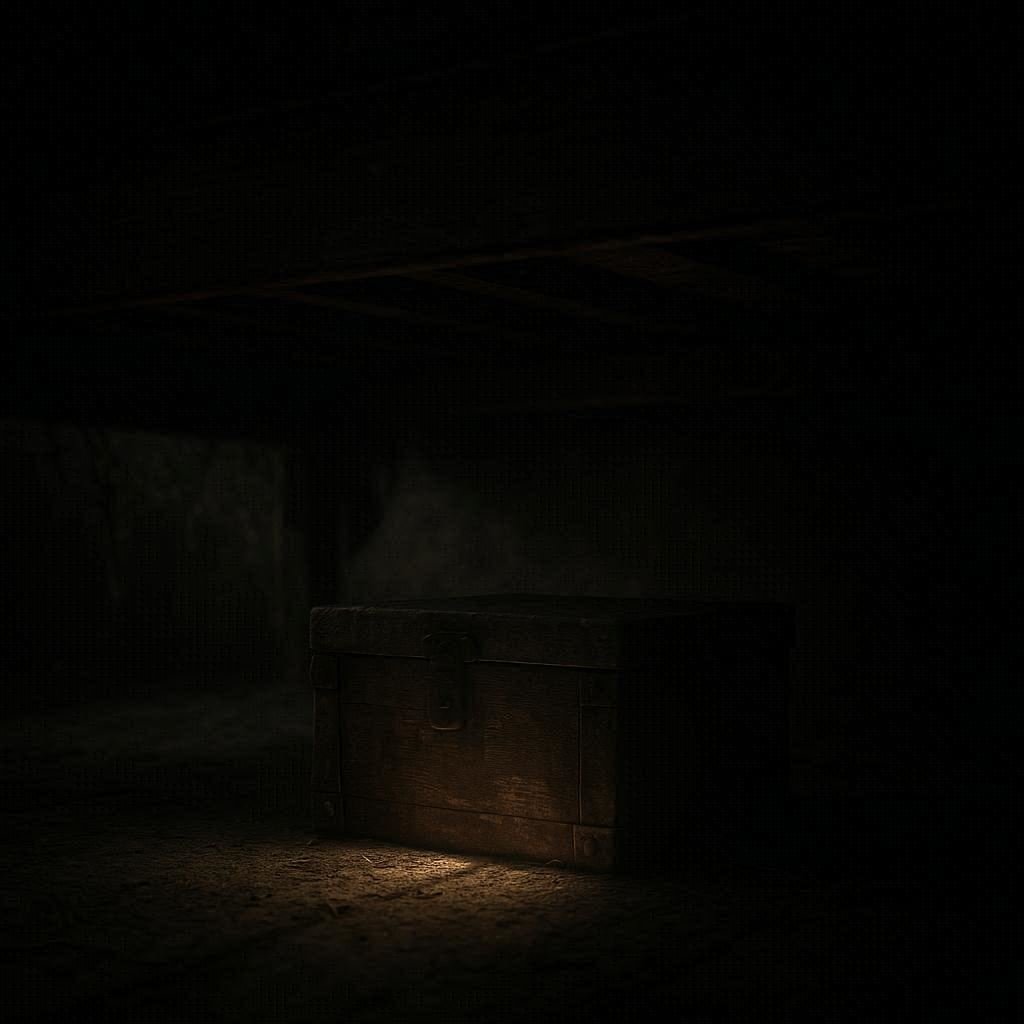
Inside the house, the horror became methodical. Cameron placed her in a cramped wooden confinement box, later keeping her for long stretches beneath the couple’s waterbed in a coffin-like space so tight she could barely move. Darkness erased her sense of time. Silence swallowed normal thought. Pain, fear, and uncertainty became routine. The box itself was terrifying, but the deeper cruelty was psychological. Cameron was not just imprisoning her body. He was trying to rebuild her reality.
That is where this case turns from brutal kidnapping into something even colder. Cameron Hooker told Colleen that a powerful organization called The Company was monitoring her. According to him, it had people everywhere. If she tried to run, if she told the truth, if she trusted the wrong person, The Company would kill her and murder her family. In a healthy mind, the story sounds absurd. In the mind of someone isolated, terrorized, deprived of control, and repeatedly punished, it became a governing law.
For years, Cameron used that lie as efficiently as locks, chains, or wood. He could let Colleen out and still keep her captive because he had trained her to believe the danger extended far beyond the room. That is why the case still feels almost impossible when people hear that she was eventually taken out in public, made to work around the house, and even allowed to visit her family. Outsiders see chances to run. Colleen saw a deadly test she had been taught she could not fail.
May 19, 1977: Colleen Stan is hitchhiking in northern California when Cameron and Janice Hooker pick her up.
Shortly after: Cameron threatens her with a knife and forces a box over her head before taking her to the Hookers’ home in Red Bluff.
Early captivity: Colleen is confined for long periods in a narrow wooden box and subjected to extreme isolation and control.
Following years: Cameron uses the invented threat of “The Company” to maintain obedience, even when Colleen is occasionally allowed outside strict confinement.
Later phase: Colleen is sometimes presented as a helper or nanny-like presence, while still living under fear and coercion.
1984: Janice Hooker finally tells Colleen that The Company is not real.
Afterward: Colleen leaves, contacts family, and the case unravels.
1985: Cameron Hooker is convicted for kidnapping and related crimes and receives a sentence that effectively keeps him imprisoned for life.
The timeline matters because it shows how captivity changed shape without truly ending. The first stage was physical domination: confinement, deprivation, and terror. The second stage was maintenance. Cameron no longer had to rely every minute on visible force because he had manufactured a wider prison. The walls were now psychological, and that made them harder for anyone else to notice.
There is something especially chilling about that middle stretch. Friends visited the house. Daily life continued around the Hookers. The neighborhood did not look like the setting for one of the country’s most infamous captivity cases. That contrast is part of why the story still lands so hard. The nightmare was not hidden in some castle, bunker in the wilderness, or abandoned compound. It existed inside ordinary space, inches away from ordinary life.
How Control Was Maintained Without Constant Physical Force
The central mystery in Colleen Stan’s case is not only how she was taken. It is how Cameron Hooker kept control for seven years.
Isolation: Darkness, confinement, and routine deprivation stripped away Colleen’s sense of normal time and judgment.
Unpredictability: Cameron controlled when she could move, speak, eat, or hope, which made every decision feel dangerous.
The Company myth: By inventing an all-seeing organization, he made escape feel larger than outrunning one man.
Threats against family: Fear for loved ones can be more paralyzing than fear for oneself.
Controlled privileges: Small allowances—public outings, family visits, household tasks—did not restore freedom; they deepened the illusion that obedience was the only safe path.
This is what makes the case so psychologically devastating. Many people imagine captivity as a chain on the ankle or a locked door. Cameron Hooker understood that if he could reshape Colleen’s sense of consequence, he would not need a locked box every hour of every day. He could let her stand in daylight and still keep her under command. He could let her sit with family and still silence her. He could give her the appearance of movement while keeping the center of her life trapped.
That same emotional violence shows up in other cases of coercion and control, including the Turpin family escape, where captivity survived for years behind the face of an ordinary household. The details are different, but the deeper pattern is similar: the prison is strengthened when it stops looking like one to the outside world.
Eventually, the weakest point in Cameron’s system was not a lock or a hiding place. It was Janice Hooker. She had helped him from the beginning, which makes her role impossible to cleanly soften. But guilt and fear inside the marriage kept building. By 1984, Janice finally told Colleen the truth that shattered the whole architecture of control: The Company did not exist. It never had.
Imagine what that moment must have felt like. Not relief first. Not even freedom first. More like a violent rearranging of reality. Seven years of obedience, terror, and self-denial had been structured around something fictional. The invisible force that had filled every room in her mind vanished in one sentence. Once that happened, Cameron stopped seeming omnipotent. He became what he had always actually been—a man with a carefully maintained lie.
Colleen left. She contacted her family. Law enforcement learned what had happened. And once the story moved into the open, it sounded so extreme that it felt almost like a horror script. A woman hidden in a box under a waterbed. Years of captivity in a normal-looking home. Psychological slavery enforced by an invented organization. Yet the facts were real enough to lead to Cameron Hooker’s conviction.
What Still Doesn’t Let the Case Go
Some true crime stories stay alive because the mystery is unsolved. This one stays alive because it was solved, and the solution is still hard to emotionally accept. People can understand a kidnapping. They can understand a locked room. What unsettles them here is the scale of control inside ordinary life. How did nobody know? How did she endure it? How can fear become so complete that even a family visit does not become an escape?
That is why the case keeps resurfacing in captivity-survival discussions and why it naturally belongs beside stories shaped by hidden pressure, manipulation, and delayed unraveling—whether in survival psychology, family control, or high-pressure deception cases like the Kelsey Berreth investigation, where truth only began to break through once the false story could no longer hold together.
Colleen Stan’s survival also matters because it forces a harder conversation about what captivity really is. It is not always chains in the cinematic sense. Sometimes it is a controlled environment, a manufactured mythology, repeated threats, and the deliberate destruction of a person’s ability to trust their own instincts. The body stays alive. The world around that body gets rewritten.
And that may be the most haunting part of all. The wooden box gave the case its infamous name, but the true prison was larger than wood. It was a structure of fear that followed Colleen even when she was no longer physically inside the box. Cameron Hooker understood that if terror could be made to feel bigger than the visible room, then the room hardly needed to be visible anymore.
That is why this story continues to hit people so hard decades later. It is not just a case file about a woman who survived something monstrous. It is a documentary-level study in how control, isolation, and deception can hollow out reality itself—and how breaking one lie can become the first real doorway back to freedom.
FAQ
What happened to Colleen Stan?
Colleen Stan was kidnapped in 1977 after accepting a ride from Cameron and Janice Hooker while hitchhiking. She was held captive for seven years in California and subjected to extreme physical confinement and psychological control.
Why was Colleen Stan called The Girl in the Box?
The nickname came from the wooden box Cameron Hooker used to confine her, including a coffin-like space where she was kept for long periods beneath the Hookers’ waterbed.
How long was Colleen Stan held captive?
Colleen Stan was held for about seven years, from 1977 until 1984, before the deception controlling her finally began to collapse.
How did Colleen Stan escape?
Her escape became possible when Janice Hooker told her that “The Company,” the organization Cameron claimed was watching and threatening her family, was not real. Once that lie broke, Colleen was able to leave and contact family.
Why does the Colleen Stan case still get attention?
The case still gets attention because it combines extreme captivity, survival, and psychological coercion in a way that feels almost impossible even though it is real. It remains one of the most disturbing modern true crime cases involving long-term control.
🔎 If this story stayed with you, the author suggests these real cases next: