What Happened to the Petit Family? The Night Cheshire Lost a Family
11 min readMarch 25, 2026
Jennifer Hawke-Petit walked into the bank that morning knowing her family was still trapped inside their home.
She was not there for a normal withdrawal.
She was not there because she wanted money.
She was there because two men had invaded her house, attacked her husband, tied up her daughters, and forced her to get cash while they waited back at 39 Sorghum Mill Drive.
Inside the bank, Jennifer did something incredibly brave.
She quietly told employees her family was being held hostage.
The bank called 911.
Police began responding.
And for a short time, it seemed like there was still a chance.
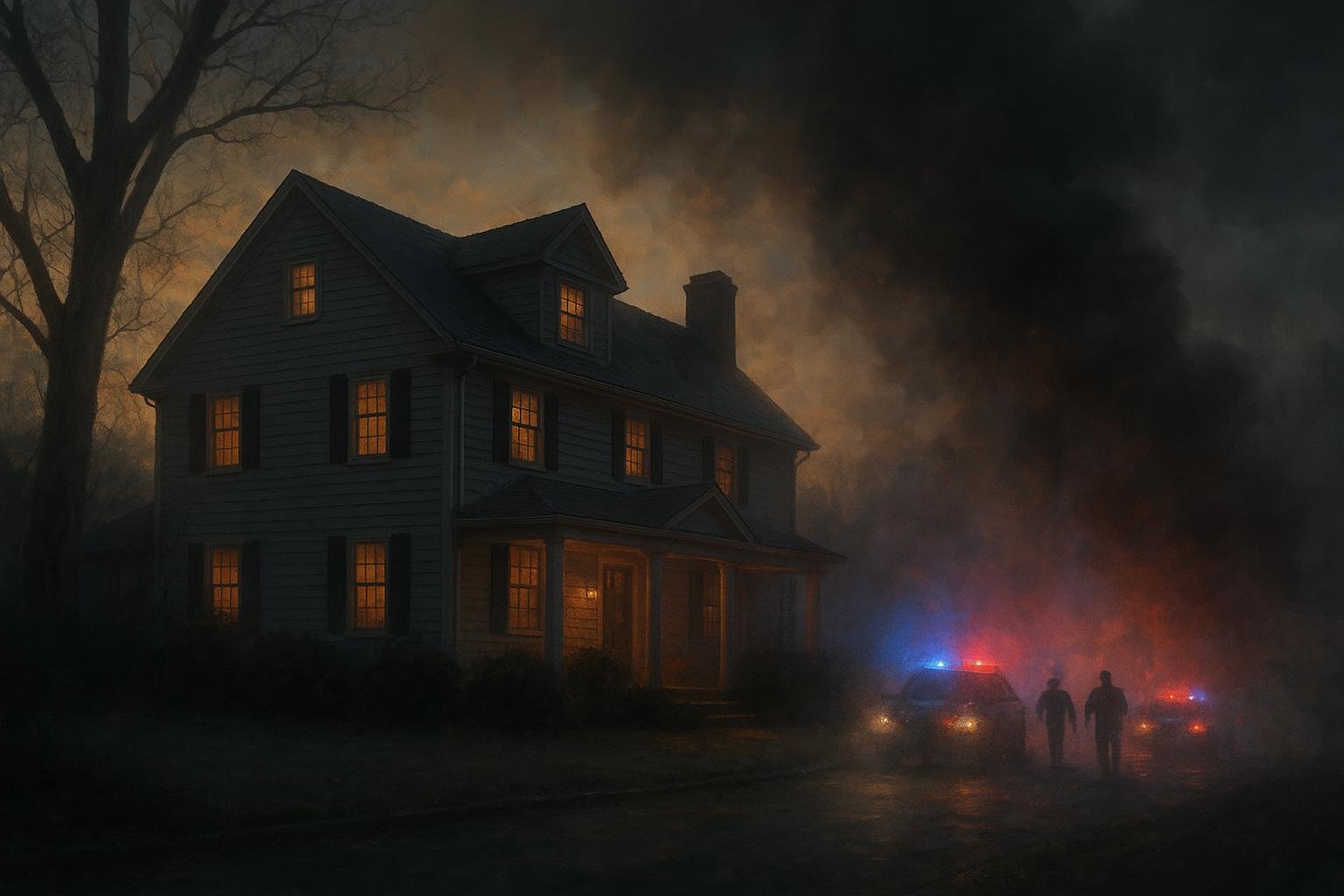
But less than two hours later, the Petit home was burning.
Dr. William Petit would crawl out alive, badly beaten and bleeding.
Jennifer and her daughters, 17-year-old Hayley and 11-year-old Michaela, would not make it out.
This is the story of the Cheshire home invasion murders — one of the most devastating crimes in Connecticut history, and a case that still raises painful questions about evil, timing, police response, and how fast an ordinary morning can become a nightmare.
The Cheshire home invasion murders happened on July 23, 2007, in Cheshire, Connecticut. Steven Hayes and Joshua Komisarjevsky broke into the Petit family home, attacked Dr. William Petit, held Jennifer Hawke-Petit and her daughters hostage, forced Jennifer to withdraw money from a bank, then set the house on fire. Jennifer, Hayley, and Michaela died. Dr. Petit survived. Hayes and Komisarjevsky were convicted and originally sentenced to death, but their sentences were later changed to life in prison without parole after Connecticut’s death penalty was ruled unconstitutional.
Cheshire, Connecticut was the kind of town people often described as safe.
It had quiet roads, clean lawns, family homes, and the kind of ordinary peace that makes people lower their guard.
At 39 Sorghum Mill Drive lived the Petit family.
Dr. William Petit was a respected endocrinologist.
His wife, Jennifer Hawke-Petit, had worked as a nurse and was deeply involved in her daughters’ lives.
Their oldest daughter, Hayley, was 17. She was smart, driven, and getting ready for her senior year.
Their youngest daughter, Michaela, was 11. She was remembered as warm, bright, and full of life.
By every account, this was a close family.
They were not involved in anything dangerous.
They were not living recklessly.
They were simply home.
That is part of what made the crime so terrifying.
It did not happen in a place people already feared.
It happened inside a house that should have been the safest place in the world.
The Break-In
In the early morning hours of July 23, 2007, two men entered the Petit home.
Their names were Steven Hayes and Joshua Komisarjevsky.
They had met through criminal circles and unstable lives. By the time they reached the Petit house, they were already on a path that would destroy an entire family.
Dr. Petit was asleep downstairs.
He was attacked with a baseball bat and tied up. The beating was severe enough to leave him gravely injured.
Then the men went upstairs.
Jennifer, Hayley, and Michaela were forced awake and restrained.
What began as a home invasion quickly became a hostage situation.
The men wanted money.
They searched the house.
They learned there was access to a bank account.
Then they made the decision that would create the most haunting part of the case.
When the bank opened, Jennifer would be taken there to withdraw cash.
Her family would remain inside the house.
The Bank Warning
By morning, the rest of Cheshire was waking up.
People were drinking coffee.
Cars were leaving driveways.
Parents were starting another summer day.
But inside the Petit home, time had stopped.
Jennifer was taken to a local Bank of America branch and forced to withdraw $15,000.
To the people inside the bank, something felt wrong.
Jennifer was calm enough to speak, but not normal.
Then she quietly told bank employees the truth.
Her family was being held hostage.
The bank called 911.
That moment should have been the turning point.
A victim had escaped the house long enough to give a warning.
Police had been alerted.
The suspects were still at the home.
The victims were still alive.
There was now a race against time.
The Race Against Time
Police began responding to the bank’s emergency call.
But hostage situations are chaotic.
Information comes in pieces.
Dispatchers have to confirm the address.
Officers have to decide whether to approach quietly or rush in.
They have to think about weapons, hostages, exits, and what the suspects might do if they realize police are outside.
That uncertainty became one of the biggest controversies in the case.
Outside the Petit home, police began setting up around the area.
Inside, the situation was deteriorating.
Dr. Petit was still tied up and badly hurt.
Jennifer and the girls were still trapped.
The men had gotten the money.
And now they needed to escape.
What happened next turned the case from a home invasion into a mass murder.
The Fire
Around 9:30 in the morning, the Petit home was set on fire.
Smoke and flames began filling the house.
Jennifer, Hayley, and Michaela were still inside.
Dr. Petit, despite his injuries, managed to escape.
He staggered out of the house, bloodied and disoriented, and collapsed outside.
Police captured Hayes and Komisarjevsky shortly after they fled the scene.
But for Jennifer and the girls, it was too late.
Firefighters entered the burning home, but the conditions were devastating.
Jennifer Hawke-Petit was dead.
Hayley was dead.
Michaela was dead.
The house that had been filled with family life only hours earlier was now a burned crime scene.
Timeline of the Cheshire Home Invasion Murders
Friday, July 20, 2007: Jennifer and Michaela go shopping for school supplies, a normal summer errand before the new school year.
Early morning, July 23, 2007: Steven Hayes and Joshua Komisarjevsky enter the Petit family home in Cheshire, Connecticut.
Inside the home: Dr. William Petit is attacked and tied up. Jennifer, Hayley, and Michaela are restrained upstairs.
Morning: Jennifer is forced to go to a Bank of America branch to withdraw $15,000.
At the bank: Jennifer quietly tells employees her family is being held hostage. The bank calls 911.
Police response: Officers begin responding and position around the home.
Around 9:30 a.m.: The house is set on fire.
After the fire starts: Dr. Petit escapes alive. Hayes and Komisarjevsky flee and are captured.
Afterward: Jennifer, Hayley, and Michaela are found dead inside the home.
2010 and 2011: Hayes and Komisarjevsky are convicted and sentenced to death.
2015: Their death sentences are changed to life imprisonment without parole after Connecticut’s death penalty is ruled unconstitutional.
Why the Case Shocked Connecticut
This case became more than a murder case because of where and how it happened.
It happened in a quiet town.
It happened to a family people could easily recognize as their own neighbors.
It happened after a warning reached the outside world.
That detail is what made so many people angry.
Jennifer got the message out.
The bank called for help.
Police knew something was happening.
And still, the home burned.
For years, people asked whether faster action could have saved Jennifer, Hayley, and Michaela.
That question does not have a simple answer.
But it has never gone away.
The Police Response Debate
The police response became one of the most debated parts of the case.
Critics argued officers waited too long and should have entered the home sooner.
They believed the bank warning gave police enough reason to act immediately.
Others argued the situation was not that simple.
In a hostage crisis, a rushed entry can cause suspects to kill victims instantly.
Police did not know exactly where everyone was inside.
They did not know the suspects’ full plan.
They did not know whether an immediate confrontation would make things worse.
That is what makes the debate so painful.
There is no version of the response that can be judged without the terrible knowledge of what happened next.
Looking backward, every minute feels critical.
In the moment, officers were operating with incomplete information.
But for the public, and especially for those who loved the Petit family, the question remained:
Could something have been done sooner?
The Trials and Sentences
The criminal case moved forward with overwhelming evidence.
Hayes and Komisarjevsky were arrested quickly.
Surveillance footage, forensic evidence, witness accounts, and trial testimony built the case against them.
Both men were convicted.
Steven Hayes was sentenced to death in 2010.
Joshua Komisarjevsky was sentenced to death in 2011.
But Connecticut’s law changed.
In 2012, the state abolished the death penalty for future cases.
Then, in 2015, the Connecticut Supreme Court ruled the death penalty unconstitutional under the state constitution. Existing death sentences were changed to life imprisonment without parole.
That meant Hayes and Komisarjevsky would not be executed.
They would spend the rest of their lives in prison.
For some, that felt like justice under the law.
For others, it felt like another wound.
But none of it could bring back Jennifer, Hayley, or Michaela.
What Doesn’t Add Up?
The hardest part of the case is the timing.
Jennifer reached the bank.
She warned people.
The 911 call was made.
Police responded.
And still, the outcome was catastrophic.
That is the part people keep returning to.
Not because there is a mystery about who committed the crime.
There is not.
The men responsible were caught and convicted.
The unresolved part is different.
It is the question of whether one different decision could have changed the ending.
Could police have gone in sooner?
Could the suspects have been stopped as soon as they returned from the bank?
Could the fire have been prevented?
Could Jennifer’s warning have saved them?
Those questions are painful because they live in the space between fact and possibility.
And possibility is where grief often hurts the most.
The Most Likely Explanation
The most likely explanation is that this was a home invasion that escalated into a hostage crisis and then into a deliberate attempt to destroy evidence and escape.
The crime was not a random moment of panic at the end.
It unfolded over hours.
The victims were controlled.
Money was demanded.
Jennifer was forced to go to the bank.
The home was set on fire.
The killers fled.
What remains debated is not who did it.
It is whether the response could have unfolded differently once Jennifer’s warning reached the bank.
That question remains one of the reasons this case still feels so raw.
The Victims Should Be Remembered First
Cases like this can easily become centered on the killers.
Their names get repeated.
Their trials get covered.
Their appeals get discussed.
But the most important names are not theirs.
Jennifer Hawke-Petit was a mother who tried to save her family while under direct threat.
Hayley Petit was 17, on the edge of adulthood, with a future still ahead of her.
Michaela Petit was 11, still a child, remembered for her kindness and smile.
They were not just victims in a famous case.
They were a wife, a mother, daughters, students, friends, and loved ones.
That matters.
Because true crime should never turn real people into background details.
FAQ
What happened in the Cheshire home invasion murders?
On July 23, 2007, Steven Hayes and Joshua Komisarjevsky broke into the Petit family home in Cheshire, Connecticut. Dr. William Petit was attacked and survived. Jennifer Hawke-Petit and her daughters, Hayley and Michaela, were killed after the home was set on fire.
Who survived the Cheshire home invasion?
Dr. William Petit survived despite being severely beaten and restrained. His wife and two daughters died.
Why did Jennifer Hawke-Petit go to the bank?
She was forced to withdraw $15,000 while her family was being held hostage. While at the bank, she quietly warned employees that her family was in danger.
Were the killers caught?
Yes. Steven Hayes and Joshua Komisarjevsky were captured shortly after the house fire and later convicted.
Were Hayes and Komisarjevsky sentenced to death?
Yes. Both were originally sentenced to death. Their sentences were later changed to life in prison without parole after Connecticut’s death penalty was ruled unconstitutional.
Why is the police response controversial?
Because Jennifer warned the bank, the bank called 911, and police responded before the fire. Many people have questioned whether faster action might have saved the family, though hostage situations are extremely difficult and dangerous to assess in real time.
Closing Thoughts
The Cheshire home invasion murders remain haunting because they happened in a place that felt safe.
A normal house.
A normal town.
A normal summer morning.
Then everything broke.
Jennifer Hawke-Petit did what people hope they would have the courage to do.
She warned someone.
She tried to save her family.
And still, the ending came too fast.
That is why the case stays with people.
Not just because of the horror.
But because of the helplessness.
Because for a brief moment, rescue seemed possible.
Because one family’s home became the center of a question Connecticut would ask for years:
Could this have ended differently?
No answer can undo what happened.
No trial, sentence, law, or review can restore the lives taken that morning.
But remembering Jennifer, Hayley, and Michaela clearly matters.
Because this was not just a crime scene.
It was a home.
So Hayes is now a chick with a male appendage, how convenient! Those two pieces of excrement will certainly get theirs in hell when Satan gets his hands on them. 👿💩…shame on Connecticut, another useless blue state!!



So Hayes is now a chick with a male appendage, how convenient! Those two pieces of excrement will certainly get theirs in hell when Satan gets his hands on them. 👿💩…shame on Connecticut, another useless blue state!!