Toolbox Killers Case — The Tape, the Predator Pair, and the California Night That Still Feels Cursed
9 min readMarch 27, 2026
Before anyone knew the names Lawrence Bittaker and Roy Norris, there was only the feeling that something was wrong in the night. Southern California was still moving the way it always did after dark—cars humming down wide roads, bus benches glowing under yellow light, teenagers drifting between parking lots and apartment complexes, everyone assuming the ordinary route home would stay ordinary. Then girls and young women began to vanish into those same familiar spaces, and for a while the city had nothing solid to hold onto except dread.
The Toolbox Killers case became one of the most infamous serial murder investigations in California history because it combined stalking, abduction, torture, and a piece of evidence so disturbing that even experienced investigators never forgot it. What still gives the case its power is not just the brutality of the crimes, but how methodically Bittaker and Norris used routine places—rides, curbs, late-night streets, and false promises of safety—to hunt victims who thought they were only minutes from getting home.
Cases like this still sit at the center of the site’s serial killer archive, because they show how a pattern can hide in plain sight until one survivor, one witness, or one cracked timeline forces investigators to see the shape of it.
By the summer of 1979, the city already had enough noise to bury warning signs. People disappeared for all kinds of reasons. Some ran from homes, some slipped through addiction, some left after arguments and came back later. Detectives in a place as large as Los Angeles County had to make judgment calls fast, and that meant the earliest disappearances that would later be tied to Bittaker and Norris did not arrive with a neat label attached. They arrived as fragments—another report, another family calling hospitals, another last known sighting near a road where hitchhiking still happened.
Both men brought long criminal histories into the partnership. Bittaker had a record shaped by violence, theft, and sexual offenses. Norris also had a history of violent crime and time in prison. When they crossed paths, this was not the beginning of their darkness. It was the moment two men with similar appetites and similar contempt for other people stopped moving alone. Investigators later concluded that their alliance accelerated everything. Together, they were bolder, more organized, and more dangerous than either had been separately.
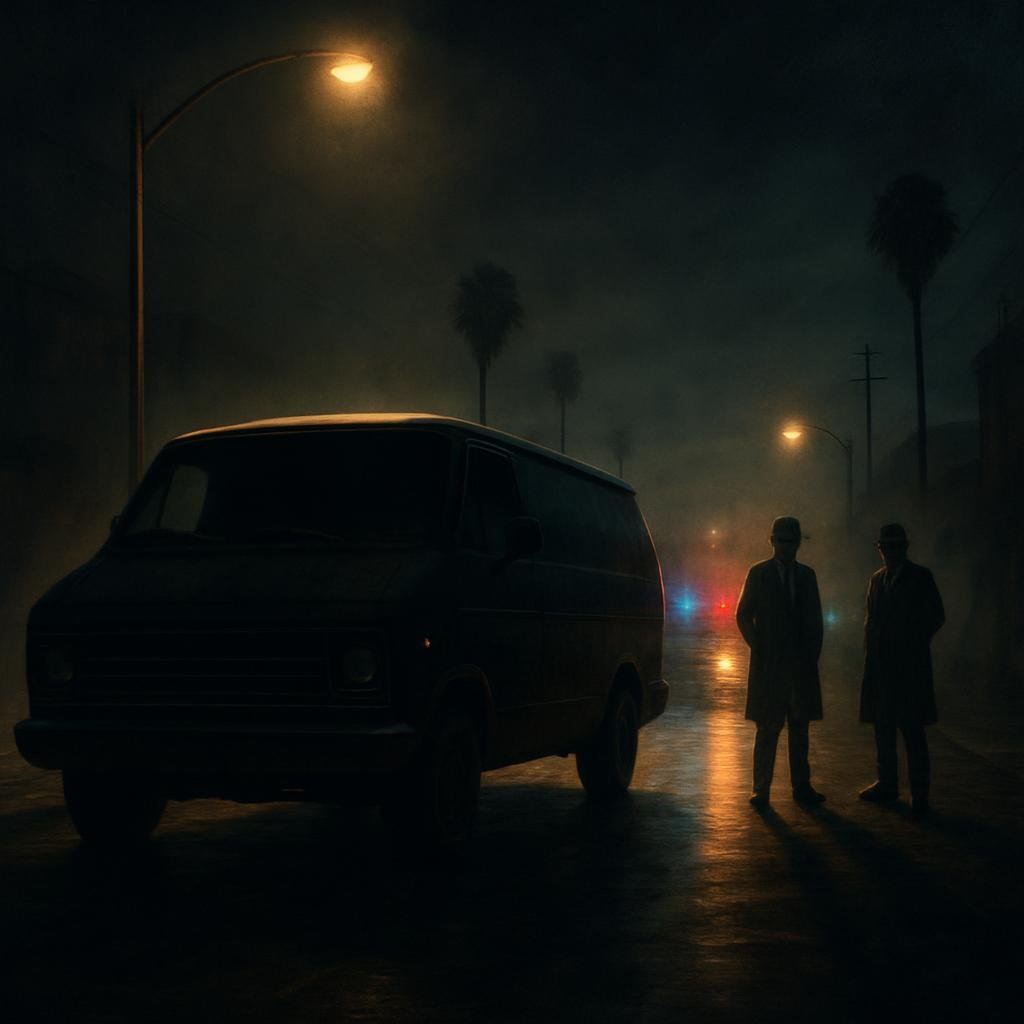
The van they used became central to that plan. It was practical, forgettable, and easy to move through neighborhoods without drawing immediate attention. Inside, it was altered in ways that made clear this was not a spontaneous burst of violence. It was a mobile trap. That detail matters because the Toolbox Killers case is often remembered for the recording tied to one victim, but the deeper truth is that the crimes were structured long before that tape entered evidence. The tape became the symbol. The planning was the real warning.
Early 1979: Bittaker and Norris reconnect after years shaped by prison time and violent criminal histories.
Mid-1979: They begin using a van to target girls and young women in Southern California, often in places where accepting a ride did not immediately seem unusual.
June to October 1979: A string of murders unfolds. At first the cases do not present themselves to the public as one clean pattern.
Critical break: A young woman escapes after being abducted and gives investigators a detailed statement about the men and the van.
Late 1979: Law enforcement pressure intensifies, evidence is collected, and the investigation starts closing in on both suspects.
After arrest: Norris eventually cooperates, helping prosecutors reconstruct the sequence of crimes and the planning behind them.
The break in the case did not come from technology, a miracle lab result, or some dramatic confession in the first hour. It came because one victim survived long enough to escape and tell the story. That survival testimony changed the case from a cloud of fear into something investigators could finally push against. It gave them descriptions, methods, movement, and a direction to chase. In older true-crime cases, that kind of testimony can be the difference between a pattern that hardens into proof and one that stays trapped in rumor.
Once detectives had that direction, the scattered pieces began to align. Criminal records, prison associations, and vehicle details all started pointing toward the same ugly center. That shift—from isolated casework to coordinated pattern recognition—is one reason the investigation still gets studied.
And then there was the tape.
The recording connected to one of the murders became one of the most notorious pieces of evidence in American true-crime history. People still reference it decades later because it seemed to capture, in real time, the cold intent behind the partnership. But the tape’s legacy is bigger than shock value. It forced everyone around the case—detectives, prosecutors, jurors, and families—to confront the fact that this was not merely a series of violent acts. It was deliberate domination preserved as evidence.
That is why the case still echoes. Not because the details are unspeakable, but because the evidence left no comfortable distance. It made the cruelty immediate. It made the courtroom feel less like a place where old files were being sorted and more like a place where the dead were suddenly, unbearably present again.
Why the Case Became So Infamous
The Toolbox Killers case became infamous for several overlapping reasons, and together they explain why it still stands apart even in a category crowded with notorious names.
The partnership: Two violent offenders reinforced each other instead of restraining each other, which made escalation faster and more systematic.
The planning: The van and the methods suggested forethought, not panic, and that always changes the emotional weight of a case.
The survivor’s account: One escape gave investigators a living map into a nightmare that might otherwise have remained partly hidden.
The recording: The audio evidence became one of the most chilling courtroom artifacts in modern true-crime history.
The atmosphere of the crimes: These were abductions tied to ordinary public spaces, which made the threat feel close, random, and impossible to fully see coming.
That is where the comparison to other predators becomes useful. The terror surrounding Richard Ramirez and the Night Stalker era came from the feeling that violence could enter any home from the darkness outside. The Toolbox Killers created a slightly different fear: that the danger was waiting in transitional spaces, in the gap between where someone was and where they thought they were going. A curb. A ride. A short distance. A routine decision that should not have been fatal.
When Norris eventually cooperated with prosecutors, his testimony helped confirm just how intentional the crimes had been. That cooperation did not reduce the horror, but it gave investigators a clearer chronology and gave the court something it always needs in cases this awful: structure. Jurors can only carry unbearable facts if someone helps them understand sequence, motive, method, and proof. Otherwise the case becomes a blur of horror instead of an argument strong enough to convict.
Bittaker was sentenced to death. Norris received multiple life sentences after cooperating. Those outcomes closed the courtroom chapter, but they did not close the cultural one. The case kept returning in books, documentaries, and law-enforcement discussions because it sits at the intersection of several things that never stop fascinating or frightening people: serial predation, offender partnership, survivor testimony, and evidence so disturbing it alters everyone who has to face it.
What Still Doesn’t Let the Case Fade
Most notorious cases survive in public memory because of one headline detail. This one survives because it has several, and each leads to a different unease.
The sense that the victims were taken from spaces people still pass through every night.
The realization that the pattern could have stayed buried longer without a survivor’s escape.
The fact that the evidence showed planning, patience, and repeated predation rather than impulsive chaos.
The courtroom legacy of the tape, which turned the abstract language of criminal filings into something brutally immediate.
But maybe the deepest reason the case lingers is that it strips away a comforting myth. People like to believe the worst offenders look visibly monstrous before they act. Usually they do not. They exploit routine. They depend on people being tired, rushed, stranded, trusting, embarrassed, or simply eager to get home. The real warning inside this case is not theatrical evil. It is predatory patience.
That patience is what makes the story feel so cold. Bittaker and Norris were not just violent; they were willing to wait for the right opening and then use it. That is why the case belongs alongside other stories of offenders who built a public mask or exploited familiar settings, including cases like the Ken and Barbie Killers and the long-cat-and-mouse arc that finally exposed BTK. Different crimes, different eras, but the same unnerving lesson: danger often hides best inside what looks ordinary.
For families, none of this analysis changes the core fact that daughters never came home. For investigators, the case remains a study in how fragile early momentum can be when missing-person reports arrive as separate tragedies instead of one pattern.
That is the feeling the case leaves behind. Not only fear of the killers themselves, but fear of how thin the line can be between routine and disaster when a predator is already watching for the moment someone believes they are almost safe.
FAQ
Who were the Toolbox Killers?
The Toolbox Killers were Lawrence Bittaker and Roy Norris, two violent offenders who committed a series of abductions and murders in Southern California in 1979. The case became infamous because of the planning involved, the survivor testimony that helped crack the investigation, and an audio recording that became one of the most disturbing pieces of evidence in true-crime history.
Why is the Toolbox Killers case so well known?
It is well known because the crimes were highly premeditated, the offenders worked as a pair, and the evidence revealed a level of cruelty that left a permanent mark on investigators and the court. The case also became a major example of how quickly serial predation can escalate when two offenders reinforce each other.
How were Lawrence Bittaker and Roy Norris caught?
A key turning point came when one abducted young woman escaped and gave law enforcement detailed information about the suspects and their van. That testimony helped investigators connect the pattern, focus the case, and build the evidence that eventually led to arrests and convictions.
Is the Toolbox Killers case solved?
Yes. The case is solved in the legal sense. Lawrence Bittaker was convicted and sentenced to death, and Roy Norris received multiple life sentences after cooperating with prosecutors. What remains unresolved is the emotional weight the case still carries for families, investigators, and anyone who studies it.
Why does the case still disturb people decades later?
It still disturbs people because it combines ordinary public settings, methodical predation, survivor testimony, and deeply haunting evidence. More than many notorious cases, it forces people to imagine how easily routine places can become crime scenes before anyone realizes a pattern is forming.
🔎 If this story stayed with you, the author suggests these real cases next: