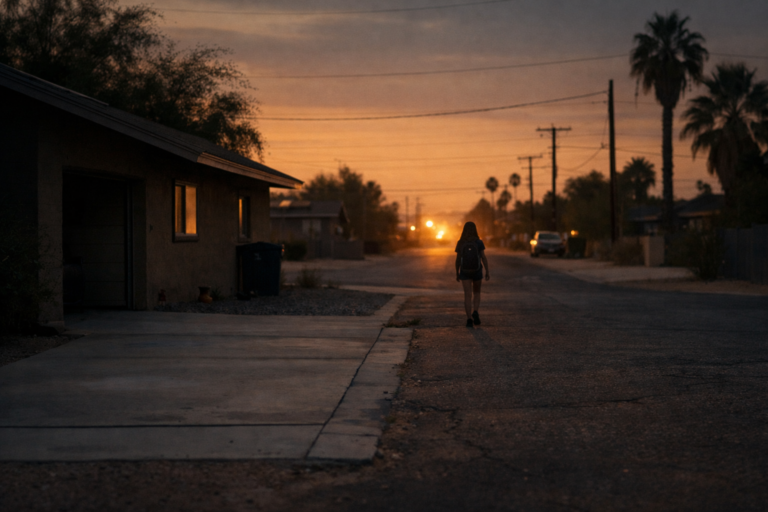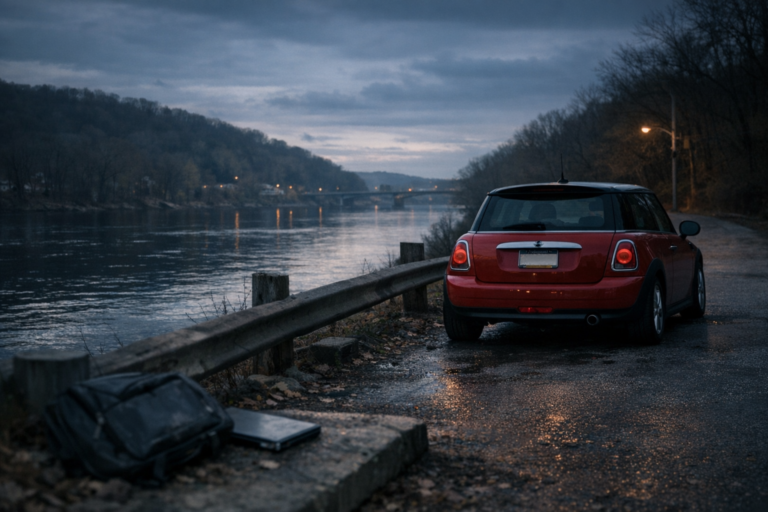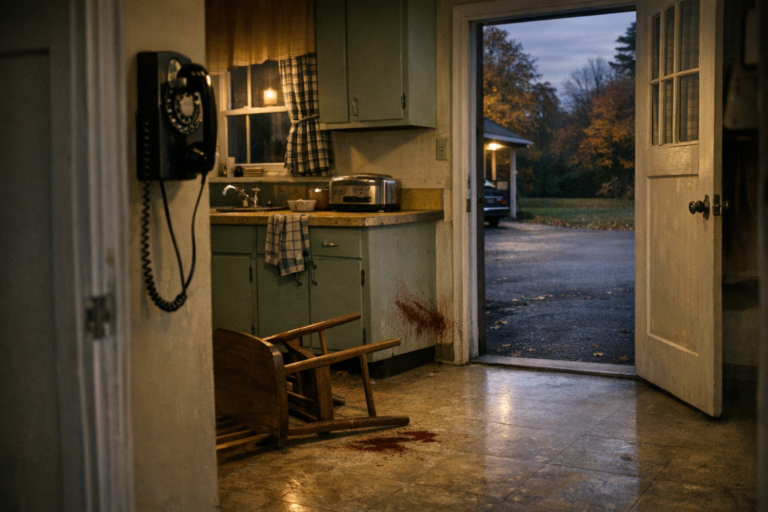
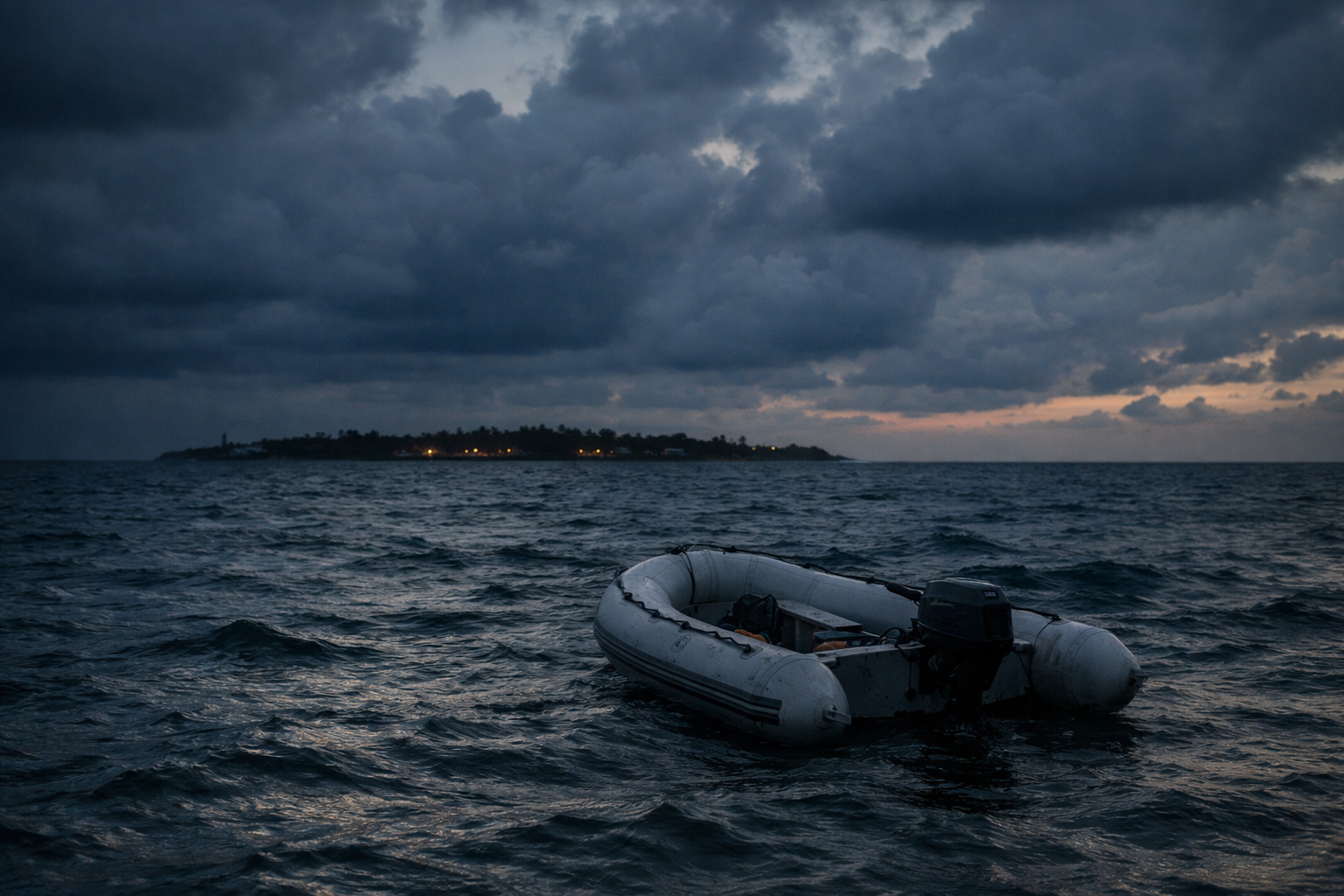
The water was already losing its color when the dinghy pulled away from Hope Town.
Behind them, dinner lights and dock lamps glowed softly along the harbor. Ahead of them was the darker shape of open water, the kind of short trip that should have taken minutes. Lynette Hooker and her husband were heading back to the yacht where they had been living, a boat called Soulmate. They knew the sea. They had built part of their life around it. And that is what makes what happened next feel so wrong. Somewhere in the Sea of Abaco, on a crossing that should have been ordinary, Lynette was suddenly gone.
Lynette Hooker’s unsolved disappearance has drawn intense attention because it sits at the uneasy line between accident and suspicion. The 55-year-old sailor vanished near Elbow Cay in the Bahamas on April 4, 2026, and the missing person case has only become more unsettling as renewed searches, seized vessels, and conflicting location data pushed investigators back into the water.
For anyone who has followed other sea-edge vanishings like the Amy Bradley disappearance, this case carries that same brutal tension: a person disappears near open water, and the setting itself starts swallowing certainty faster than investigators can build it.
How the Night Began
On the surface, the setting looked almost postcard-perfect. The Hookers had been sharing pieces of a sailing life online, the kind of life many people daydream about when work feels too loud and the world feels too cramped. Blue water. Anchored boats. Quiet coves. The yacht named Soulmate. It looked like freedom.
But postcard settings have a way of turning sinister when the timeline breaks.
According to the account Brian Hooker gave authorities, he and Lynette left Hope Town around 7:30 that evening in a small dinghy and headed toward their yacht near Elbow Cay. He said the weather turned rough. High winds. Choppy water. At some point, Lynette fell overboard.
That explanation sounds simple until you sit with it for a minute.
This was not a case where someone with no boating experience wandered into danger by accident. Lynette was an avid sailor. She was not a stranger to small boats, shifting conditions, or the basic logic of being on the water. And yet, by the end of that short crossing, she had vanished into one of the most punishing kinds of uncertainty there is: open sea at dusk.
Brian told investigators the dinghy lost power because Lynette had the engine safety lanyard, the kill-switch key designed to cut the motor if the operator goes overboard. He said he tried to reach her, but strong current and wind separated them. He later said he saw her swimming toward shore or toward the larger sailboat before he lost sight of her.
That detail matters, because in cases like this, the sea does not merely hide evidence. It distorts time, distance, visibility, and memory. A person can seem close and be unreachable. A shoreline can look manageable and still be impossible. A statement can sound plausible and still leave a dozen small questions behind.
Timeline of Events
- April 4, 2026, around 7:30 p.m. — Lynette Hooker and Brian Hooker leave Hope Town in a small dinghy to return to their yacht, Soulmate, near Elbow Cay.
- That evening — Brian later says rough weather caused Lynette to fall overboard and that strong currents quickly carried her away.
- Overnight into April 5 — Brian says the dinghy lost power, drifted for hours, and eventually washed ashore near Marsh Harbour. He then made his way to a boatyard and contacted authorities.
- April 5–7 — Bahamian authorities, local rescue teams, and the U.S. Coast Guard search by sea and air. The effort later shifts from rescue to recovery.
- April 8 — Brian Hooker is taken into custody for questioning in the Bahamas. No charges are filed.
- April 13 — He is released after several days in custody.
- April through May — Lynette’s daughter publicly questions the account, and investigators continue reviewing evidence.
- May 2026 — The U.S. Coast Guard confirms a criminal investigation and later seizes the yacht Soulmate as part of that inquiry.
- Late May to early June — Investigators identify new areas of interest after reviewing electronic-device and GPS-related evidence.
- June 2–8, 2026 — A renewed search in the Bahamas uses divers, underwater vehicles, drones, cadaver dogs, and examination of the dinghy. The search ends without publicly announced answers.
Where the Story Changes
If this had remained only a tragic boating accident report, the case might have followed a familiar arc: bad weather, failed rescue, heartbreaking uncertainty, no body found. But it did not stay there.
Within days, investigators detained Brian Hooker for questioning. He was later released without charges, but the story had already shifted. This was no longer just a disappearance at sea. It had become a disappearance under active scrutiny.
Then came the developments that kept public attention locked on the case.
Lynette’s daughter, Karli Aylesworth, publicly said she doubted the account from the beginning. She questioned how the event could have unfolded the way it was described and raised concerns about the couple’s history. Those statements did not prove what happened, but they gave shape to the unease many people were already feeling. In a case with no recovered victim and no public criminal charge, family doubt becomes part of the atmosphere surrounding every fact.
Then investigators reportedly found something even more important: inconsistencies between Brian Hooker’s statements and location data derived from electronic devices. That detail changed the case more than any dramatic headline ever could. Because when a disappearance at sea stops matching the digital trail, investigators are no longer dealing only with rough water and tragic odds. They are dealing with a broken map.
That tension keeps this case in active discussion. The sea is part of the uncertainty, yes. But so is the possibility that the original search area may not have matched what really happened that night.
What Doesn’t Add Up
- A short routine trip turned catastrophic. The crossing from Hope Town back to the yacht was not some epic offshore voyage. It was the kind of transition boaters make all the time.
- Lynette was experienced on the water. That does not make accidents impossible, but it does make people look more closely at how one unfolded so completely.
- The timeline depends heavily on one account. In the crucial window, the only public narrative of what happened came from the person who says he was with her.
- Electronic data reportedly created new search zones. That suggests investigators saw enough conflict between the account and the location evidence to redirect resources.
- Authorities escalated rather than wound down. Instead of treating the case as settled tragedy, they opened a criminal investigation, seized the yacht, examined the dinghy, and returned for a renewed search.
None of those points prove foul play on their own. But taken together, they explain why this disappearance keeps pulling people back. It is not just that Lynette vanished. It is that the official effort seems to have moved steadily toward deeper doubt.
The Sea as a Crime Scene
Land preserves. Water erases.
That may be the most chilling part of Lynette Hooker’s disappearance. If something happened out there beyond the version first described, the environment itself would have worked against investigators from the first minute. Dusk narrows visibility. Wind changes direction. Current alters where a person, object, or piece of evidence should be. Time works like acid.
That is why sea-based disappearance cases become so haunting. People imagine oceans and island channels as beautiful spaces, but for investigators they can become moving crime scenes with no edges. Even a truthful witness can struggle to reconstruct direction and distance under stress. And if a witness is not truthful, the sea gives him cover that streets and sidewalks never could.
This is also why the renewed federal interest matters so much. Reports that divers, underwater vehicles, cadaver dogs, and newly identified search zones were used in June suggest that investigators believed there was still evidence to chase. Not certainty. Not a solved case. But enough friction in the facts to go back.
The recovered or seized vessels matter for the same reason. When authorities take custody of the yacht or dinghy in a case like this, they are looking for the kind of silent evidence stories cannot override: damage patterns, traces, missing items, biological evidence, timing clues, digital devices, route history. Boats remember things differently than people do.
Why This Case Still Gets Attention
Some disappearance cases fade because the available facts stay frozen. This one keeps moving.
- It is recent. The public still sees it as active, not historical.
- It blends beauty with dread. A Bahamas sailing life colliding with federal scrutiny is the kind of contrast people cannot stop thinking about.
- The search expanded instead of shrinking. Renewed efforts gave the case a second life in headlines and public discussion.
- The unanswered question is stark. Was this a terrible accident in dangerous conditions, or did the ocean become the backdrop for something else?
That same question is what links this case naturally to stories like the Rebecca Coriam disappearance, where the boundary between open water, vanished evidence, and an incomplete story left people arguing long after the official search ended.
🔎 Related Investigation:
If this case pulled you deeper into the mystery, continue into:
The Human Part People Don’t Let Go Of
Cases like this are easy to flatten into bullet points: timeline, weather, questioning, devices, search. But those are only the bones of it.
At the center of the story is a woman whose daughter has had to speak publicly while living inside uncertainty. There is no final scene anyone can point to. No recovered body. No courtroom answer. No single, stable version of the truth. Instead there is a mother who was there one evening and gone by nightfall, and a family forced to weigh grief against suspicion.
That emotional split is one reason the case holds attention. In many disappearances, the tragedy is the absence itself. Here, the tragedy is tangled with doubt. If Lynette drowned after a genuine accident, then the sea took her in one of the cruelest ways possible. If something else happened, then every early hour of the search may have unfolded inside a false story.
That is a brutal difference.
It also helps explain why investigators reportedly focused on electronic data, vessel examination, and revised search areas rather than simply accepting the original account and waiting for the ocean to answer. In a modern disappearance, the digital trail can become the one witness that does not panic, forget, or improvise. When that trail points away from the story first told, investigators pay attention.
What the Most Likely Explanations Look Like
Right now, two broad explanations dominate public thinking.
First: Lynette Hooker truly did fall overboard during rough conditions, and the rest of the story is a tragic chain of bad luck, darkness, current, and failed recovery. That remains possible. Water is merciless, and bodies are not always recovered quickly or at all.
Second: the disappearance was not a straightforward accident, and investigators’ reported concern about location data reflects a deeper mismatch between the account and reality. That does not automatically tell us how Lynette disappeared, but it would explain why the case escalated instead of settling.
The honest answer is that the public still does not know which explanation is true. But the reason this case still lives in active discussion is simple: the second possibility has never been convincingly ruled out.
And that leaves the story in the same terrible place it began — at the edge of water, with a missing woman, a short crossing, and a timeline that feels too small to hold everything that followed. In that sense, Lynette Hooker’s disappearance belongs with other cases in which one last sighting, one changed clue, or one broken timeline turned a single night into a mystery that would not stay quiet.
Maybe the renewed searches will eventually recover the evidence investigators have been chasing. Maybe the vessels will tell a clearer story than the people around them have. Or maybe this case will join the long list of disappearances where the location itself became part of the silence.
For now, that is what makes Lynette Hooker so difficult to forget. The Bahamas setting should have made the story feel bright, open, and easy to picture. Instead it did the opposite. It turned the horizon into a blind spot.
🔎 Related Investigation:
🔎 If this story stayed with you, the author suggests these real cases next:
- The cruise ship disappearance that left Amy Bradley between deck lights and open water
- The final camera moment in Rebecca Coriam’s vanishing at sea
- Disappearance cases where the last known moment changed everything
Explore more Disappearances stories here: