Listen to the USS Indianapolis Story
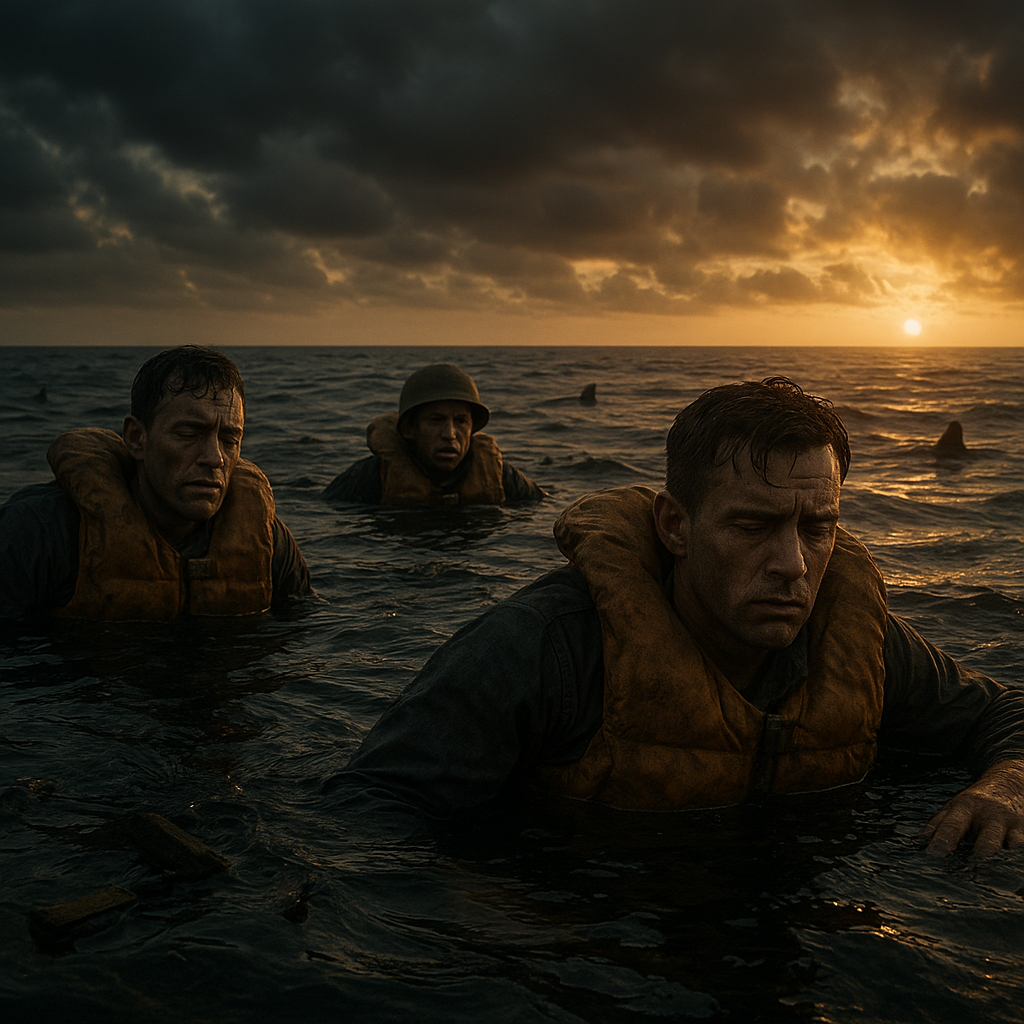
The first blast threw sleeping men out of their bunks before most of them even understood they were under attack. The second tore deeper, opening the USS Indianapolis to the sea so fast that the ship seemed to die in one long metallic scream. In the darkness of the Philippine Sea, with fuel burning, steel bending, and the deck beginning to tilt under their feet, hundreds of sailors were suddenly forced to choose between black water and a sinking ship.
That is what makes the USS Indianapolis survival story so hard to shake even now. This was not only a World War II naval disaster. It was a four-day ordeal in open water, where the survivors faced dehydration, exposure, exhaustion, delirium, and the constant fear of shark attacks while rescue failed to arrive.
For readers drawn to other ocean ordeals, the survival timeline of Salvador Alvarenga in 438 Days at Sea shows the same brutal truth: once the ocean separates you from land, time itself becomes part of the enemy.
The Ship Went Down in Minutes
Just after midnight on July 30, 1945, the heavy cruiser USS Indianapolis was moving through the Philippine Sea after completing a secret wartime delivery. Many of the men on board did not fully know what they had carried, only that the mission mattered. Then the Japanese submarine I-58 found them.
Torpedoes struck with devastating speed. Fire broke out. Compartments flooded. Men who had been asleep seconds earlier woke inside smoke, flame, and total confusion. Some were trapped immediately. Others stumbled through dark passageways slick with oil, trying to reach the deck while the ship leaned harder and harder beneath them.
There was almost no time to think, no long sequence of orderly evacuation. The Indianapolis sank in about twelve minutes. Hundreds went down with her. Roughly 900 sailors made it into the water, many already burned, injured, or half-blinded by oil and salt. When the lights of the cruiser disappeared beneath the surface, the survivors were left staring into darkness so complete that the ocean and sky seemed to erase each other.
At first, many believed rescue would come by morning. So they gathered into floating clusters, checked on the wounded, and tried to stay calm. But dawn brought only light. Not ships. Not aircraft. Not proof that anyone knew where they were.
The First Day in the Water
Morning revealed the full scale of the disaster. The horizon was empty in every direction. Men floated among scraps of wreckage and widening oil slicks. The sea looked almost peaceful from a distance, which only made the reality feel crueler.
The heat began working on them immediately. The Pacific sun hammered down on exposed skin. Lips cracked. Tongues swelled. Salt rubbed into burns and open wounds until even drifting hurt. Men who had survived the sinking now had to survive stillness, which can be its own form of torture when there is no shade, no fresh water, and no certainty that the day will end differently than it began.
Then the sharks arrived.
Survivors later described fins cutting through the water around the groups. The attacks did not come as one constant frenzy. Instead, they came in bursts. A fin near the surface. A sudden brush against a leg. A scream. Thrashing. Then an empty space where a man had been. The randomness made it worse. No one knew whose turn it would be next, and nobody could do much except stay together and try not to splash.
That is one reason the story still grips people. The men were not facing a single dramatic moment of danger. They were facing hours and then days of repeated fear, where every minute demanded more endurance than the body and mind were designed to give.
Night, Thirst, and the Breaking Point
When darkness returned, it did not bring relief. The temperature dropped. Bodies that had baked all day began to shake in the cold. The survivors huddled together as best they could, partly for warmth and partly because being alone in that water felt like a death sentence. The night sounds were unforgettable: weak voices, whispered prayers, men calling for friends, and every now and then the burst of panic that meant something had moved in the water again.
By the second day, the ordeal had changed from waiting into a slow collapse.
Dehydration started destroying judgment. Some men drank seawater even though they had been warned not to. Hallucinations followed. Sailors became convinced they saw islands on the horizon. Some thought they saw ships. Others believed fresh water was nearby if they could just swim a little farther. Men who might have survived if they had stayed in the group suddenly pushed away, chasing things that were not there until distance or exhaustion swallowed them.
In stories like Yossi Ghinsberg’s jungle ordeal in the Amazon, the natural world becomes frightening because it begins to distort the mind along with the body. The Indianapolis survivors faced that same psychological unraveling, only there was nowhere to walk, hide, or regroup. There was just water, sun, darkness, and the repeated temptation to believe something impossible.
The strongest men tried to maintain discipline inside the floating groups. They reminded others not to drink seawater. They tried to keep the injured in the middle. They repeated that rescue had to come. But every sunrise without a ship weakened the argument. By the third day, hope was no longer a shared confidence. It was work.
Timeline of the USS Indianapolis Survival Ordeal
- Just after midnight, July 30, 1945: The USS Indianapolis is struck by torpedoes from Japanese submarine I-58.
- About 12 minutes later: The cruiser sinks, sending hundreds of men into the Philippine Sea and taking many more down with it.
- First daylight hours: Survivors gather in floating groups, expecting rescue to arrive quickly.
- Day 1: Heat, burns, oil exposure, thirst, injuries, and the first shark attacks begin to thin the groups.
- Day 2: Dehydration worsens. Some men drink seawater and begin hallucinating or swimming away from the others.
- Days 3 and 4: Exhaustion, exposure, and mental collapse spread. Hope becomes harder to hold.
- August 2, 1945: A patrol aircraft spots survivors by chance and radios for help.
- Rescue phase: Seaplane pilot Adrian Marks lands on the open ocean and begins pulling men aboard until ships arrive.
- Final toll: Of roughly 900 men who reached the water, only 316 survived.
Why Rescue Took So Long
One of the most disturbing parts of the USS Indianapolis survival story is that the men were not only fighting nature. They were trapped inside a chain of missed signals and administrative failure.
The ship did not arrive when expected, but that absence did not trigger the urgent response people imagine. Different officers and stations had fragments of information, but those fragments were not acted on fast enough. Assumptions were made. Reports were mishandled or discounted. The result was devastating: while hundreds of sailors drifted in the sea, the Navy had not yet assembled the fact that one of its ships had vanished and that time was running out.
Later, public attention often focused on Captain Charles McVay, who was court-martialed after the disaster. But for many survivors and historians, the larger story was never that simple. The sinking, the rescue delay, and the postwar search for blame became part of the same tragedy. In 2000, Congress recognized McVay’s lack of culpability, and the Navy placed that recognition in his personnel record in 2001. That could not change what happened in the water.
What This Story Does Not Let You Forget
By the third and fourth days, death had become familiar enough that some survivors barely had the strength to react. Friends drifted away. Voices weakened. Men stopped finishing sentences. Some stared into the sky and spoke to people who were not there. Others floated in silence, trying to save energy they no longer really had.
Accounts from survivors reduce the ordeal to its most basic human elements: pain, thirst, fear, memory, and the refusal to let go. That is why the story still sits alongside the strongest maritime survival accounts ever told. If you want another example of how long water can test the mind, Harrison Okene’s survival inside a sunken vessel offers a very different but equally claustrophobic fight against time.
The Moment the Horizon Changed
On August 2, chance finally interrupted the disaster.
Lieutenant Wilbur Gwinn was flying a routine patrol when he noticed what looked like debris below. Then he saw movement. Men. Hundreds of them, scattered across the ocean. The radio message that followed was the first real break in the nightmare. At last, someone had seen them.
Even then, rescue did not arrive as one clean sweep. Lieutenant Adrian Marks brought his seaplane down onto the open sea, a dangerous decision in rough water. He began pulling survivors aboard, and when the aircraft could not hold more, others were secured to the wings until ships arrived. It was not elegant. It was necessary.
When rescuers finally hauled the survivors out, many were burned, swollen, oil-covered, and barely conscious. Of the roughly 900 who entered the sea, only 316 survived. The number is staggering, but the real weight lies in the duration. The ship sank in minutes. The suffering continued for four days. Disaster arrived fast. Survival was slow.
That is why the USS Indianapolis still matters beyond war history. It is a maritime survival story about what happens after the explosion, when fear turns into endurance and endurance turns into something almost impossible to imagine from dry land. Readers who finish here often move toward the K2 disaster or the Andes plane crash survival story, because those stories carry the same hard truth: sometimes survival is not one heroic moment, but a long refusal to disappear.
FAQ
What happened to the USS Indianapolis?
The USS Indianapolis was torpedoed by the Japanese submarine I-58 just after midnight on July 30, 1945. The cruiser sank in about twelve minutes, sending hundreds of sailors into the Philippine Sea.
How many men survived the USS Indianapolis sinking?
Hundreds of men made it into the water after the ship sank. The Navy’s corrected accounting records 1,195 aboard and 316 survivors of the disaster; several men died after being rescued. Dehydration, exposure, injuries, and shark attacks contributed to the losses during the days before rescue.
Why was the USS Indianapolis rescue delayed?
The rescue was delayed because missed communications, assumptions, and reporting failures meant the Navy did not act quickly enough when the ship failed to arrive as expected. Survivors were eventually found by chance during a patrol flight.
Is the USS Indianapolis story mostly about shark attacks?
No. Shark attacks were part of the terror, but they were only one piece of the disaster. Thirst, exposure, exhaustion, injuries, and the long delay before rescue killed many of the survivors.
Why does the USS Indianapolis survival story still matter today?
It still matters because it shows how survival can become a battle against time, fear, and institutional failure all at once. The story is not only about a ship sinking. It is about what happened after the sinking, when rescue did not come and the survivors had to endure the open sea for days.
Research Sources
The following resources were consulted to verify and update this article.
- The National WWII Museum — Surviving the Sinking of the USS Indianapolis
Historian Seth Paridon draws on survivor Harlan Twible’s account to explain the sinking, survival groups, shark attacks, and rescue. - United States Navy — USS Indianapolis Pauses to Honor Crew of Famed Namesake Ship 75 Years After Supreme Success, Sacrifice
The Navy’s anniversary account confirms the wartime delivery, torpedo attack, prolonged exposure, and 316 survivors. - USS Indianapolis official survivors and families website — Captain Charles B. McVay
An account endorsed by survivors, families, and rescue crew members covers the delayed rescue, McVay’s court-martial, and later exoneration.
Watch the USS Indianapolis Survival Story on YouTube
Follow the survivors and the rescue crew in the full Read The Real Story episode.