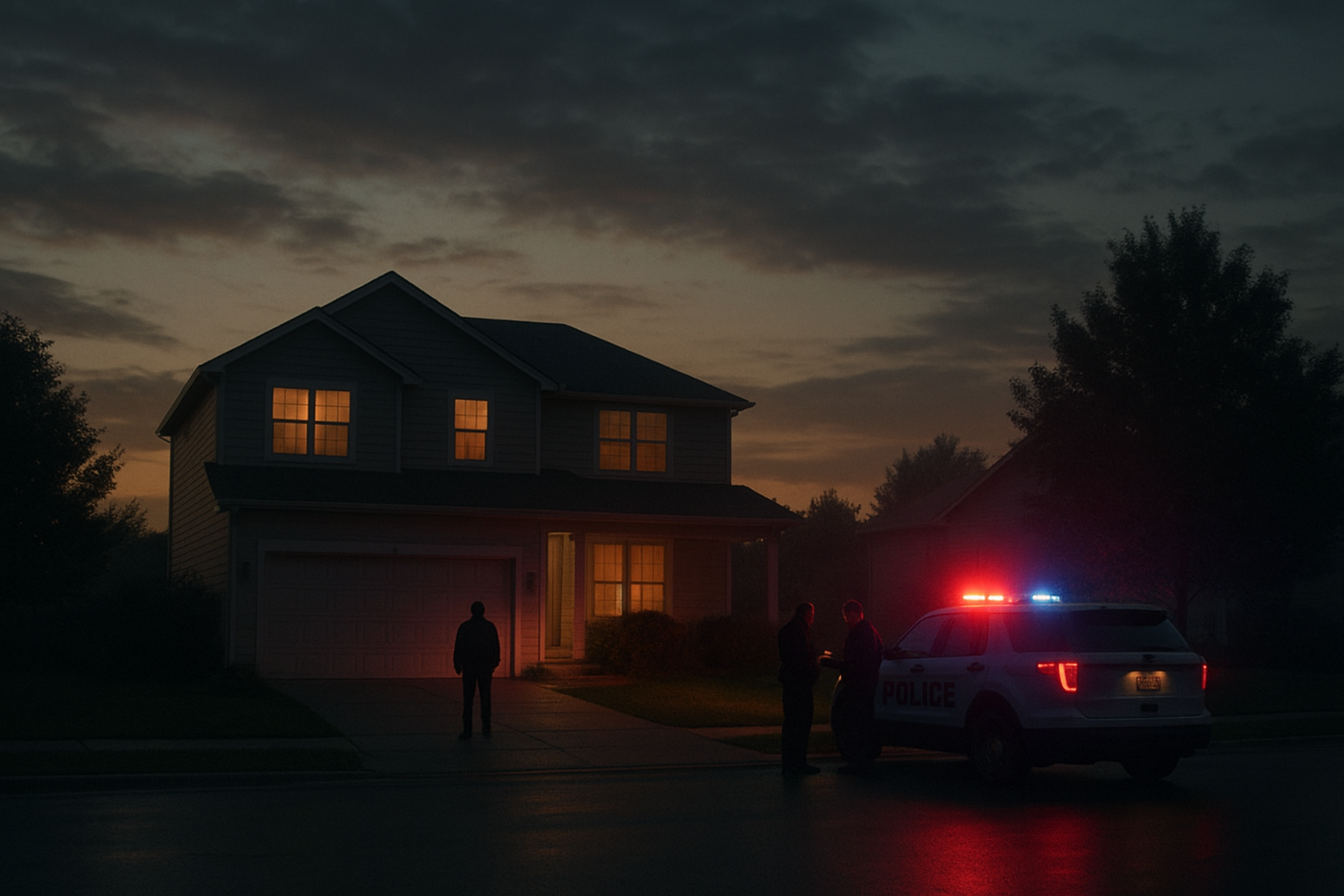
The Chris Watts case is the true story of a Colorado husband and father who appeared on camera begging for his missing family to come home, while investigators slowly uncovered a much darker truth. What shocked people most was not only the crime itself, but how ordinary Chris Watts seemed right up until the moment his carefully controlled image collapsed.
In August of 2018, the Watts family looked like the kind of family people quietly envied online. They lived in Frederick, Colorado, in a large suburban home with bright rooms, a clean lawn, and the polished appearance of a life moving in the right direction. Shanann Watts was energetic, outspoken, and constantly sharing pieces of family life on social media. Chris Watts, her husband, appeared quiet and mild — the kind of man who blended into a room and still left people believing he was dependable. Their daughters, Bella and Celeste, filled the family’s videos with laughter and noise. And Shanann was pregnant with their son. From the outside, there was almost too much happiness in the picture. But that is often how these stories begin. The surface holds together right up until the moment it breaks, and once it does, people start replaying every photo, every smile, every recorded moment, trying to figure out where the cracks were hiding all along.
The Affair and the Cracks Inside the Marriage
By the summer of 2018, pressure had started building inside the Watts home. The family was struggling financially. Their marriage was strained. Shanann had traveled to North Carolina with the girls for several weeks, and during that time Chris began an affair with a coworker named Nichol Kessinger. That affair became the hidden second life that changed everything else around it. While Shanann texted Chris trying to understand why he seemed distant, Chris was imagining a future that no longer included the family he had built. That is one of the details that still makes the case so chilling. This was not a crime investigators believed came from one explosive argument or one sudden moment of madness. By the time Shanann returned home in August, Chris already appeared emotionally detached from the life around him. He acted like a man trapped, but what he really wanted was erasure — a fast, brutal reset of the life he no longer wanted.
The Morning Shanann Disappeared
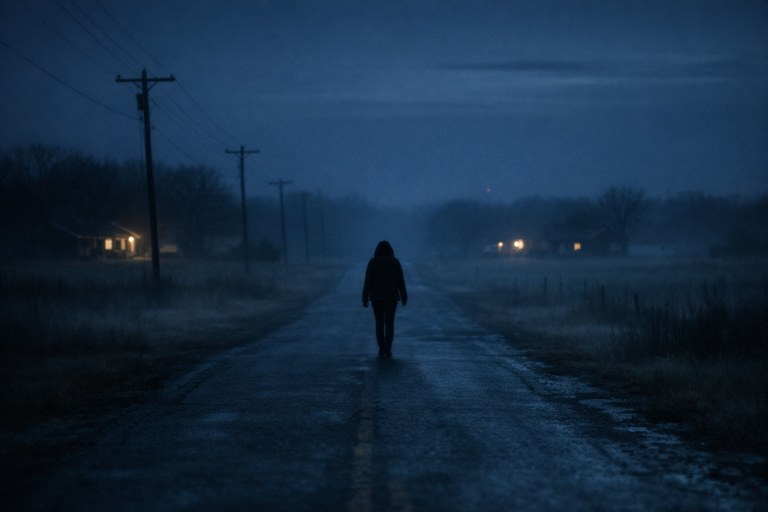
In the early morning hours of August 13, 2018, Shanann returned home from a business trip to Arizona. A friend dropped her off shortly after 2 a.m. Security footage later showed her walking into the house. She was never seen alive again. Later that morning, Shanann missed a doctor’s appointment. She stopped answering calls and texts. That alone immediately alarmed people close to her. Shanann was active, responsive, and deeply connected to friends and family. One of those friends, Nicole Atkinson, became worried quickly. Instead of waiting or assuming Shanann simply needed space, Nicole went directly to the house. She knocked repeatedly. When nobody answered, she kept pushing. That decision may have changed the entire case. Instead of giving Chris time to settle the situation into whatever story he intended to tell, Nicole forced attention onto the house almost immediately.
Timeline of the Chris Watts Case
- August 13, 2018 — Around 2:00 a.m.: Shanann Watts returns home to Frederick, Colorado, after a business trip to Arizona.
- Morning of August 13: Shanann misses a doctor’s appointment and stops responding to calls and messages.
- Later that day: Friend Nicole Atkinson becomes concerned and requests a welfare check at the Watts home.
- August 13: Police respond to the house. Chris Watts claims he does not know where his family went.
- August 14: Chris gives a televised interview asking for Shanann and the girls to return home.
- August 15: Chris fails a polygraph examination and begins changing his story during questioning.
- August 15: Investigators discover Shanann, Bella, and Celeste at an Anadarko Petroleum oil site connected to Chris’s work route.
- November 2018: Chris Watts pleads guilty to multiple murders and is sentenced to life in prison without parole.
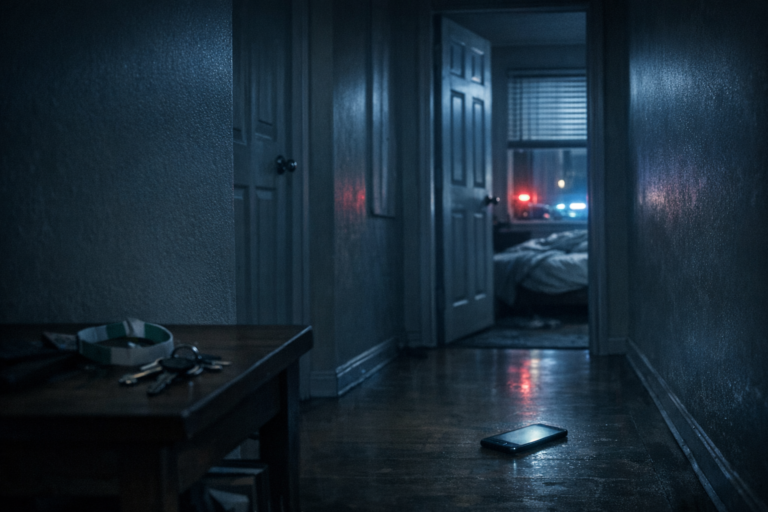
Police arrived at the Watts home for a welfare check later that day. Chris eventually came home and let officers inside. At first, he played the role that would soon become infamous: the worried husband who did not know where his wife and children had gone. He spoke softly. He looked controlled. He acted confused. But even in those early hours, something felt wrong. Shanann’s purse was still inside the house. Her phone was there. Her medications had been left behind. Her car remained in the garage. None of it matched the idea of a mother voluntarily disappearing with her children. There is body camera footage from that welfare check that people still revisit because you can almost feel suspicion entering the house room by room. Chris moves strangely through the footage. Sometimes he talks too little. Other times he talks too much. He appears less like a frantic husband and more like someone trying to carefully manage a performance. When police and neighbors reviewed surveillance footage from a nearby home, the atmosphere shifted even more. Chris stood beside investigators watching the video and appeared visibly uncomfortable. One neighbor later admitted that Chris was acting so strangely that he immediately felt something was wrong.
The Porch Interview That Changed Public Opinion
By the next day, the disappearance had exploded into national news. Chris Watts stood outside his house and gave a television interview that would later become one of the most disturbing public appearances in modern true crime. He pleaded for Shanann and the girls to come home. He said he wanted them back. He claimed he had no idea where they were. But something about the interview unsettled people almost immediately. He smiled at odd moments. His tone felt flat. His words sounded correct on paper, but emotionally hollow underneath. Even before investigators uncovered the truth, many viewers felt it instinctively: Chris did not look like a desperate husband searching for his missing family. He looked like a man trying to imitate one. Investigators continued tightening pressure around him. They examined his phone records, his movements, and his work schedule. Chris worked for Anadarko Petroleum, and on the morning his family disappeared, he had traveled to a remote oil field. That detail quickly became central to the investigation. As questioning intensified, Chris agreed to take a polygraph examination. He failed it. Once that happened, the thin structure holding up his story began collapsing almost immediately.
The Confession and Discovery at the Oil Site
During questioning, Chris first attempted to shift blame onto Shanann. He claimed that after an emotional argument, she had harmed the children and he had killed her in rage afterward. It was a desperate and horrifying lie — one that attempted to turn the murdered mother into the villain of her own story. Investigators did not believe him. Eventually, Chris admitted the truth. He confessed to murdering Shanann. He also admitted his daughters were dead. Investigators later discovered the bodies at the remote Anadarko oil site where Chris had worked that morning. Shanann had been buried in a shallow grave. Bella and Celeste had been hidden separately inside oil tanks. Even years later, it is difficult to read those details without feeling stunned by their brutality. It was not only the murders themselves that horrified people. It was the cold, mechanical way Chris appeared to erase his family afterward, as if the future he wanted could begin the moment the old one disappeared. According to Chris’s later statements and court records, he strangled Shanann after an argument inside their bedroom. He then loaded Shanann and the girls into his work truck and drove them to the remote site before sunrise. One of the children may still have been alive during that drive. Bella, the older daughter, was later described in court records and reporting as asking heartbreaking questions during those final hours. Those details became impossible for many people to shake because they destroyed any remaining illusion that this had been a sudden, uncontrollable act. There were moments to stop. Moments to turn around. He kept going.
Why the Chris Watts Case Still Disturbs People
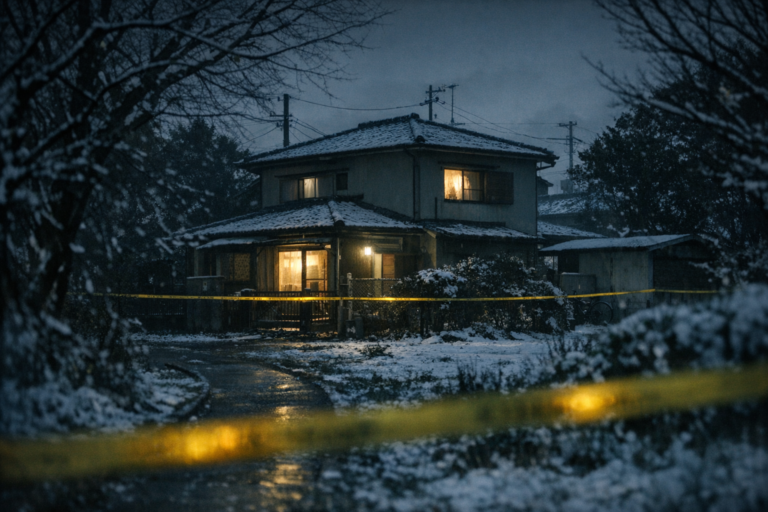
As the investigation widened, the motive looked both terrifyingly ordinary and completely monstrous. Chris Watts wanted out. He wanted his affair. He wanted a different life. He wanted freedom from debt, pressure, responsibility, and the family structure he increasingly viewed as an obstacle. There was no elaborate conspiracy. No mysterious intruder. No hidden criminal empire. That simplicity made the case even worse. The horror came from how small the motive felt compared to the scale of destruction it produced. In November 2018, Chris Watts pleaded guilty to multiple murders and received life sentences without the possibility of parole. There would be no full trial. No dramatic courtroom battle. And in some ways, that left the public staring at the same impossible question: How could someone who appeared so bland, quiet, and forgettable carry something this dark inside him without anyone fully seeing it? Part of the answer may be that family annihilators rarely look monstrous beforehand. They look manageable. Dependable, even. They grill in the backyard. They smile in photographs. They wave to neighbors. Their collapse stays hidden until image and reality finally split apart. Chris Watts became one of the clearest modern examples of that divide. People could watch him before and after the murders, compare the soft-spoken father in family videos to the man who loaded his family into a truck before dawn, and still struggle to emotionally connect those two versions of the same person. The case also stayed with people because Shanann herself remained so vividly present throughout the story. Through her videos, messages, and social media posts, she never became a distant victim people only read about in headlines. You could hear her voice. You could watch her daughters running through the house laughing moments before everything ended. The victims did not have to be imagined. They were already there. That made the loss feel immediate in a way many true crime cases never do. Years later, the Chris Watts case still feels less like a mystery than a nightmare preserved almost completely on camera: the welfare check, the porch interview, the surveillance footage, the failed polygraph, the confession. But what gives the story its lasting power is not simply the sequence of evidence. It is the betrayal at the center of it. The person Shanann and the girls should have been safest with became the person they needed protection from. And for a brief, horrifying stretch of time, he stood in front of the world pretending he wanted them back. That is why the case refuses to fade. It is not only about murder. It is about performance, deception, and the terrifying weakness of appearances. A quiet voice. A worried face. A suburban driveway in morning light. None of it meant safety. Behind the calm was a man who had already decided his family stood in the way of the life he wanted, and by the time anyone realized the truth, the house that once looked picture-perfect had become one of the darkest crime scenes in modern American memory.
FAQ
Who was Chris Watts?
Chris Watts was a Colorado husband and father who murdered his pregnant wife, Shanann Watts, and their two daughters, Bella and Celeste, in August 2018.
What happened to Shanann Watts?
Shanann Watts disappeared after returning home from a business trip on August 13, 2018. Investigators later discovered she had been murdered by her husband, Chris Watts.
Where were Bella and Celeste found?
The bodies of Bella and Celeste Watts were discovered at an Anadarko Petroleum oil site connected to Chris Watts’s work route.
Did Chris Watts confess?
Yes. After failing a polygraph examination and facing mounting evidence, Chris Watts confessed to murdering Shanann and later admitted responsibility for the deaths of his daughters.
Why did the Chris Watts case become so famous?
The case became widely known because of the disturbing contrast between Chris Watts’s calm public appearances and the horrifying reality investigators uncovered behind them.
🔎 Related Investigation:
🔎 If this story stayed with you, the author suggests these real cases next:Explore more True Crime stories here: View all True Crime stories →
- The final night that exposed a deadly obsession behind closed doors
- The cross-country trip that turned into a national search and a grim discovery
- The child murder mystery that still leaves investigators with more questions than answers
Watch This Story on YouTube
Prefer to watch? See the full story on our YouTube channel.