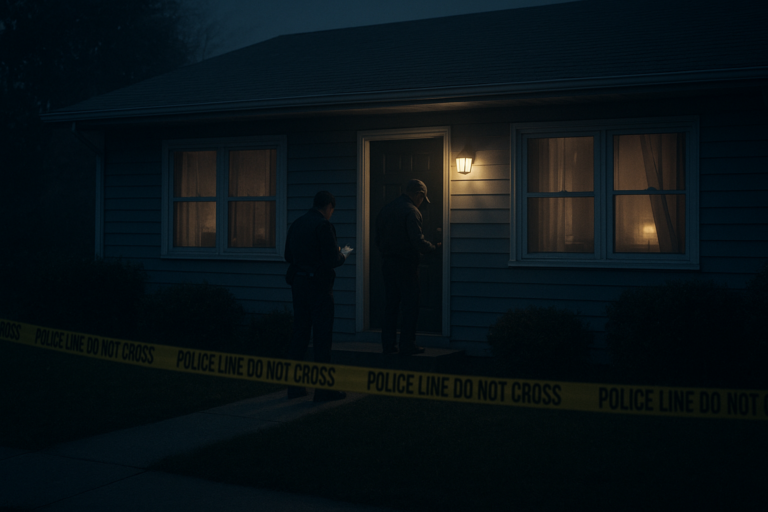
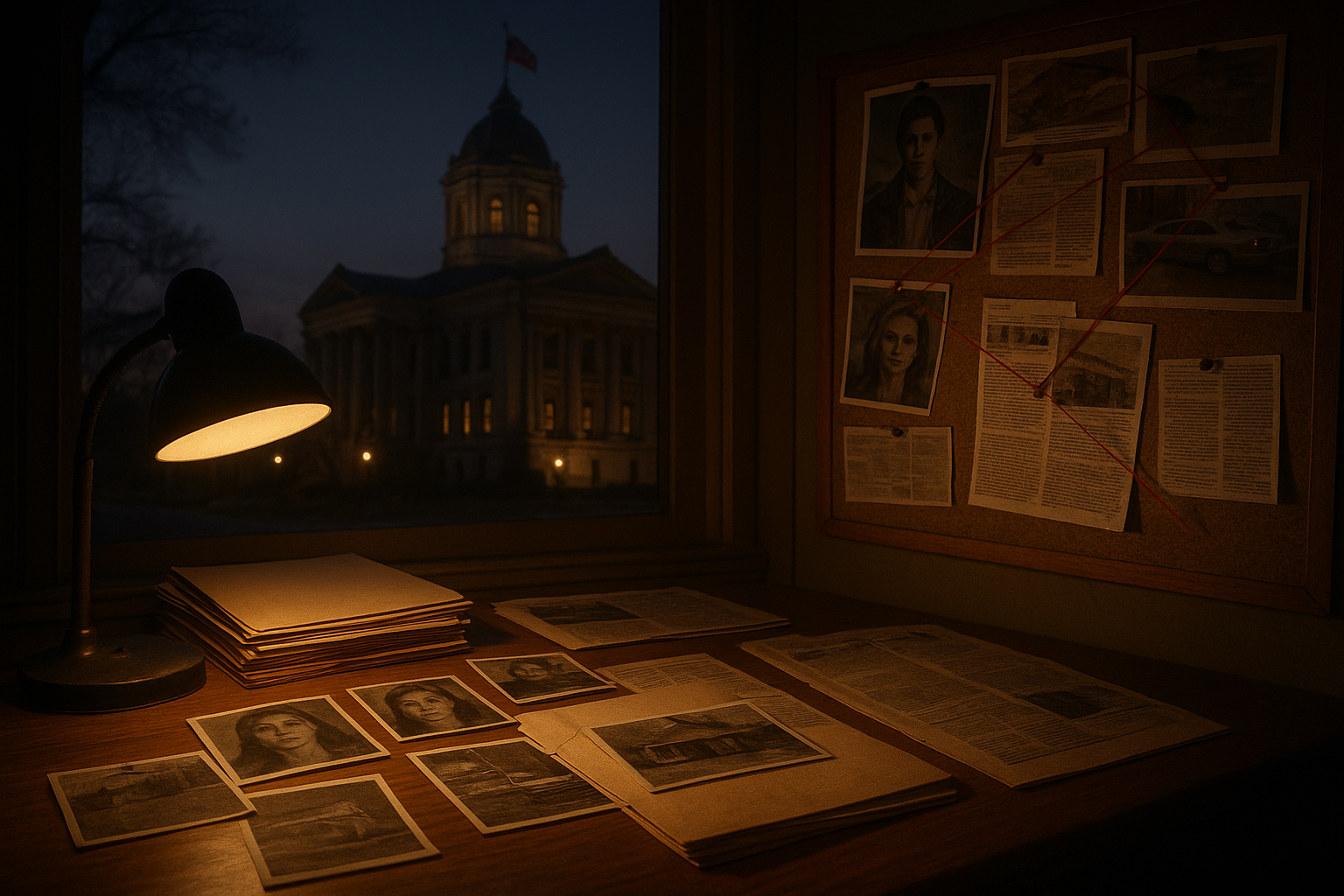
Old verdicts are supposed to settle a story. Old evidence is supposed to cool. Old public outrage is supposed to drift into the archive. But some true crime cases do the opposite. Years later, they come charging back into view because a retrial begins, a resentencing fight opens, a wrongful-conviction review cracks the old certainty, or fresh investigative pressure exposes how unfinished the original story really was.
These six cases returned to attention through different routes: a retrial, resentencing, post-conviction litigation, renewed investigation, a pardon and public debate. Renewed media attention alone does not reopen a criminal prosecution.
The useful question is what changed: a verdict, a sentence, an investigative lead or simply the public discussion. Those developments have different evidentiary and legal meanings.
The cases below matter for another reason too: they expose how unstable “finished” can be. A murder conviction may survive public doubt while legal review keeps grinding. An acquittal may end a prosecution but not end the cultural argument. A cold file may look dormant until DNA, a podcast, a new witness, or renewed reporting yanks it back into the present tense. In other words, these are not simply famous crimes. They are stories that proved time alone does not guarantee closure.
This comparison follows later developments while preserving the distinction between accusations, convictions, acquittals and exoneration.
Karen Read: The Retrial and Verdict
Karen Read’s first trial ended in a mistrial in 2024. On June 18, 2025, her second trial ended in acquittals on the charges connected to John O’Keefe’s death. She was convicted of operating under the influence and sentenced to one year of probation.
The retrial examined the prosecution’s collision theory and the defense’s challenges to the investigation. Allegations made by either side should be distinguished from the jury’s verdict.
The verdict is the legal result of that trial. Continuing public disagreement does not turn the acquitted charges into unresolved accusations against Read.
Menendez Brothers Resentencing — Why the Beverly Hills Murders Still Grip the World
Erik and Lyle Menendez were convicted of murdering their parents. In May 2025, their sentences were reduced to fifty years to life, creating parole eligibility. Both were denied parole in August 2025. Resentencing did not overturn the murder convictions.
As checked on October 20, 2026, the parole board’s calendar lists Lyle’s next suitability hearing for February 23, 2027, and Erik’s for February 24. These scheduled hearings are subject to change and are not grants of parole.
Resentencing, parole eligibility and a decision to release someone are separate steps. Their case illustrates why those terms should not be used interchangeably.
Scott Peterson Case — The Christmas Eve Disappearance That Turned Into a Murder Trial
Scott Peterson’s murder convictions remain in place. A judge denied his third habeas petition on April 27, 2026. The Stanislaus County district attorney’s May summary reports that all fourteen claims were rejected; Peterson’s lawyers disputed the ruling and announced plans to appeal.
Post-conviction challenges can test evidence and procedure without automatically producing a new trial. A defense claim is not itself a finding that a conviction was wrongful.
The later litigation should be read through the actual rulings and the arguments each side made, rather than through the popularity of a documentary theory.
Casey Anthony Case — The Trial That Divided a Nation
Casey Anthony was acquitted of murder, aggravated manslaughter and aggravated child abuse in 2011. She was convicted of four counts of giving false information; in 2013 an appellate court ordered two of those misdemeanor convictions vacated.
Documentaries, interviews and renewed discussion can bring an old trial back into public attention. That is different from a new murder prosecution or a court order reopening the acquitted charges.
Public reactions cannot replace the jury’s verdict. Discussion of the case should identify what was proven, what was acquitted and what remains uncertain.
Roxanne Sharp Cold Case — How a Podcast Helped Lead to Arrests 44 Years Later
Louisiana State Police took the lead in Roxanne Sharp’s case in 2023, reviewing evidence and resubmitting material for DNA analysis. Police said their 2025 podcast generated new information and witness cooperation. Four men were arrested or charged in April 2026. The announcement does not establish that DNA alone supplied the breakthrough.
This is a renewed investigation, rather than a retrial or an overturned conviction. The April announcement describes charges, not verdicts.
The four men face charges, which must be distinguished from convictions. A renewed investigation does not by itself establish a completed prosecution.
Craig Coley: Wrongful Conviction and Pardon
Governor Jerry Brown pardoned Craig Coley on November 22, 2017, after investigations uncovered evidence demonstrating his wrongful conviction. The official announcement directed his immediate release.
His case illustrates a different outcome from a disputed but surviving conviction: the state granted relief on the basis of evidence of wrongful conviction.
Coley spent thirty-eight years and ten months imprisoned before his pardon.
Why These Cases Still Don’t Stay Buried
What these cases have in common is not one kind of crime or one kind of defendant. It is pressure on the original story. In one file, that pressure comes from a retrial that forces every witness, theory, and forensic claim back under the microscope. In another, it comes from resentencing, which reopens the ethical meaning of the crime even when the basic facts are long known. In still another, it comes from wrongful-conviction review, which asks whether the justice system’s confidence was ever justified in the first place.
That is why these stories keep pulling readers in. They are not cold in the emotional sense. They are warm with conflict. The public wants to know whether the new spotlight changes anything real or simply restages an old fight. Does the retrial expose weakness in the original prosecution? Does a resentencing push people to reinterpret the whole case? Does a DNA breakthrough vindicate years of doubt? Does renewed pressure revive a file that authorities treated like dead paper? Each question turns a single article into part of a broader documentary lane.
Later developments deserve attention because they can change a case’s legal status. The same care is needed when the verdict remains intact despite renewed debate.
The unsettling truth is that some cases return because justice may still be moving, some because justice may have failed, and some because justice never really started until years later. That is why these six stories belong together. They are all examples of the moment when the archive refuses to behave like the past.
There is also an editorial reason to study these stories side by side. They reveal that “back in the spotlight” is not one thing. In one case, the heat comes from a courtroom sequel. In another, it comes from a post-conviction challenge or appellate review. In another, it comes from modern science humiliating old certainty. And in another, it comes from the fact that local persistence refused to let the file remain culturally dead. That range matters, because it helps readers understand the difference between a reopened legal fight, a reopened evidentiary fight, and a reopened public argument.
Seen together, these cases also challenge the lazy idea that time naturally settles everything. Time can preserve doubt just as easily as it preserves evidence. It can deepen family grief, harden public narratives, and make each new filing or forensic development feel even more explosive. When a story returns after years or decades, it often returns carrying everything that was never emotionally or legally resolved the first time.
Conclusion
The most powerful true crime stories are not always the ones with the bloodiest opening or the biggest first-wave headlines. Sometimes they are the ones that come back. A retrial can make an old prosecution look newly unstable. A resentencing fight can force a country to re-argue what justice even means. A wrongful-conviction review can turn a long-finished courtroom story into an indictment of the system that told it. And a cold case can roar back because the evidence finally found a better century to speak in.
That is the real thread connecting these cases. None of them stayed in the archive where people expected them to remain. They reopened, resurfaced, or reignited. And once they did, they reminded readers of something deeply uncomfortable: a case does not have to be legally active to feel unfinished, and it does not have to be old to become volatile again.
If you want to understand how true crime stories keep their grip across decades, this is one of the clearest places to look. The spotlight rarely comes back by accident. It comes back because something in the story still has the power to move, fracture, or accuse.
Research Sources
The following resources were consulted to verify and update this article.
- NPR / OPB — Karen Read’s second-trial verdict
Reports the acquittals, impaired-driving conviction and probation. - Associated Press / NY1 — Menendez resentencing and parole history
Summarizes the 2025 sentence reduction and parole denials. - California Board of Parole Hearings — February 2027 hearing calendar
Current calendar, checked October 20, lists the brothers’ separate hearings. - Stanislaus County District Attorney — May 2026 Peterson case update
Prosecution summary identifies the April 27 habeas ruling. - Los Angeles Innocence Project — Response to the Peterson ruling
Defense organization’s response and stated intention to appeal. - Florida Fifth District Court of Appeal / Justia — Anthony v. State (2013)
Court opinion records the verdicts and partial reversal of misdemeanor convictions. - Louisiana State Police — April 2026 Roxanne Sharp announcement
Details the renewed investigation, podcast leads and charges. - California Governor’s Office — Craig Coley pardon announcement
Official announcement explains the evidence of wrongful conviction and release. - Los Angeles Times — Coley duration
Corroborates imprisonment duration.
🔎 If this story stayed with you, the author suggests these deeper investigations next:
- Unsolved True Crime Cases That Still Have No Answers
- Cold Cases Solved After Decades — Crimes That Finally Got Answers
- Cold Cases Solved by DNA and Genetic Genealogy — The Breakthroughs That Finally Named the Killer
- Disappearances Solved Years Later: The Cases That Went Cold Until One Break Reopened Everything
Explore more True Crime stories here: